
Markerless motion capture, force plates, and instrumented insoles changed what coaches can see, and what athletes can handle.
Markerless motion capture made the film room awkward
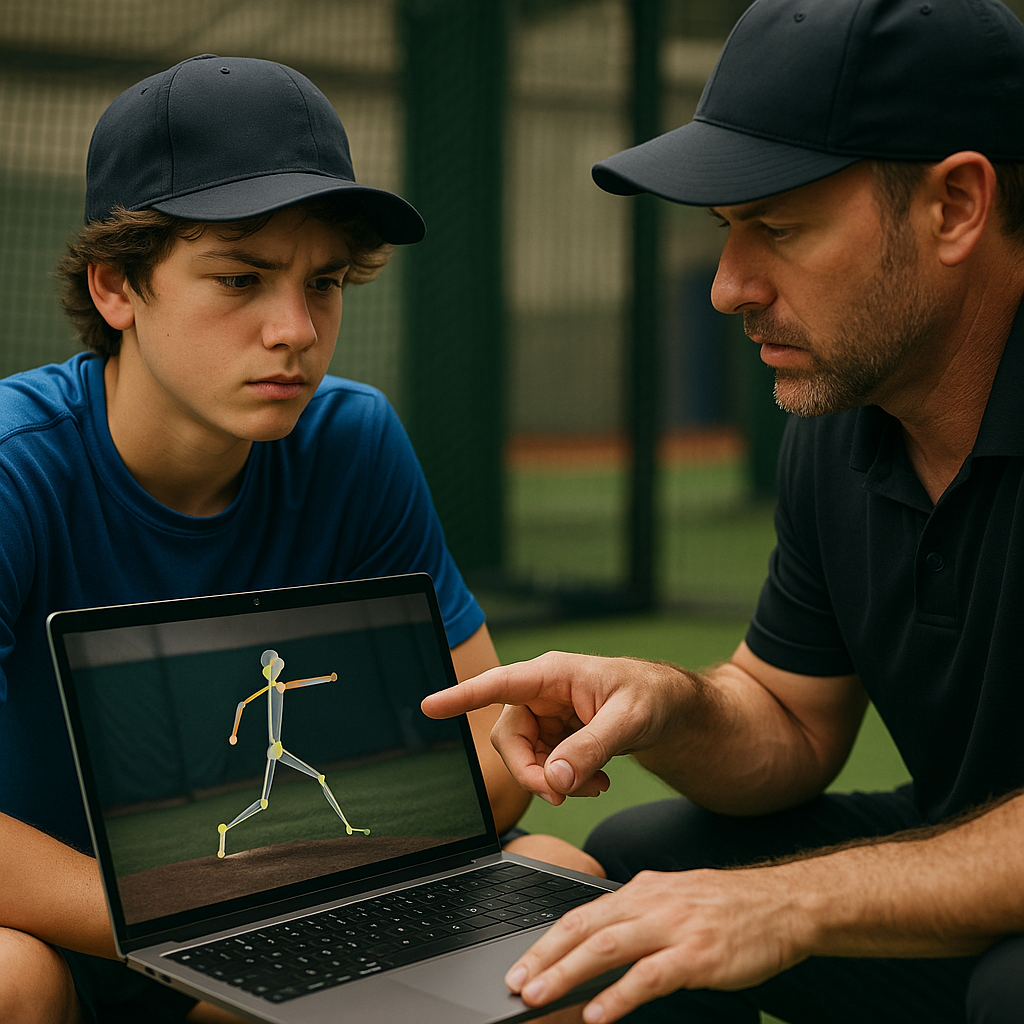
Five years ago, most of us were still doing the same thing: prop up a phone, shoot 60 fps, and argue about what we thought we saw. Now a lot of clubs and high schools are running markerless motion capture (or a lightweight version of it) and it changes the vibe fast. It feels like the tech is calling your bluff. The platform spits out joint angles, hip-shoulder separation, and a pretty little stick figure that makes your athlete look like they were built wrong.
Here's what surprised me: the biggest change isn't precision, it's volume. You get more clips, more timestamps, more "events" per rep. For a pitcher, it can break down into foot strike, trunk rotation, and ball release. For a sprinter, it's contact time, shin angle, and pelvic drop. The temptation is to treat every flagged moment like a problem to fix this week. That's when you get the kid who trains like a lab rat and competes like they're walking on glass.
When I use tools like this (even the budget stack: a phone, a tripod, and something like Kinovea for slow-mo plus angle lines), I start by asking one narrow question: what am I looking for today? One thing. Not a full rebuild. Then I sanity-check the capture. Was the camera high enough? Was it square to the plane? Did the athlete drift out of frame? If the overlay "floats" during a cut or a throw, I don't pretend it's truth. I go back to the raw video and use the numbers as a nudge, not a verdict.
The quiet transformation is that kids now grow up with a data-backed criticism loop. If you coach them, you have to coach the relationship with the tool too: when to trust it, when to redo the rep, and when to close the laptop and just compete.
Force plates turned jump day into a reality check
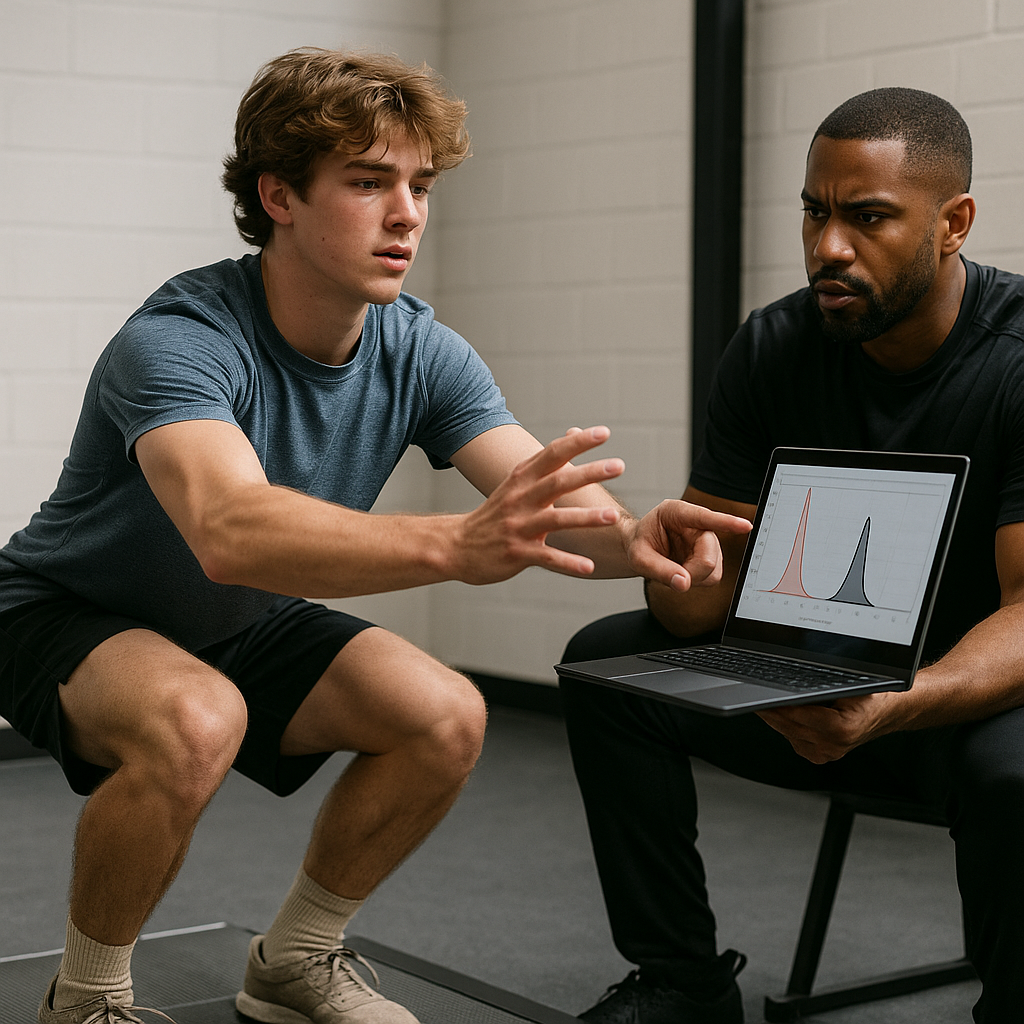
I remember when jump testing was a chalk mark on the wall and a bunch of teenagers lying about their best number. Force plates dragged that whole conversation into the light. If you've used a system like VALD ForceDecks (or any of the newer portable plates), you know the moment: the athlete sticks a jump that looks fine to the naked eye, and the screen shows a nasty asymmetry or a landing peak that makes your stomach tighten.
The plate doesn't care that they're bouncy. It shows how they produce force and how they absorb it. That's the equipment change that quietly shifted training: we stopped judging only the jump height and started staring at the braking phase, the right-left split, and the rate of force development. For basketball and volleyball kids, it can expose why they feel great in warmups and cooked by the third set. For soccer and lacrosse players, it can show a pattern that matches the ankle that keeps barking, even when the kid swears it's nothing.
The best use I've found is also the least dramatic. I don't chase perfect symmetry as a moral goal. I use the plate to pick the one constraint that matters for the next training block. Maybe it's teaching a quieter, more controlled landing with a deeper hip hinge. Maybe it's a simple unilateral strength emphasis because the takeoff leg is doing all the work. And sometimes it's just proof that today's fatigue is real, not an attitude problem. A kid who shows a sharp drop in peak power and a longer time to stabilization usually isn't being lazy, they're fried.
The failure mode is obvious once you've seen it: the plate becomes a scoreboard. Athletes try to win the session with a single hero rep, and the coach starts programming to game the number. If you want it to help performance, you have to keep it tied to decisions you would make anyway: return-to-play progression, workload tweaks, and which qualities you emphasize on heavy days versus skill days. Otherwise it's a very expensive way to make teenagers anxious about landing.
Instrumented insoles changed how we talk about feel
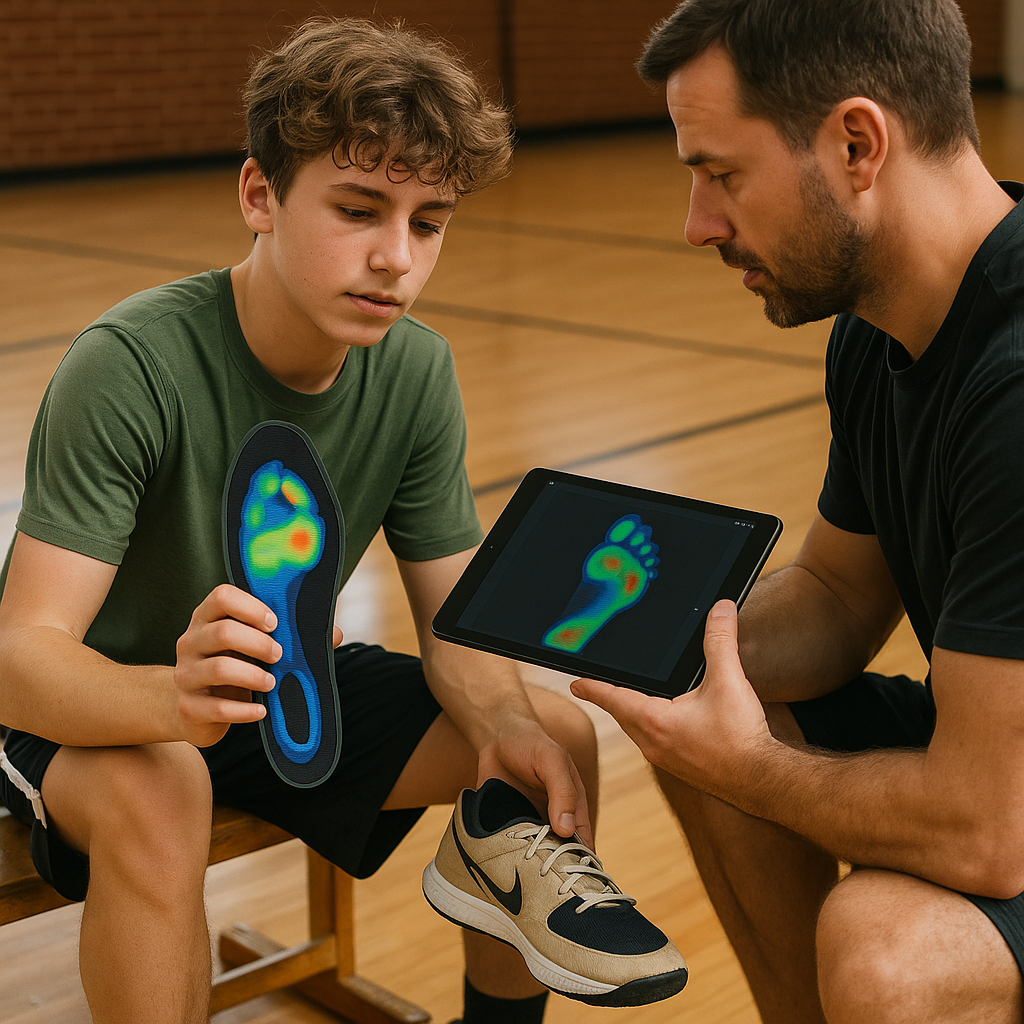
Ask a 15-year-old how their cut felt and you'll usually get one of two answers: good or weird. Instrumented insoles are the first piece of gear I've used that can take that vague feedback and pin it to something you can coach without turning it into a lecture. Systems like Moticon (and the other pressure-sensing insoles in this lane) don't just measure steps. They show where the load is traveling under the foot, how long contact lasts, and whether the athlete is living on the inside edge of their shoe when they think they're pushing through the big toe.
The quiet training shift is that footwork stopped being purely visual. A coach can see a kid's knee cave, sure, but the insole can show the early heel pop or the lazy midfoot contact that sets the whole chain up. In team settings, I like them for a single practice theme: "today we're watching pressure under the first metatarsal" or "today we're trying to shorten that sloppy contact on decel." The athlete gets a target they can chase without hearing ten cues at once.
They're also sneaky useful for equipment choices that used to be superstition. Cleat plate stiffness. Basketball shoes that feel stable but shove a kid onto the lateral edge. Even orthotics conversations get less emotional when you can see the before and after pressure path. Not every athlete needs a change, and you can't diagnose injuries from an insole readout, but you can stop guessing about what the foot is doing.
One practical note from the trenches: don't run these on day one of a new shoe and pretend it's a pure biomechanics report. Blisters and unfamiliar uppers change mechanics all by themselves. I give kids a break-in window, then collect a small set of comparable reps (same drill, same surface, same warmup). The point isn't to win a prettiest-heatmap contest. It's to connect what they feel with what they're doing, so the next time they say weird, you can ask, weird where? and mean it.