
Three live-footwork drills I run in the gym that stop the crossover step before it turns into a layup line.
The four-corner closeout that fixes the first two steps
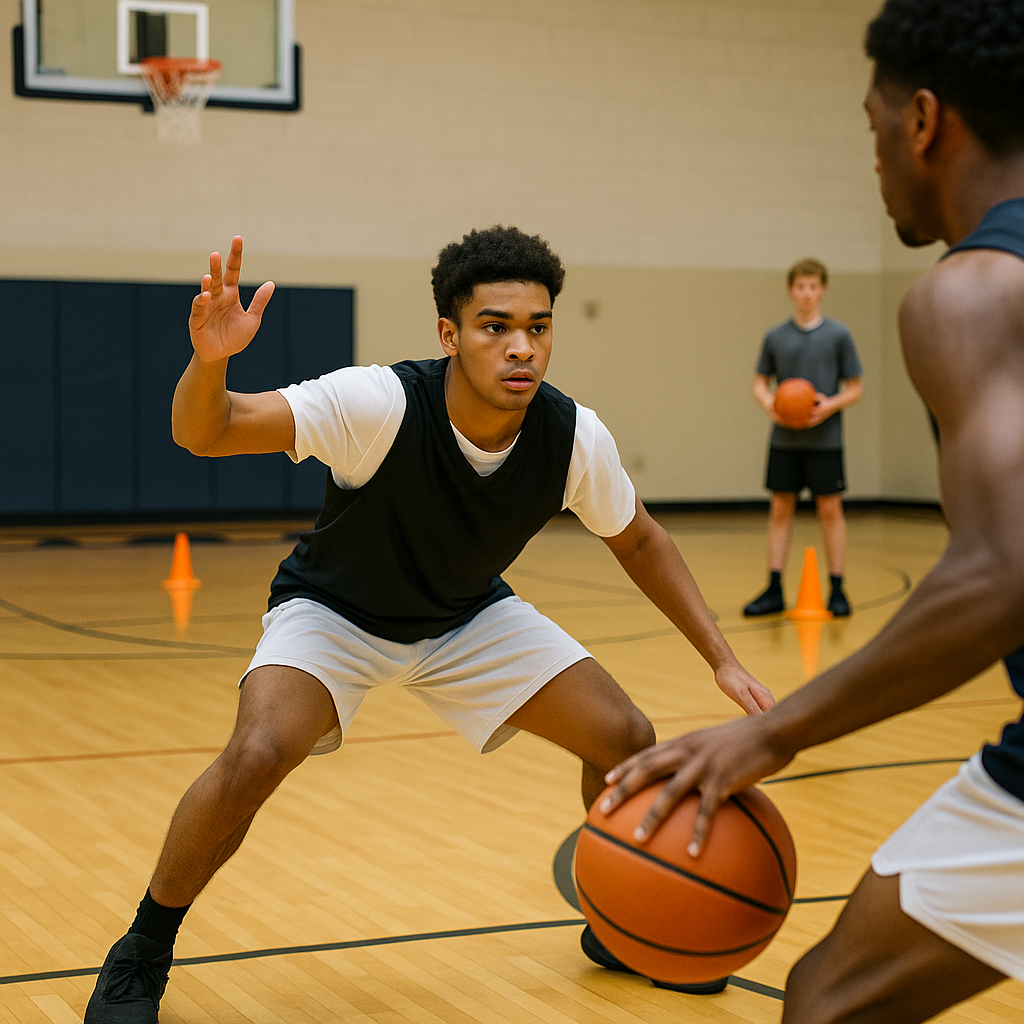
I stole this from a long February stretch when we were giving up the same shot: drive, help, kick, and our closeout turned into a fly-by because the kid was trying to make up for being late with speed instead of angle. Set four cones in a square, about 12-15 feet apart, like a mini half-court. One defender starts in the middle in a stance. I like to put a manager or JV kid at each cone with a ball so passes are sharp, not floating.
On my whistle, the passer at any cone throws it to another cone. The defender has to sprint the first two steps, then chop and get their butt down before the last 6 feet, arriving on a high hand, inside foot forward, and shoulders square enough to take away the first straight-line drive. The key is what happens next: as soon as they arrive, the new ball-handler at that cone rips through and takes one hard dribble either direction. The defender gets one slide step to cut it off. Not three. One. That forces clean feet, because if they cross over, they lose the angle immediately and everyone sees it.
I coach it with boring words: sprint, sink, stick, slide. If their feet click together on the stop (you can hear it on a loud gym floor), they were too tall on the chop steps. If their first slide is a reach, they were leaning on the closeout. Run it 20 seconds, rotate, and keep score: offense gets a point for a blow-by on that one-dribble attack; defense gets a point for a chest stop or a forced pick-up. Kids care the second there’s a number on the whiteboard.
Baseline funnel: keep the hips out of the paint
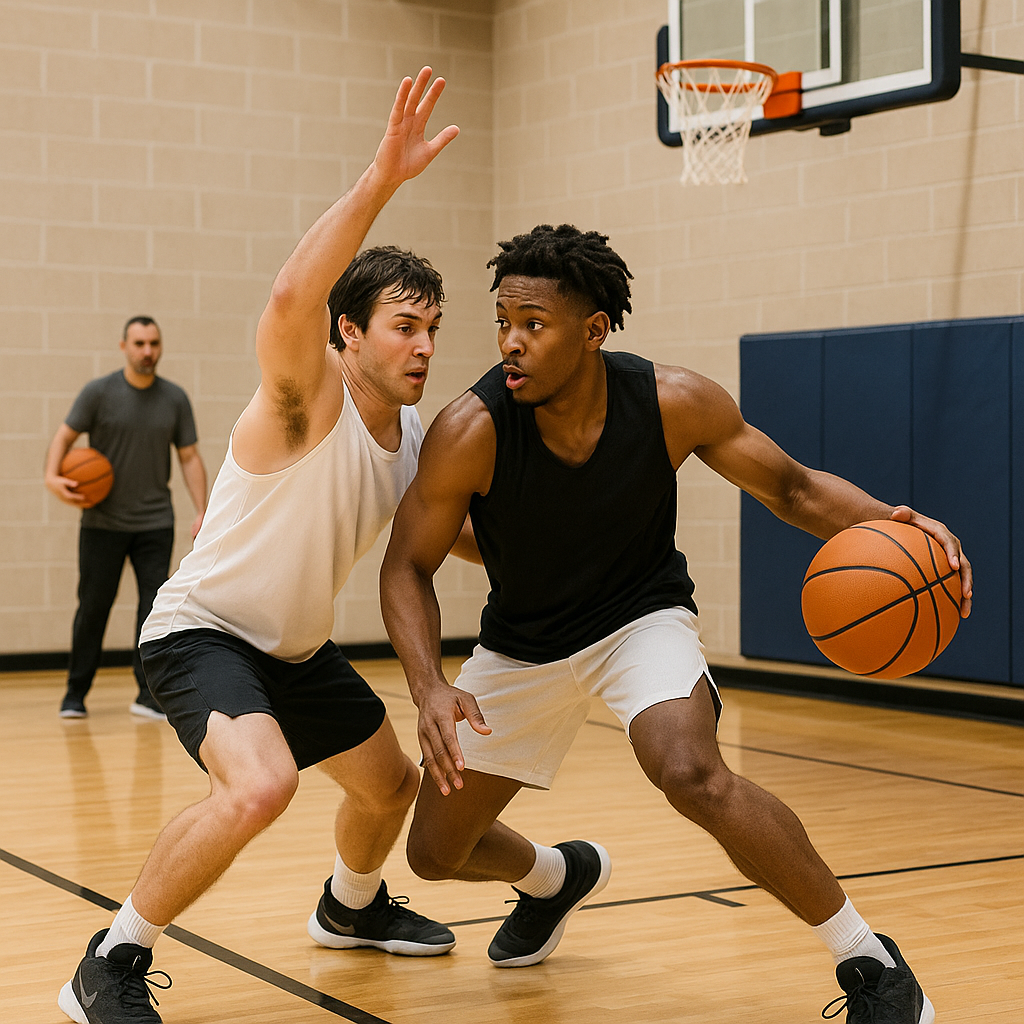
There’s a reason I run this on the baseline and not in the middle of the floor: the line is an automatic referee. If the defender’s hips open and their feet cross, the ball is going downhill and you’ll hear sneakers squeal as they try to recover. Put an offensive player on the wing, one step off the three-point line, ball in hand. Defender starts in help with one foot in the lane, as if they were tagging a cutter. I stand under the rim with a ball so I can restart fast and keep the reps tight.
On the pass, defender closes out and must force baseline. We’re not debating scheme here, we’re training the footwork that makes any scheme possible. The offensive player gets three dribbles max to try to turn the corner. The defender’s job is to “ride the rail” with the baseline as their friend: drop step with the top foot, push, and slide without crossing, keeping the inside hand ready to contest but the outside hand low enough to discourage the wrap-around. If they get beat baseline, it’s a point for offense. If the defender makes them pick up or push them under the backboard, defense gets the point.
The detail kids miss is the spacing on the closeout. Too close and the ball-handler blows by on the first dribble. Too far and you give them a clean pull-up or they get comfortable and set up a counter. I tell my guys to arrive at “one arm plus a step.” You can literally see it: hand up, but you’re not reaching for the ball, you’re taking away their eyes. The best part is how quickly it transfers in a game. When the crowd gets loud and the kid with the ball starts pounding it, the defender who’s done this drill doesn’t panic and sprint past their own angle. They just keep sliding and trust the line.
Two-dribble scramble to a dead stop (no reach allowed)
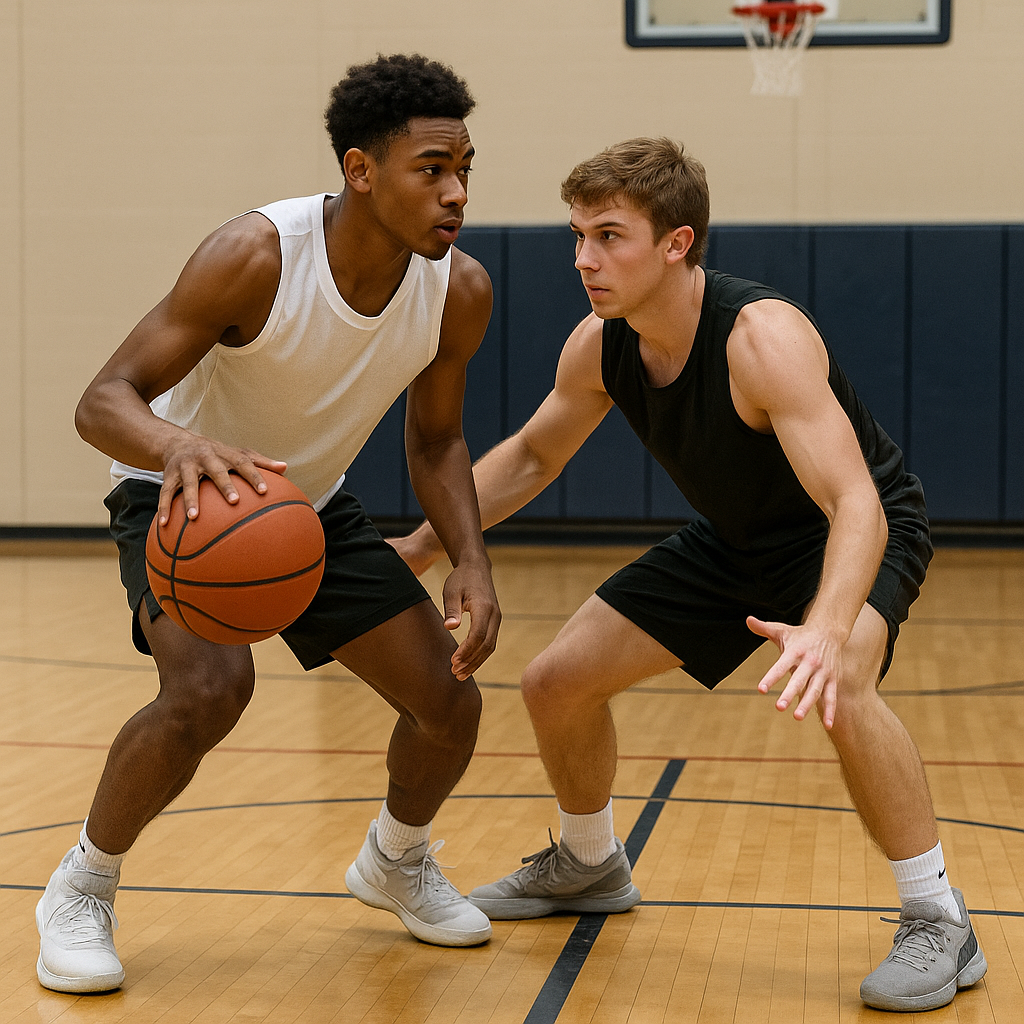
This one looks almost too simple on paper, which is why I like it. It’s pure defensive footwork under stress, with a rule that keeps kids from turning it into a steal contest. You need a lane line, a top-of-key spot, and a coach who will call it the same way every time.
Set up 1-on-1 at the top. The ball-handler starts with their toes on the three-point line, centered. The defender starts one step behind them, slightly to one side, like they got screened and are late. On “go,” the offense gets exactly two dribbles to attack either side and try to score. The defender is in scramble mode and has to recover to a chest-to-shoulder position by the second dribble, then come to a dead stop without crossing their feet. That dead stop is the whole point. If their feet cross, I blow it dead and the offense gets the point even if they missed. It sounds harsh, but kids stop crossing fast when the scoreboard punishes it.
Here’s the other constraint: defender is not allowed to reach on the first dribble. I want hands active, yes, but not that desperate swipe that makes their shoulders turn and their base narrow. If they reach, automatic point for offense. Now the defender has to win with their feet, not their hands, and you can see them start to sit and slide instead of lunge.
I’ll run it in short bursts, 6 reps each, then switch sides so they have to recover both directions. If you’ve got a video manager, film from the free-throw line. When you show a kid the moment their heels click together and they pop straight up, it hits harder than any speech. And when that same kid stays down on a late closeout in the fourth quarter, it doesn’t feel like a miracle. It feels like Tuesday.