
From bare hands to PitchCom, catcher responsibilities shifted fast, and your 13-year-old is living the whiplash behind the plate.
When the glove got bigger, the job got louder

I learned this the hard way the first time I tried to teach a 12U catcher to think two pitches ahead while also worrying about blocking a ball in the dirt. The kid wasn't "behind". He was doing a version of catching that used to be normal, back when the position was mostly survival: stop the ball, throw it back, maybe back-pick a runner if you had a cannon and a little luck.
Early catchers started out barehanded or with minimal protection. That matters because if you're flinching, you can't run an offense. Once the catcher’s mitt became standard and the rest of the gear followed (mask, chest protector, shin guards), the physical part of the job got safer, and the mental part got room to grow. You could receive the pitch instead of stabbing at it. You could set a target and hold it. You could frame the edges without feeling like your thumb was about to snap. And if you can control the strike zone presentation, you start caring a lot more about what pitch is coming next and where it needs to land.
Here's the modern disconnect for young catchers: they show up in full gear on day one, so adults assume they'll also show up with the old-school field general brain. But the mental side didn't arrive in a single generation. It evolved as tools and rules evolved. Even the vocabulary we toss at kids now, like "steal a strike," change eye level, show fastball then expand, comes from an era where a catcher could trust his equipment enough to make receiving a skill instead of a bruise.
If you're trying to build pitch sequencing as a skill, it helps to say out loud: this job used to be mostly reactive. Now it's proactive. And your catcher has to learn that without the decades-long ramp-up the position had as it modernized.
The scouting boom turned catchers into part-time analysts
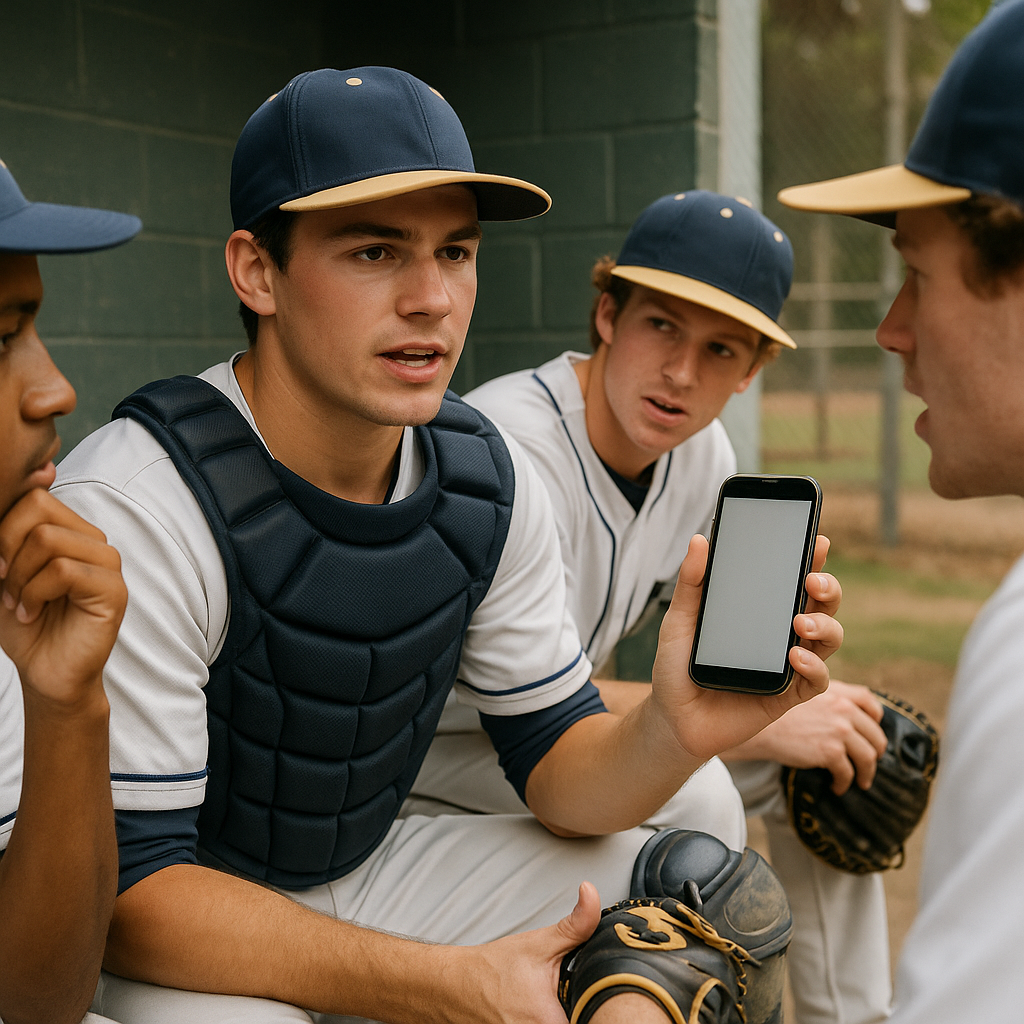
Watch a high school dugout and you'll hear phrases that sound like they came off a pro scouting sheet: "He can't get to velocity in," spin plays up, he's late, stay hard. Ten years ago, most of that talk would've stayed at the college or pro level. Now it trickles down because kids are watching big-league breakdowns, coaches are sharing clips, and everyone has a vocabulary for stuff like tunneling and chase.
That shift matters because a catcher isn't only managing a pitcher anymore. He's managing information. In the old rhythm, you'd call what you trusted and adjust if the hitter showed you something. In the newer rhythm, you're expected to start the at-bat with a plan: how you're going to use a fastball at the top of the zone, when you can steal a strike with a backdoor breaking ball, whether the changeup is a get-me-over or strictly a chase pitch. That's sequencing, but it's also decision-making under a lot of noise.
When I'm working with young catchers, I can usually tell who feels crushed by this expectation. They over-call the smart pitch, the one that sounds like baseball IQ, and forget the one their pitcher can land for strike one. You'll see it in the glove target too. The target gets fidgety. They pull it late, like they're still deciding. Pitchers hate that. So do umpires.
One practical way to make the history make sense is to separate two roles that got mashed together over time: receiver and caller. Receiving is body control and glove work. Calling is pattern recognition and knowing your own pitcher. Scouting language blurs those roles, and kids start thinking the job is to sound clever. It's not. It's to get the next pitch executed. When you frame it that way, you give them permission to build sequencing from what they can command today, not from what a broadcast says should happen in a perfect at-bat.
PitchCom and wristbands: who's calling it now?
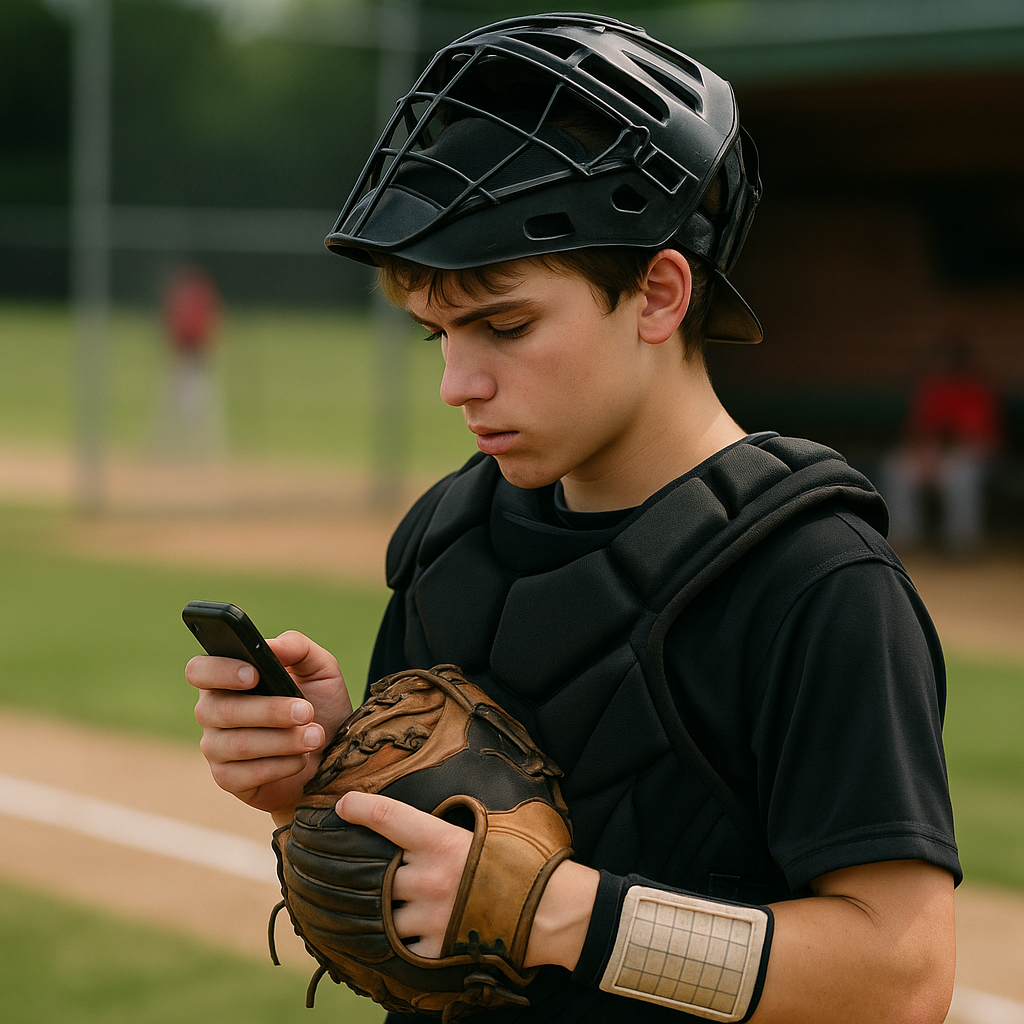
This is the part nobody says plainly to a young catcher: the position is in a tug-of-war over who owns the sequence. At the top level, technology like PitchCom can move pitch selection away from visible signs. At lower levels, wristbands and dugout-driven calling can do the same thing, just without the electronics. Either way, a catcher can end up feeling like a waiter delivering an order he didn't cook.
I've caught bullpens where the pitcher is looking at me like, "Just tell me what you want," and I've also caught games where the coach is sending in every pitch and the catcher is basically a traffic cone with shin guards. Both environments create different holes in a kid's development. The first one can overwhelm a catcher who hasn't learned how to build a sequence. The second one can produce a catcher who receives well but doesn't know why the slider was the choice there, or what to do when the plan gets punched in the mouth by a hitter who adjusts.
If you're trying to develop sequencing as a skill, you can't ignore the historical drift toward outside control. The older stereotype is the catcher as field general. The newer reality is shared control: sometimes pitcher-led, sometimes catcher-led, sometimes bench-led, sometimes pregame-card-led. So the skill isn't just pick the right pitch. It's knowing when to take ownership and when to stay synced.
A drill I like (and you can do it in a normal bullpen with a bucket of balls) is to run three short innings of 6 to 8 batters in the catcher’s head. First inning: the pitcher picks every pitch, catcher only sets targets. Second inning: catcher calls everything, pitcher can shake once per batter. Third inning: someone off to the side (coach or another catcher) calls it, and the catcher has to predict the next call before it comes in. When you rotate control like that, kids start noticing what never changes: getting strike one, reading the swing, and not calling a pitch their pitcher can't throw today. That's the thread connecting old catching to modern catching, even as the gadgets and systems keep shifting the spotlight.