
In small-town sports, rivalry shirts are a way to show which side you're on, signal that you know the local history, and claim your place in the crowd. That's why a shirt printed for one Friday-night matchup can disappear faster than a generic team sweatshirt. The shirts that sell best often capture something specific about the rivalry, such as a local joke, a memorable game, or a detail that people on both sides immediately recognize.
Why Local Rivalry Shirts Sell So Fast
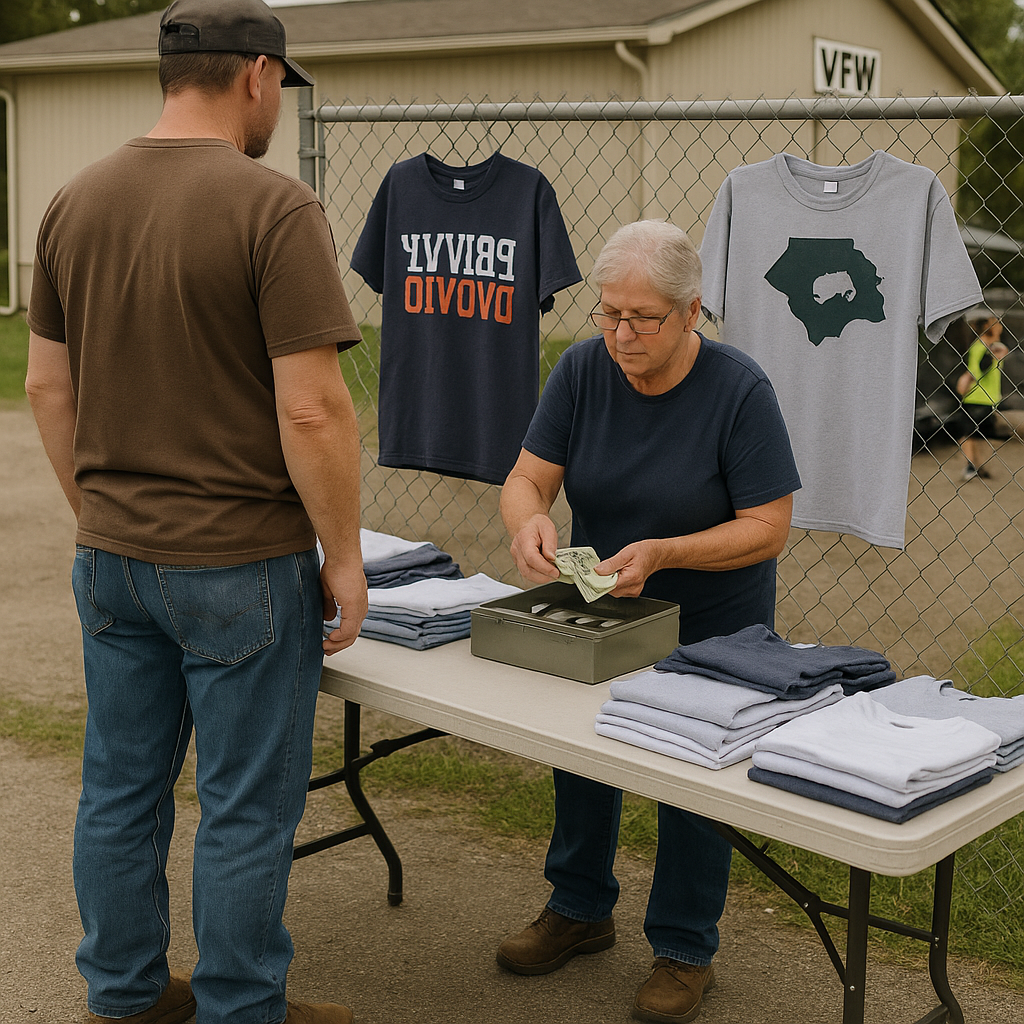
Local rivalry shirts can quickly take off at a small-town game. I once saw a seller who had set up a folding table outside the VFW with a handful of homemade designs, all tied to that week's matchup. These shirts are usually designed around the rivalry itself, which gives people a reason to buy them before kickoff.
The connection to the week's game is also what lets local sellers change designs quickly. A cold forecast might mean more long-sleeve shirts, while a player injury can turn "next man up" into the phrase everyone wants to wear. The seller responds to whatever fans are talking about that week.
Local sellers also have something large online retailers don't: a direct connection to the community. Buyers may know the person who printed the shirt, recognize the joke on it, or remember the game that inspired the design. Even a flawed shirt can become part of that history.
That's what makes rivalry merchandise different from ordinary team gear: it captures something specific about the matchup while the rivalry is still fresh.
Why Fans Customize Old Rivalry Gear
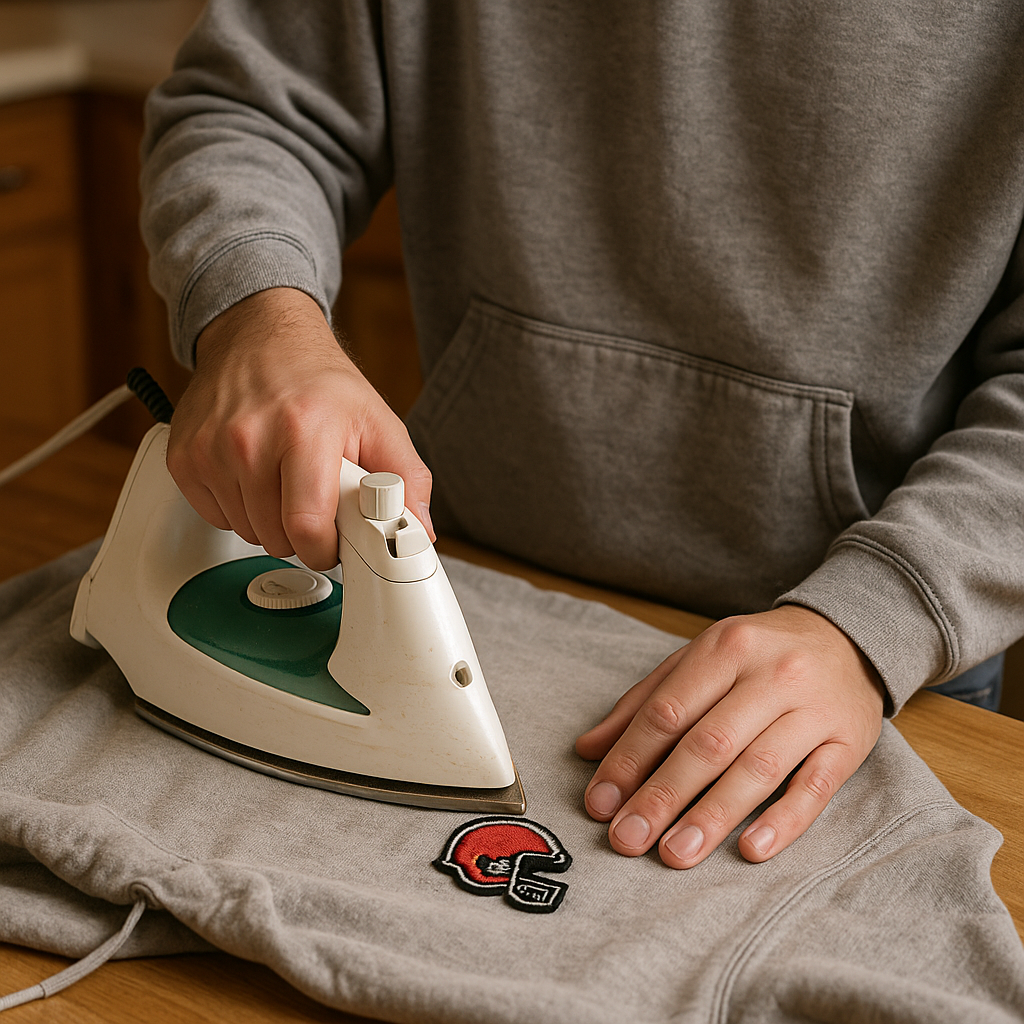
There are two kinds of people on rivalry week: the ones who buy something new, and the ones who show up in the same faded hoodie they've had since high school but still want to make it feel different for the big game. That's where a simple iron-on patch comes in. Adding a small embroidered helmet, team initial, or mascot to an old sweatshirt can give it a new look without buying another piece of clothing. The best local patches are often deliberately simple, with designs that look like they could have been made years ago. The worn-in, homemade quality is part of what makes them feel like rivalry gear rather than ordinary team merchandise.
If you iron on a patch, follow the manufacturer's instructions rather than treating one timing as universal. Heat, pressure, and application time vary by patch and fabric. In general, use a heat-safe surface, protect the patch with a cloth, avoid steam unless the instructions specifically call for it, and check the garment's care label first. Cotton and denim are generally better candidates than heat-sensitive synthetics. For a piece that will get heavy use, sewing around the patch adds durability.
When using a household iron, turn off the steam, preheat the fabric as directed, and apply steady pressure for the recommended time. Let the patch cool before handling it, and wait the recommended amount of time before washing the garment.
Why Local Inside Jokes Make Rivalry Shirts Special
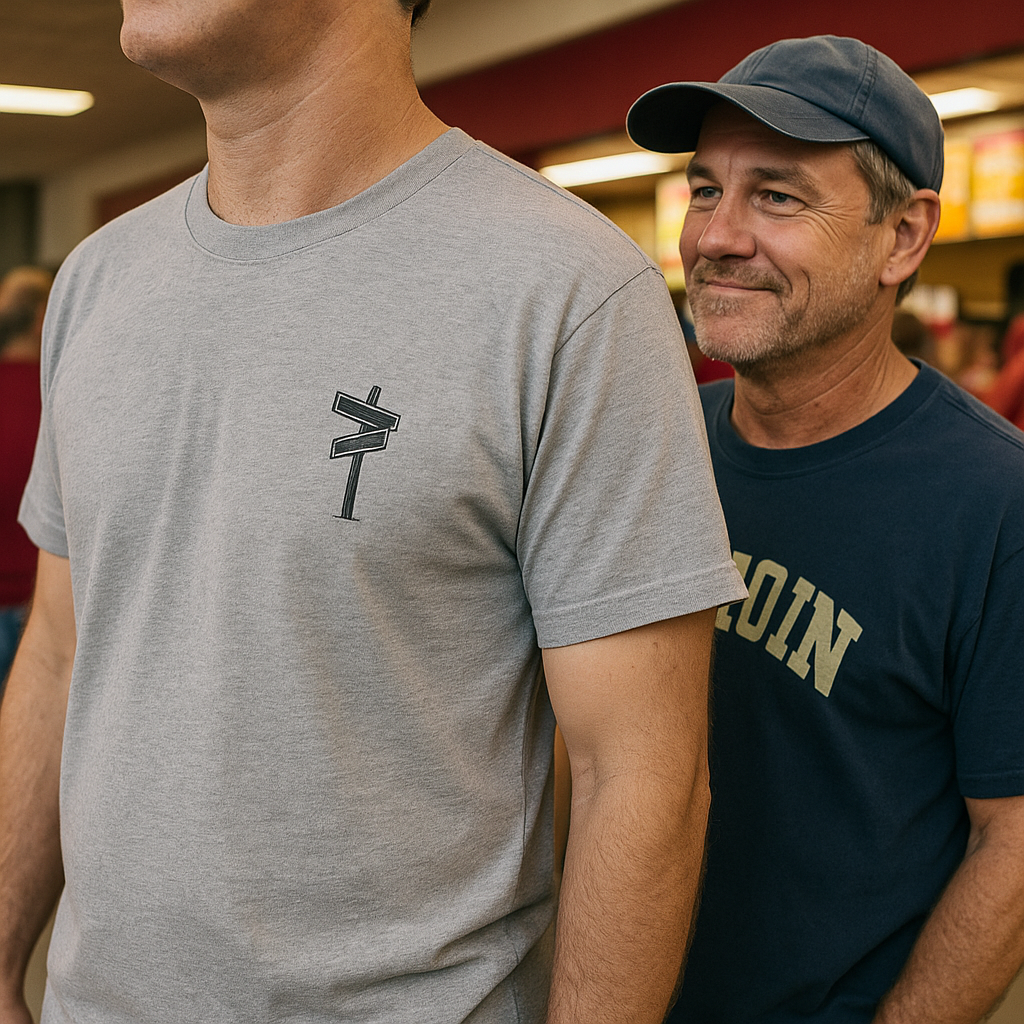
Some rivalry shirts make sense only if you know the local story behind them. In my area, one of the more popular designs was a plain gray tee with a small street sign printed on the chest. The sign referred to an intersection where the visiting team's bus once got stuck trying to turn around, a story that people in town still remembered. The specificity lets the rivalry show up outside of game day because the merch carries a memory.
Designers who are from the town (or at least hang around the diner long enough to hear the stories) pull details big brands would never touch. I've even seen a shirt built around a misspelling that ended up on a banner one year.
The best rivalry merch doesn't always have to be hostile. Sometimes the joke is enough to remind both sides of the history they share.