
A dry-erase board, a cheap timer, and one rule about Mondays kept our kids playing two sports without melting down.
Run a 12-minute skills swap at the end of practice
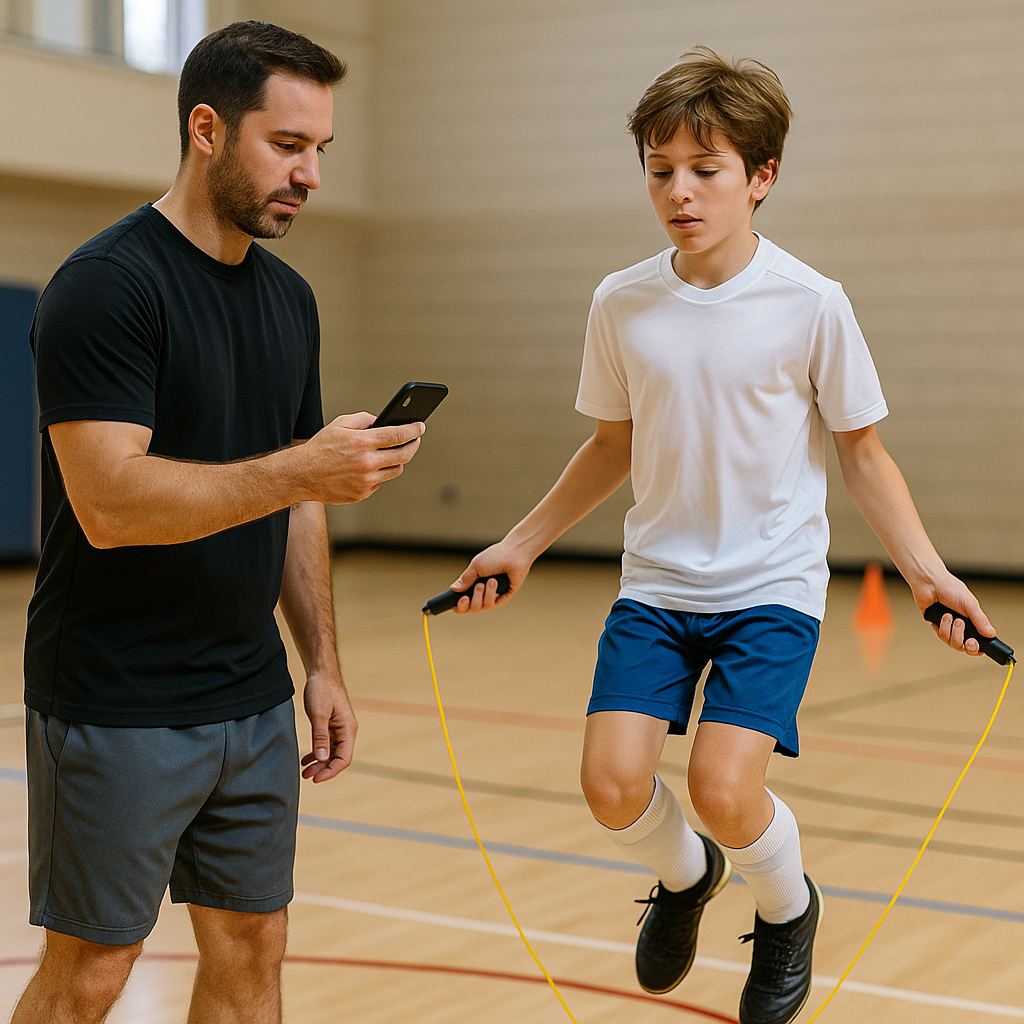
Most coaches try to bolt cross-training onto the week as an extra workout, then everybody wonders why the kid looks cooked by Thursday. The sneaky fix I've used with teams (and with my own kid's spring overlap) is a tight 12-minute add-on at the end of the main practice. Not a conditioning finisher, not a lecture. A skills swap. I set a phone timer for 12 and we do two blocks: 6 minutes of something borrowed from the kid's other sport, then 6 minutes of something that plugs a common hole for this sport.
Examples that translate cleanly: soccer kids do a 6-minute jump-rope rhythm block (nothing fancy, just two-feet, then alternating, then side-to-side) because their feet get sharper without extra pounding. Baseball kids do 6 minutes of wall-ball with a tennis ball, glove hand only, because their eyes and hands speed up and it doesn't mess with throwing volume. Basketball kids do a short ladder pattern (in-in-out-out, icky shuffle) because it feeds defensive footwork without a single sprint. Then we flip it back: a tiny dose of the sport we're in, but on purpose. For volleyball, it's 6 minutes of landing and stick, because the knees don't care that the scoreboard does.
Here's what makes it work in the Sports Extras sense: it fits inside the practice environment you've already got. Cones are already out. A speed ladder lives in the trunk. Tennis balls are in every coach's bag. Kids leave feeling like they got a bonus, not like they got assigned homework. And because it's capped at 12, they don't start dragging their feet halfway through. If you're worried it'll turn into chaos, assign one station leader per group and keep the menu the same for two weeks. The consistency is the point. You want the kid who plays multiple sports to feel like their "other" sport is an asset, not a scheduling problem.
Use the whiteboard draft so overlaps don't get political

Multi-sport kids don't usually quit because they hate the games. They quit because the adults make the overlap weird. I've watched it happen in real time: the kid walks into training with a backpack, a second jersey stuffed in the front pocket, and that look that says, Please don't make me choose in front of everybody.
The simplest tool I've used to keep it from turning into a loyalty contest is a dry-erase whiteboard and what I call the draft. It lives in the garage during overlap season. On Sunday night, we draw the week as columns and write every practice or game in its exact time slot. Then we draft three non-negotiables for the kid, not for the teams: (1) one full rest day, (2) one skill day that's low impact (shooting, stick work, form work), and (3) one day where they show up early enough to be part of the warm-up, not the kid who slides in late and apologizes for existing.
After those three are down, we fill in the rest like Tetris. If two events collide, we don't argue feelings. We use a simple tie-breaker I've found kids will accept: pick the one where their absence hurts other people more. That usually means games over practices, or the day they're the only catcher, or the day they're running the relay leg nobody else can. If it's truly even, we rotate it week to week and write that rotation on the board so it doesn't get renegotiated every time someone texts.
Why does this belong in Sports Extras? Because it's the off-field gear and structure that lets the on-field benefit happen. Cross-training isn't magic if the kid's sleeping 6 hours and eating dinner in the car. The board makes the week visible. You can see the red flags: three late nights in a row, zero strength work, a Saturday doubleheader followed by a Sunday tournament in the other sport. When I see that, I don't preach about balance. I erase a box. Then I tell the kid, "We're buying back your legs." They laugh, but they also show up Monday with a little more pop.
The $10 jump rope that fixes awkward acceleration
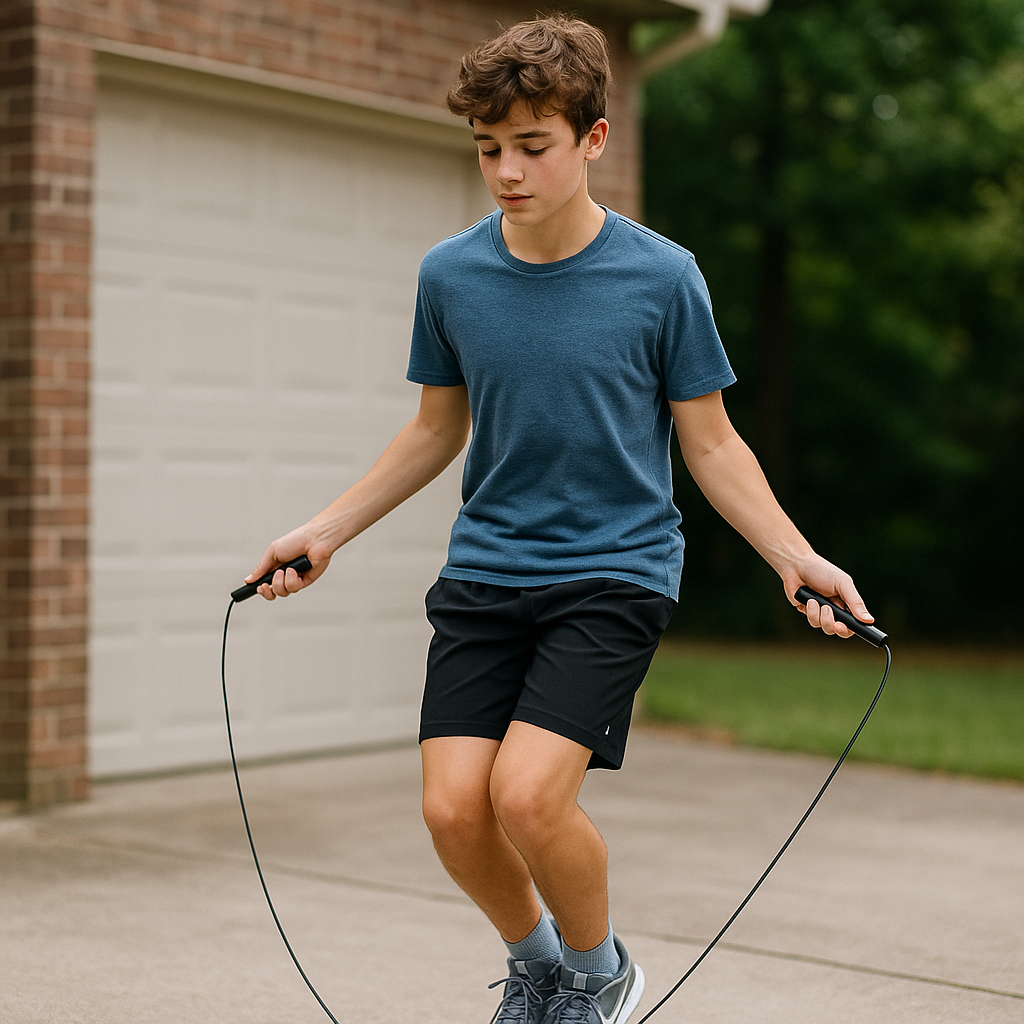
I've got one piece of gear I recommend to multi-sport families who don't want another complicated plan: a basic speed jump rope. Not a weighted one, not the fancy Bluetooth one. The kind you can find online for around $10. I keep two in my trunk because someone always forgets theirs, and because the driveway is a better coach than I am when a kid's acceleration looks like a baby deer situation.
Here's the cross-training win: jumping rope teaches timing, stiffness through the ankle, and quick ground contacts without adding a bunch of miles. Those are universal. They show up in a soccer kid's first three steps, in a basketball player's closeout, and in a baseball player's first move out of the box. And it's a rare drill that doesn't care what sport your kid claims as their "main" one. The rope humbles everyone equally.
The way we do it is simple and repeatable, which is why it sticks. Three rounds:
- 40 seconds two-foot jumps, 20 seconds rest
- 40 seconds alternating feet (think jog-in-place), 20 seconds rest
- 40 seconds side-to-side hops over an imaginary line, 20 seconds rest
That's four minutes. If the kid's in a heavy week, we stop there. If they're fresh, we do one more set and call it eight minutes. The cue I say every time is boring on purpose: small jumps, quiet feet, wrists do the work. When it clicks, you can hear it. The rope stops slapping the concrete like a wet towel and starts making that clean, fast zip.
This also solves a real Sports Extras headache: you can do it next to the field while a sibling finishes practice. No cones. No facility. No coach needed. If the rope is too long, shorten it using the built-in adjustment or tie a simple overhand knot near each handle. Don't chase perfection. You're after rhythm and contacts. When a kid plays multiple sports, rhythm carries over more than you think, especially when they're tired and their form wants to fall apart.