
Three hidden costs that land right between siblings: the spare-room shuffle, the car-seating math, and the quiet resentment nobody budgets for.
The bedroom shuffle nobody budgets for
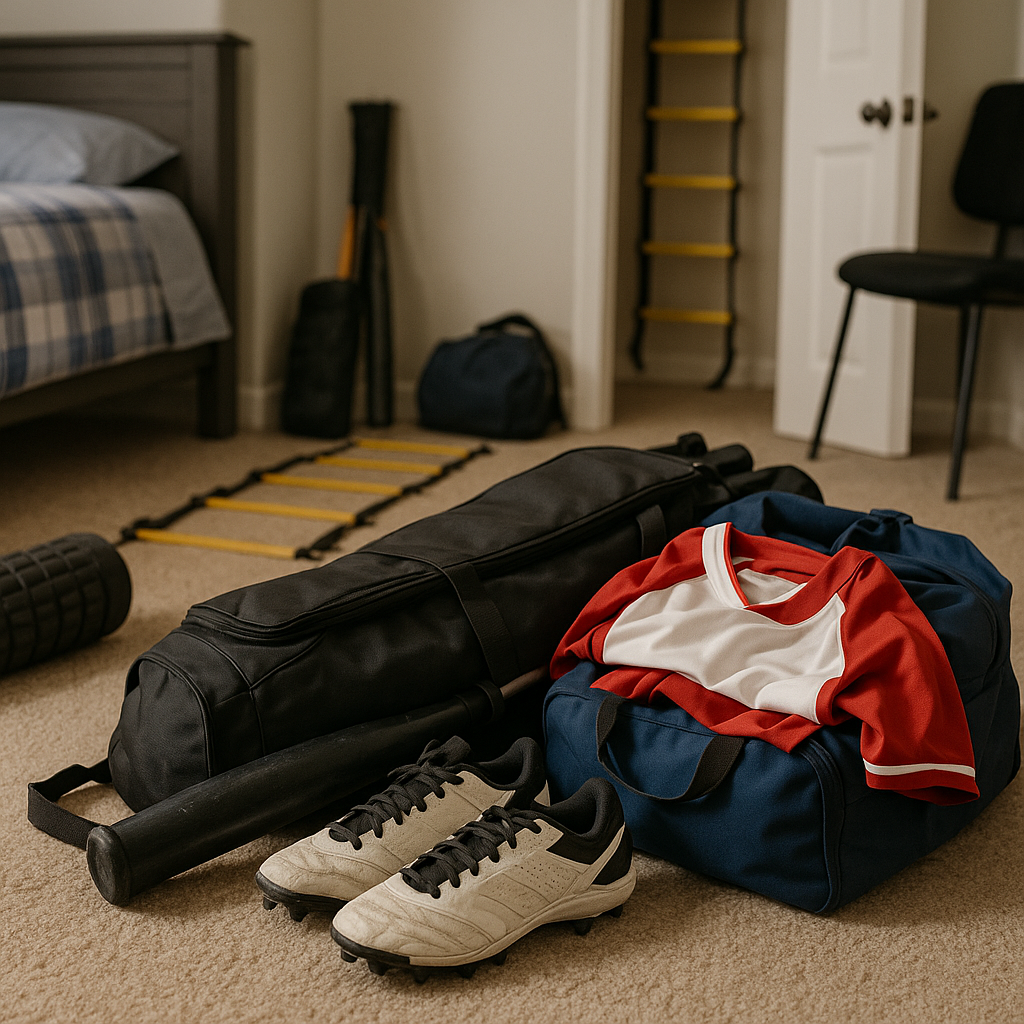
The scholarship chase can create a sneaky space problem: sports gear expands, and shared areas can start shrinking around it. It starts innocently. A second pair of cleats because the first pair is "for games." A bat bag that used to hang on a hook now needs floor space because it weighs as much as a freshman. Then the off-season speed ladder, the rolling foam roller, the extra set of uniforms for summer ball, and the duffel that lives half-packed so you can bolt for a weekend showcase with four hours' notice.
In our house, the cost wasn't the equipment itself. It was what the equipment did to the sibling map. One kid's room turns into the staging area because it's closer to the garage, or because it's got the bigger closet, or because coaches want video, and that's where the only quiet corner for a tripod ends up. The other kid can start feeling like their belongings are always the ones expected to move. Their art bin gets shoved under the bed. Their posters come down, so a pull-up bar can go up. They may become less eager to invite friends over when sports gear regularly takes over the room.
If resentment is starting to build, the night before an away game can make those small tensions easier to notice. The athlete is packing tape, cinching straps, and checking that the spare laces are in the side pocket. The sibling is hunting for a charger that wandered into the bat bag abyss. And nobody says it out loud because everyone is tired, so it comes out sideways: eye rolls, door slams, "Must be nice" comments.
What helped us wasn't a speech. It was a dumb, physical boundary. We picked one storage zone that belonged only to athletics: a single heavy-duty shelving unit in the garage, plus one labeled tote per season. No gear piles in bedrooms, no uniforms draped over someone else's chair, no cleats drying on the heat vent. When the tote is full, something has to leave. The goal is simply to keep one child's sport from taking over space that belongs to the rest of the family.
Backseat math, or why the middle kid keeps getting squeezed
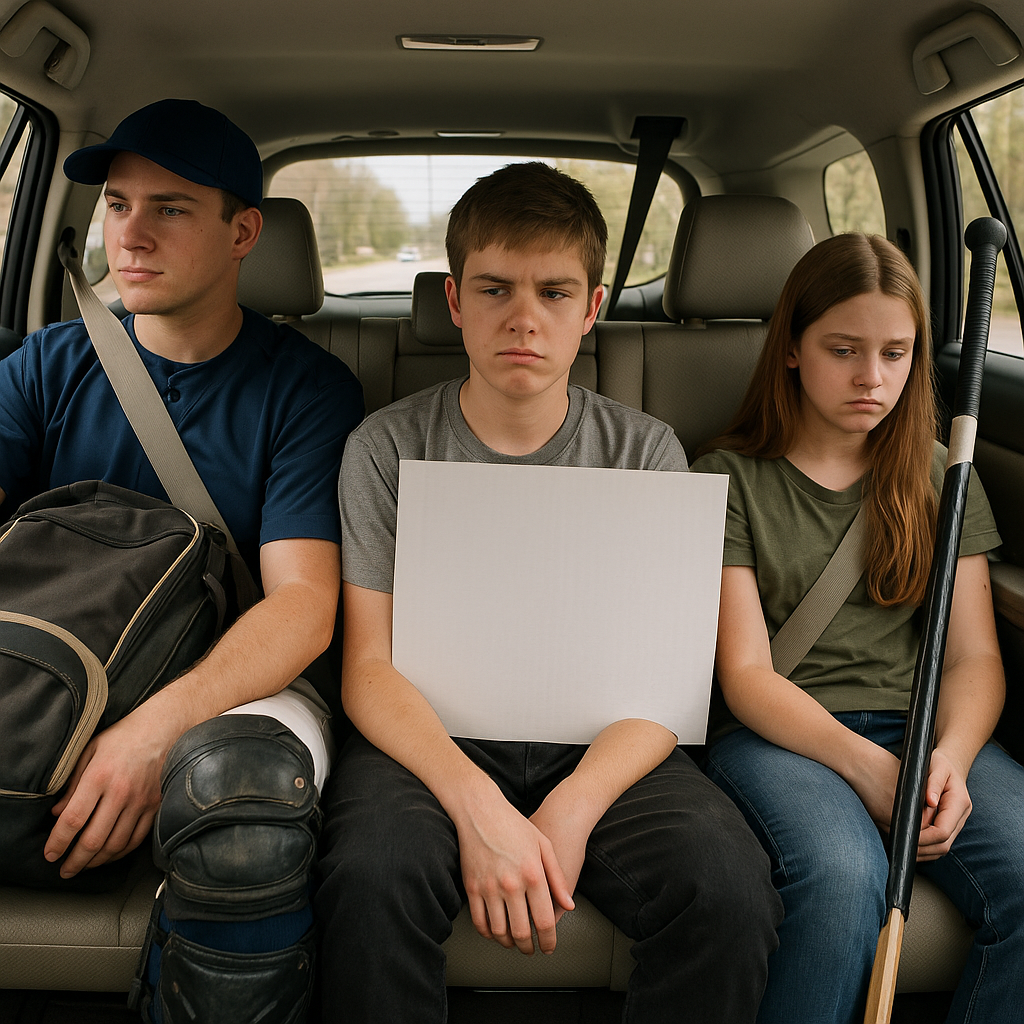
People talk about travel costs like it's just hotel nights and gas receipts. The more irritating expense is the vehicle compromise you keep paying for, week after week. A catcher bag doesn't care that you also have two other kids with long legs. A goalie stick doesn't shrink because someone has a science fair board. And when you do the math and realize you need a bigger SUV or a roof box to survive the spring schedule, the sibling who doesn't play the priority sport feels it immediately.
The argument may look like it's about comfort, but repeated seating compromises can also start to feel like a question of whose needs come first. The athlete gets the captain's chair because they need space for a knee brace. The sibling gets the squished middle seat because the bat bag has to lie flat, and because it's only 20 minutes. Except it's never only 20 minutes. It's Tuesday practice, Thursday lift, Friday game, Saturday doubleheader, Sunday training session, plus a two-hour haul to a showcase where you're eating drive-thru fries in the parking lot because check-in is at 6:45 a.m.
We had one kid who could recite, with scary accuracy, how many times they ended up in the middle seat that month. Not because they're dramatic. Repeated small compromises can become especially noticeable when a sibling feels their needs are getting less attention.
What fixed the vibe more than any pep talk was making the seating plan a written rule. Ours was taped inside the glove box like a mini depth chart. If you're in uniform, you still don't automatically get the best seat. We rotated by day of the week, and we had a separate rule for messy gear: cleats go in a plastic bin with a lid, and that bin goes in the cargo area, not on anybody's lap. When we needed extra space, a properly installed hitch-mounted cargo carrier gave the gear somewhere else to go without crowding the passenger area. Any external load should be securely fastened and kept within the vehicle and carrier's rated limits.
Bonus: the athlete stopped treating the car like their personal locker room. When your sweaty stuff has a designated bin outside the cabin, you lose the temptation to fling it at your brother's feet and call it team smell.
The calendar debt siblings pay in favors

The hidden cost nobody warns you about is the favors economy you accidentally build. Once recruiting season ramps up, the schedule stops being a normal family calendar and turns into a stack of exceptions: strength training before school, tutoring after, a coach's call squeezed into dinner, and weekend tournaments that swallow the only open days. The sibling can end up becoming the flexible one. They get asked to ride with another family. They get dropped off at a friend's house early. They get picked up late because you're stuck in a parking lot talking to a travel coach about exposure while your phone buzzes with, "Are you coming or not?"
Over time, repeated compromises to the schedule can make one sibling seem unusually independent or low-maintenance. Parents should still check whether that child is quietly giving up activities or asking for less because someone else's sport dominates the family calendar. That pattern can also feed resentment if one child's needs seem to get accommodated automatically.
We noticed it during the dead time that nobody talks about, the hour between the JV game ending and varsity warmups starting. The athlete is on the field, dialed in, getting last swings in the cage. The sibling is sitting on cold bleachers with a half-dead phone, watching families cluster around the kid in uniform. The frustration may have less to do with the sport itself than with feeling like the family's attention keeps following the kid in uniform.
What helped us was keeping a visible record of the compromises, not to assign blame but to make the pattern harder to overlook. A shared note can make repeated compromises visible. If one child's activity displaces another's plans, parents can record it and make a point of giving the affected sibling meaningful time or choice later. A ride to their friend's house on a night we were tired. First pick of the front passenger seat for a week. Their choice of where we ate after a game (not a postgame nutrition lecture, just tacos).
This kind of tracking feels silly until you try it. Then you realize how many small debts stack up in a semester, especially when you're chasing highlight clips, emailing coaches, and living by the school gym's posted schedule. The note doesn't create fairness, but it stops the sibling from being the only one doing the math in their head.