
A simple wearable check and two follow-ups that I use to adjust training when an athlete looks off.
The 90-second readiness screen
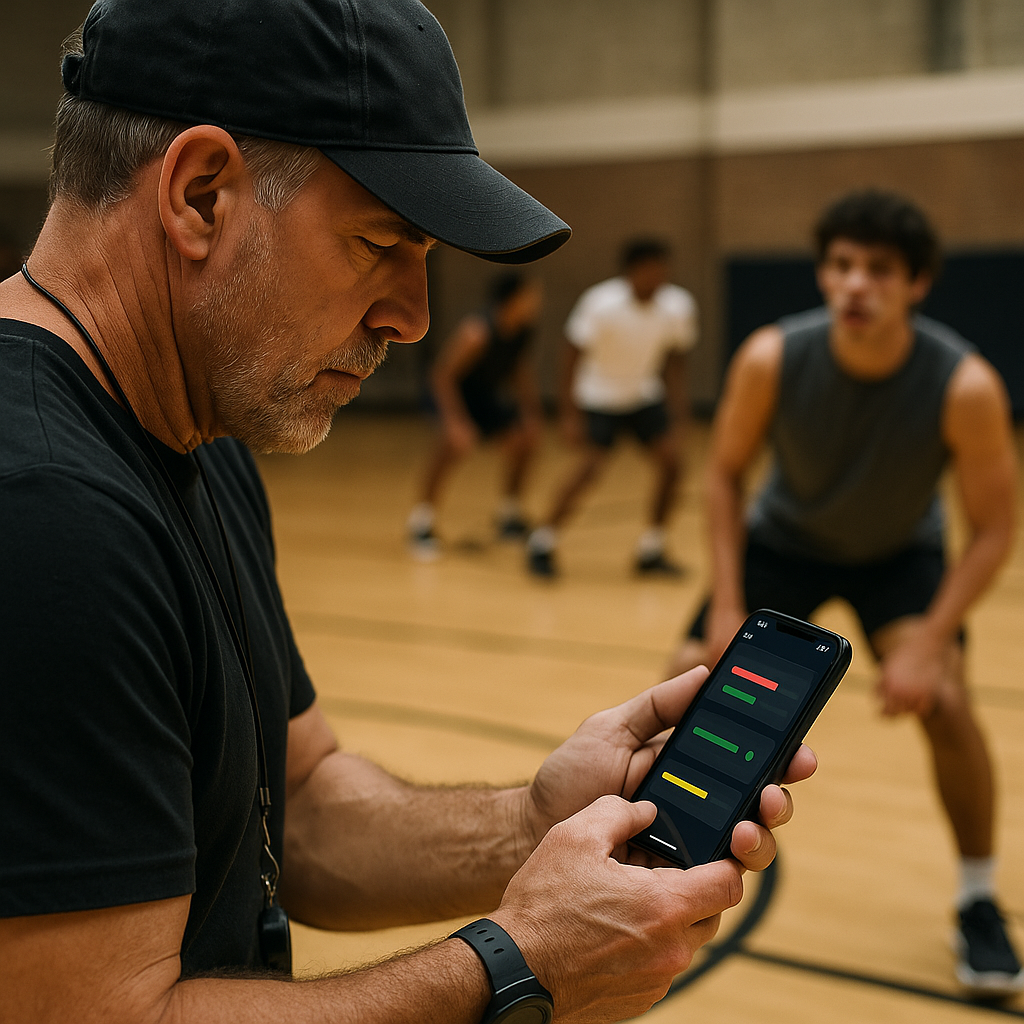
We started using wearables for one reason: I was tired of finding out a kid was cooked when the first set of gassers went limp. The most useful change has been a simple pre-practice check that gives me another signal to consider before we start. I keep it simple. I review the readiness or recovery data from the devices our athletes use and look for three things: a meaningful drop from that athlete's baseline, a string of bad nights' sleep, and a resting heart rate noticeably different from that athlete's usual pattern.
The trick is I don't compare kids to each other. A sophomore lineman and a varsity winger won't necessarily have the same numbers, so I compare each athlete with their own usual patterns. What matters to me is how far an athlete has moved from their usual pattern. If a kid shows a clear dip alongside poor sleep, I use that as a reason to check in and see how they're feeling that day.
Here is how it plays out in the gym. I flag names before the whistle, then I catch them during dynamic warmups while everyone's messing with mini-bands and foam rollers. I ask one question: "Anything different this week?" If they say finals, a new job shift, or they got home from an away game at midnight, that lines up. If they say nothing and the numbers still look off, that's when I watch how they move in the first five minutes. If their movement looks different during the first few minutes, I may move them into a modified workload.
The unexpected bonus is that it keeps parents and admin calmer when you have to pull back. When I can say, plainly, "His recovery markers have been trending down for three days and his movement looked flat today," it reads like coaching. Sometimes an athlete still has a great day despite numbers that look off. The screen is one signal that prompts me to look more closely before deciding how hard that athlete should train.
Using wearable data to track training load
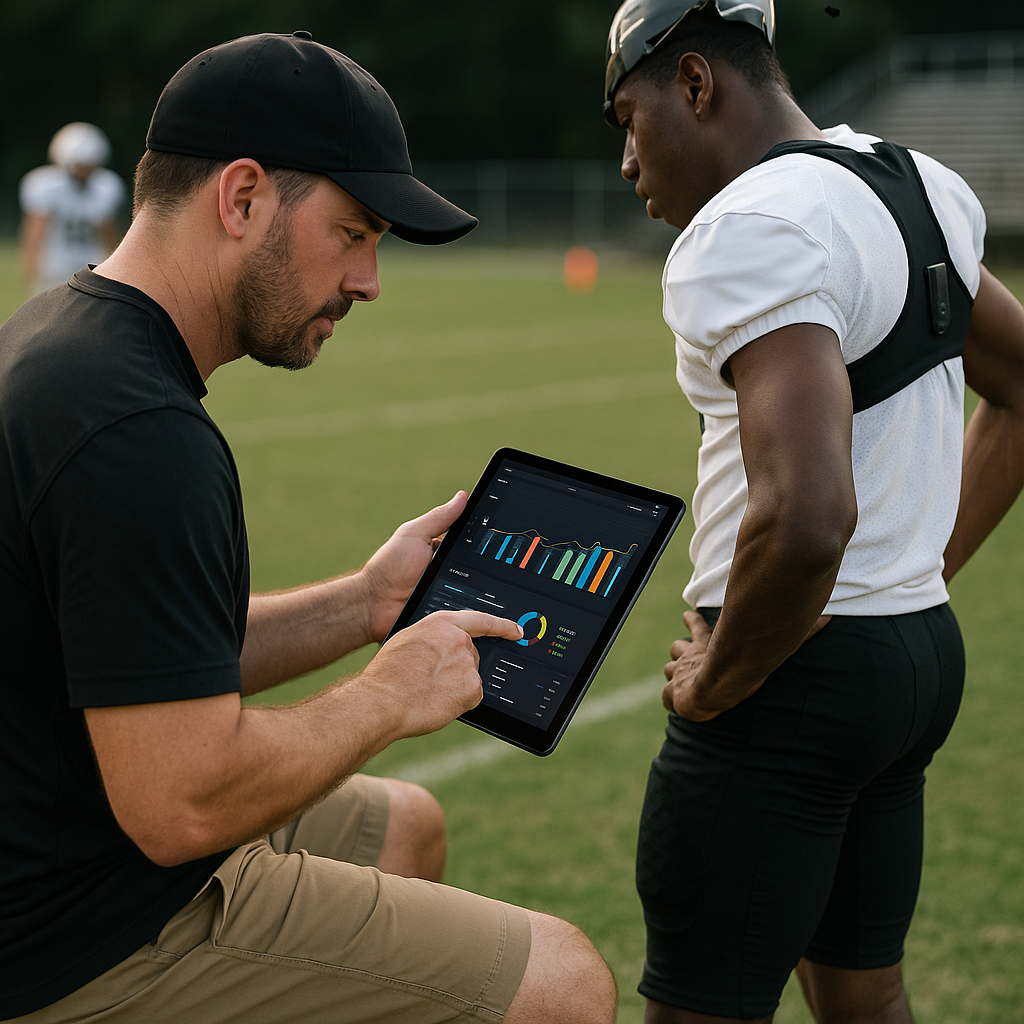
In a high school program, the schedule is never clean. A kid is a corner on Friday, then the JV coach borrows him for reps on Tuesday, then suddenly he's returning kicks because somebody's ankle is taped up. The old way to manage that was a clipboard and somebody's memory. The new way, with GPS wearables, is that your workload can be tracked without you having to pretend you saw every rep.
I'm talking about tracking each athlete's high-speed running and acceleration exposure over the course of a week. Depending on the system, the dashboard can show measures such as distance, speed, and acceleration. Those categories can help coaches monitor changes in training exposure. Large changes in running exposure can increase an athlete's physical demands, which is why I track high-speed running and acceleration trends rather than looking at a single session in isolation. The wearable does not prevent an injury, but it can help you see when an athlete's workload is changing.
Here's what I do with that information in-season. If a player blows past their usual sprint exposure in a game (it happens in rivalry weeks when everything turns into a track meet), I don't “make up” conditioning on Monday. Monday becomes movement quality, tempo, and skill. Tuesday is when I decide whether they get full-speed routes or if we keep them on submax reps with clean footwork. Meanwhile, a kid who barely played Friday might need speed touches so they're not going from zero to chaos when they're called up next week. Not all load management means reducing work. Sometimes it means adding controlled speed work so the athlete is not going from very little exposure to full-speed work in competition.
And yes, you still have to coach. Kids forget to charge units. Someone will leave a vest in the locker room. But even with imperfect data, the trend is useful because it gives us another way to review what the athlete has actually done. When a coach says, "He looks fine," I can pull up the week view and show that the athlete has already hit their typical acceleration count by Wednesday. That gives us a clearer basis for deciding how to structure the rest of the week.
Using movement changes as a reason to check in
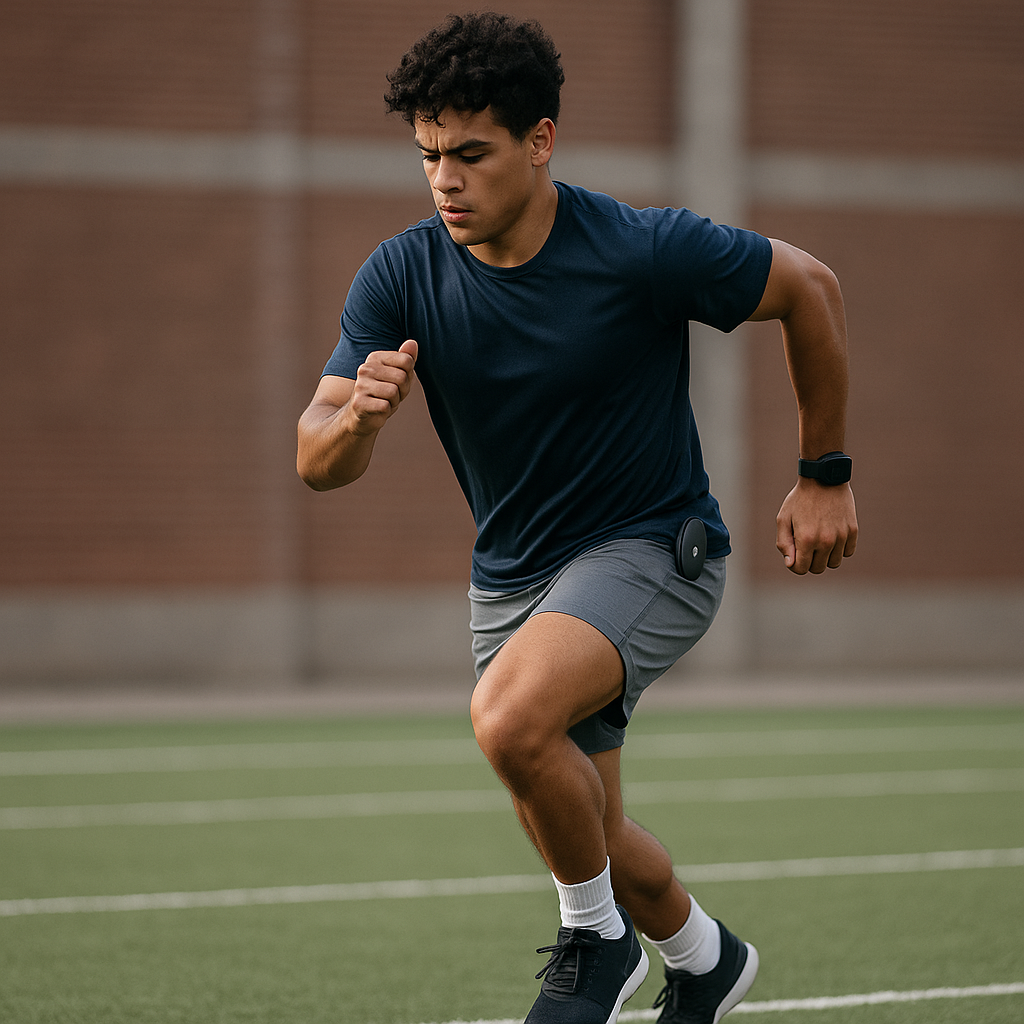
Not every school has force plates or a full athletic training suite, but a surprising number of kids already show up with a running watch, a pod, or some kind of sensor because wearable technology has become more common among athletes. When there's a Stryd pod in the mix, or a watch that tracks running dynamics, one useful thing to monitor is whether running or movement patterns have changed after a game. A change in movement may give me another reason to check in with the athlete.
This is the scene I know too well: Saturday morning lift, music up, kids acting as if nothing hurts, and a sophomore who took a helmet to the hip the night before is determined to prove he's not fragile. If you wait for him to tell you his groin feels tight, you'll be late. Instead, I look for the simplest symmetry clues the wearable will provide: stride-length imbalance, ground-contact-time differences (if available), or a sudden shift in where power appears. Then I pair the data with what I see during the first few warmup strides. Does he protect one side on the turn? Does he land more softly on one foot? Does he avoid opening his hips when everyone else is flowing?
If I see a meaningful change, I check in with the athlete privately. I pull him aside while he pretends to retie his shoes. I ask about one specific moment: "When you plant to cut off your left, do you feel anything grabby?" If he says yes, we adjust the day: no maximal sprinting, no aggressive lateral decels, and no bonus conditioning to prove toughness. If the athletic trainer agrees that continued activity is appropriate, we can shift to lower-intensity work such as cycling or controlled running. Then I tell the athletic trainer what I'm seeing so they can do their job.
A change in movement after an injury or hard contact is also worth checking, particularly if the athlete is favoring one side. Wearables are another source of information, but they work best when paired with what the athlete reports and what the coaching and medical staff observe.