
Three position-tuned warm-ups that turn sloppy first reps into game-speed habits before the whistle.
The Lacrosse Ball Hand-Fight Series (no gloves)
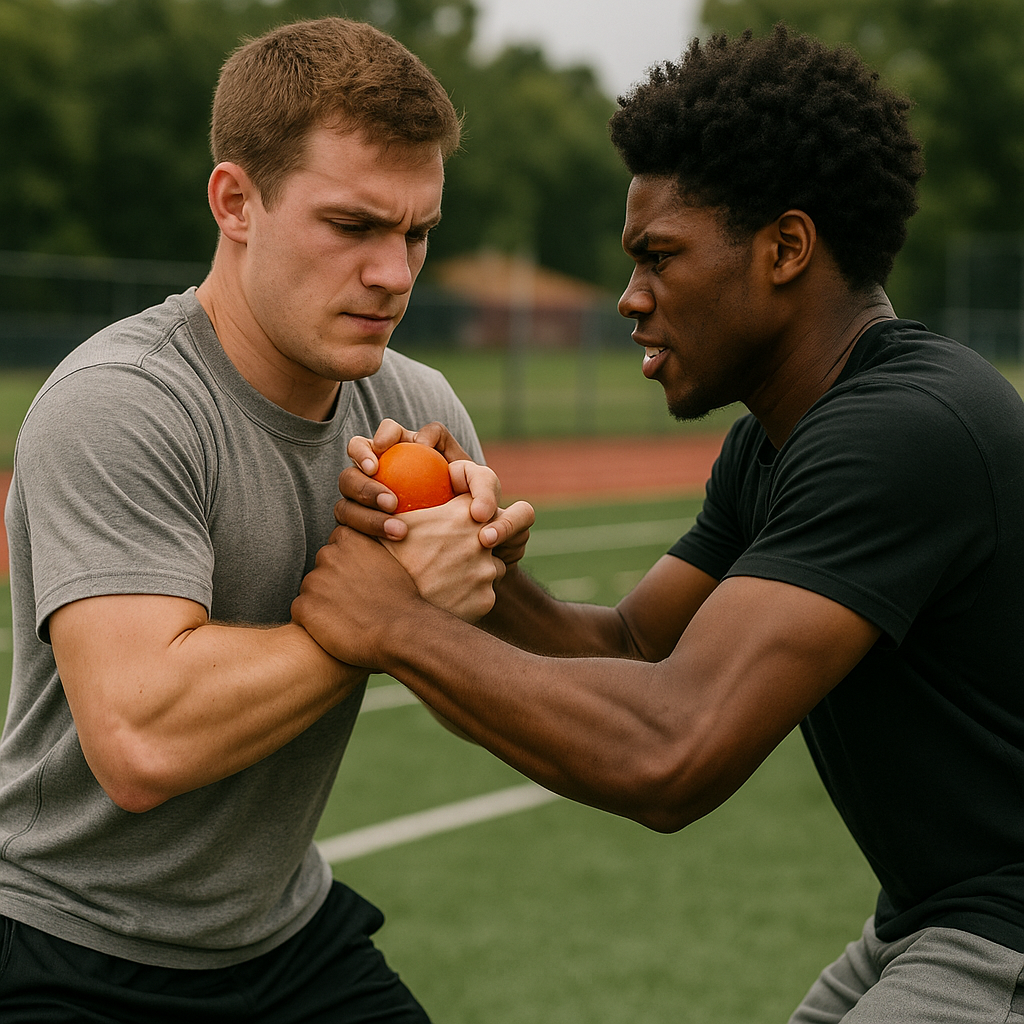
I keep a couple lacrosse balls in my pocket for warm-ups because they force honesty. A football or basketball lets kids cheat with surface area. A lacrosse ball doesn't. If your hands are late, if your wrists are soft, if you panic when someone gets into your space, that little rubber rock tells on you in about ten seconds.
We do this in pairs on the sideline, no gloves, and I tell them straight up: don't squeeze like you're trying to crush it. Hold it firm enough that it doesn't pop out when you bump, and keep your elbows in so you aren't windmilling. Partner A holds the ball at sternum height. Partner B has 15 seconds to pry it loose using only hand fighting and body position, not yanking the arm. Then switch. That first round is always ugly and that's the point. You see the receiver who can run routes all day but gets jammed and turns into spaghetti. You see the point guard who hates contact but needs to finish through a forearm. You see the wrestler who thinks everything is a rip-and-go and forgets to keep a base.
Then I layer it by position. Skill kids (WR/DB, guards, wings) do it with their feet alive: one hard step, replace hands, reset. Linemen do it wider and slower with a heavier stance, because their job is winning inches, not looking quick. For soccer and lacrosse kids, I make them keep their head up and call a number I flash on my fingers, because they love staring at the object and losing the field. By the time we hit the first real drill, the contact doesn't feel like a surprise anymore. The best part is how it changes the first scrimmage rep: fewer grabby holds, more clean hand placement, and a lot less whining about "he's so strong" when the issue was timing.
For linemen: 3-step strike prep on a painted line
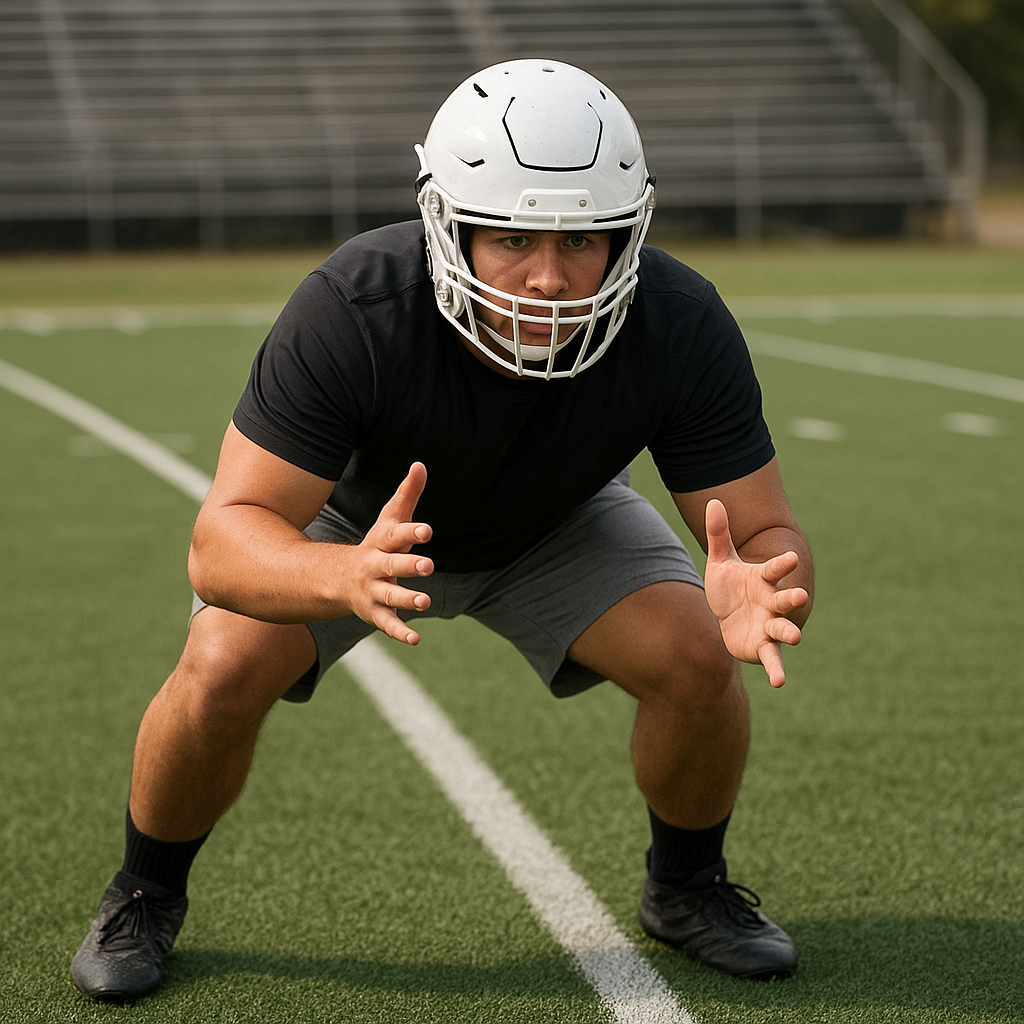
If I'm watching a Friday night line struggle early, it's usually not because they're weak. It's because their first two steps are different every rep. One kid's stepping under himself. Another kid's popping straight up because he's thinking about the hit instead of the ground. Warm-ups are where I fix that, and I do it with the least sexy tool on the field: a painted line.
Put toes just behind a yard line. Hands relaxed, not already clenched. On my clap, it's three steps only, then freeze. Step one is a short power step. Step two replaces and loads, like you're trying to stand your hips under your ribs. Step three is where the strike would happen, but in warm-up I don't let them strike anybody yet. They freeze and I walk the line. I check two things: are their feet still straddling the line (not crossing over), and are their shoulders still over their thighs (not drifting behind the heels)? When they freeze, they can't talk their way out of it. Their body is either in a position to move a defender, or it's not.
Once the freeze looks decent, we add the hands, but it's still controlled. Thumbs up, elbows tight, and I want the punch to stop on an invisible chest plate, not continue into a hug. If you let them full-speed collide here, the same bad habits win, just louder. For tackles, I cue a wider base and a slightly longer second step because they're living on the edge. For centers, I make the first step almost comically short because snapping already steals time and balance. For defensive ends or outside backers who rush, I keep it on the line but change the third step into a hip turn so they feel the corner without spinning off balance.
It doesn't take long. Two rounds of five reps is plenty. The giveaway that it's working is how quiet it gets: less stomping, less heavy breathing, more of that focused, annoyed look kids get when they're trying to make their body do one specific thing. And when we finally go inside run or pass pro, the first contact isn't a coin flip. Their feet already know where to go.
For skill players: the cone "stop-start" that protects your first cut
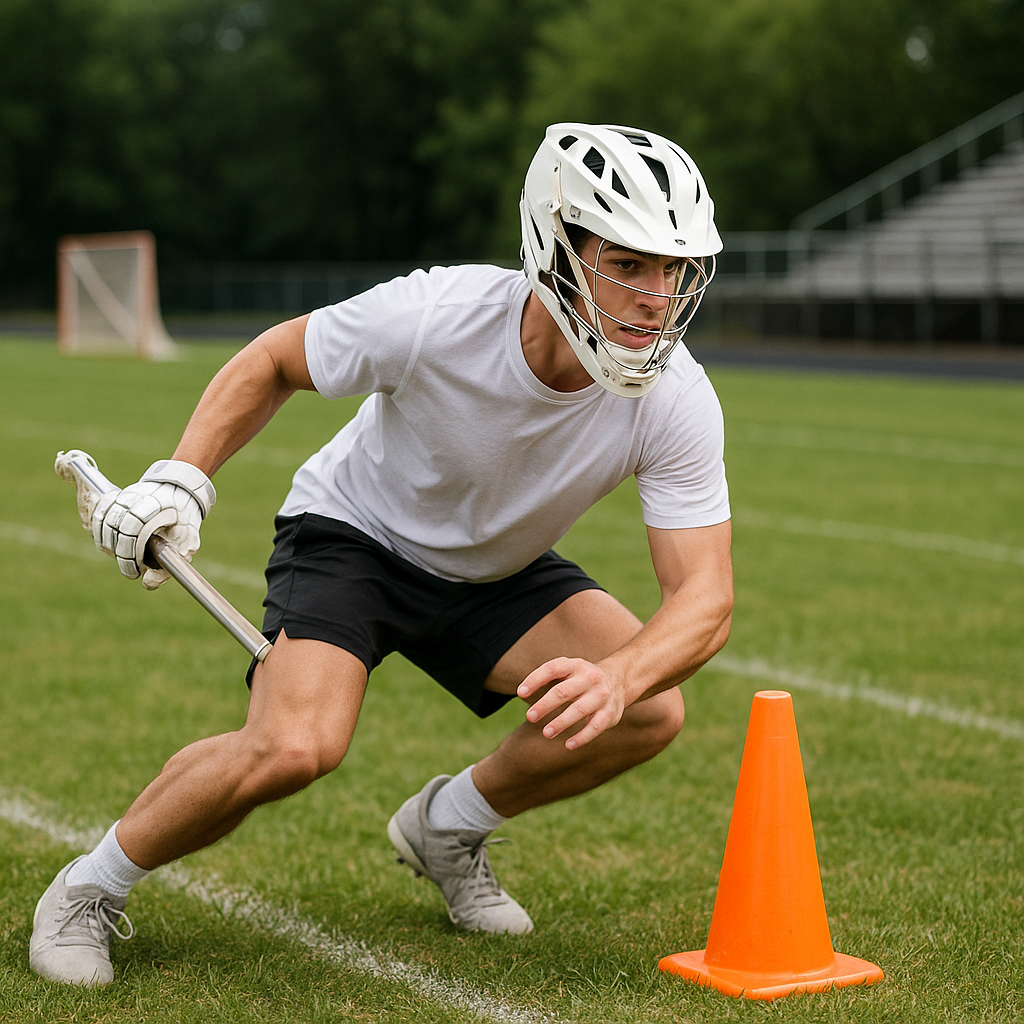
Most kids can sprint in a straight line while the adrenaline's high. The first cut is where the wheels come off. You see it in warm-ups if you look for it: they drift into the cone, their last step is a reach, and then they wonder why their ankle feels weird by the second quarter. So I run a stop-start series that looks boring from the bleachers, but it saves my skill guys from the classic early-game slip and the late-game limp.
Set three cones five yards apart in a straight line. Nothing fancy. The rule is simple: every time you hit a cone, you must stop under control, then restart on a specific cue. I use three cues in one set so the brain has to stay awake: (1) go means a normal restart, (2) a single whistle means open your hips and restart at a 45, and (3) a hand point means a hard lateral step then go. Receivers and DBs do it like they come out of a break: shoulders down, eyes up, and one violent plant step, not a shuffle parade. Basketball guards translate it immediately to a jab and go. Soccer wingers love it because it feels like a press trigger.
I coach the contact with the ground more than the speed. If their heel is slamming, they're braking too late. If their knees are collapsing inward on the stop, they're reaching and praying. I want them to stop with their feet about shoulder width, shin angled, and chest over the knee so the next step can fire without a stutter. And yes, I make them do a couple reps on their weaker side first. It forces the I only cut left kid to show himself before it matters.
We keep it short: two sets of six total starts. The payoff isn't that they look fast in warm-ups. It's that the first time a quarterback hangs a slant a little inside or a point guard gets bumped on a drive, the athlete doesn't need three extra steps to gather themselves. They can plant, re-accelerate, and stay on schedule, which is what the whole night runs on.