
Three tech habits that turn pitch sequencing from gut feel into something you can repeat under pressure.
Build your own hitter map between innings
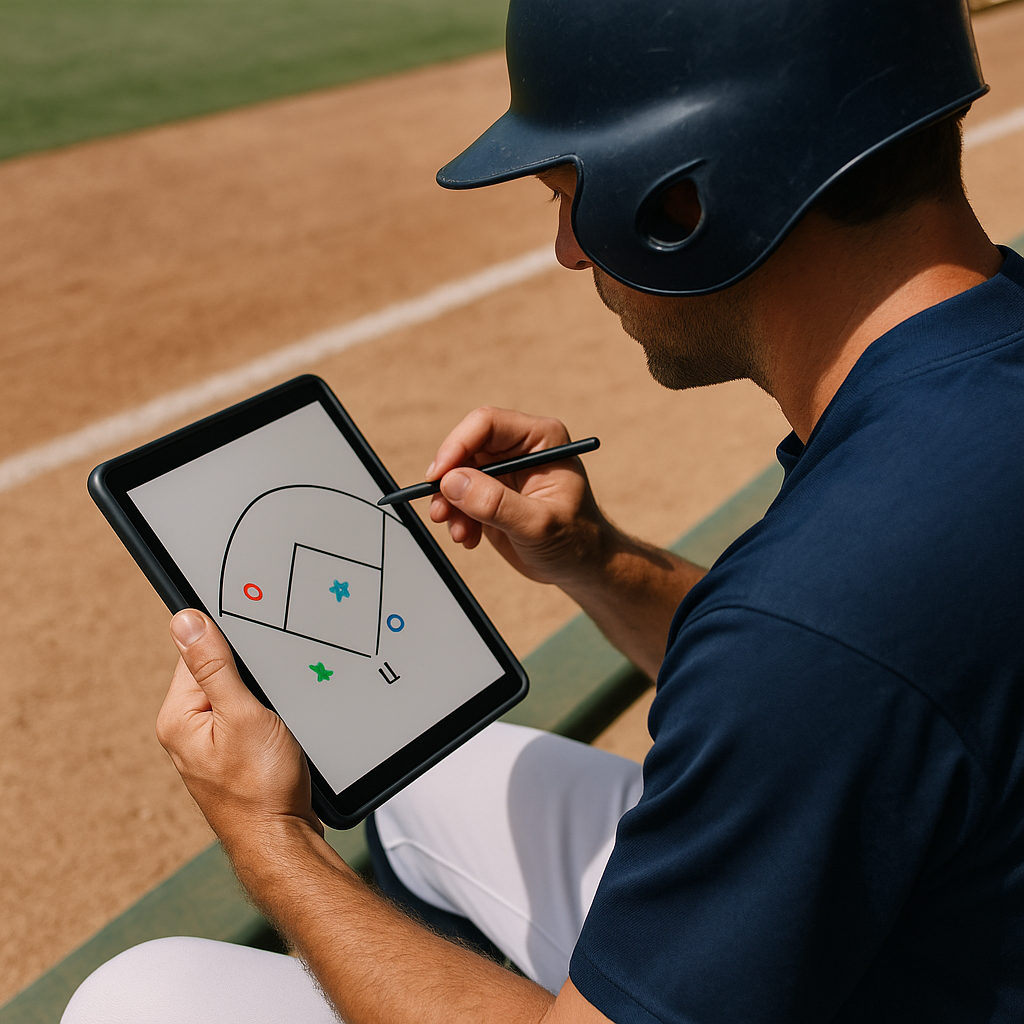
I used to think I could hold an entire lineup in my head: who was late on the fastball, who chased the slider, who stared at the first-pitch strike like it was a personal insult. Then you catch a doubleheader in July, the pitcher keeps shaking, the other team starts running, and your memory turns into mush right around the fifth inning.
The best upgrade I've made for pitch sequencing is embarrassingly low-tech, even though it lives on an iPad. I keep a blank field diagram in a notes app and I mark only what matters for calling the next at-bat: where contact was loud, where swings were late, and what pitch got the ugliest takes. Between innings, I take 30 seconds and draw three things per hitter, tops. A hard grounder through the 5-6 hole on a first-pitch heater? I dot it and write "1st-pitch FB." A foul ball that landed in the on-deck circle because the kid was late by a full beat? I mark "late" and circle it. A check swing on a changeup that still went 220 feet? That gets a star because it's telling you something about timing, not just outcome.
What this does in real games is keep you from calling sequences based on vibes. When the catcher (that's you) can glance down and see, "Okay, he rolled over two sinkers in, but he was early on the breaking ball away," it changes the next three pitches. You stop wasting a perfectly good 0-0 strike because you're afraid of contact. You stop doubling up the same location just because it worked once. And you start stacking pitches in a way that makes sense with what happened today, not what the scouting report said last month.
Two little rules that keep it usable: use one color for takes and a different color for swings, and write the pitch type in two letters (FF, CH, SL) so you can read it with a mask half on. If you can't scan it in five seconds, it's too fancy.
The wristband code that keeps you and your pitcher synced
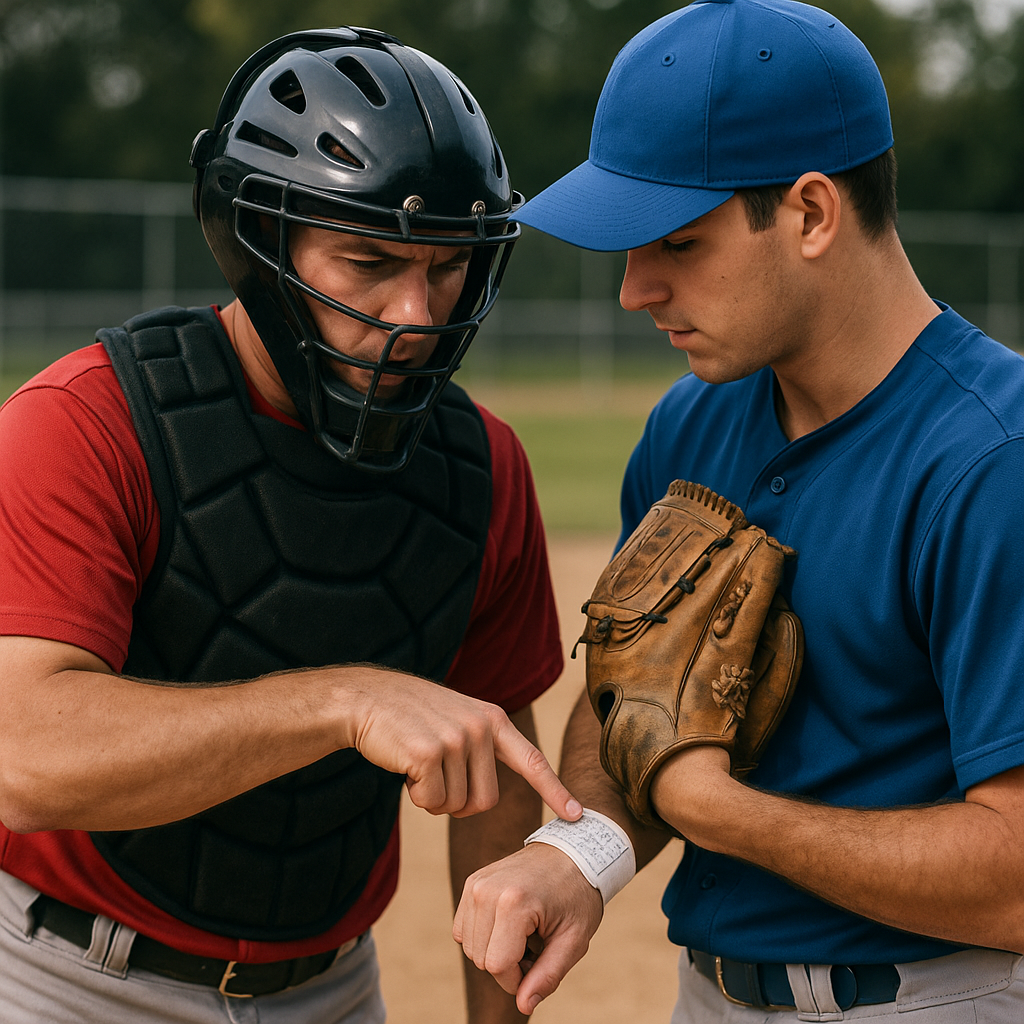
Nothing blows up sequencing faster than sign confusion. You can have the right idea, the right count, and the right hitter read, and it still turns into a belt-high fastball because your pitcher thought you put down a 2 and you meant a 1.
For younger batteries, I like a simple wristband system paired with a tiny bit of structure that tech made normal. The wristband isn't the trick by itself. The trick is that it lets you pre-load sequences the same way you'd save a playlist. Early in the game, I don't try to be a genius. I pick 6 to 8 packages that cover the basics: get-ahead, chase, bounce, and a get-me-over that isn't a straight fastball every time. Each package is three pitches, written in a code the pitcher and I practiced in the bullpen. Example: Line 12 might be FF away, CH down, SL off. Line 27 might be first-pitch breaking ball for a strike, then elevate the heater, then bury something. You can build these around what your guy can throw that day. If the slider's spinning like a wiffle ball, don't force it into every line just because it's on the wristband.
Here's where the technology angle matters: we film bullpens on a phone and tag the lines that feel automatic. Not nasty, not perfect. Automatic. When I say Line 12, the pitcher doesn't have to remember three separate pitches, he remembers the one sequence we saw on video that landed. That frees up your brain behind the plate to do the real job: adjust the packages based on what the hitter just showed you.
I also like that it makes mound visits shorter. You can walk out, show one number, and talk about location with your glove instead of whispering a novel. If the other team is running signs or your pitcher is rattled, you can still keep tempo. And tempo matters because hitters settle in when they know what's coming emotionally, even if they don't know the pitch.
One warning from experience: don't make 30 lines for a 13-year-old. You'll spend the whole game searching. Keep it tight, repeat the good ones, and edit between outings like you would any other tool.
Video delay makes you smarter about the third time through (not just mad)
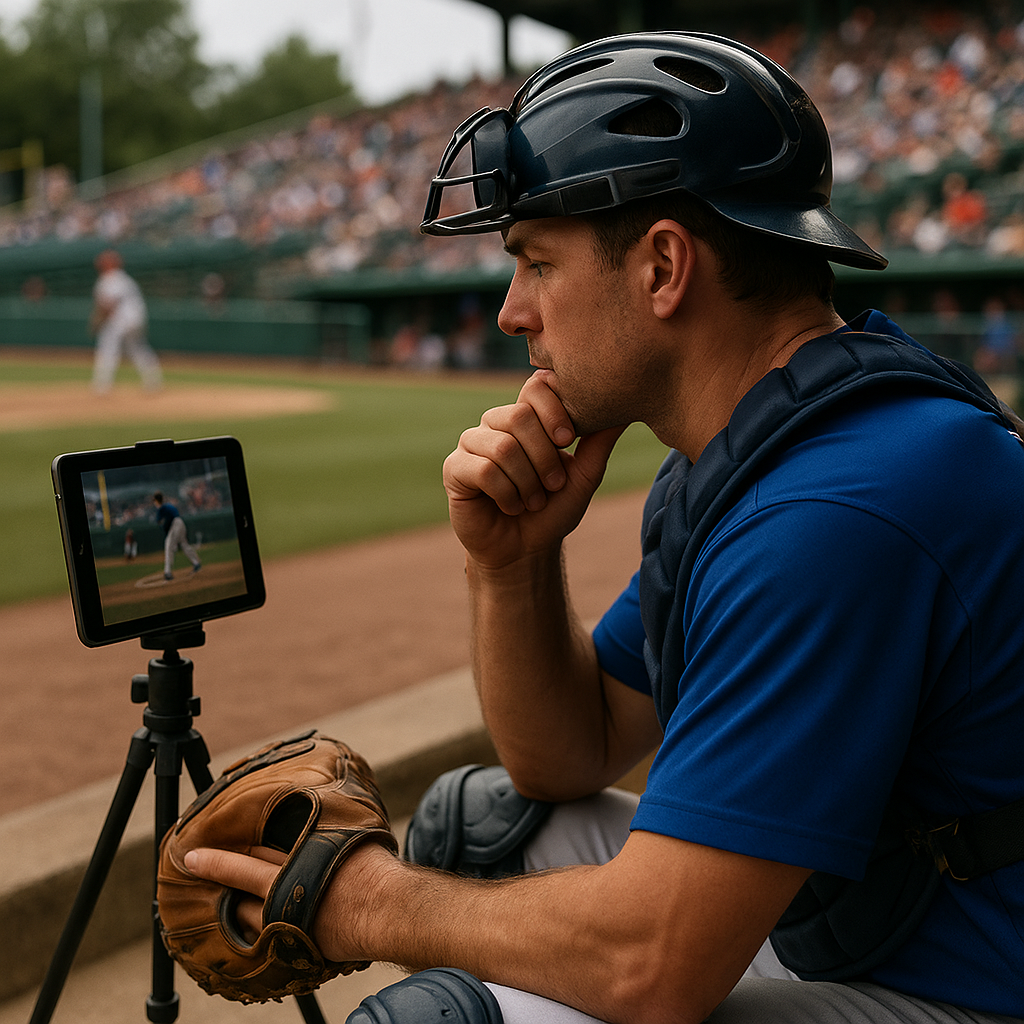
By the third time through a lineup, every catcher has the same problem: you feel like you're making the same calls, but you also feel like anything new will get crushed. That's usually when someone in the stands yells, Throw strikes! as if you haven't been trying.
What helped me more than any lecture was getting access to a simple video delay setup during games. I'm not talking about running a whole broadcast. Just a tablet or phone on a tripod with an app that gives you a 10 to 20 second delay so you can peek between batters. The first time I used it, I expected it to tell me, "Yes, that slider was a ball." Instead, it kept showing me something I couldn't feel in the moment: our patterns.
For example, I didn't realize how often I was going glove-side fastball after a first-pitch breaking ball. It felt random in my head because the situations were different. On video, it looked like a neon sign. Hitters weren't guessing the exact pitch, they were loading their swing path for that lane. Once you see it, you can fix it without reinventing the whole game plan. Maybe you keep the first-pitch breaker, but the next pitch becomes a changeup that starts in the same window. Or you flip it: steal a strike with the fastball early, then show the breaking ball in the same spot later when the hitter's timing has sped up.
The other thing the delay is great for is separating bad call from bad throw. If you called down-and-away and the pitch ended up middle-middle, you don't need a new sequence. You need your pitcher to breathe and hit a target. I've watched innings where I would've panicked and switched plans, but the clip showed the plan was fine and the execution was just leaking over the plate.
Keep the check quick. One look for pitch window, one look for hitter timing, then back to your crouch. You're not running a film session. You're just giving your future self a better memory than adrenaline will allow.