
When summer practices turn hot and humid, even well-trained teen athletes can get into trouble before they admit they need a break. I use a few simple checks during practice, such as a visible temperature cue, scheduled hydration reminders, and a clear rule for when an athlete comes out, to catch problems before heat stress becomes heat illness.
Why I Use a Simple Temperature Check During Practice
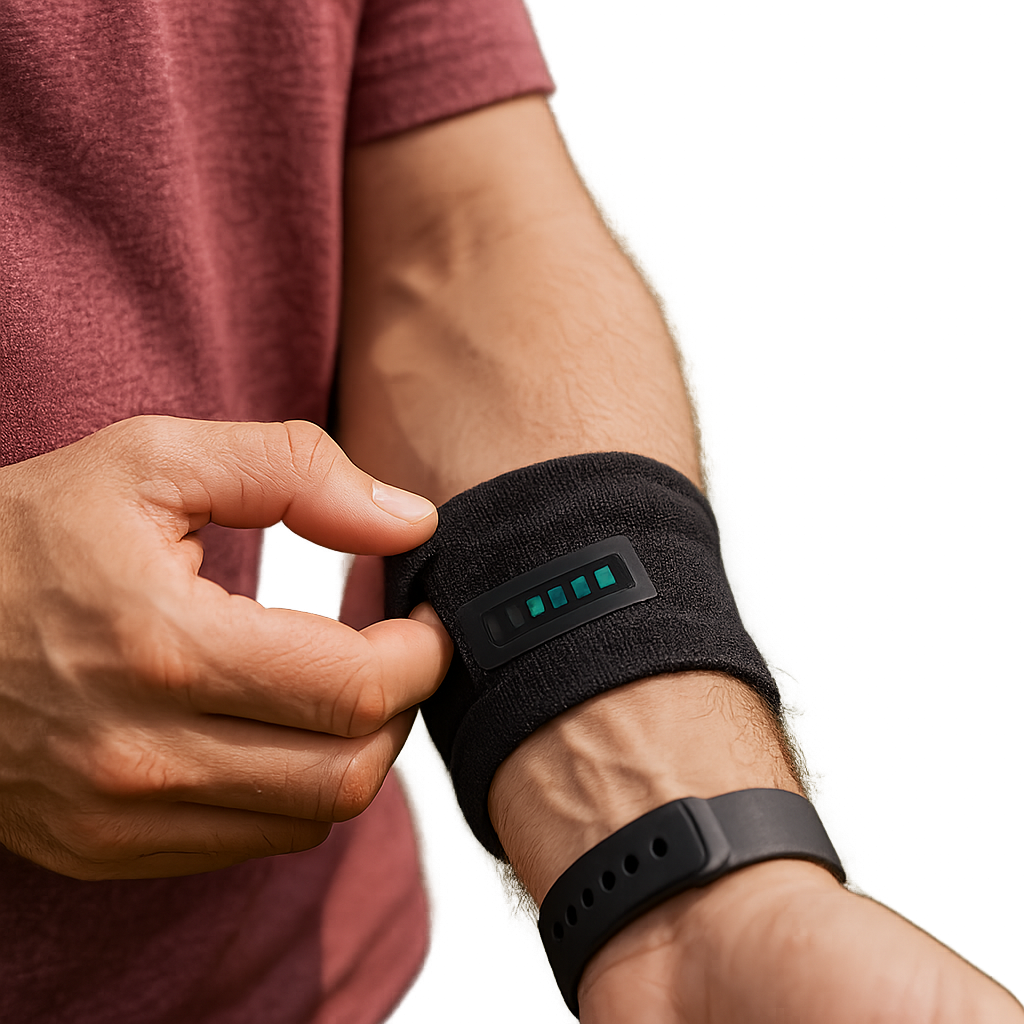
I like wearables, but I trust them more when they have something dumb and visible to respond to. My favorite add-on is a little liquid-crystal thermometer strip (the kind that changes color by temperature). I stick it on the inside of a wrist guard or the back of a watch band as a simple visual cue. It costs only a few dollars online, and it gives me another visual cue when a kid insists they feel fine.
Here is the thing: most wrist wearables estimate skin temp, and some smooth it so hard you miss the moment the kid stops sweating and starts cooking. The strip isn't a medical device, but I use it as one more visual cue alongside how the athlete looks and feels. I don't treat the strip as a measure of heat illness. If an athlete looks flushed, confused, dizzy, unusually fatigued, or otherwise unwell, we stop the activity and move them somewhere cool.
This also keeps adults honest when they're pumped about a new sensor. I've watched a coach point at a heart rate graph like it's the gospel while a freshman's face is beet red and their eyes are doing that slightly unfocused stare. The strip gives me another visible cue I can point to, alongside what I'm seeing in the athlete.
Use Wearable Alerts to Remind Teens to Hydrate
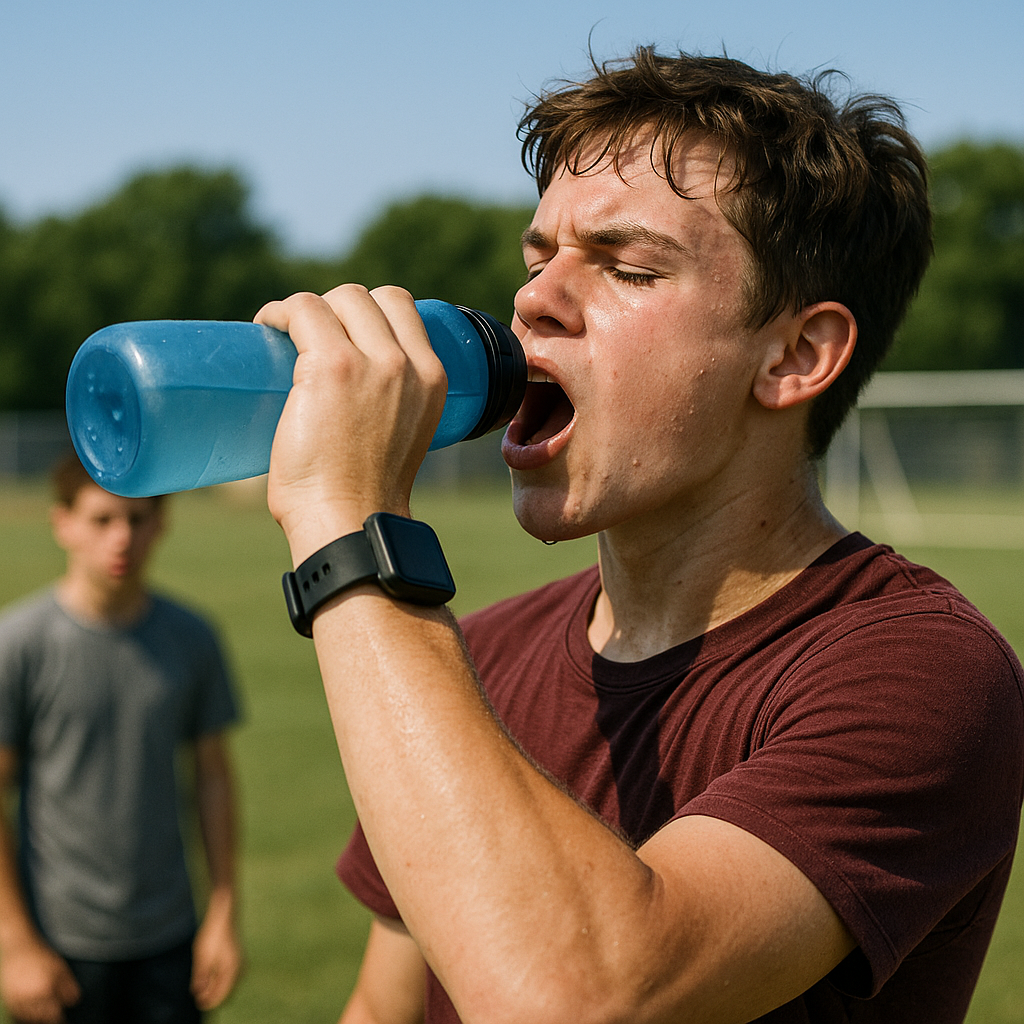
Most teenagers will grind through heat until they can't, then tell you after. So I set the wearable up to be the annoying assistant coach. On Garmin and Apple Watch, that usually means a recurring timer plus a haptic buzz. On WHOOP, it's more about recovery and strain, but the principle is the same: the device should interrupt them before their body does.
The trick is to make the alert a team rule. When the first watch buzzes, everyone drinks. IWhen the watch buzzes, everyone takes a drink and gets a chance to cool down before returning to work. Heat stress sneaks up faster when a kid is growing, running hard, and trying to look tough in front of friends. The buzz turns it into routine, and routine is what survives scrimmage chaos.
What I watch for in the data is whether the same athlete keeps spiking heart rate for the same drill as the session goes on. If a kid is usually 155 bpm in the first set of tempo runs and suddenly they're at 170 bpm at the same pace, I treat that as a reason to check in rather than push harder. I look at the athlete, the conditions, and how they're feeling before deciding what to do. That might mean pulling them out for one rotation, moving them to a shaded station, or putting them on a bike for the conditioning piece so they keep the training effect without extra solar load. And yes, I tell them exactly why. Teens respond well to specifics.
When to Stop Practice: Pay Attention to How the Athlete Is Recovering
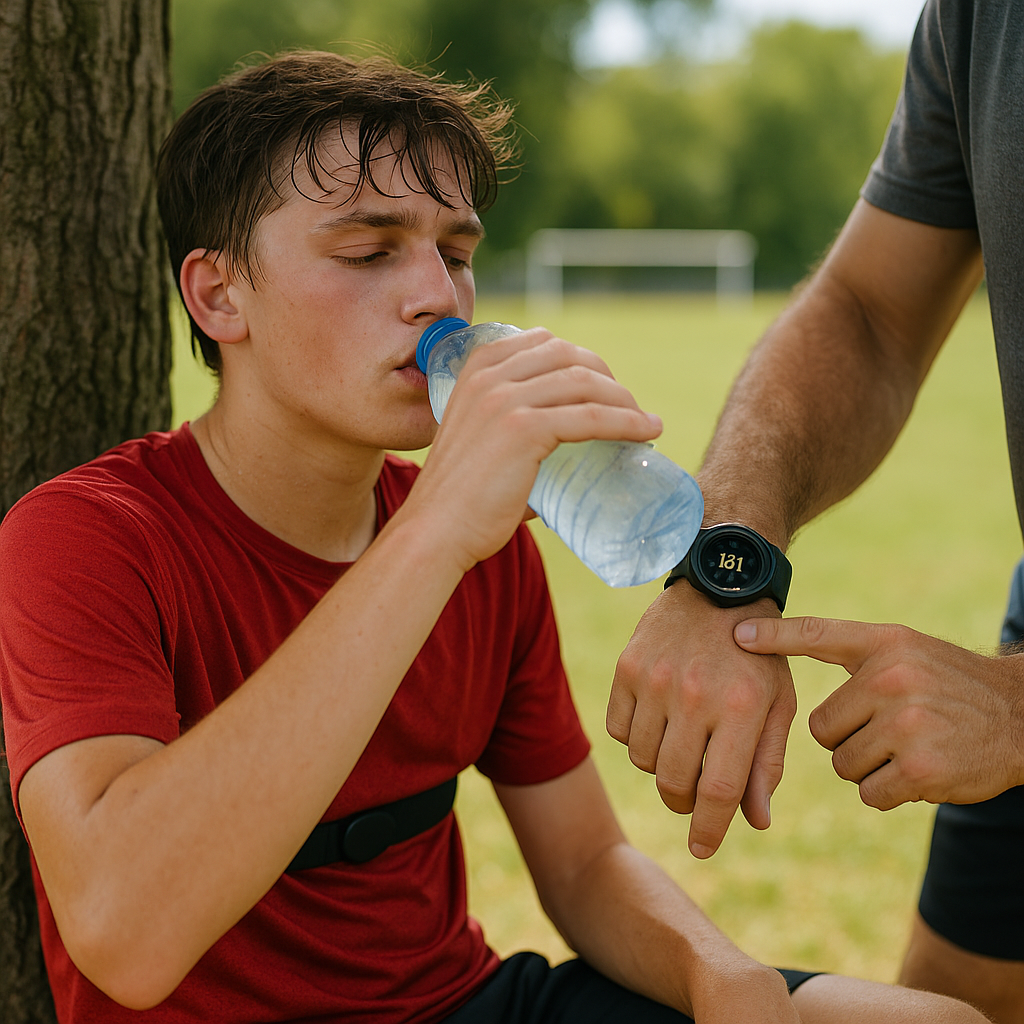
Peak heart rate isn't the thing I use to decide whether an athlete is safe to continue. What matters more is how the athlete looks and feels after the rep. If an athlete remains dizzy, confused, unusually fatigued, nauseated, or otherwise unwell after a break in the shade, they're done for the session and need to be assessed.
I learned this the hard way at a summer tournament where the field felt like a frying pan. One of our faster runners looked okay, kept nodding, kept saying they were good. The numbers told a different story. They finished a short burst, hit 190, and then hovered in the high 170s while everyone else slid back toward the 120s. That's the moment I pull them, move them somewhere cool, and assess how they're feeling. If they show signs of serious heat illness, I follow the team's emergency plan and get medical help immediately. A watch isn't a diagnosis tool, but it is a pattern detector when you're watching it like a coach.
This is also where I like a chest strap (the Polar H10 is the one I've used) for workouts that matter, because wrist-based optical sensors can get weird when sweat is pouring and the kid is gripping a bat or a lacrosse stick. If the reading is jumpy, I don't pretend it's precise. I look for the overall behavior: is it trending down during rest, or is it pinned high even when the effort stops?
When I make the call to shut it down, I frame it as preserving the week rather than losing the day. Kids hate feeling singled out. They hate missing reps. But they hate missing two weeks even more, and heat illness can sideline an athlete for days or longer, depending on its severity.