
A kitchen timer, two phone alarms, and one notebook page help keep homework from taking over the end of the night.
Put an analog timer on the desk
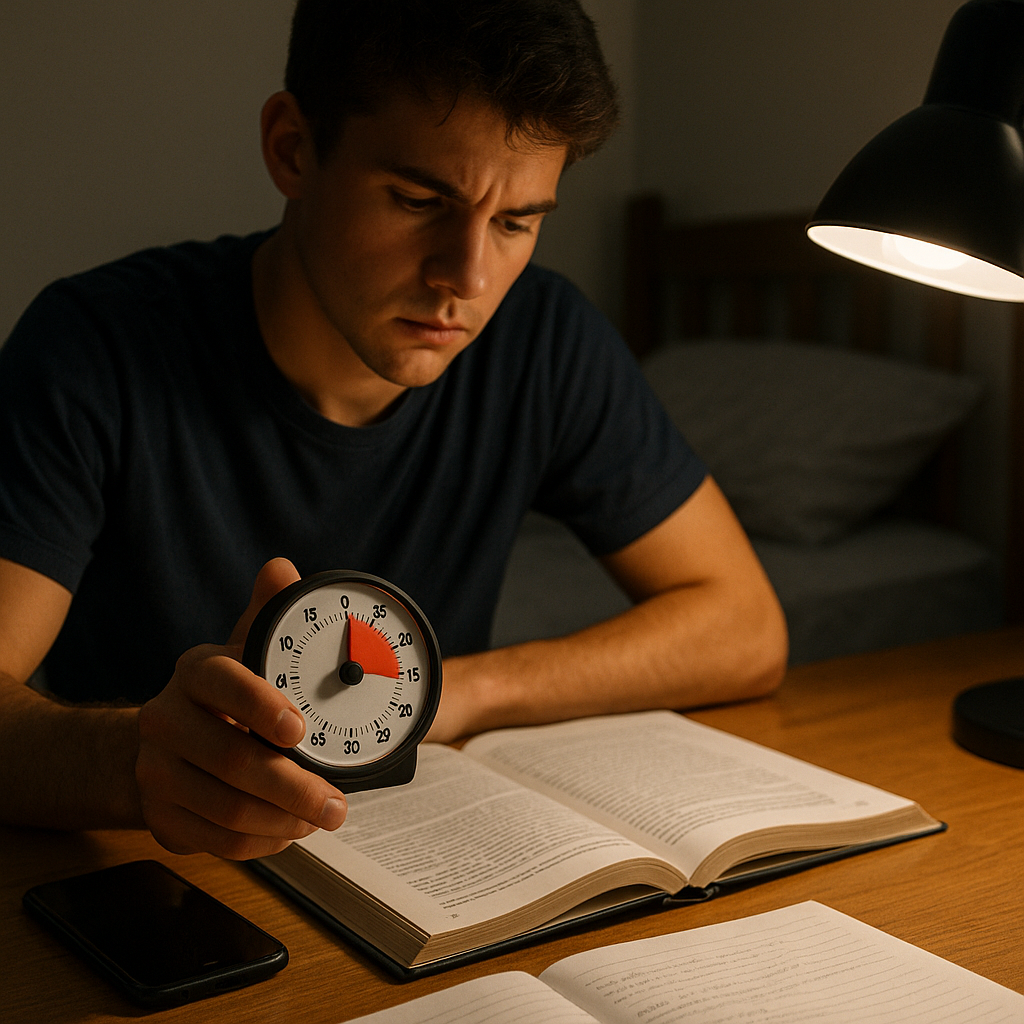
One of the simplest tools I use during a brutal school week is an analog kitchen timer. When a teen athlete tries to do homework on a phone timer, the timer turns into a trap. One buzz becomes a quick check of Snap or a coach's Remind message, then you look up, and it's 11:40, and they're still under a desk lamp, trying to finish homework. The analog timer is simple on purpose.
Here's how I run it when the schedule is practice, dinner, then academics: set the timer for 25 minutes of one subject only. When it rings, they stand up, drink water, and do two minutes of the least dramatic mobility possible (ankle rocks against the wall, a slow hip flexor stretch, or just legs up on the bed). Then set it again for 20 minutes. That's the whole point. The timer creates a clear stopping point so homework doesn't keep pushing bedtime later.
The part that surprised me: the visible dial helps kids pace without asking every five minutes, "How much longer?" They can see the red wedge shrinking. And on nights when they swear they have "a ton" to do, the timer shows whether it's a real load or just a foggy brain after a double session. If they can't get through 25 minutes of reading without rereading the same paragraph, that's a fatigue flag. We don't hero through it. We adjust: a shorter block, a quick shower, lights down, and the next day we talk to the teacher about a deadline that doesn't collide with game travel.
Use the post-practice shower as a stopping point
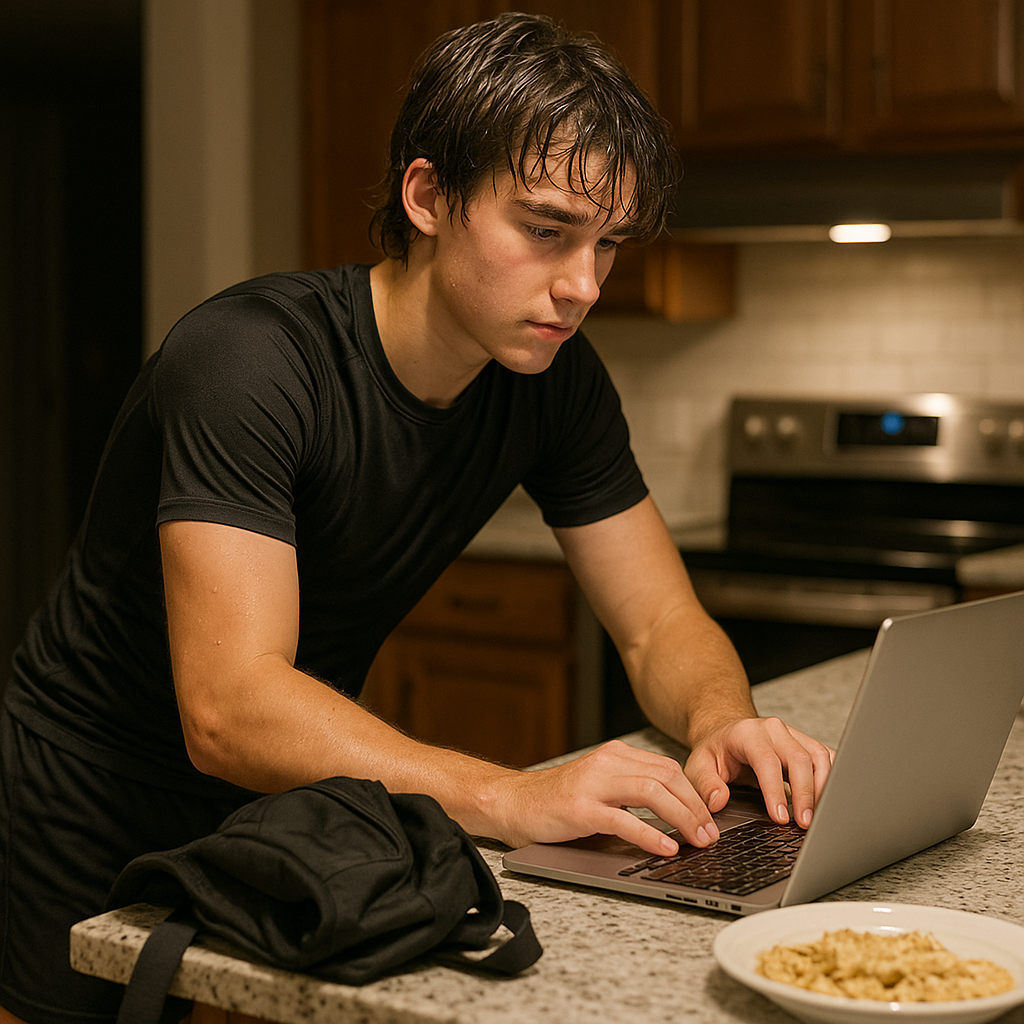
After a late practice, the danger zone is the hour that looks harmless: they come in, drop a sweaty backpack by the kitchen island, start just checking the LMS, and suddenly they're still in compression shorts at 9:30 with wet hair and cold leftovers. The problem is that, after a late practice, homework can easily push bedtime later.
I started treating the shower like a hard academic boundary. If practice ends at 6:30 and the drive home takes 20 minutes, I aim to start the shower by 7:30. That gives us a predictable transition from practice to dinner and then to homework. A shower and clean clothes also make it easier to shift from practice to homework.
Make it concrete. We set out what they need before they leave for practice: a towel, a clean T-shirt, deodorant, and the next day's outfit on a chair. If they have an existing treatment plan for an injury, I keep it separate from the most demanding homework.
On heavy school nights, I also keep the shower short so it doesn't push bedtime later. Over time, the routine makes it easier to finish the night without pushing back homework and bedtime.
A two-alarm phone setup
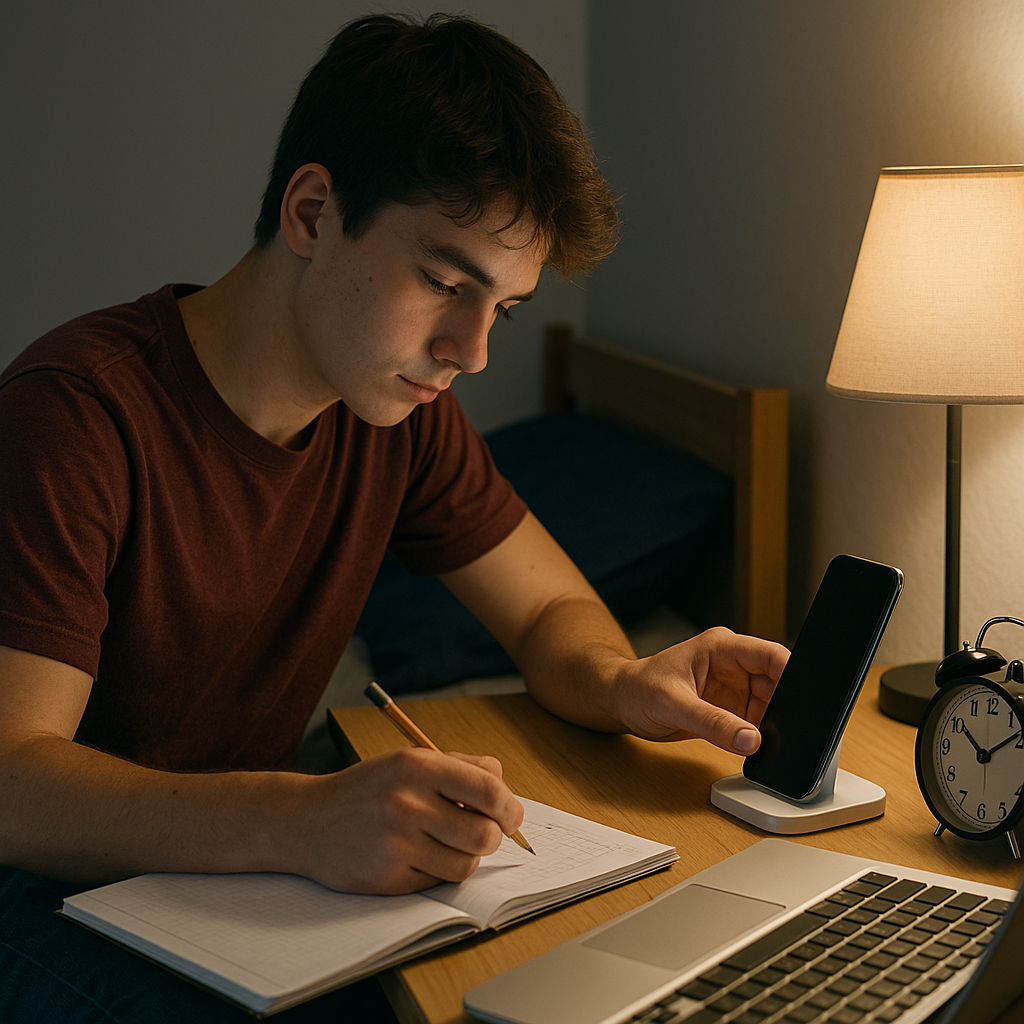
I'm against keeping the phone in their hand late at night. What works in my house is a two-alarm setup and a designated place to put the phone at bedtime.
Alarm one is the wrap alarm. Pick a time that gives you enough time to finish up, get ready for bed, and still get enough sleep. When it goes off, they stop starting new assignments and switch to wrapping up: submit what is prepared, email the teacher if something's genuinely unfinished, pack the bag, and do the basic things that make the next morning easier. Alarm two is the in-bed alarm. When that one hits, the phone goes on a charger across the room or in the hallway.
The key is making the phone useful without making it tempting. Use Focus mode or Do Not Disturb with a short allow-list: parents, ride group, and maybe one coach contact for last-minute schedule changes. Everything else waits. If they're worried about missing a team update, we solve it with a habit: check messages once right after dinner, then again at the wrap alarm, and that's it. If schedule changes regularly arrive late at night, that's something the adults around the team may need to address.
I also like a paper tomorrow list on the desk, one page in a cheap spiral notebook. When their brain starts spinning about an unfinished lab or a quiz, they write it down, then go back to the problem in front of them. It's low-tech, but it keeps bedtime from turning into a silent planning meeting.