
A one-card way to borrow footwork, vision, and tempo from five sports without piling on more practices.
Make a 5-sport menu (so training stops being random)
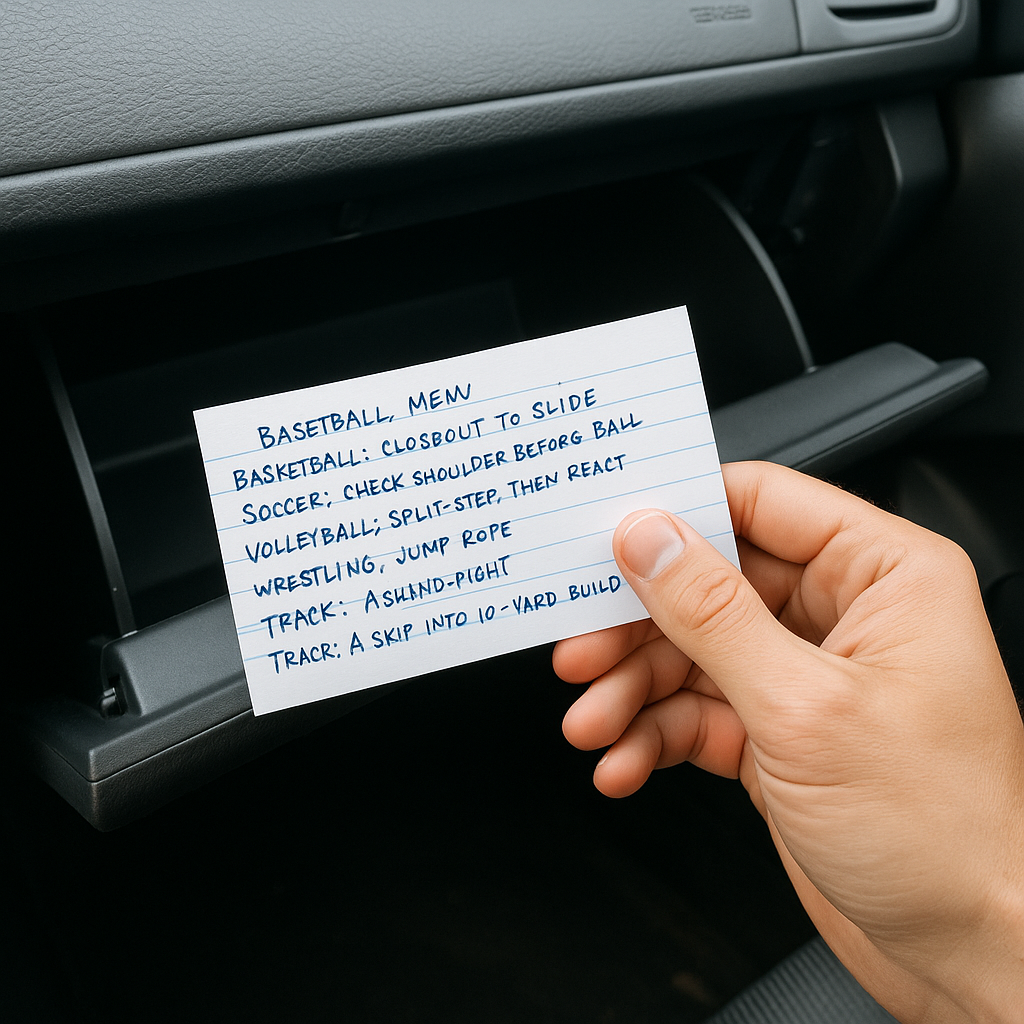
I started doing this after watching athletes narrow their offseason training to one sport and repeat many of the same movements. I wanted a simple way to introduce different movement, reaction, and decision-making challenges without adding another full practice. So I keep a single 3x5 index card in the glove box with a five-sport menu. It sounds corny until you use it for a month and realize it solves the exact problem high school athletes have: they want structure, but their weeks are chaos (practice, weights, homework, then somebody's game film on Hudl at 11:30).
Here are the rules that make the card work.
- Pick five sports that demand different things. I like: basketball (short bursts and passing reads), soccer (continuous scanning), volleyball (reaction and timing), wrestling (grip and position fighting), and track hurdles or sprint work (mechanics). You can swap based on what the athlete has access to, but don't pick five that are basically the same movement pattern.
- Each sport gets one skill you can steal in 10 minutes. Not a full workout. A steal. Example: basketball gets "closeout to slide" footwork; soccer gets "check shoulder before the ball"; volleyball gets split-step, then react; wrestling gets hand-fight for 30 seconds; and track gets "A-skip into a 10-yard build."
- One line for equipment so it happens. Shoes, a tennis ball, a jump rope, a cheap set of mini bands, whatever. If it requires a facility you can't access after school, it won't happen.
The point isn't to become good at five sports in a week. It's to introduce a wider variety of movement, perception, and decision-making tasks without turning them into five additional workouts. If you're a coach, you can tuck this into the team group chat and ask for a photo of the card on Sunday night. If you're the athlete, keep it in your bag next to your tape and spare laces and do one steal while you're waiting for a ride.
Borrow the scanning habit from soccer (even if they never played)
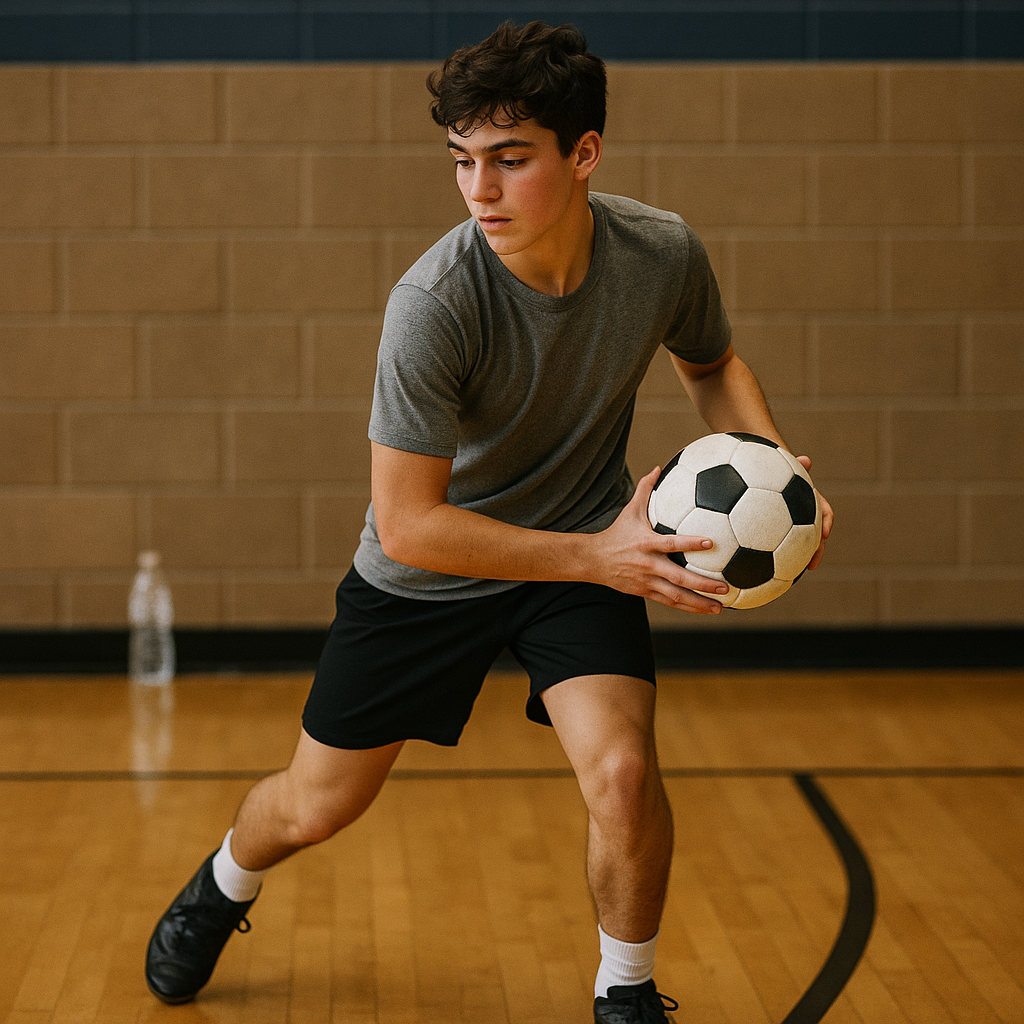
When people say a kid is "fast but not fast in games," I usually see the same thing on Friday nights: they run with their eyes down. Not literally at the ground, but locked. No constant updates. Soccer offers a useful model because scanning before receiving the ball is an important part of gathering information about teammates, opponents, and space. The habit is called checking your shoulder, and you can train it without a field, cones, or a teammate willing to pass for an hour.
I run a simple drill in a gym corner or on the sideline before a lift. Put two objects behind you about five yards apart. A pair of water bottles works, or two backpacks. Stand facing away. Start with a ball in your hands if you're a basketball or football kid, or a bat if you're a baseball kid, just so it feels sport-specific. Now: shuffle forward three steps, and on every step, you must snap a glance over your shoulder and say what you saw behind you. Bottle left. Backpack right. You are not allowed to slow down to look. If you can't identify it accurately, reset and make the glance controlled enough to gather the information without losing your movement pattern. Keep the chin level and make the eyes do the work.
After 60 to 90 seconds, add the part that matters in high school games: a decision under noise. Have a teammate or coach call a number (1 or 2) as you move. If they call 1, you pivot and toss the ball to the left object. If they call 2, toss to the right. If you're alone, set a phone timer that beeps at random intervals and use the beep as the cue to toss to a pre-decided side, then switch sides every round. It's a little clunky solo, but it still forces your head to come up and your feet to organize fast.
The idea is to practice gathering information while moving, a skill that matters in sports such as football, baseball, and basketball, too. That doesn't mean a soccer scanning drill automatically improves performance in those sports, but it can add a different perception-and-movement challenge.
Wrestling-style hand fighting for athletes who hate arm day
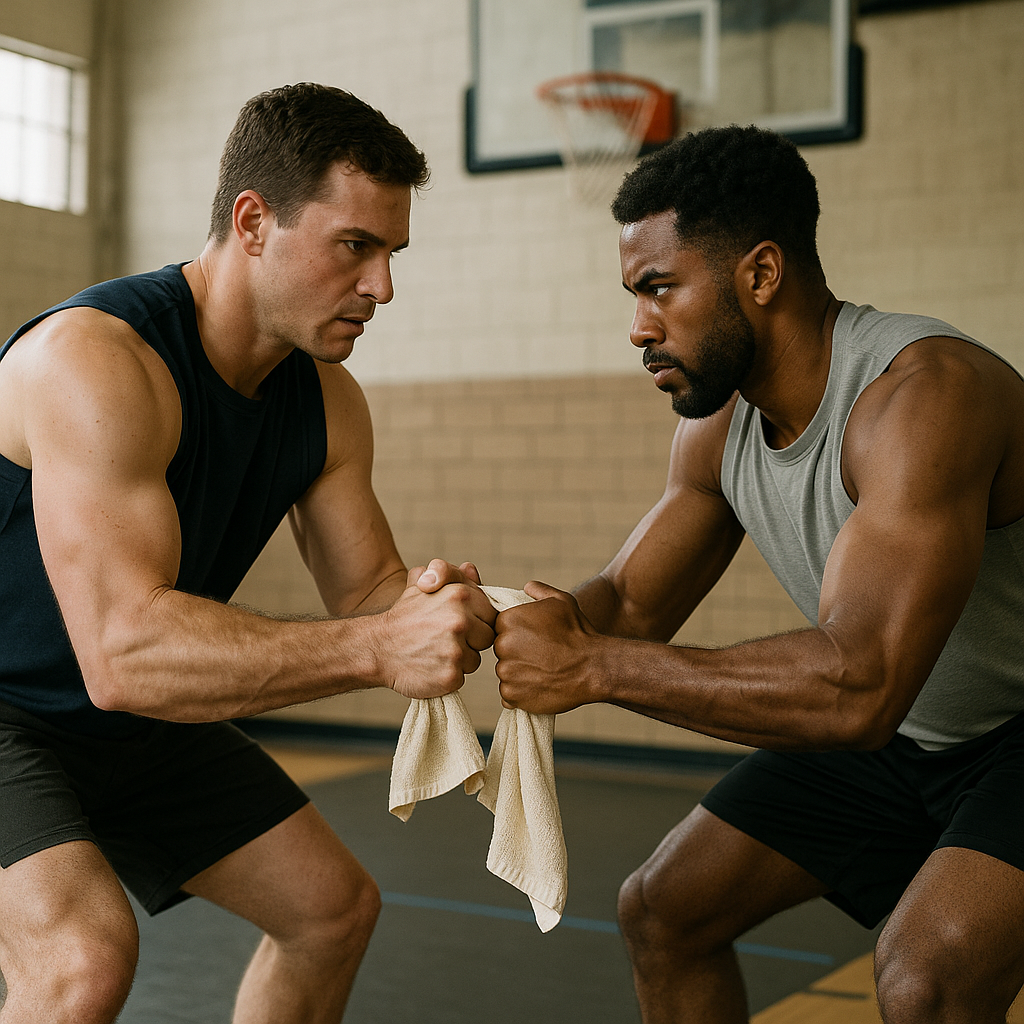
Every winter, I meet athletes who lift hard but still look uncomfortable the second somebody puts their hands on them. You see it in rebounding, in press coverage, in fighting through a screen, in a baseball kid getting jammed and bailing out. The fix isn't more curls. It's learning to win the first two seconds of contact, and wrestling has an entire language for that. A controlled partner drill can borrow the hand-positioning concept without adding takedowns, provided the athletes use light resistance, sound technique, and appropriate supervision.
All you need is a partner and either a towel or a short resistance band. Stand facing each other in athletic stance, and each grab the towel with one hand, like you're fighting for the same handle. The goal is not to yank like tug-of-war. The goal is to keep your feet under you while you constantly re-grip, peel, and replace your hand position. Set a timer for three rounds of 30 seconds with 30 seconds rest. During each round, you're trying to do three things:
- Own inside position. If your forearm is inside theirs, you can steer. If you're outside, you're reacting.
- Move their hands without losing your base. Tiny steps, hips under you. If your heels come up and you stand tall, you just taught yourself to get knocked back.
- Switch tasks mid-round. At 15 seconds, the coach (or whoever's counting) calls switch, and you change from fighting for inside position to fighting to pull the towel two inches to your side. That forced pivot is the whole point.
The drill is most relevant to sports where athletes regularly establish or resist legal hand contact, such as football, basketball, and wrestling. I would treat it as a coordination exercise rather than assume that it directly improves sport-specific performance.
If it gets sloppy, make it smaller: three rounds of 20 seconds, and no one is allowed to move their feet more than a shoe length. The moment it turns into yanking and falling, you've lost the plot.