
A shared calendar, one weekly 15-minute block, and two small rules that keep practices, lifts, and homework from eating each other alive.
The Sunday 15-minute calendar block
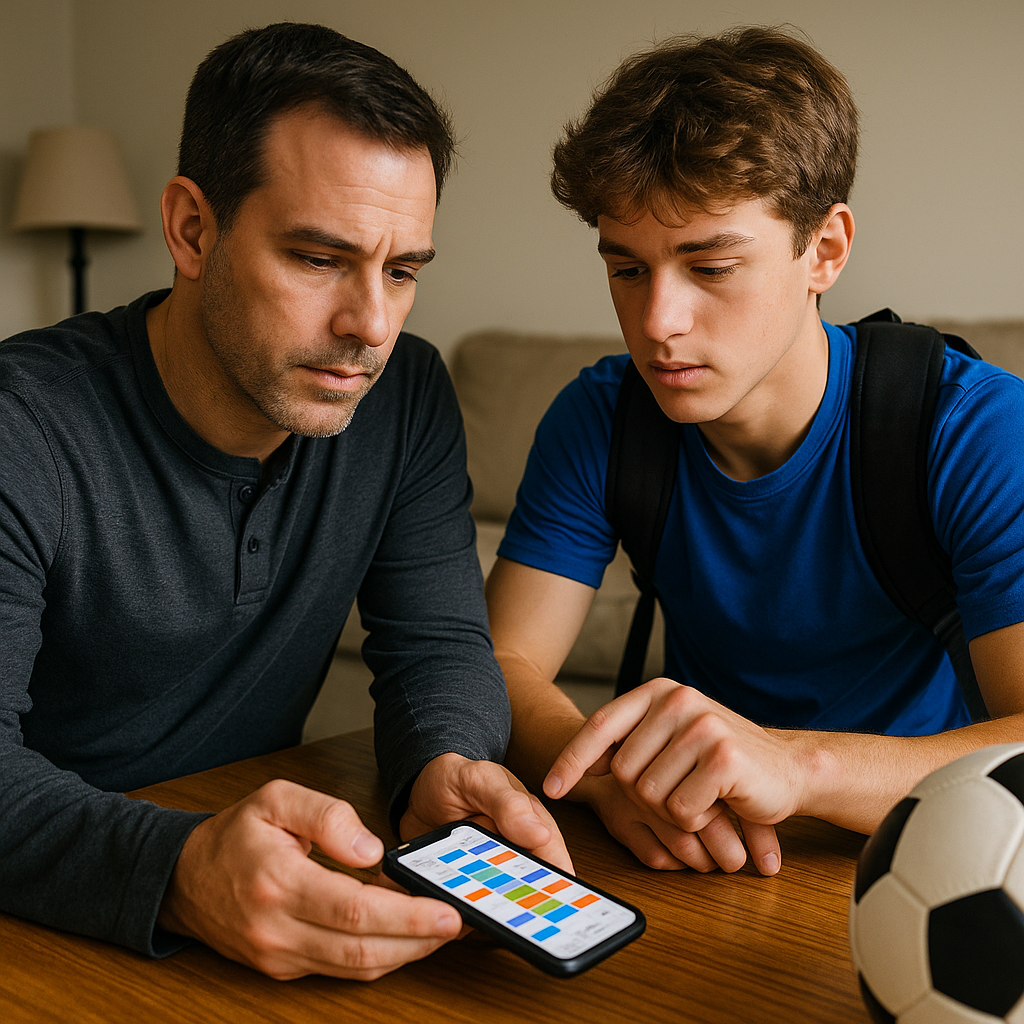
I used to think time management was about motivation, but it's actually about whether everyone is looking at the same week. For dual-sport seasons, I like a Sunday block that takes 15 minutes, tops, and it's the same every time: one parent, the athlete, and the calendar app you already use (Google Calendar or the iPhone Calendar, I don't care). We start by dumping in the non-negotiables first: school hours, games, meets, tournaments, team practices, and any athletic trainer appointments. Then we add the stuff that gets athletes in trouble when it floats: two homework blocks (even 45 minutes each), one lift or speed session, and at least one full day off from organized sports each week, when the schedule allows.
The key is color-coding by sport. Using a different color for each sport makes overlapping practices and games easier to spot. I use two simple rules: (1) travel time is its own event. If practice starts at 6:00, I schedule the departure time separately to account for travel and last-minute preparations. (2) anything that requires gear gets a 5-minute "pack" block right before it. That block is where the shin guards, mouthguard, and any phone or other device charger they regularly need are handled, so nobody is doing it at 10:48 pm while stressing about tomorrow.
The goal is to spot conflicts between practices, schoolwork, travel, and recovery time before they become last-minute problems.
Two-bag staging: one by the door, one in the trunk
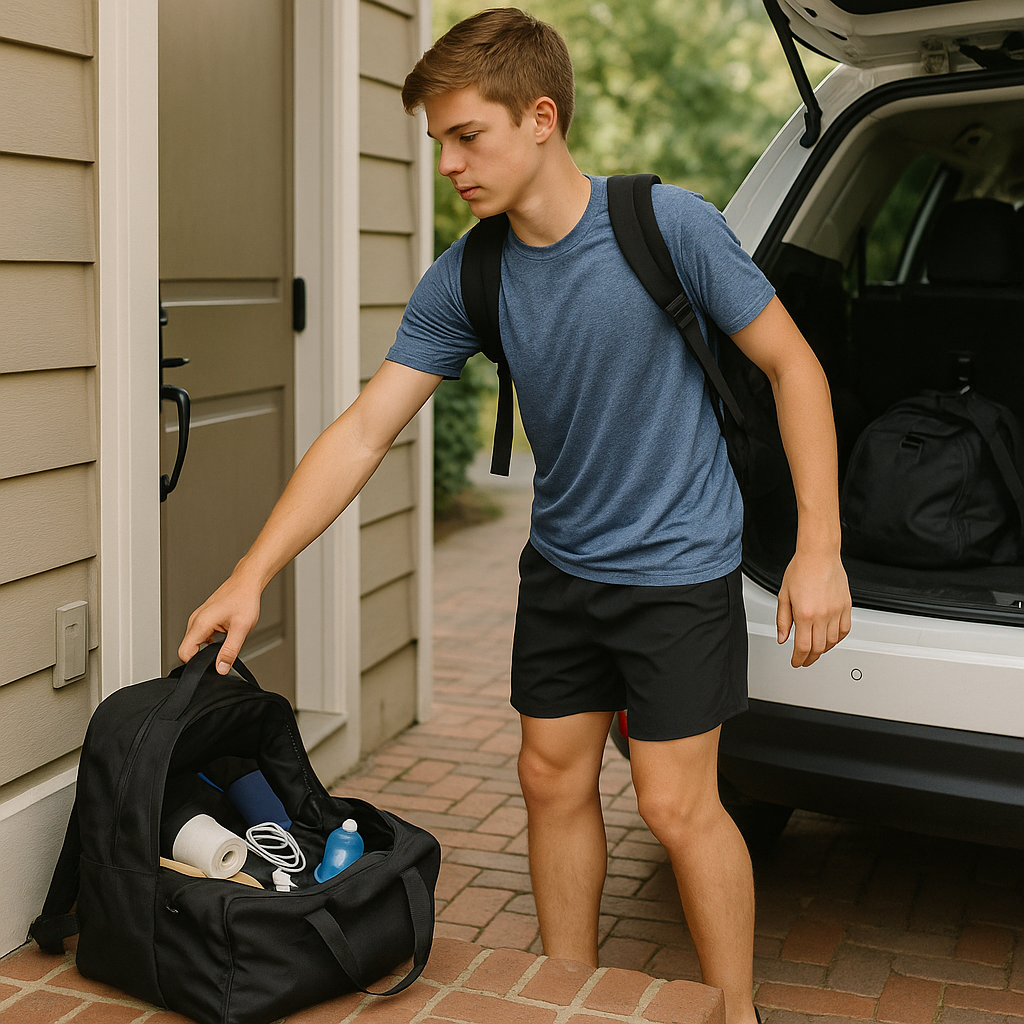
Busy seasons can be difficult not only because of the amount of work, but also because athletes are constantly moving between school, practices, games, and other commitments. If you've watched a kid bounce from school to a field to a gym, the dead time is always the same: rummaging for tape, re-lacing cleats, hunting for a missing uniform top, realizing the water bottle is still on the kitchen counter. My fix is a two-bag staging system that lives where the transitions happen.
Bag one is the door bag. It sits by the exit they actually use. In it: the small stuff that disappears and wastes minutes. Think athletic tape, pre-wrap, hair ties, an extra pair of socks, deodorant, and a cheap phone charger cable that stays there permanently. If your athlete uses a heart-rate strap or any wearable for practice load, the strap goes in this bag after it dries. Bag two is the trunk bag. It never comes inside unless it needs cleaning. This is where I stash an old towel, a spare Nalgene-style bottle, a hoodie, and a roll of trash bags for muddy gear. If it's winter, I add knit gloves and a beanie because outdoor practices and games can mean long periods in cold weather.
Here's the part that makes it work: the weekly reset is a 6-minute audit tied to the calendar block. Open the door bag and replace what was used. Open the trunk bag, toss wet stuff into a laundry bin, and restock the hoodie and towel. The goal is a simple system that is easy to repeat each week.
A 3-line message for protecting recovery time

When a dual-sport athlete's schedule is already full, optional or last-minute activities can make it harder to protect time for school and recovery. Optional workouts, extra film sessions, or last-minute requests to stay late can become difficult to fit when two sports already fill the week.
I don't ask coaches to manage my kid's life. I do give them a clean boundary, early, in a way that's easy to respect. It's a three-line message I send at the start of overlap season (email is fine, a direct message in TeamSnap is fine too):
- "Coach, heads up: Jamie is in-season for soccer and basketball from Sept 5 to Oct 28."
- "On overlap weeks, we can do team practices and games, but we are protecting at least one full day off from organized sports each week, while also protecting adequate recovery time after games."
- "If there's an extra session you really want them at, please send it 48 hours ahead so we can plan around schoolwork and sleep."
The message makes the family's boundaries clear and gives the coach advance notice about scheduling constraints. It also forces the family to define what protected time means. For us, that meant a no-training window after a late game. They eat, shower, and have time to recover rather than adding another workout.
This is about avoiding the slow creep where recovery becomes the first thing sacrificed because it doesn't have a uniform attached. When the boundary is written down, the calendar block has something concrete to defend.