
Three camp-built footwork reps that keep your hips square, your eyes calm, and fast receivers from stealing your cushion.
The tennis-ball line drill for quiet feet
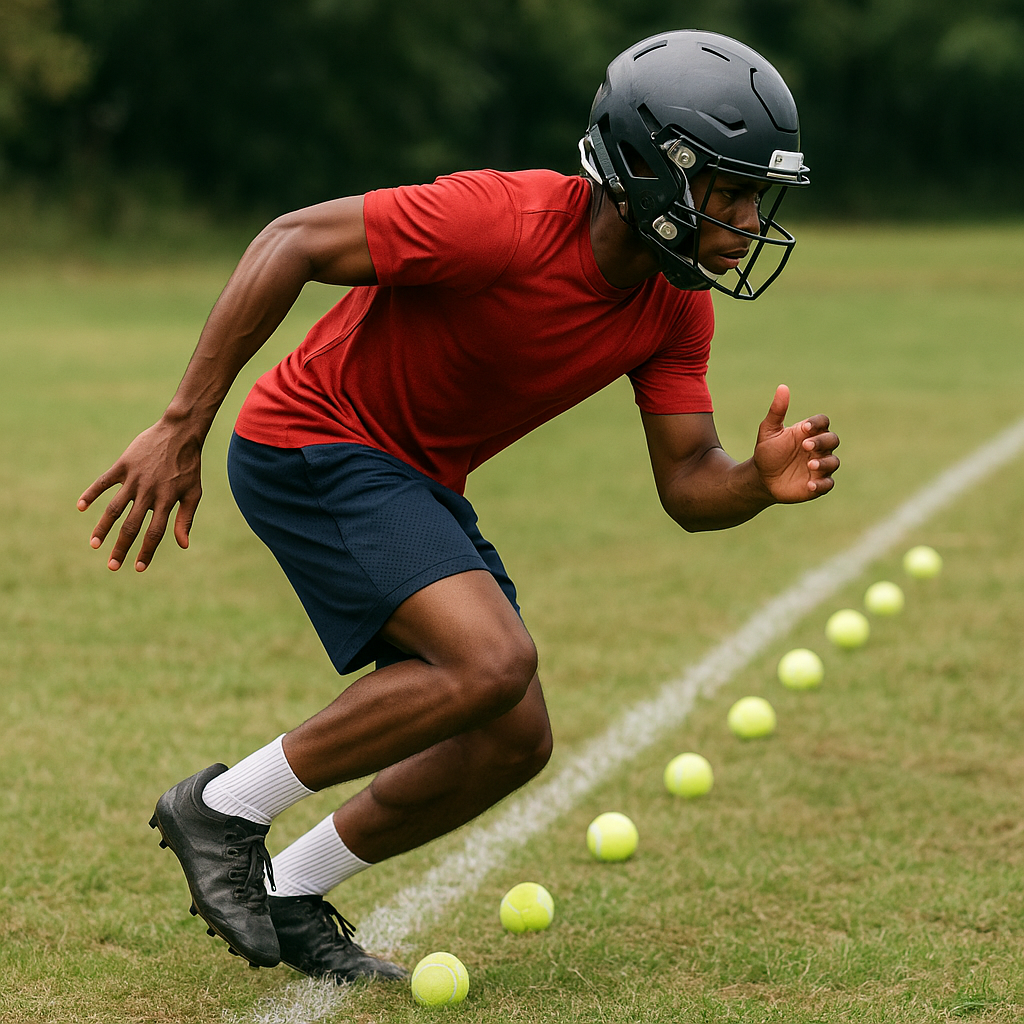
I started doing this at an off-season camp because the field was a mess and the coach running DB indy said, "Good. You can't hide bad feet on bad grass." We laid a row of tennis balls down on a yard line, spaced about one shoe-length apart. The rule was simple: you could not step on a ball, and you could not let your feet cross the line. It sounds like a gimmick until you try to play press or off-man with a receiver who eats up space. The tennis balls punish the two things high school corners do when they're nervous: over-striding and clicking their heels together.
Set it up like this: one row for a smooth backpedal, one row for a weave (shuffle with your hips square), and one row for a pedal-to-45-degree break. You go 8 to 10 yards down the line, then reset and do it again. No racing. In camp, the fastest kids were usually the sloppiest for the first five reps because they were used to winning with speed, not control. The point is that every step lands just outside the line, under your hips. If you hear slaps, you're reaching. If you feel your upper body bobbing, your base is too wide.
When it's done right, you feel your calves and arches working like they're supposed to, and your eyes stop darting at the ground. That's the part I love. After a couple rounds, your feet start finding the same track without you thinking about it. Then you add the receiver: a teammate gives you a release at half speed, and you stay on the tennis-ball track while your hands do nothing. No jam. Just feet. It looks boring, but it cleans up the first two steps that decide whether you stay in phase or spend the rest of the rep chasing.
Ladder work that transfers to a real route stem
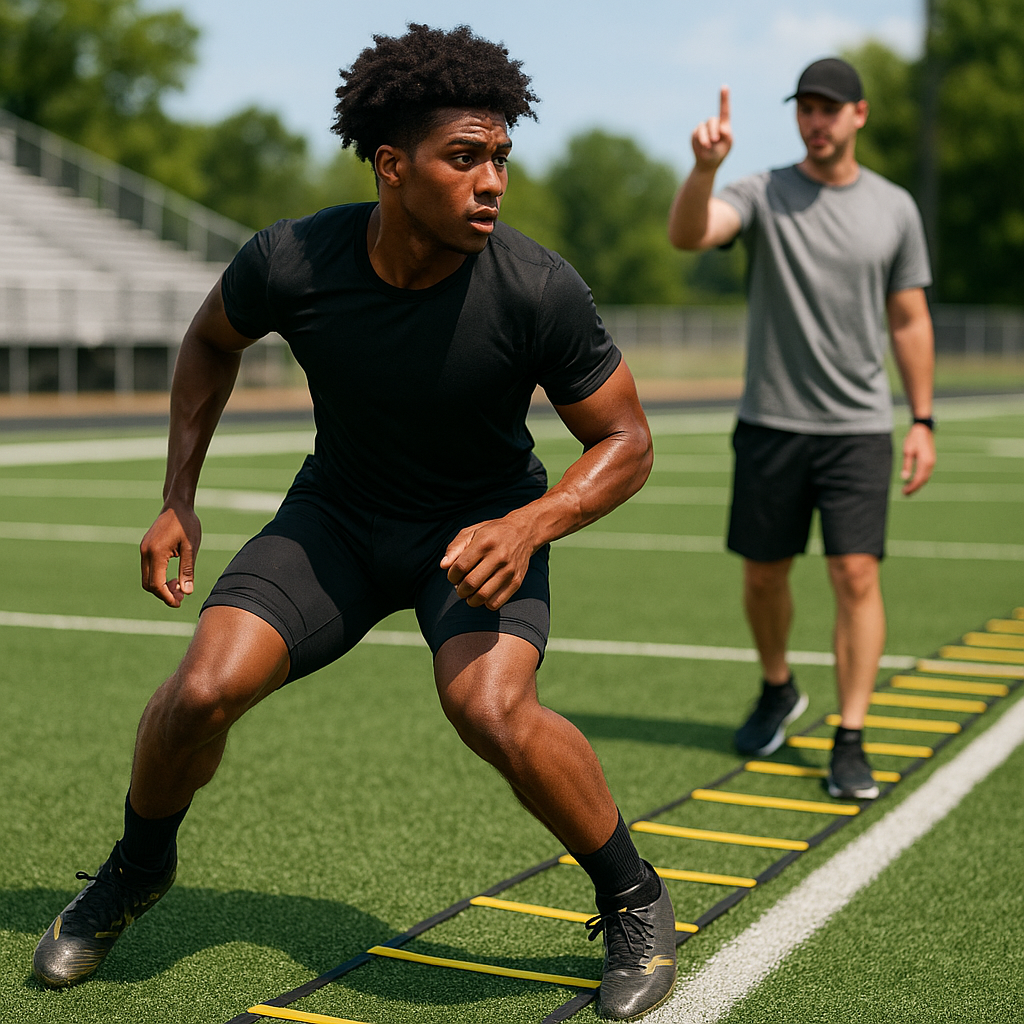
Every camp has a ladder station, and I've watched a lot of defensive backs win the ladder and still lose the next rep of 1-on-1s. The fix isn't to throw the ladder away. It's to stop treating it like a dance routine and start treating it like a route stem with a defender attached.
Here's the version that carried over for me. Put the ladder on the sideline so you've got a visual boundary like you do in cover 2 or quarters, and work in three cues: eyes up, hips level, and a shoulder check on command. A coach or teammate stands five yards away and flashes a hand signal (left or right) whenever they feel like it. While you're doing the ladder pattern, you have to snap your head to that side and get it back without your feet changing tempo. That head snap is what happens when the receiver threatens your blind spot, or when you have to peek the quarterback without turning your whole body into a door.
My go-to patterns at camp were boring on purpose: one foot in each box on the pedal, then a two-in-two-out where you stay square, then a quick stick on the last box and open at 45 degrees like you're driving on a speed out. The ladder gives you the rhythm. The shoulder check gives you the stress. If your shoulders swing and your steps widen, you just found why you panic when a kid hits you with a hesitation release.
One detail most people miss: do it in cleats on turf, not in trainers on a basketball court. The friction is different, and the whole point is learning how small your steps have to be so you can still redirect when your studs bite. When you do it right, your feet feel like they're under you, not out in front of you. Then in 1-on-1s, you can sit on the stem a beat longer without grabbing, which is basically the whole job at the high school level when refs are watching your hands.
Mirror-and-squeeze reps on the boundary (with a stopwatch)
Camp corners talk about playing the boundary like it's a personality trait. The truth is it comes down to whether your feet can squeeze space without opening the gate too early. This rep is the closest thing I've found to that feeling without running full routes all day.
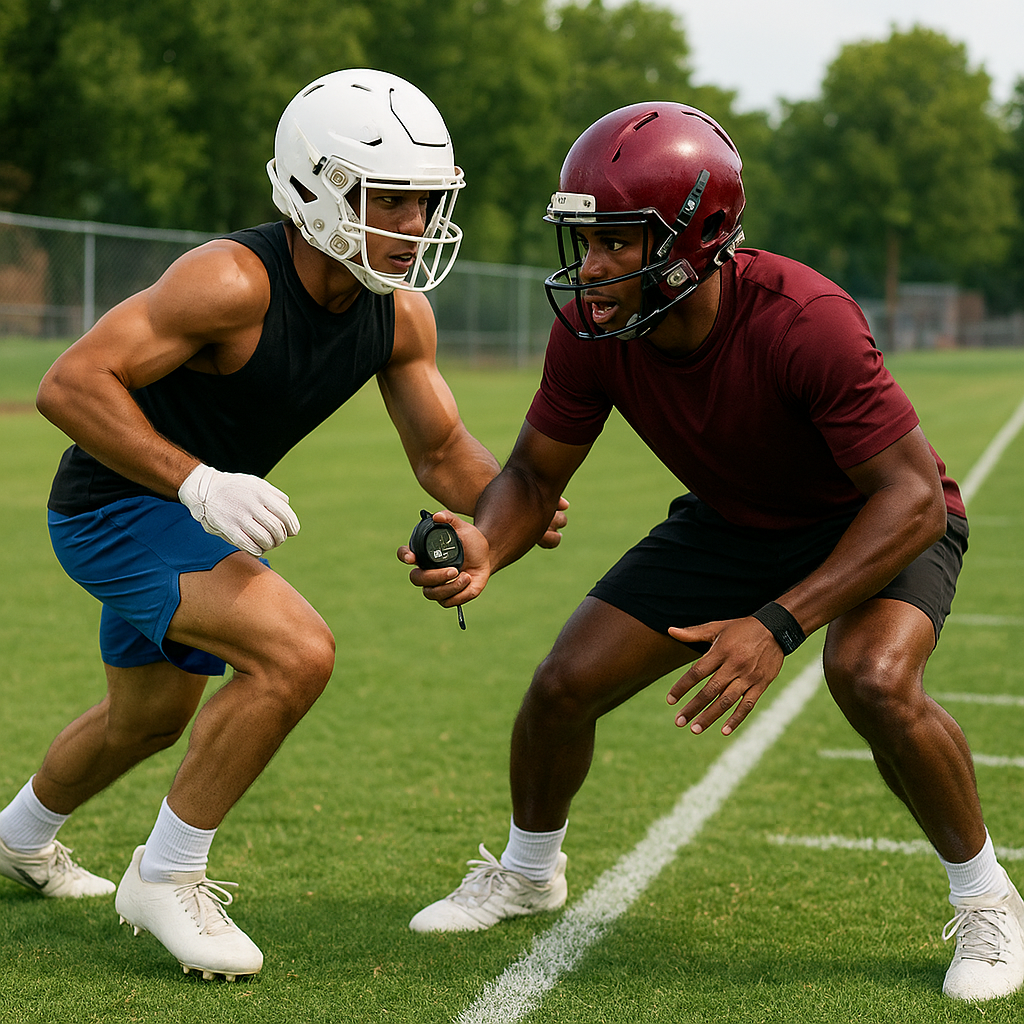
Put a receiver (or any fast teammate) one yard inside the sideline. You line up head-up at 6 yards, outside shade by half a man. Start a stopwatch for 4 seconds. That time cap matters because it forces a realistic tempo. You aren't backpedaling to nowhere. You're holding your cushion through the part of the route where a kid is trying to sell you vertical. The receiver's job is to stay on the boundary and use pace changes, rocker steps, and a late lean to steal space. Your job is to mirror with a patient pedal, then squeeze them tighter to the sideline one step at a time without turning your hips fully downfield until you have to.
The coaching point I stole from an off-season camp counselor: your outside foot is the steering wheel, not your shoulders. When I mess it up, I feel it immediately. My shoulders turn, my feet get long, and now I've given up the inside for free. When it's clean, my steps stay short, my hips stay square longer than I think they can, and I can still break back inside if the receiver tries to cross my face. That last part is why this isn't just a sideline drill. It's footwork for staying in phase.
Make it competitive without making it dumb: run five reps each, then swap. Keep score by separation at the 4-second buzzer, not by catches. Nobody throws a ball. You can do a whole block of this before 7-on-7, get your feet right, and show up to 1-on-1s with your base already awake.