
Three in-season habits that help young varsity athletes track stress, protect recovery, and spot workload problems before they build.
Strava notes beat the group chat spiral
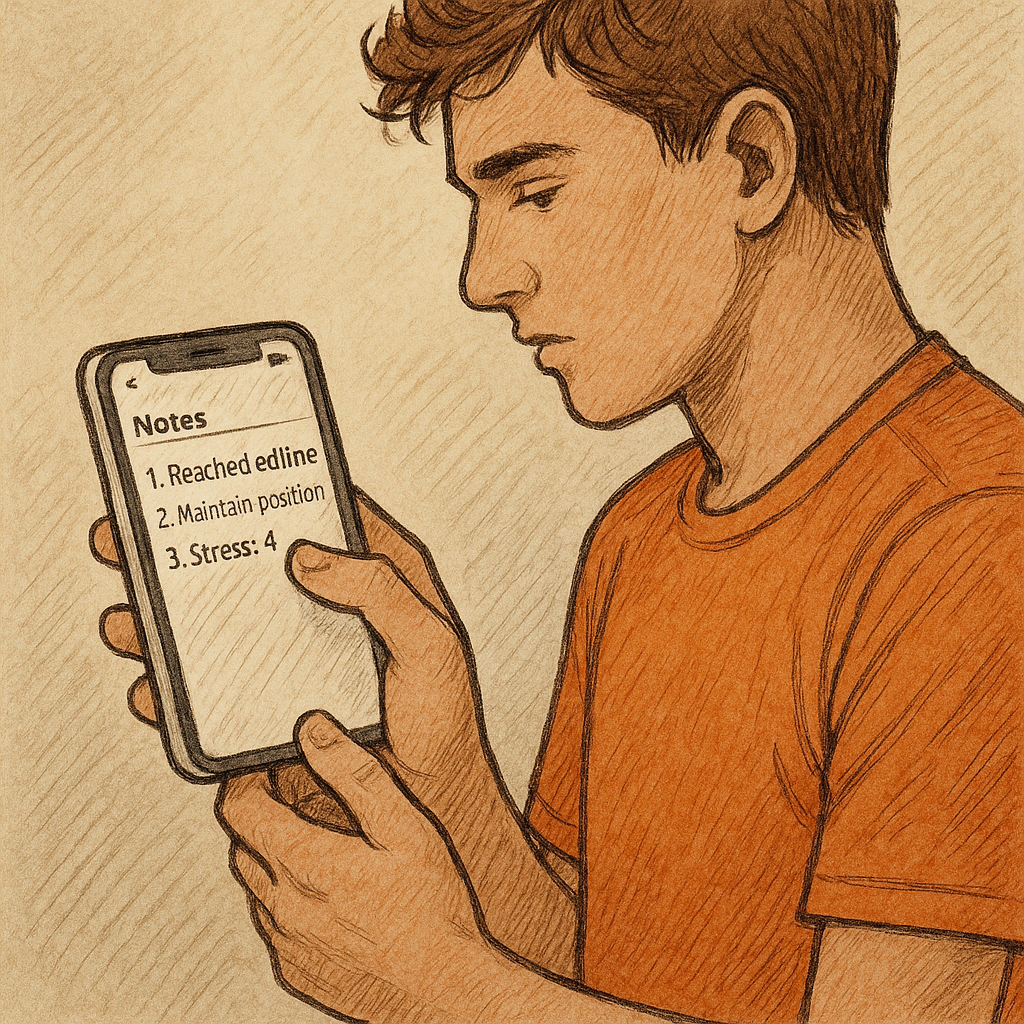
When the season turns into a blur of school, lifts, bus rides, and games, the mental stuff gets sloppy first. Not because kids are weak. Because the feedback they hear is loud and inconsistent: a coach is on them about effort, a teammate is chirping about touches, and the group chat is replaying one ugly clip on loop. The easiest fix I’ve seen is boring: use the notes field on a Strava activity (or any training log that time-stamps it) and make it a three-line debrief before the shower.
I tell athletes to write: (1) one thing they controlled today, (2) one thing they’ll repeat next practice, and (3) a one-to-ten stress score. That’s it. No essays. The reason it works is that the note is anchored to the actual session. You’re not trying to remember how Tuesday felt when it’s already Friday night under the lights. And it sidesteps the highlight-reel brain that tells a teenager, “I’m washed,” after one bad series.
The controlled item has to be specific enough to sound like the practice field rather than a poster. “Got to the end line on every defensive transition.” “Hit my cadence on the warm-up strides.” “Kept my shoulders down on the last 200.” Then the repeat item is a cue, not a goal: “First step on contact,” “eyes up before the trap,” “long exhale between serves.” The stress score is the sneaky part. When it trends upward for several days, it is a reason to check sleep, soreness, workload, and recovery with a coach, athletic trainer, or parent.
One detail I’ve learned the hard way: don’t let them use the note to litigate playing time. That’s what the group chat is for, apparently. Keep it about the process and their own switches. If a kid wants to add one more line, I allow: “Sleep: 6.5 hrs” or “Caffeine: yes.” It’s amazing how often the big mental wobble is just a Thursday night that turned into 1 a.m. scrolling.
The 10-minute walk after losses (no headphones)
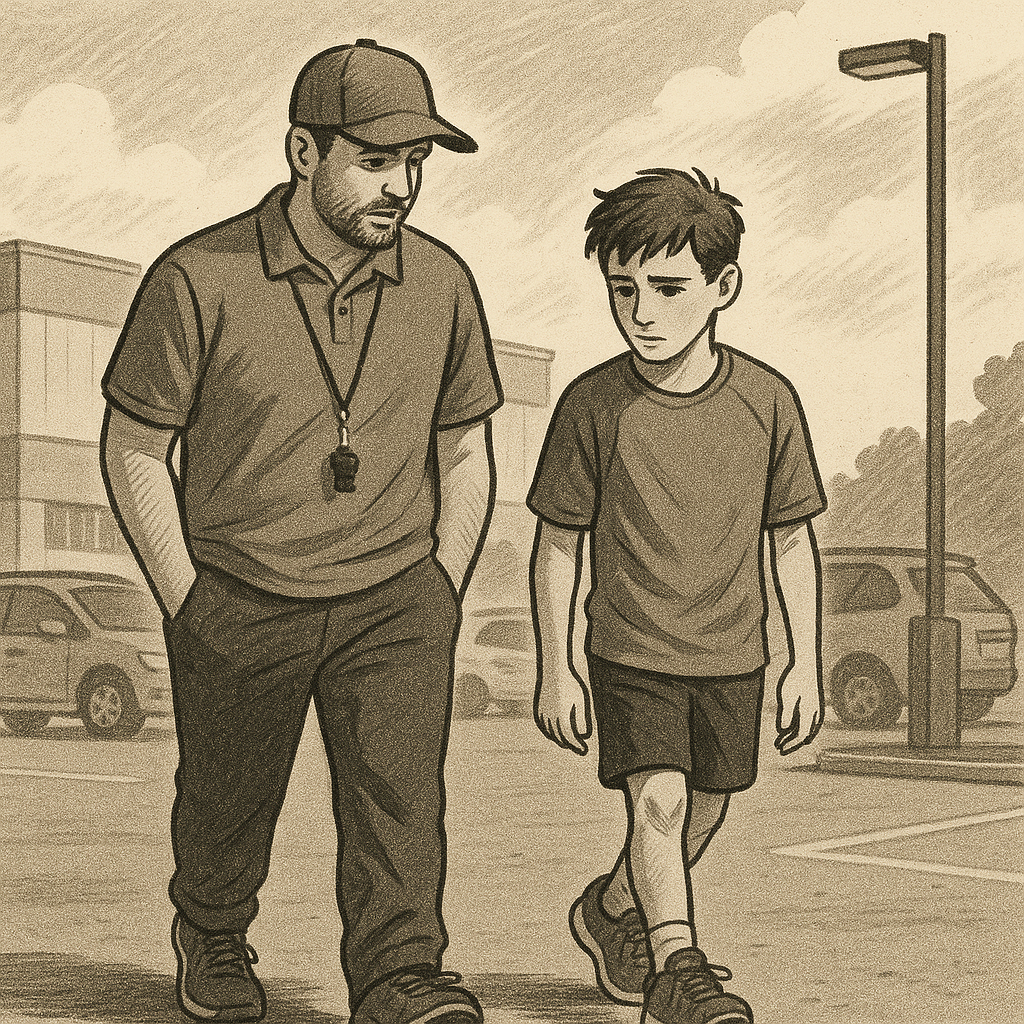
After a loss, some kids want to rewatch everything immediately, and some want to disappear. Either way, their system is still stuck in game speed. I’ve had better luck with a simple rule than with any pep talk: shoes stay on, and we walk ten minutes before anyone opens TikTok, YouTube, or the postgame stats.
It’s not a punishment lap. It’s not extra conditioning. It’s just a flat, steady loop in the parking lot or around the outside of the facility, at a pace where they can talk in full sentences. If they’ve got a Garmin, I’ll tell them to start a “Walk” so they don’t turn it into a shuffle-jog. The point is to downshift, not sneak in training.
The no-headphones rule matters. The loss already came with a soundtrack in their head. I want them to hear normal sounds again: car doors, teammates laughing, a coach’s voice drifting over. Here’s what I’ll say if they’re riding the same mistake: name the play once, out loud, and then switch to logistics. “Bus leaves at 8,” “Quiz tomorrow,” “Are you eating when you get home?” It sounds silly, but it pulls them back into the world where you do the next thing.
Half the time, ten minutes is long enough that the kid who’s about to melt down doesn’t. And the kid who wants to act like they don’t care stops performing that, too. I’ve watched athletes get in the car after that loop and say, “I’m still mad, but I can breathe.” That’s the whole goal in high-pressure stretches: get them to a state where they can sleep and show up the next day without carrying the entire season in their chest.
If you want a tiny upgrade, pick a consistent finishing spot. Same light pole. Same bench. Routine is calming when everything else (weather, opponents, lineup, travel) is changing week to week.
A one-page meet-day plan that fits in a gym bag
High-pressure seasons don’t just test legs and lungs. They test decision-making. The night before a big game or meet, I’ve watched smart, prepared athletes spin out over the dumbest micro-choices: what time to eat, whether to tape, what song to play, if they should change shoes, if they should bring the massage gun. All that “maybe” is exhausting.
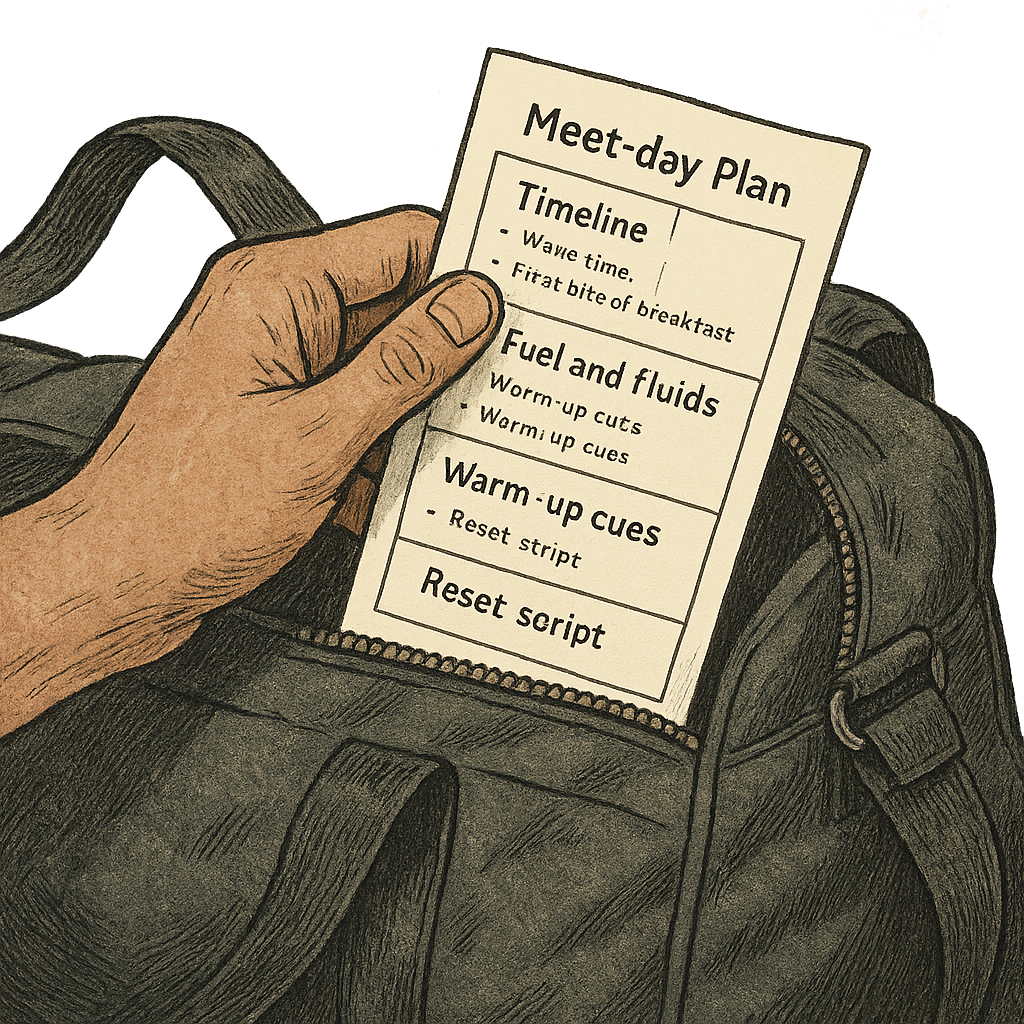
The fix I like is old-school: a single sheet of paper, folded into quarters, living in the outer pocket of the gym bag. I use a cheap MUJI A5 notebook page because it tears out clean, but any paper works. The rule is that it has to be readable in bad locker-room lighting, and it can’t require a phone. If your phone dies on a bus ride, the plan shouldn’t die with it.
On that page, I keep four boxes:
- Timeline: wake time, first bite of breakfast, arrival, warm-up start, and a reminder like “pee before spikes/cleats go on.”
- Fuel and fluids: two specific options they tolerate (for example, a bagel and peanut butter, or rice and eggs), plus what they’ll sip. Not a new sports drink they saw on Instagram.
- Warm-up cues: three items max. A long list of cues can create more mental clutter, so trim it to the few reminders the athlete and coach consider most useful.
- Reset script: one sentence for when it goes sideways. Mine is plain: “Next rep is the only rep.” Some kids prefer “Breathe out, then move.”
They check it once at breakfast, once when they arrive, and once right before go-time. After that, it goes back in the bag. The paper is a fence around their attention. I’ve seen it keep athletes from chasing new gear, new rituals, and random last-minute advice from a teammate’s uncle in the stands.
Also, the page becomes a record. When the season flips from fall to winter, or winter to spring, they can compare what worked when the schedule got tighter and the pressure got louder. Not by vibes. By what they did.