
Teach young linemen to see the shift early with helmet depth, stance hand, and the near-foot tip-off.
Helmet depth tells you who's about to move
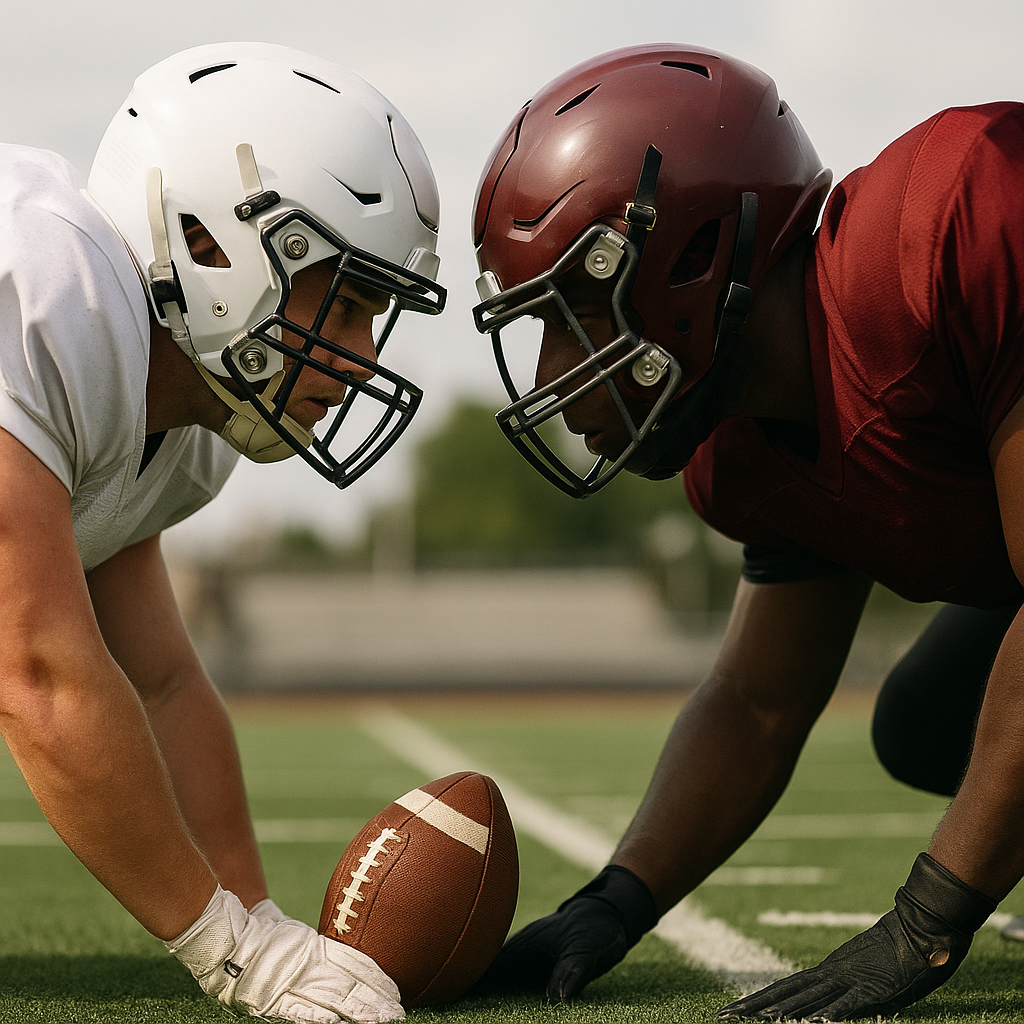
I started teaching this after watching the same play die in youth ball: a kid is locked onto his man, the defense bumps a half-gap late, and now our guard is blocking air while a 3-tech is in the backfield. The cleanest early clue is helmet depth, not the numbers on the chest. A defender who's planning to stem into a tighter alignment will often cheat his head and shoulders closer to the ball pre-snap, even if his feet are still sitting in the original spot. It looks like he's leaning in to listen, or like he's impatient. If you freeze the moment, his facemask is a few inches closer than the guy across from him.
Here's how I coach it without turning pre-snap into a lecture. During indy, I stand behind the offense and have two D-linemen set in a normal even front look. Then I tell one of them, quietly, to plan a late slide from a 4i-ish shade into a true 3-tech. I don't let him move his feet until my clap. All he's allowed to do is adjust his upper body. The offense gets five seconds to point at which helmet is closer to the ball and call it out: "near" or "even." It's a dumb-simple rep, but it trains their eyes to stop staring at the belt buckle and start seeing the line as a row of levels.
On a real Friday night, I want the young tackle thinking: if that inside guy's helmet is already living in my B gap, I'd better be ready for him to show up there for real. That doesn't mean we jump. It means we tighten our first step, keep our inside hand ready to catch color, and we don't let our brain commit to a wide picture that might not exist a second later.
The stance hand is a dead giveaway on slants and bumps
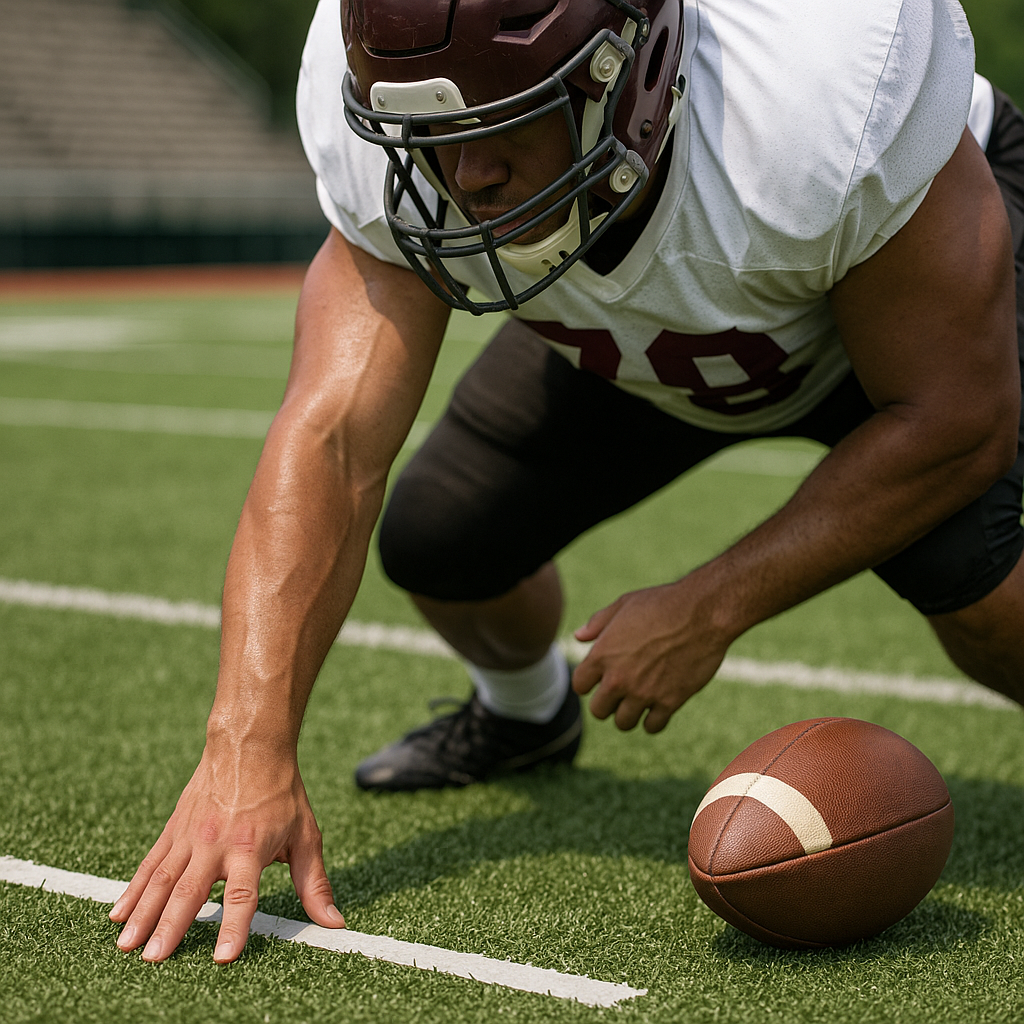
If you only give a young lineman one thing to look at, give him the down hand. It sounds too small to matter until you sit close enough in a game to hear the fingertips scratching at the turf. When a defensive lineman is about to slant, spike, or bump into a new gap, his hand placement often shifts with it. The inside hand creeps closer to the ball when he's thinking I'm crossing face, because that's the hand that lets him launch at that angle. If he's widening late, you'll see the opposite: the outside hand settles, his shoulders square a hair, and he looks like he's getting ready to run a track start.
I learned this because kids can lie with their eyes, but they can't hide what their base is set up to do. They'll stare straight ahead, they'll point, they'll bark, and then the hand tells the truth. In practice, I make it visual. I put a strip of athletic tape on the ground where the ball would be, then another strip one shoe-width outside it. I have the defenders line up and I tell them, "If you're slanting inside, put your down hand on the tape closer to the ball. If you're slanting out, hand goes on the outside strip." We run it at half speed first so the offense can literally see the connection between hand placement and path.
Now when we're on the sideline during a game, I don't ask a young guard to diagnose fronts like a college center. I ask, "Which hand is he loading up?" If the 3-tech's inside hand is tight and heavy, the guard knows the inside threat is alive, even if the kid hasn't moved yet. That changes how we set: eyes inside first, shorter first step, and be ready to pass him if he disappears. It also keeps them from chasing ghosts, because they're reading a physical cue, not guessing based on alignment alone.
Near-foot pressure: the cue kids can feel in their own stance
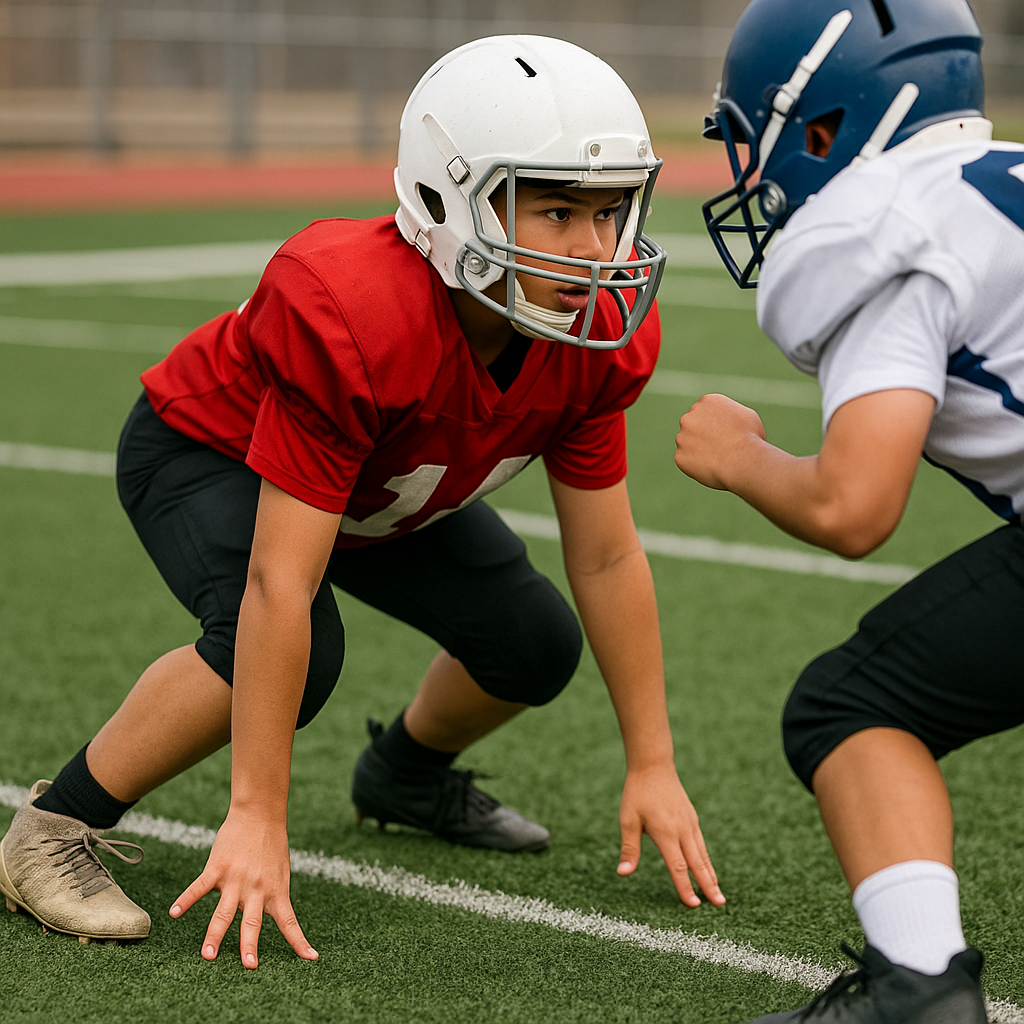
The best part about teaching near-foot pressure is that it transfers fast, because it isn't just something they see. It's something they can mimic, then recognize. When a defensive lineman is about to shoot into the near gap, he tends to load the foot that's closest to where he's going. You can catch it as a tiny heel lift, a knee that points inward, or the foot digging like he's about to scrape mud off a cleat. Youth defenders especially give this away because they don't have the patience to be perfectly still. They start preloading the direction they want to go, and the body leaks the plan.
Here's the drill I use when I'm short on time and long on kids who stare at the scoreboard between plays. I line up a guard and a defender in a normal look. I tell the defender he can either stay, slant inside, or slant outside, but he has to decide before the cadence starts. Then I make the guard take a picture with his eyes for one second and say out loud, near foot or away foot based on which foot looks heavier. After that, we run the rep. The guard doesn't have to be right 100% for it to work. He just has to get out of the habit of freezing when the defense moves late.
On game film, you can slow it down and show them the tell. On the field, it's quick: if the defender's inside foot is dug in and his outside foot looks light, don't over-set wide. Keep your first step under you and be ready to catch the spike. If it's the outside foot that's loaded, don't chase inside with your shoulders and gift-wrap a lane. This cue also helps the kids who struggle with nerves, because it gives them a simple job during the pre-snap chaos: find the heavy foot, then play the snap. No speeches. Just a clean trigger.