
Packed game schedules can squeeze homework, sleep, and recovery into the same few evening hours. These three routines are how I keep schoolwork from becoming another casualty of baseball season.
The backpack whiteboard check before you leave the dugout
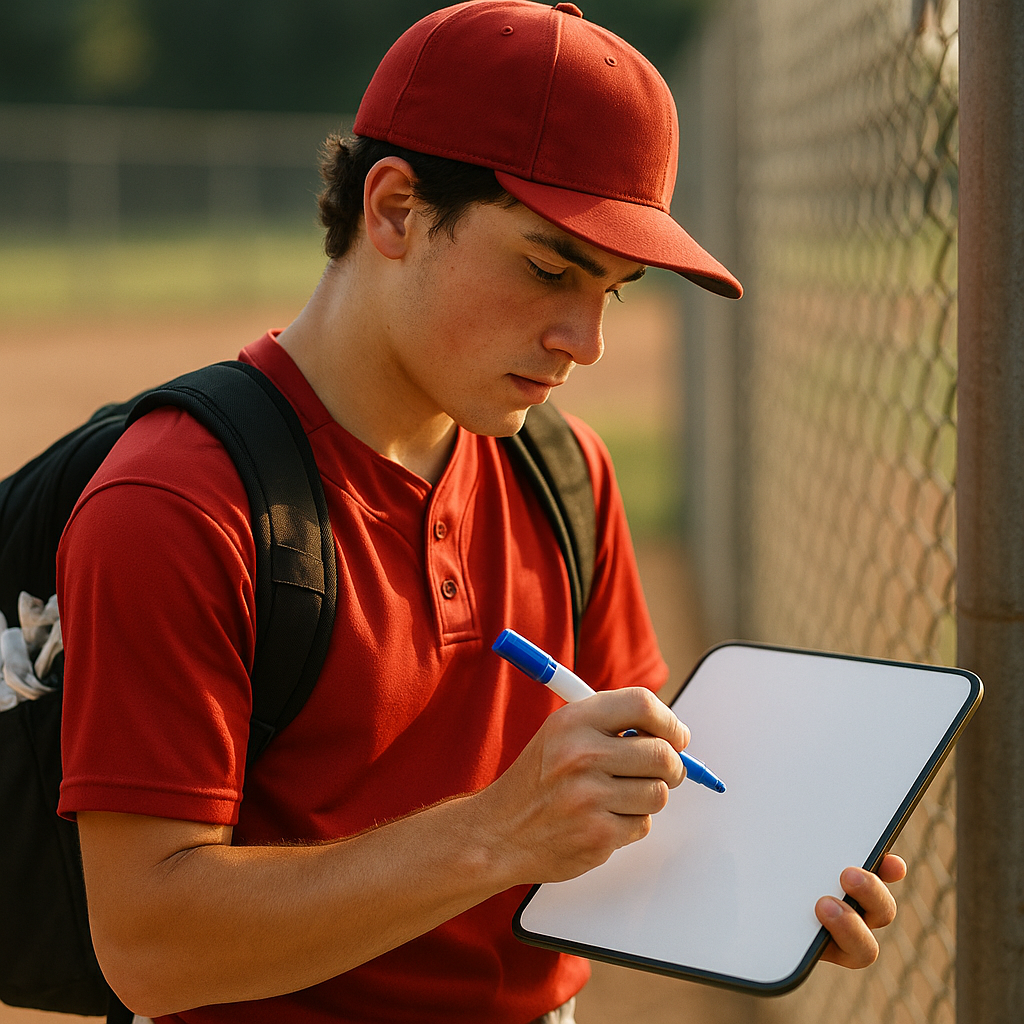
I started doing this after one too many nights where we got home from a JV-to-varsity double-header, he showered, ate, and then froze at 10:07 because he couldn't remember what was due tomorrow. Not the big projects. The small stuff. The Google Classroom post with a weird filename. The worksheet that only exists as a photo on a friend's phone. That's the kind of thing a packed baseball week eats alive.
Here's the tool: a 9 x 12-inch mini whiteboard (the thin kind that slides into a backpack laptop sleeve), a black dry-erase marker, and one other color. I like blue. It weighs nothing, it doesn't need Wi-Fi, and it doesn't turn into a notification festival on the bus.
As soon as the last out is recorded and the bags are getting zipped, you do a 90-second check standing by the dugout gate or the bullpen fence. Black marker is only for tomorrow. Write three lines max: (1) what's due, (2) what time it's due, and (3) what you need to bring to make it happen (Chromebook charger, book, calculator, whatever). Blue is for the first five minutes when you get home. Not the whole study plan. Just the opening move: upload the photo, email the teacher, start the first two problems, print the rubric. If there's a late bus or a long drive, that blue line is the difference between starting and staring.
The best part is how it changes the ride home. Instead of reliving every at-bat in your head while your brain spirals about school, you've already captured the assignments. The whiteboard lives in the same pocket as the schedule card and the extra batting gloves, so it stays a baseball thing, not another app your kid will mute.
Turn study hall into a bullpen: use the time you actually have

For student-athletes, homework time can become fragmented by practices, games, travel, and early dismissals. Fifteen minutes in the study hall. Ten minutes while a teacher is wrapping up a test. Twenty minutes on a bus with a teammate blasting music. Then it's practice, cages, or a game. If you keep waiting for a perfect 90-minute homework block, you'll keep losing.
What works better is treating those little pockets like a structured throwing day. I use short study blocks that fit whatever time is actually available. I pick one small task, work until the available window closes, and leave myself a clear note about where to restart. That last part matters. Ending on purpose makes it easier to restart later.
Micro-task examples that play nice with a tight schedule: knock out the five-question exit ticket; write the first paragraph of a history response; do every other problem in a math set; make a quick outline; enter sources into a Works Cited doc so you're not hunting URLs at midnight. If the assignment is on paper, take a clean photo and drop it into a folder labeled by class before you even start. I've watched kids lose 20 minutes just scrolling for the right picture because they snapped it between innings and never filed it.
There's also a baseball-specific advantage: these chunks fit around the adrenaline curve. After a game, the brain is loud. It wants to replay the second inning or the 0-2 pitch you chased. A short block can feel much more manageable. You can do it in the cafeteria after school, on the bus while the lineup card is getting passed around, or in the hallway outside the trainer's room while you're waiting for tape. You're not trying to win the entire gradebook in one sitting. You're stacking small completions so the workload doesn't get pushed late into the night and start cutting into sleep.
The teacher email template you write once and reuse all season (yes, with times)
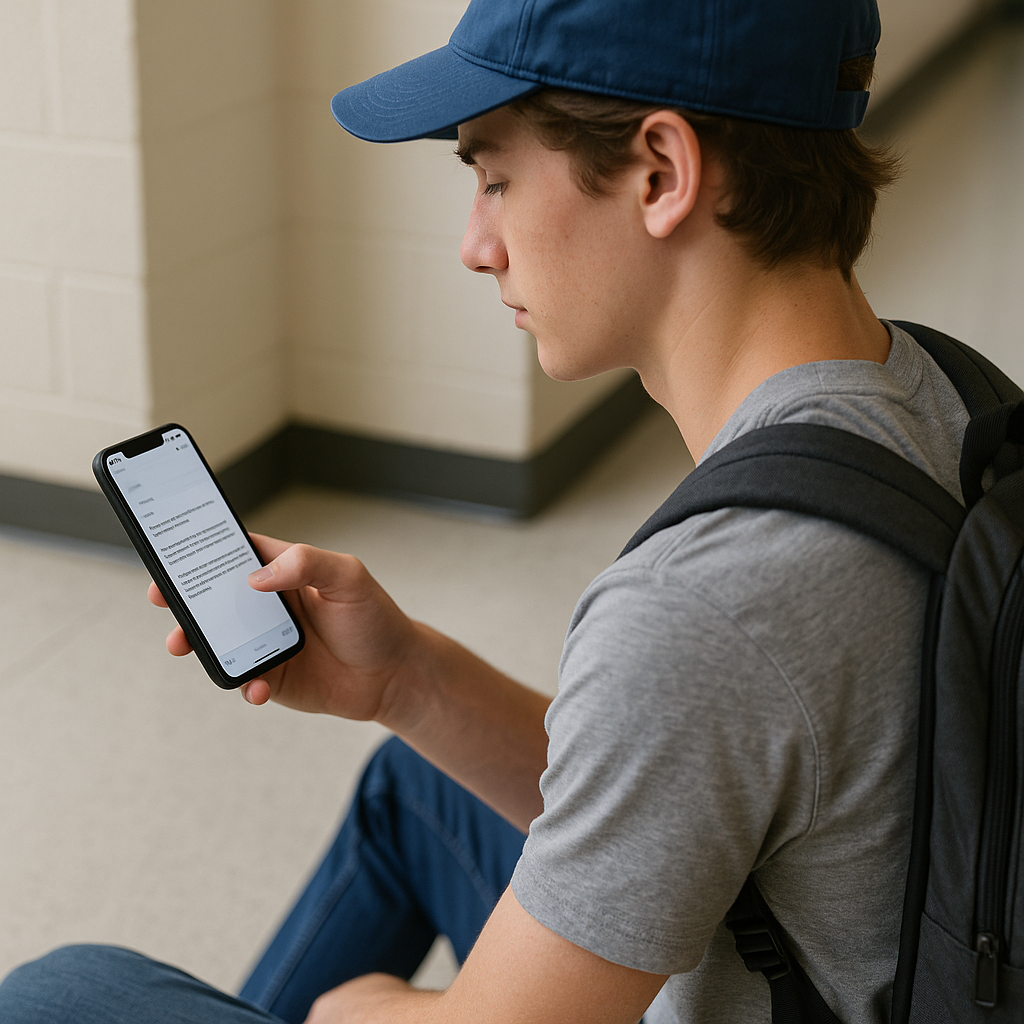
If your kid is missing work because of away games, early dismissals, and the occasional tournament that eats a Friday, the worst move is waiting until the grade drops to a D and then sending a vague email. Teachers don't have time to decode it, and kids hate sending it because it comes across as an excuse. So we made a template that lives in Notes. He fills in the blanks, hits send, and moves on.
Here's the structure I push, and it's boring on purpose:
- Subject line: Class + date + what you're asking for. Example: Algebra 2: April 9 away game - missing quiz?
- First sentence: the concrete schedule. Example: I'll be dismissed at 1:30 for an away game and won't be back until around 7:30.
- Second sentence: what you've already checked. Example: I looked in Google Classroom and saw the practice set posted, but I didn't see the warm-up or the quiz.
- Third sentence: a specific ask with two options. Example: Can I take the quiz tomorrow during study hall, or would you rather I do it before school on Thursday?
- Close: a simple thanks and your name.
The times are not fluff. When you clearly say that you'll be on a bus and you're trying to avoid turning this into a 10 p.m. scramble, most teachers meet you halfway. You're also modeling a skill the kid will need the second sports stops being the excuse and becomes just life: communicate early, show what you've done, and ask for a workable path.
One more thing I learned the hard way: don't ask for everything at once. Don't email six teachers in a row with a giant paragraph about the season. Send one clean message tied to one class, then do the next one. It feels smaller, and the replies come back cleaner, too.