
A strip of tape on a clipboard sounds silly until it helps you spot recurring movement concerns, pain reports, and sloppy landings before a lifting block ramps up.
The tape-on-clipboard readiness screen
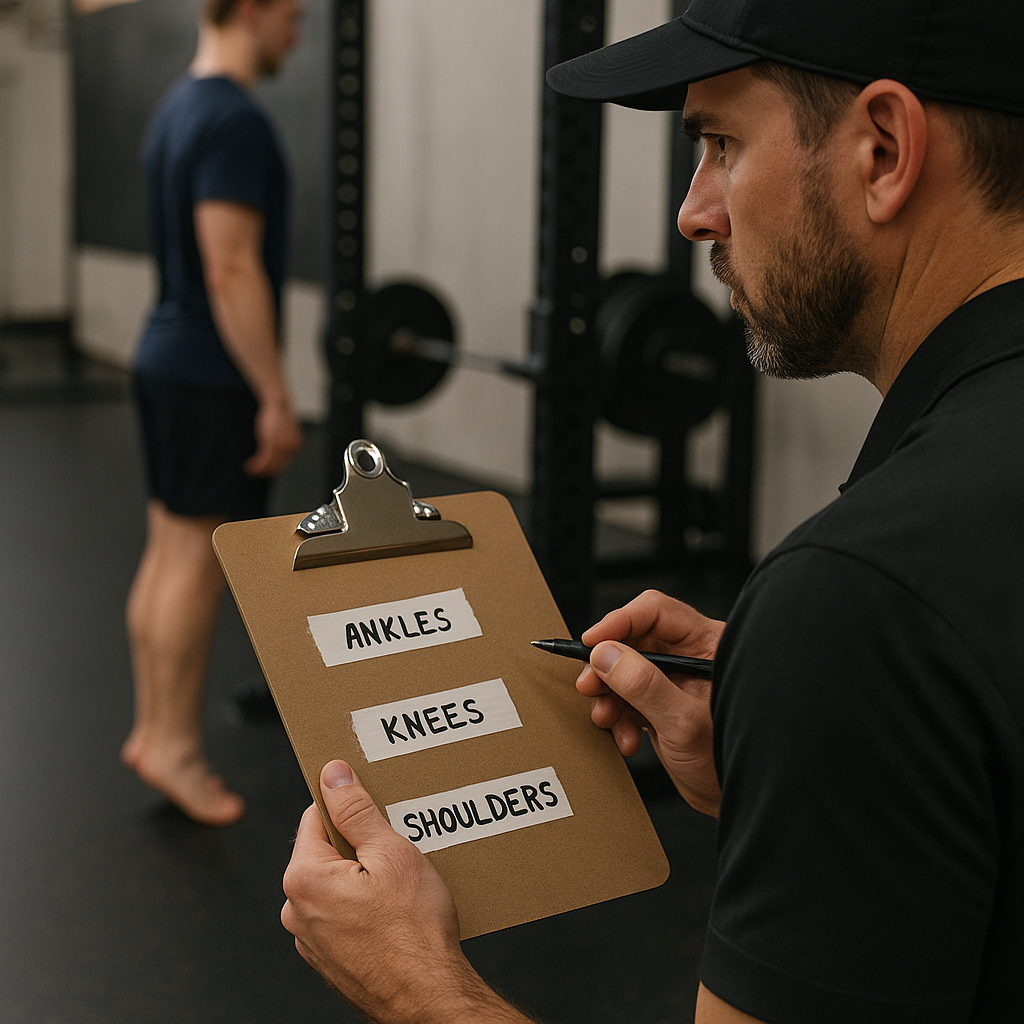
I stole this from a veteran ATC who was tired of hearing, two weeks into a block, that a kid's shin has been barking since PE. Before we touch a barbell, I put three little pieces of athletic tape on my clipboard, each one labeled with a Sharpie: ankles, knees, shoulders. Every athlete gets 30 seconds to do three things, and I watch like a hawk while they think I'm just being fussy.
1) Ankles: five slow heel raises per side, barefoot if the room's clean. I'm looking for a heel that drifts inward, toes that claw the floor, or a kid who can't keep the big toe down. Those findings tell me to take a closer look at ankle and foot control before progressing the athlete, but they do not predict who will develop Achilles pain.
2) Knees: a five-rep bodyweight squat to a box or bench. If the knees cave in or the athlete can't hit the same depth twice, I don't get cute with the load that day. I write a dot on the tape, and they earn a lighter progression plus extra tempo work.
3) Shoulders: a dead-hang for 10 to 20 seconds on the pull-up bar, then one controlled push-up. If they struggle to control the hang or push-up, I treat it as a coaching cue and adjust the exercise rather than assuming it predicts future shoulder pain.
The tape is the trick because it forces me to record it. Not a spreadsheet, not an app, just a physical reminder sitting on my clipboard at practice. When the same concern shows up twice, I adjust the session and ask about pain or other symptoms. Persistent or worsening pain goes to the athletic trainer or another qualified healthcare professional rather than being treated as a coaching problem.
Teach the landing before you chase the vertical
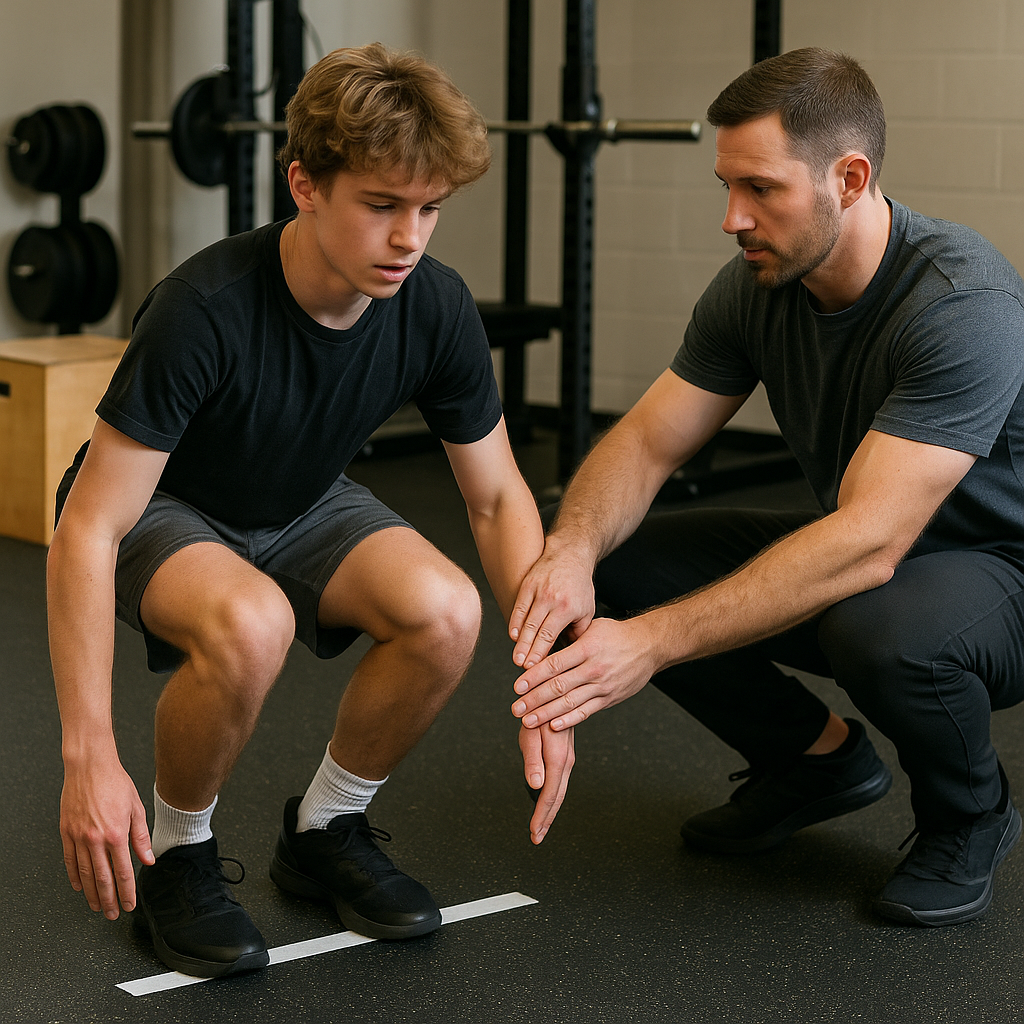
If you run a weight room for teenagers, you know the moment: the first week the jumps show up, somebody lands like a folding chair and laughs it off. Poor landing control is worth coaching on, but knee pain that develops during a jumping block can have several causes, including rapid increases in training load, and should not automatically be blamed on a single landing pattern. So I teach landings the same way I'd teach a clean pull. It's a skill, not an accessory.
I start with a drop-to-stick from an 8 to 12-inch box. Step off, land, freeze for a full two seconds. No rebound. The freeze is the whole point. I want to see knees tracking over the middle toes, hips back, chest quiet, and feet that don't slap like flip-flops. We do three sets of three, and I walk the line like a judge. If the landing is loud, the set doesn't count. If the athlete's knees dive in, I put my hand outside their knees and cue them to press out into my palm. Simple and immediate.
Then we add a more demanding progression: single-leg decel. One step forward, land on one foot, and hold. This is where you may notice athletes who lose ankle control or land with a relatively stiff knee, which gives you another movement pattern to coach before adding more jump volume. I don't need a lecture from them about how they feel fine. The wobble is the story.
Only after that do we do any sort of repeated jump. Even then, I cap contacts. Ten clean landings beat thirty sketchy ones, especially when the athlete's also sprinting at practice and playing two games this week. The payoff is better landing practice and a more controlled progression before jump volume increases.
The shoulder-saving tweak to teen bench culture
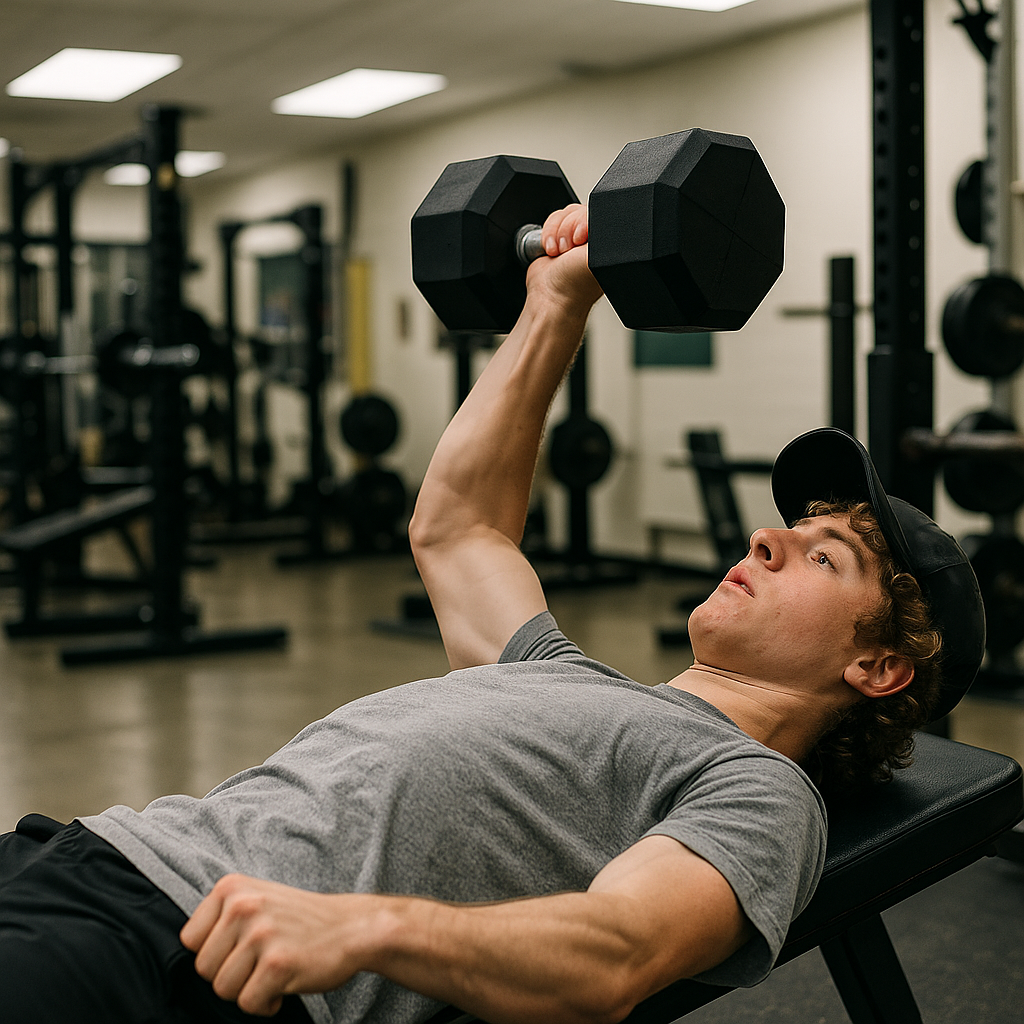
Every school's weight room has the same gravitational pull: the bench station. And I get it. It's measurable, it's social, and it's the one lift most kids have seen on TikTok a thousand times. The bench press itself is not inherently unsafe, but grip width, load, control, and overall technique can change shoulder loading.
Here's the progression I use to reinforce bench technique: athletes start with manageable dumbbells before moving to heavier barbell work, and I coach consistent shoulder and upper-back positioning. I cue it like this: pull your shoulder blades down into your back pockets, then pinch them gently into the bench, and don't let them slide when you press. If they can't keep that position for eight clean reps with moderate dumbbells, they don't touch a heavy barbell that day. That's not punishment. That's keeping the next three weeks from turning into "my shoulder clicks" conversations.
Grip matters too, and I don't pretend it's universal. I line up their index fingers just outside the smooth part of the bar as a starting point, then I watch their elbows. If the elbows flare hard at the bottom, we narrow the grip by one finger width. I want the forearms vertical at the bottom, not angled like they're trying to bench around a corner.
We also pause every rep for a beat on the chest with lighter weight once a week. No bounce. The pause exposes who loses tightness and who tries to crank the shoulders forward to finish. Those athletes get more rows and face pulls that day, plus push-ups with a slow lowering phase.
And yes, I still let them chase numbers. I make them chase numbers with controlled technique, appropriate loading, and positions they can maintain without pain.