
A homework packet, a short study timer, and a shared calendar can make tournament weeks easier to manage.
Keep a homework packet in the car
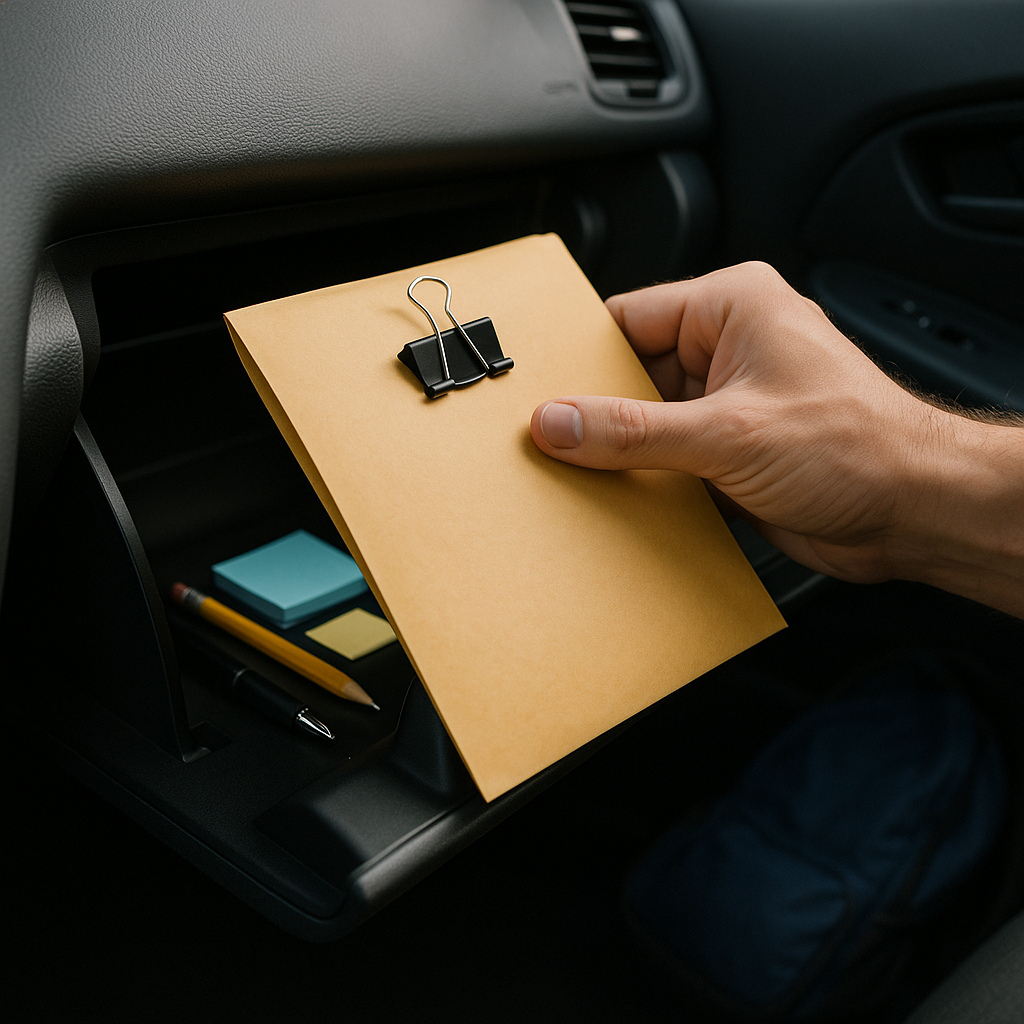
There are weeks when the car is basically your kid's second locker. Backpack in the trunk, cleats on the floor mat, a half-empty shaker bottle rolling around, and then, at 9:41 p.m., you get the message: "I can't find the worksheet." That was me about a dozen times before I got stubborn and built a tiny system that survives the chaos.
I keep a plain manila envelope in the glove box with a medium binder clip clipped to the outside so it doesn't vanish. The rule is simple: anything school-related that needs to be turned in this week gets clipped into one packet the minute it enters the car. Clip the week's loose worksheets, rubrics, and permission slips together so they stay in one place instead of disappearing into the car or gear bag.
Inside the envelope: a single sharpened pencil, a cheap pen, two sticky notes, and one sheet of notebook paper. That notebook sheet is the underrated part. After practice, I have my child write down the next three school tasks in the parking lot before we head home, rather than relying on memory. Then the whole bundle gets clipped and goes back in the envelope.
This works especially well on busy sports weeks because homework often has to fit around practices, games, appointments, and travel. Whether the week includes a softball doubleheader, a late basketball practice, or a 6:00 trainer appointment, the packet keeps the paperwork in one predictable place even when the backpack gets left in the car.
For us, it cuts down on two common problems during tournament weeks: hunting for loose papers and forgetting what still needs to be finished. And if you're thinking, "My kid uses a laptop," cool. Clip the printed rubric or the permission slip anyway. Even in a mostly digital school setup, loose paperwork can still be easy to misplace.
Try a short homework sprint after practice
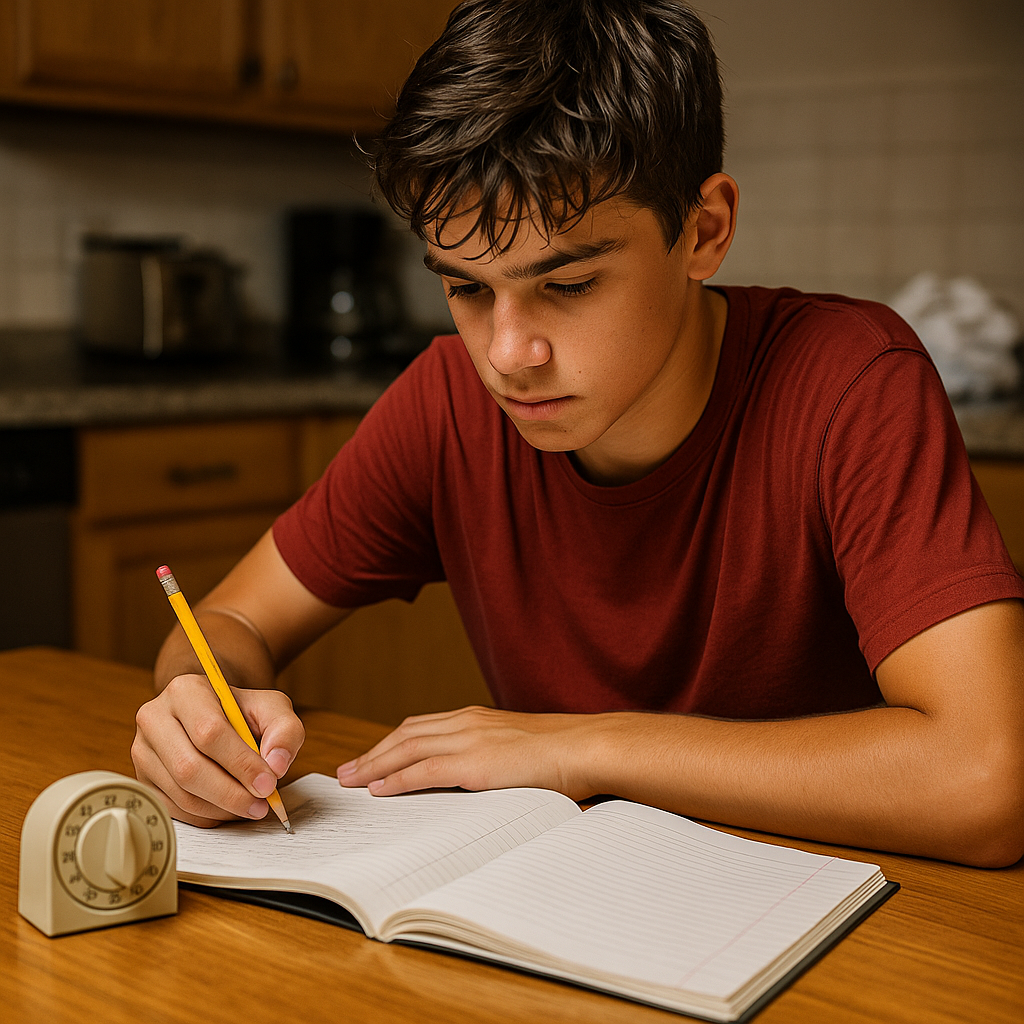
I stopped telling my kid to "go do homework" after practice because the instruction felt too vague and often turned into a negotiation. After a demanding practice, starting a large block of homework can feel especially difficult, so I begin with one short, timed work period.
I set a 12-minute timer rather than tying the first work period to finishing the whole assignment. I use 12 minutes because it feels manageable in our house and still gives my child enough time to make progress on a small task: five math problems, a paragraph edit, a few vocabulary cards, or a quick quiz review. I like an old-school kitchen timer because it makes the same sound every time and doesn't drag them into their phones. If you only have a phone, put it in airplane mode and face down on the counter. What matters is having a clear stopping point.
Here's how we run it on nights with late practice: shoes off, hands washed, quick snack, timer. During those 12 minutes, I stay nearby for questions but otherwise let my child work independently. When the timer rings, they choose one of three options: stop, take a 3-minute break, or roll into a second 12. Let them pick. Giving my child a choice about what happens after the timer rings also reduces the argument over whether to continue.
For us, the goal is to get some schoolwork done before the night gets too late and fatigue makes it harder to concentrate. In our house, the timer also makes the task feel more manageable because my child knows exactly when the first work period ends.
On travel weeks, we use the same routine in the hotel: desk chair, timer, packet. That consistency makes it easy for us to repeat the routine away from home.
Put school and sports on the same calendar
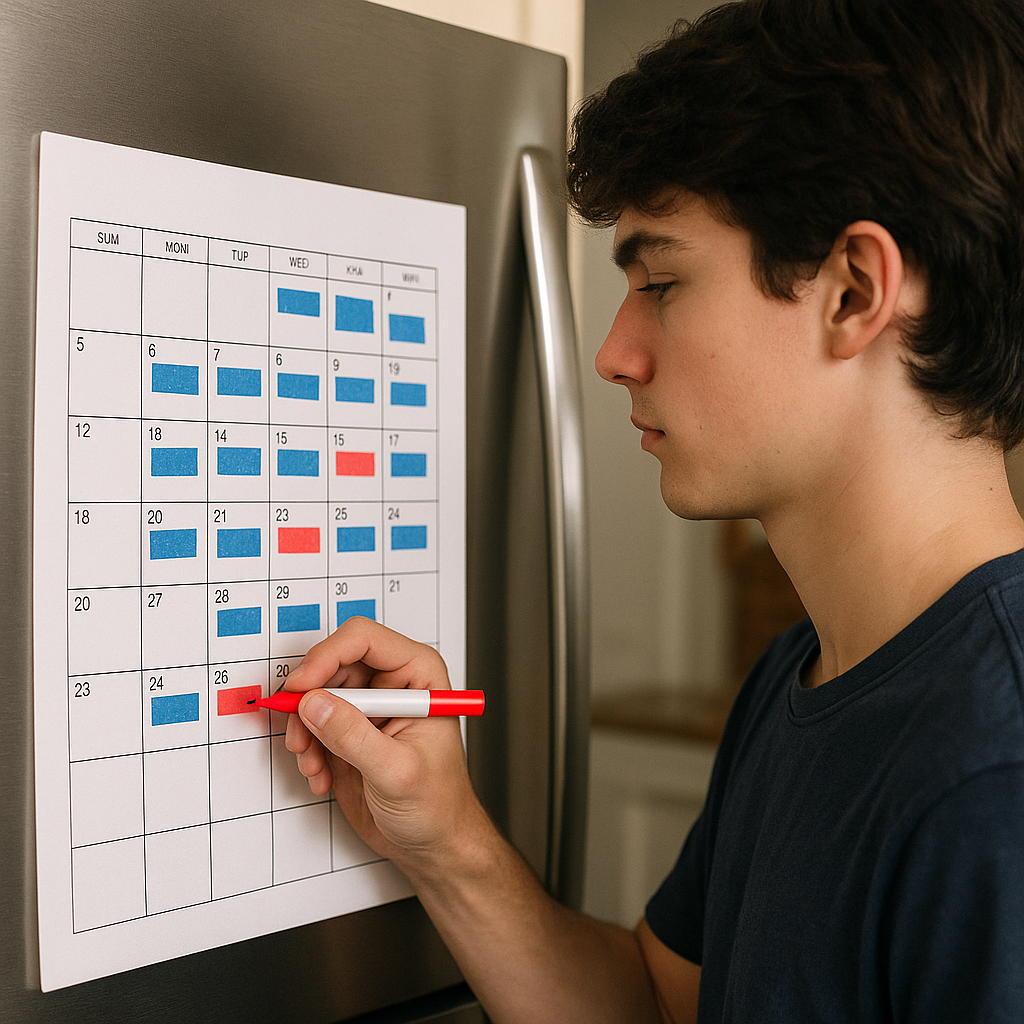
Busy sports schedules can make school deadlines easier to overlook, especially when practices, games, and travel change from week to week. Your kid remembers the 7:00 tip. The English project quietly sits there until it's suddenly midnight.
My fix is a single monthly calendar (either a paper one on the fridge or a shared digital one) with only two colors. One color is for sports, and the other is for school, which keeps the calendar easy to read at a glance. I update it the same day the coach sends the schedule or the teacher posts a syllabus. If a date has both colors on it, that is a high-stress day. You can see it from across the kitchen.
The useful part comes when both colors land on the same day. If Tuesday includes practice and a big test, move a manageable piece of the schoolwork to an earlier day when possible. For us, that looks like: ten minutes of outline work on Sunday afternoon while the uniform is in the wash, or a quick flashcard review before leaving for a lesson or during travel when someone else is driving. Even a small amount of work completed earlier can reduce what is left for the busiest night.
The calendar can also make conversations with coaches easier. A clear heads-up gives the coach useful context when school obligations conflict with optional training: "We can do Wednesday, but Thursday is finals week, so he may need to miss the extra hitting block."
For older athletes, I would have them add their own practices, games, tests, and deadlines so schedule conflicts are easier to spot before the week gets overloaded.
If practices and tournaments repeatedly push homework to late at night, organization may not be enough. The American Academy of Pediatrics recommends adequate sleep and recovery for young athletes and warns that excessive training or overlapping sports schedules can contribute to fatigue and burnout. The AAP also lists poor academic performance as a possible sign of overtraining or burnout.