
Three simple cross-training add-ons using tennis balls, a jump rope, and a wobble board can challenge coordination, rhythm, balance, and body control.
Tennis ball drills add a reaction challenge
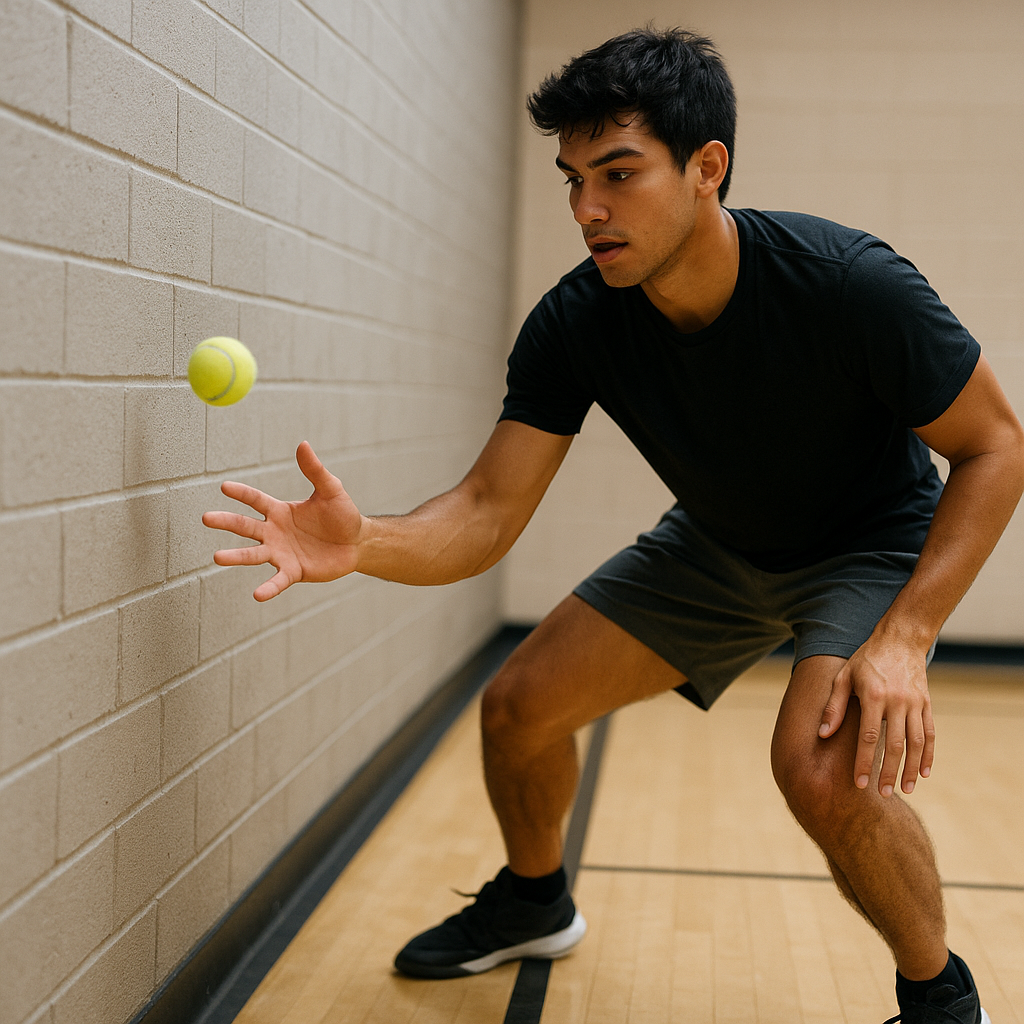
I started carrying two tennis balls in my backpack for athletes who look comfortable in predictable drills but struggle when a movement task suddenly changes. A tennis ball moves quickly enough to make catching and repositioning more demanding than a predictable footwork drill. Find a wall, a fence, or the side of the gym, and stand about 6 to 8 feet back. Toss one ball against the wall with your right hand, catch with your right, then switch to left. Easy. Then make it honest: alternate hands every throw, and after each catch, tap the ball to the floor once before you throw again. The floor tap adds another coordination task, making it harder to maintain posture while catching and moving.
Once that feels smooth, add feet. I like a simple in-in, out-out pattern (like an agility ladder, but you do it on a taped line). Throw, catch, two quick steps, tap, throw. As the pattern becomes easier, the goal is to keep the steps controlled and the catches clean. For athletes, the useful part is learning to coordinate the eyes, hands, and feet while several things are happening at once.
Two notes from doing this with athletes: Use a standard tennis ball if you want a quicker rebound, and keep the sets short enough to maintain good technique. Keep the sets short enough to maintain good technique rather than pushing through sloppy repetitions.
Jump rope builds rhythm and repeated-footwork practice
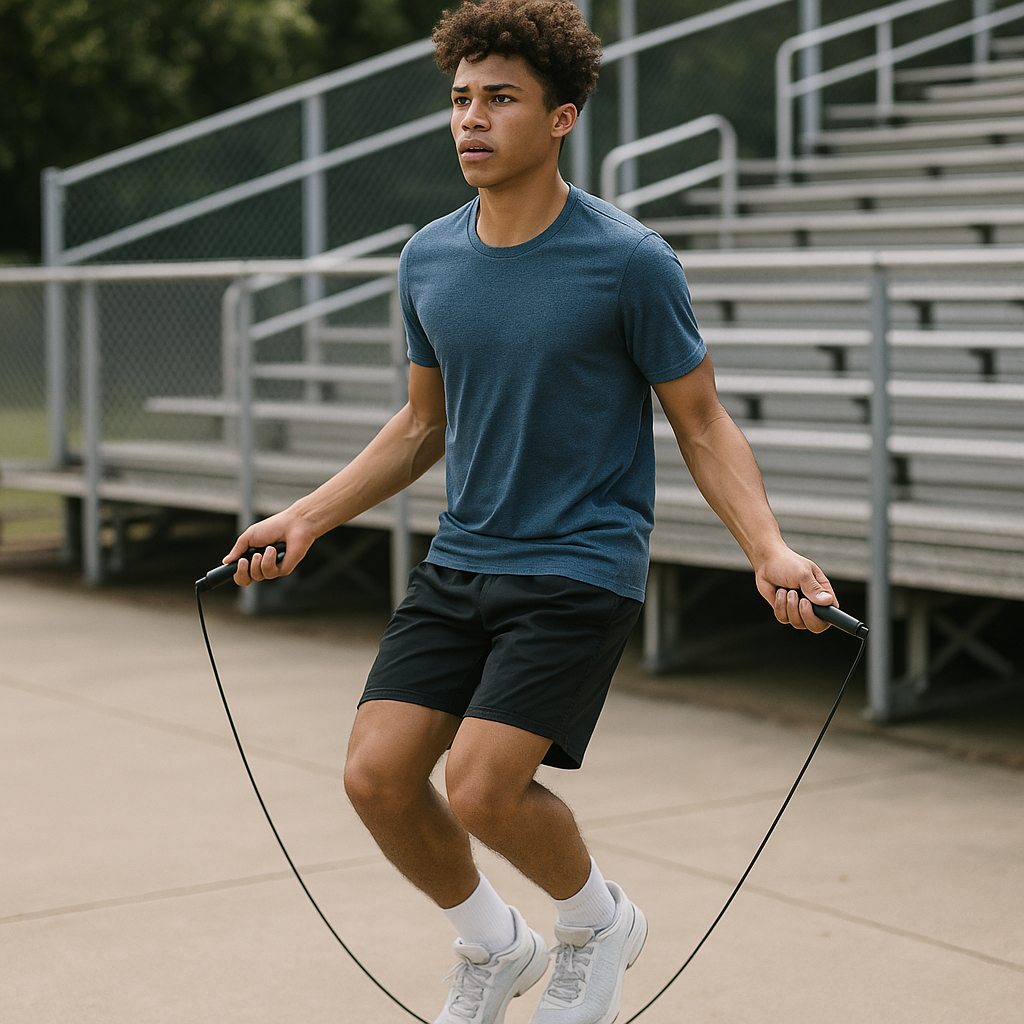
If you’ve ever watched a multi-sport kid bounce from basketball to soccer to lacrosse, you’ve seen the same issue show up in different uniforms: quick changes in pace can expose gaps in rhythm and conditioning. Jump rope is an easy add-on because it combines repeated foot contacts, rhythm, and a cardiovascular challenge in very little space.
Here’s a simple progression I use when athletes need a short session between practices or games. Start with 5 rounds of: 30 seconds easy bounce (both feet), 15 seconds rest. A simple cue helps: turn the rope mainly with the wrists and keep unnecessary shoulder movement to a minimum. Then move to 5 rounds of: 20 seconds alternating feet, 20 seconds both feet, 20 seconds rest. Alternating feet makes the pattern more demanding because body weight has to shift from side to side while the rope keeps moving.
A metronome can also turn the drill into a simple rhythm challenge. Set a metronome to a comfortable tempo and try to match one jump to each beat for a short interval. Matching the rope to a steady beat gives athletes another way to practice maintaining rhythm under a small amount of physical fatigue.
Keep the rope in your bag rather than leaving it at home. It takes up little space and works well when you only have a short window to train.
Wobble board catches challenge single-leg balance
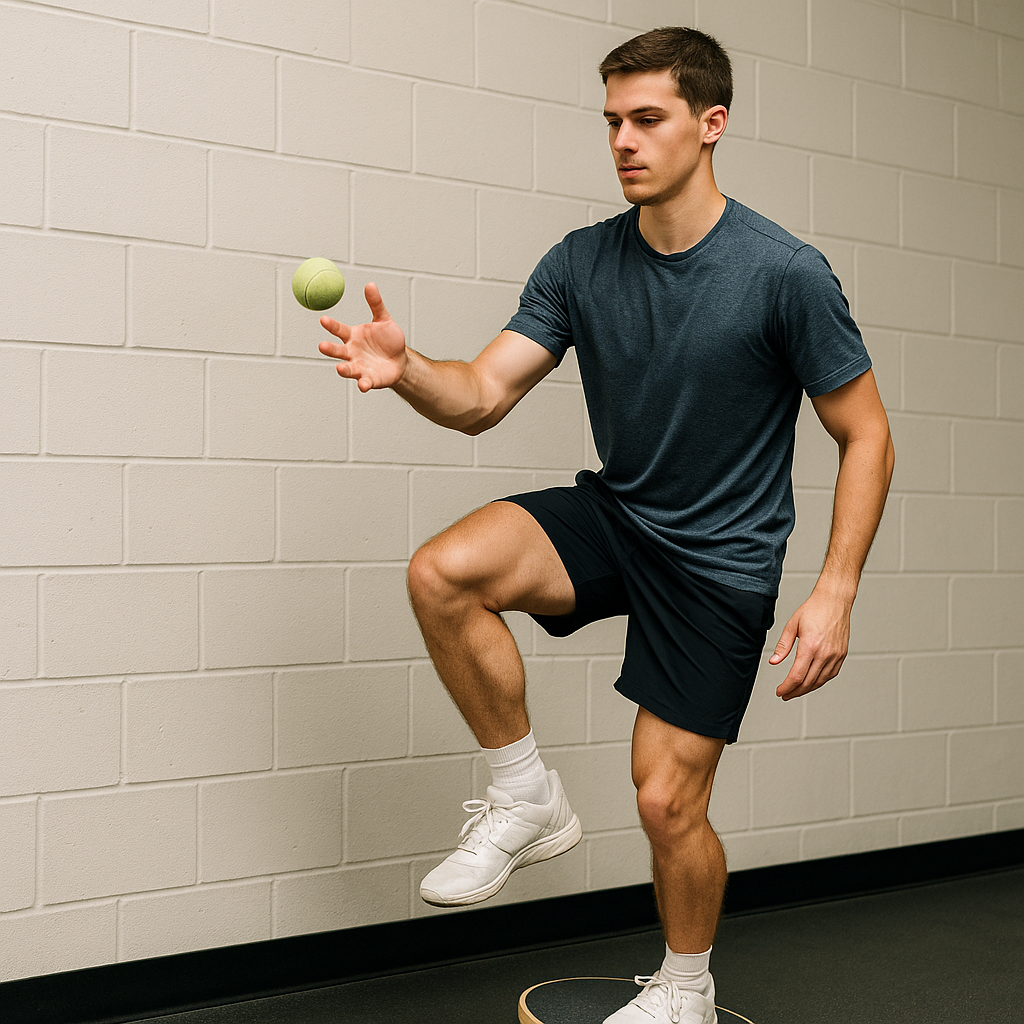
A wobble board looks like rehab equipment, which is why half the team ignores it, and the other half uses it wrong, turning it into a circus trick. I like it as a low-impact way to add balance work without turning the session into another conditioning workout. The goal isn’t to balance forever. The goal is to maintain control through the ankle, knee, and hip while adding a catching task.
Set the board near a wall. Step onto it with one foot, the other foot hovering off the floor like you’re mid-stride. Keep a slight bend in the knee, maintain pressure through the foot, and avoid locking the leg. Then take a tennis ball and do gentle wall tosses, catch with the same hand for 10 reps, switch hands for 10. If you don’t have a wall, a partner works, but the wall keeps the throws consistent, so you can feel what’s changing in your body instead of blaming your partner’s aim.
Different athletes may struggle with different parts of the drill. Watch for loss of balance, excessive trunk movement, or the knee drifting inward, then reduce the difficulty if the technique breaks down.
To increase the difficulty, keep the throws consistent and briefly turn your head between tosses before returning your eyes to the ball. Turning the head adds another balance challenge because visual and head-position information changes during the task. Keep the sets short and stop once balance or technique noticeably deteriorates. Stop the set once balance or technique noticeably deteriorates.