
From a one-breath pre-pitch cue to a count-situation bullpen, these mound habits help young athletes stay focused under pressure.
The One-Breath Pre-Pitch Routine
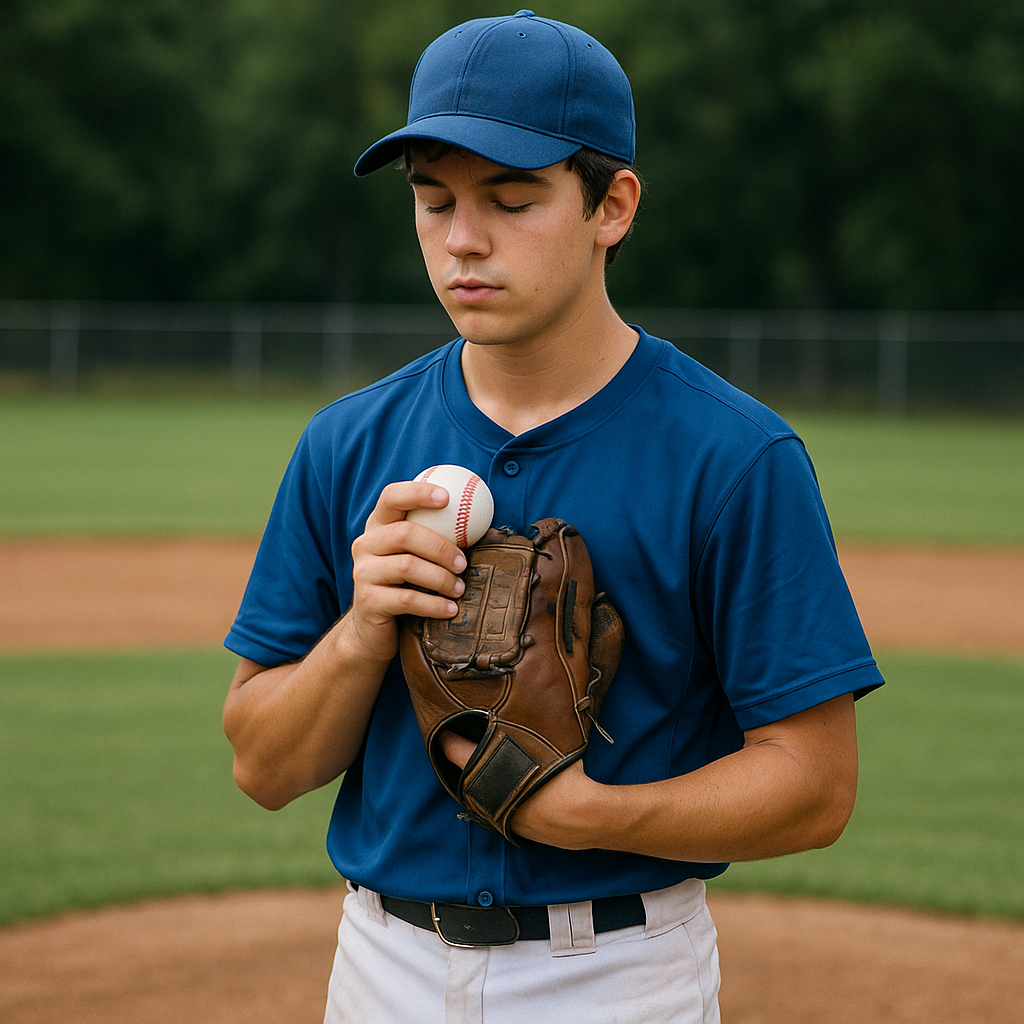
I started teaching this after watching a kid unravel on the mound. He'd miss up and in, then immediately try to fix it while the catcher was still tossing the ball back. You could see him running film in his mind, then stepping on the rubber, already arguing with himself. The fix wasn't a new grip. It was a repeatable pause.
Here's the routine: as soon as you get the ball, step behind the mound (or just off to the side in a bullpen), look at one specific spot on the grass or dirt, and take exactly one slow inhale and one slow exhale. That's it. Then you step on, get the sign, and go. No extra phrases, no long meditation, no staring down the hitter like a movie scene. The point is to teach your brain a clean line between the last pitch and the next one.
In practice, I run it as a constraint. If the pitcher starts walking back to the rubber without doing the breath, we reset. If they do three breaths, we reset. Kids love making rules complicated, so you keep it almost comically simple. The goal is to shift your attention from the last pitch to the next target. That same skill shows up when a point guard turns it over and has to pick up full court, or when a receiver drops one and the next play is already called.
Make it measurable so it sticks. We do a 25-pitch bullpen where every pitch is graded twice: strike/ball, and routine/forgot. If the routine score is perfect and the strike score isn't, we still call it a good day. Weirdly, the strike score may improve as the pitcher gets better at resetting between pitches.
Call-Your-Own Sequence Bullpens

A lot of pitchers fall into predictable bullpen patterns: fastball, fastball, then an offspeed pitch when the coach calls for it. That can make practice comfortable, but it doesn't give pitchers much practice making decisions under pressure. So once a week, I flip the bullpen: the catcher sets up, but the pitcher calls the pitch and location out loud before the sign even goes down.
The first time you do this, you notice something immediately. Kids will protect themselves with safe calls. They avoid throwing a 1-1 breaking ball for a strike in practice because it might look ugly. They also fall into loops: arm-side fastball, arm-side fastball, then an emergency offspeed when they get bored. Saying the call out loud makes the thinking visible, which is the entire point.
I structure it in sets of five. Before each set, the pitcher has to pick a plan. Example: "Win this set with three strikes to the glove-side edge." Or, "Show the changeup twice, but only if I'm ahead." Then they throw five, and we don't stop to lecture after each pitch. We review after the set. That delay matters because the pitcher has to remember the plan, evaluate the five-pitch set, and make adjustments without stopping after every throw.
To keep it grounded, we use a simple scoreboard on a clipboard. One column for execution (did it go where you called it) and one for choice (was the call coherent with the count you said you were simulating). When a pitcher misses a spot, but the choice was good, we say so. When the pitch hits the glove but the choice makes no sense, we say that too. That distinction helps pitchers judge the decision separately from the result, which is useful in any sport where a good decision can still produce a bad outcome.
It can also build confidence. When a kid has practiced making the call, owning it, and moving on, they don't look to the dugout every time the situation gets loud.
Count-Situation Bullpen: Practice Pitching Under Pressure
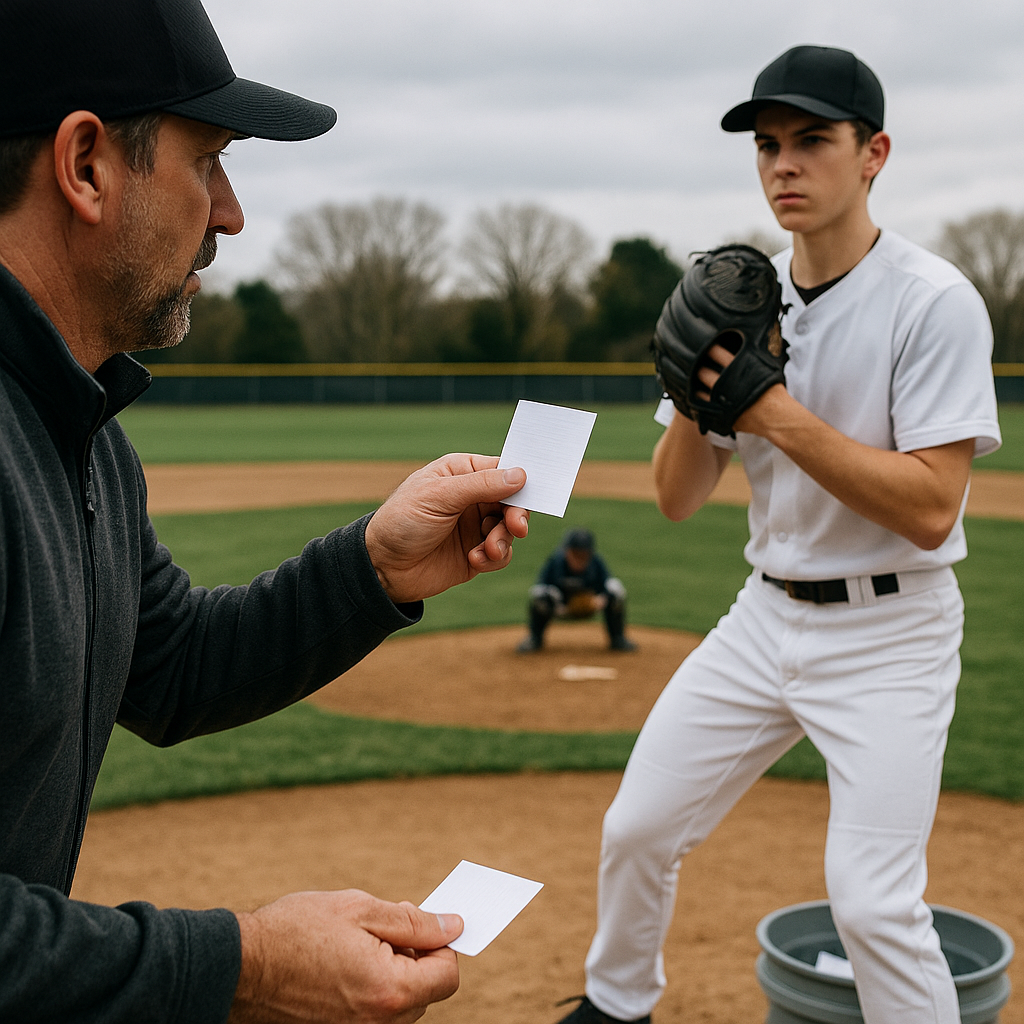
If you want a pitcher to stay calm under pressure, don't let every rep start at 0-0. Real at-bats rarely feel like a neutral 0-0 count. They feel like you just walked the No. 9 hitter, the top of the order is coming up, and the umpire's zone is doing its own thing. So I run a bullpen game where every "at-bat" begins in a mismatch count: 2-0, 3-1, 0-2, or 1-2. You announce the count before the first pitch, and the pitcher has to work inside that problem.
We keep it simple with a bucket of index cards. Each card has a count and one condition. Examples: "2-0, no fastball middle," "0-2, hitter doesn't chase," or "3-1, runner on third, infield back." You draw a card, the catcher gives a target, and the pitcher has to make a plan in about five seconds.
The coaching here is about not melting when the situation is skewed. A lot of kids hear 2-0, and their shoulders jump up because they've learned that being behind is shameful. You can watch the body tighten and the mind narrow in the wrong way. The drill teaches a different reflex: accept the count, choose a lane, execute one pitch.
For 2-0 and 3-1, we emphasize throwing a competitive strike rather than aiming at an excessively precise spot. If you aim for a paint-dot with a high-school arm in a 3-1 situation, you're often just choosing a walk in slow motion. For 0-2, we practice waste pitches that still look competitive: a fastball up that starts at the top of the zone, or a breaking ball that starts near the zone and finishes below the strike zone. You can talk about tunneling if your group likes that language, but most kids just need to see that you can miss on purpose without losing the hitter.
The same pressure-management skill can apply to other school sports, too. A basketball free throw when you're down two, a penalty kick, a 3-2 count at the plate, a serve receive after shanking the last one. The pressure comes from having to make a decision when the count or situation isn't in your favor. These reps give pitchers practice doing that.