
A good veteran doesn't need a dugout speech to help a younger teammate settle down. Often, one clear instruction at the right moment is enough.
The bullpen-side two-minute reset

I learned this one from an older catcher who treated the bullpen like a quiet office. When a freshman pitcher was melting down, he didn't trot to the mound to perform leadership in front of everybody. He waited until the inning ended, met the kid at the bullpen gate, and kept it so plain it almost sounded rude: two questions, one reminder, then he walked away.
The two questions were always the same: What pitch do you trust today? And where is it finishing when it's good? That's it. No mechanics clinic. No lecture about competitiveness. Just getting the kid to say, out loud, a single pitch and a single target. Then came the reminder, and it was specific enough that you could picture it: Throw it like you're playing catch, not like you're trying to win an argument.
The captain part is the exit. He'd tap the fence once, like a punctuation mark, and go back to the dugout. If you linger, it turns into therapy, and the pitcher starts negotiating with you. If you leave, he has to own the choice. I've used the same move as a captain with position players, too. A young shortstop boots one and gets tight? Same two-minute reset behind the fence: one play he can execute clean, one cue he can feel, such as getting the glove out early or setting the right foot, then you let him rejoin the game.
Little detail that matters: I keep a ball in my hand during the talk, not for drama. It keeps my eyes down so I'm not staring him into a corner, and it keeps the conversation from turning into a face-to-face confrontation.
Teach one job, not the whole position (then shut up)
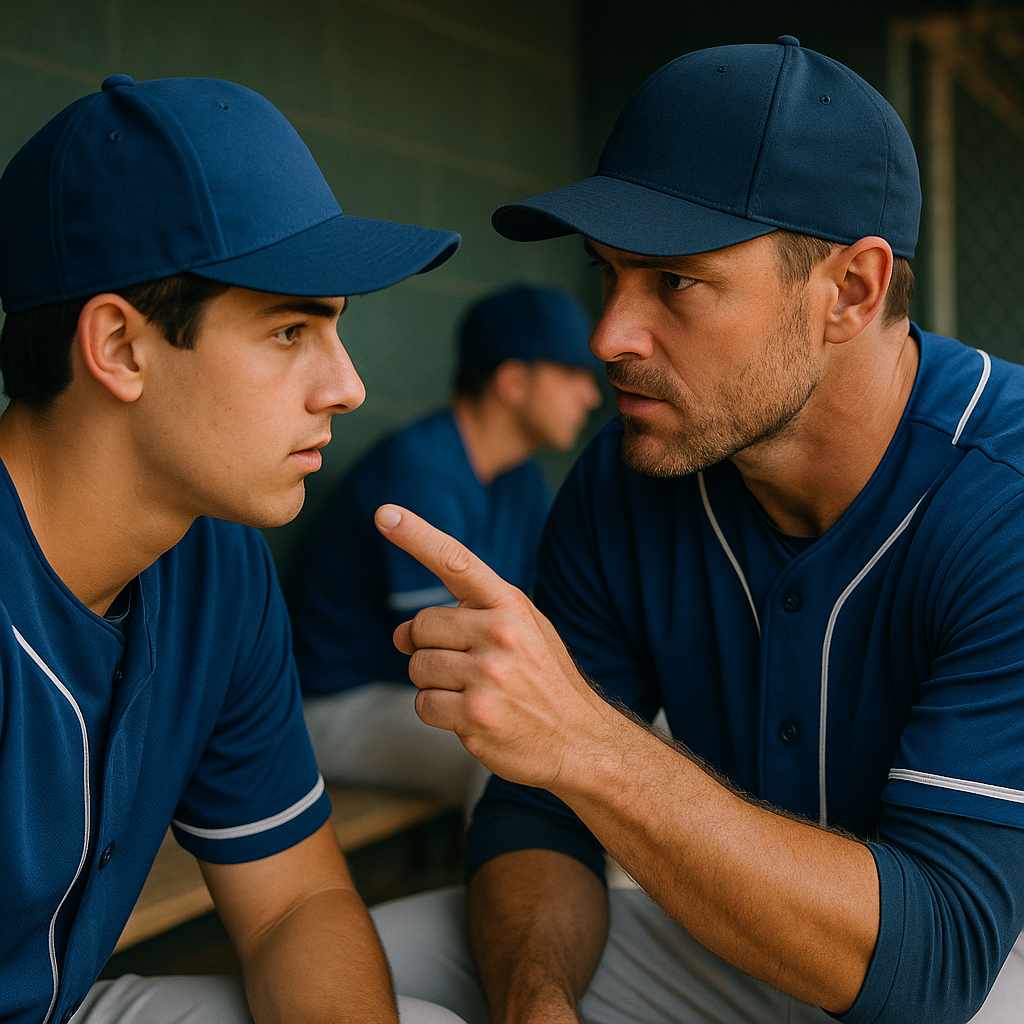
There's a style of captain who tries to be a second coach. It comes from a good place, but it usually lands like noise. The mentorship style that held up best on teams I've been on is narrower: pick one job the younger guy can do in the next half-inning, and make it so clear he can't misunderstand you.
Example: we had a new right fielder with a cannon arm and zero feel for situational throws. Early season, he airmailed a cutoff man twice because he was trying to throw every runner out by a mile. Our captain didn't tell him about footwork, release angles, or outfield philosophy. Between innings, he just said, On anything to the wall, hit the cutoff man in the chest. Not near him. Not toward him. Chest. Then he added one sentence that made it stick: If you miss him, you miss the whole play.
That's the whole intervention. Next inning, the ball splits the gap, the kid fields it clean, and you can see him fighting the urge to be a hero. He hits the cutoff man in the numbers. The relay is clean enough to keep the runner at third. In the dugout, the captain doesn't celebrate, doesn't say "told you so." He just nods once and goes back to his spot on the bench.
I've done the same thing with base running, because that's where young players get exposed fast. Instead of dumping ten baserunning rules on him at once, I'll give him one cue that fits the situation, such as making sure a line drive gets through before committing to the next base. We practice saying it in the same rhythm every time. It becomes a switch you can flip under stress.
This style works because it respects the speed of the game. Nobody is absorbing a seminar while they're still sweating through pine tar and adrenaline. One job. One target. Then you get out of their way.
The scouting tip that helps a younger hitter
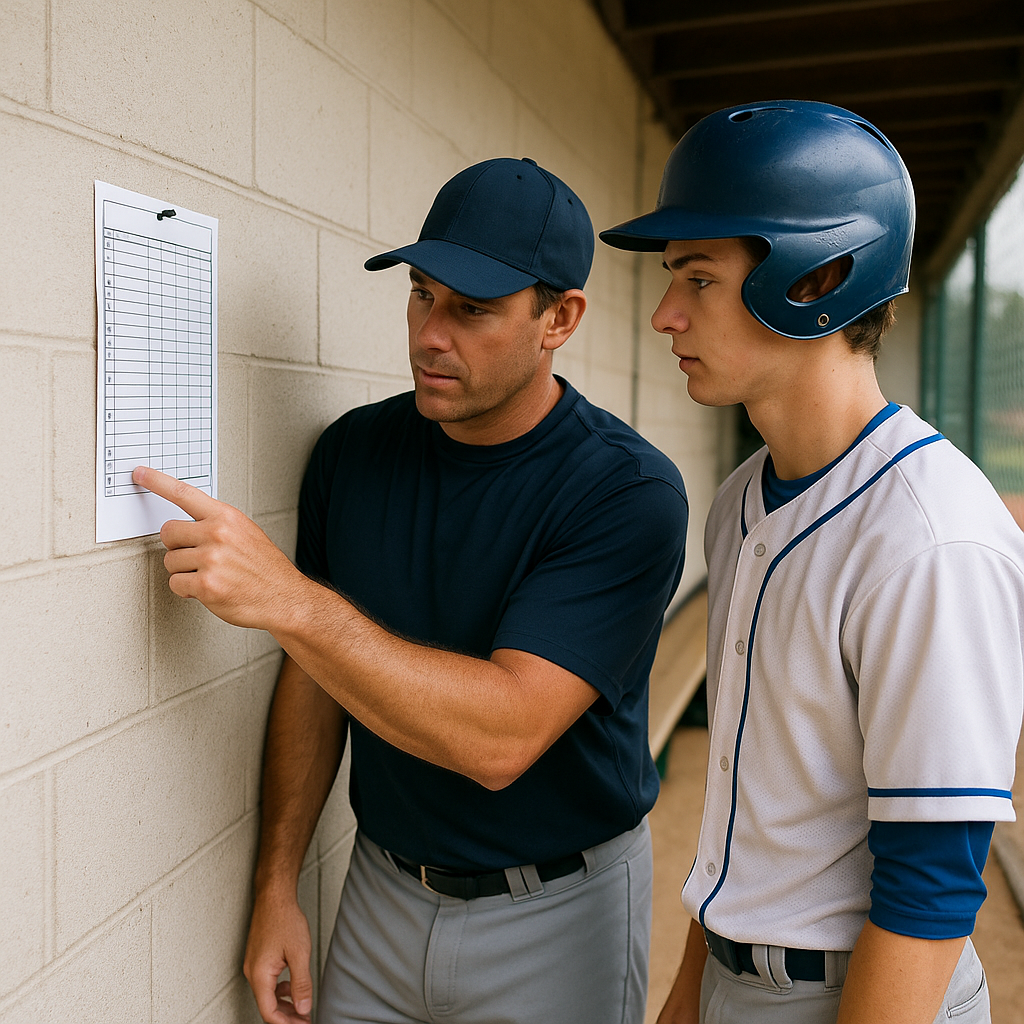
Some of the best mentoring I've seen happens before a younger hitter ever steps into the box. A veteran can use what he sees from the dugout or during his own at-bat to give the next guy a clearer idea of what to expect.
The point isn't to shelter a younger hitter from difficult matchups. It's to give him useful information before he faces one. We had a sophomore lefty who could hit velocity but chased spin like it was his job. On Fridays, we'd see a senior right-hander with a tight slider, the kind that starts middle and vanishes under the barrel. If that sophomore drew a tough matchup after tearing up Tuesday's starter, the useful move was helping him understand what he was about to see.
Our captain would pay close attention to the pitcher before the younger hitter's first plate appearance. After seeing the slider himself, he'd come back to the dugout and pass along whatever he had picked up. That gave the younger guy a chance to watch an at-bat from the on-deck circle with a specific plan, not just nerves.
Then the captain follows through with small, practical stuff. After his first plate appearance, he'd come back and say, It's starting at your front hip. Or, He's doubling up the slider when he gets ahead. Not hype. Not warning labels. Just the thing you can act on.
I've tried this as a captain too, and the important part is sharing what you actually saw rather than pretending you've solved the pitcher. Sometimes the information helps. Sometimes the younger hitter still gets beat.
The bigger benefit is that the younger hitter gets useful information before frustration takes over. A veteran can help him recognize what the pitcher is doing without turning one difficult matchup into a referendum on confidence or toughness.