
From sled pushes to med-ball throws, these off-field swaps keep innings from turning into ache by May.
Sled work for leg power without the post-throw soreness
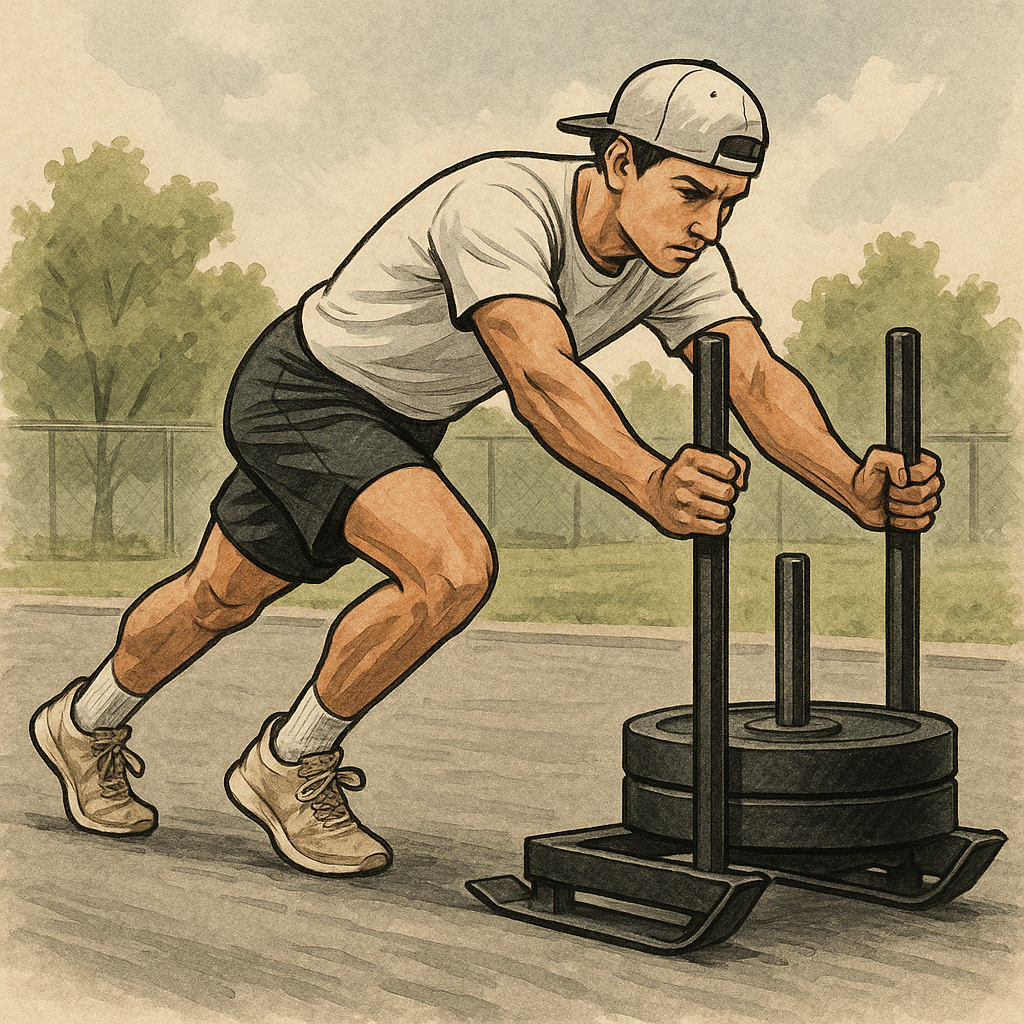
If I'm trying to keep a varsity kid athletic through a long spring without stacking more pounding on top of throwing and cages, I reach for the sled. Not because it's trendy, but because it lets them go hard without the day-after shin splints vibe that shows up right when the weather finally gets nice, and everyone wants to run poles again.
Here's how it looks in the real world, in the same shoes they warm up in: 6 to 10 trips of 20 yards each, with plenty of rest to keep the speed snappy. Two flavors. Heavy pushes (think: slow, ugly, but safe) for 3 to 5 trips. Then lighter pushes or backward drags for 3 to 5 trips, with the legs moving and breathing up, but the feet aren't slapping the ground. Use the sled only in a designated training area with a suitable surface and under the supervision of a coach or qualified professional.
The payoff can carry across varsity sports: stronger lower-body efforts for baseball players, repeated drives in basketball, and short bursts off the line in football. I also like sled days on weeks with two games because it's easy to dose. If an athlete reports forearm tightness after a long outing, I have them tell the coach or athletic trainer before doing additional training. Any approved session should avoid aggravating the problem and follow the athlete's recovery plan.
Small coaching cue that matters: on pushes, I want ribs down and hands low on the poles so they don't turn it into a shrug contest. When the traps take over, their shoulders may feel unnecessarily tense during throwing later that week.
Two med-ball throws that teach the hips to do their job
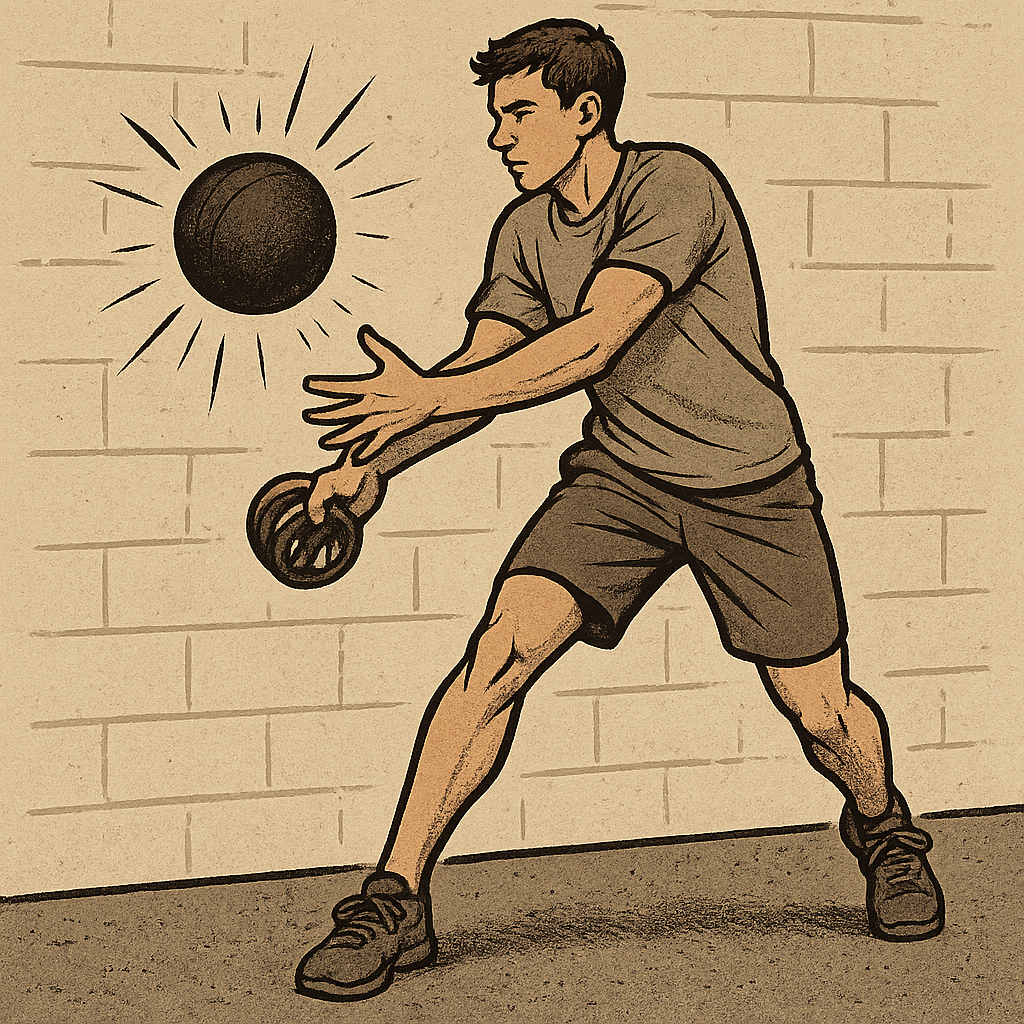
I like cross-training that still feels like an athlete doing something, not a rehab patient collecting tiny wins. Medicine ball work hits that sweet spot, and it translates to the part of pitching and throwing that gets teens in trouble: trying to create velocity with the shoulder because the hips and trunk didn't show up that day.
I keep it simple and repeatable with two throws, usually using a 6- to 10-lb rubber medicine ball approved for wall throws. First is a scoop toss into a wall. Feet about shoulder width, ball starts low between the legs, and they drive the hips forward like they're jumping without leaving the ground. 3 sets of 5 per side, and I want each rep to sound the same when it hits the wall. You can hear when they get lazy. The second is a rotational shot-put throw, also into a wall, where the back hip turns first, and the arm is just the delivery system. Again, 3 sets of 5 per side.
This is where it sneaks into season management: if a kid had a bunch of high-intent throws in pregame because the JV field was late and everyone got rushed, I'm not adding more throwing volume the next day to "get work in." A coach or athletic trainer can decide whether medicine-ball work, lifting, or a lower-impact session fits the athlete's recovery plan without adding unnecessary throwing-related stress.
One detail I only started enforcing after watching enough guys compensate: I make them finish the rep with their eyes level and balanced, and hold that position for a full second. If they have to stumble not to faceplant, they were never in control of the rotation. That same stumble shows up on the mound as yanked fastballs and a shoulder that feels cranky in the second inning.
If you try this with a slick ball or on a dusty wall, it turns into chaos. Use an appropriate medicine ball in a designated throwing area, with a coach checking the surface, equipment, spacing, and technique.
Keep the engine, ditch the pounding: the bike interval block
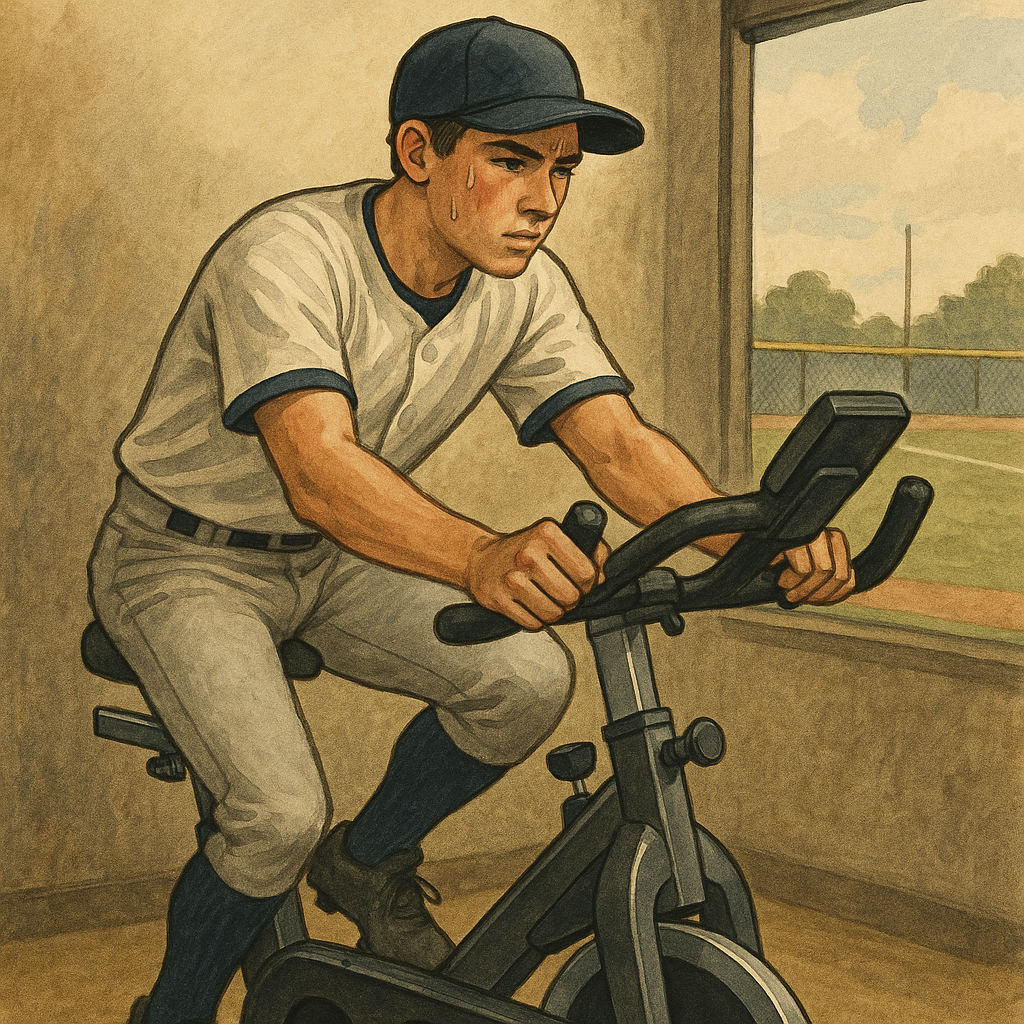
Every spring, there's a week where the schedule goes sideways: a makeup game, a long bus ride, and then a Saturday doubleheader where the dugout snacks are basically sunflower seeds and regret. That's when I start leaning on the bike for conditioning, because it keeps the heart and legs honest without adding more impacts to knees, shins, and lower backs that are already taking batting practice swings on tired tissue.
The setup is boring on purpose. Any sturdy stationary bike works, but I see the best compliance when the seat is set right and the kid doesn't feel like they're grinding their knees. I want a slight bend at the bottom of the pedal stroke, not a locked-out leg, and the seat high enough that their hips aren't rocking side to side.
The interval block I use most in-season: 8 rounds of 20 seconds hard, 70 seconds easy. Hard means they can still keep their torso quiet and hands light on the bars. If they're death-gripping and bouncing, it's too heavy a gear. After the 8 rounds, pedal easy for 5 minutes. That's it. It fits in a tight after-school window, and it doesn't steal the next day's legs the way a "run till you puke" set can.
The benefit carries over into sports because it trains for repeated effort: beating out a grounder, making several basketball transitions, or producing short bursts in football with recovery between plays. When kids only do slow jogging, they feel fine at first, then get weirdly flat by the fifth. On the mound, that flatness is when the stride shortens, the front side opens early, and the arm suddenly tries to guide the ball to the glove.
I also like the bike the day after a start for pitchers who are antsy and want to do something. It scratches the itch. They get warm, sweat, and leave feeling like they moved forward, not like they sat out while everyone else worked.