
When the defense stemmed late, this little mug card kept my young line from chasing ghosts and missing their combo.
Teach them to ID the box, not the jerseys
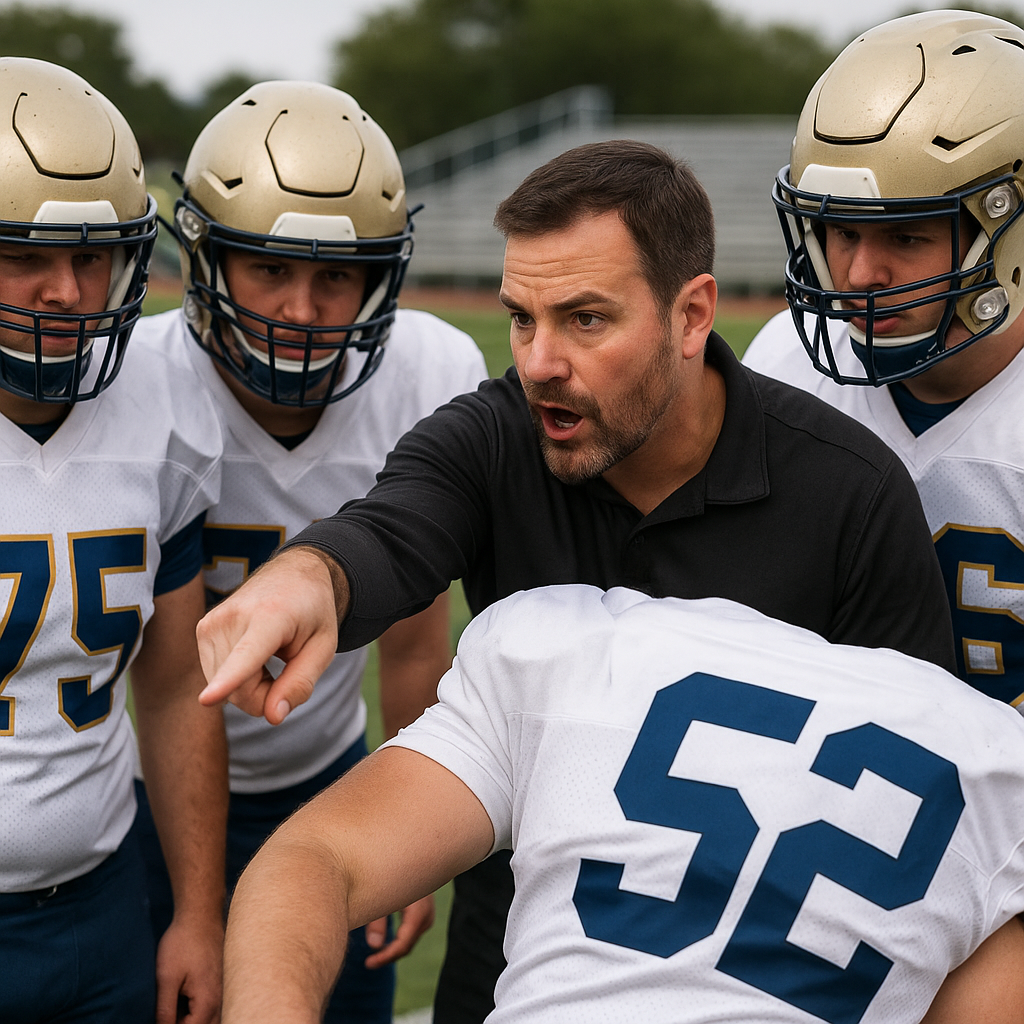
The fastest way I've found to calm down a young zone scheme when the defense is bouncing between even and odd looks is to make the pre-snap conversation about the box, not about who looks scary. Kids get mesmerized by the nose because it's right in their face, then they forget the part that matters: how many bodies are in the tackle box and where the first down lineman is on their play-side. I put them in a huddle, call the play, then I make the center point and say out loud, "Box count." Everyone echoes the number. No one gets to add commentary. Then I have the play-side guard answer one more question: is there a down lineman on your inside shoulder or not? That one answer tells you whether you're working a true double to a linebacker or whether you're covered and need help fast.
On the field, the cue I use is the heels of the defensive ends. If those ends are wide and light, it usually isn't an odd front that's trying to plug every gap with down linemen. If you've got a head-up nose or a shade and the ends are tight, now you're in that "every gap is claimed" world, and your combos have to be clean. The adjustment isn't, Block that guy instead. It's, "Our steps and eyes don't change, but our first contact does." For my tackles: take your zone step, get your hands on the nearest down guy, and keep your eyes up for the scraping linebacker. For my guards: if you're uncovered, you're not shopping for work. You're stepping to help your covered teammate first, even if the linebacker is waving at you. Kids want to run to the second level because it feels like winning. Then the down lineman splits the double and your back gets hit at two yards.
The most honest rep is against a defense that stems late. I'll have our scout walk in a 4-down look, then shift to a 3-down with a stand-up outside backer right before the cadence. I don't let my line talk through it endlessly. I want one clean box count, one covered/uncovered answer, then we snap it. If they can do that with the play clock moving and a coach yelling Set! behind them, Saturday feels slower.
The center's first step is a promise
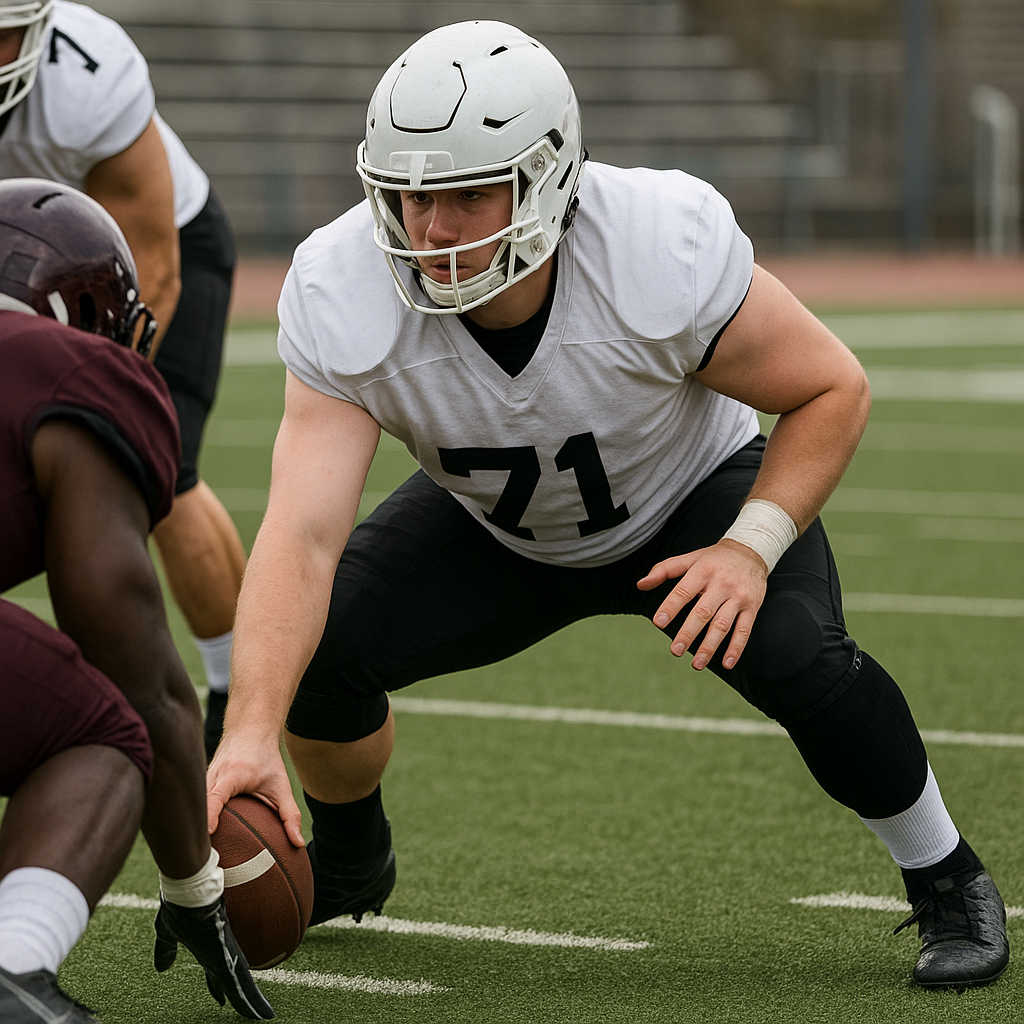
When defenses change fronts, young linemen panic because their feet get argumentative. You can see it on film: a center takes a big bucket step because the nose is head-up, the guard feels that movement, and now the A gap is a revolving door. So I coach the center's first step like it's a promise to the rest of the line. It has to look the same whether it's a 4-down or a 3-down. Same timing. Same distance. Same angle. If that step changes, everything to his right and left starts improvising.
Here's what I insist on for inside zone: snap, then a six-inch play-side step with the play-side foot. Not a slide. Not a hop. If it's against a heavy nose, I don't ask him to win the whole rep with that first step. I ask him to earn leverage. His second step and his hands are where he makes his living. We talk about fit with specific landmarks: near hand goes to the sternum plate area, far hand works to the play-side pec, and his hat tracks to the play-side number. If the defense is in an odd look with a head-up nose, that fit still applies. What changes is the urgency of help. The play-side guard can't daydream about the linebacker. He's got to feel that center's hip and get his hands in early, or the nose will split them like they're holding a door for him.
I also keep the center's eyes honest. Young centers love staring at the defender they're touching because it feels like control. In zone, control is shared. After contact, I want the center's eyes to flash to the play-side linebacker window. If that linebacker triggers, we climb. If he hangs, we stay on the down guy another half second and keep the double alive. That half second is the difference between a back cutting off the guard's hip for eight and a back bouncing because the nose is in his lap.
One little on-field trick: I put a strip of athletic tape on the center's helmet, right above his play-side eye, so I can ask, "Where's the tape pointing on your first step?" It's an immediate check without turning it into a lecture. Then we run it again. It's repetitive, sure, but that's the point. You want the front change to be noise, not a new set of feet.
Combo calls that survive a late stem (without over-talking)
I've listened to a lot of young lines try to solve a front change with more words. It never works. The defense stems, your guard starts naming every defender like he's calling bingo, and the cadence dies on the vine. For zone, I keep the combo language stupid simple and I tie it to who we're climbing to, not who we're blocking first. Because the down guy might change, but the linebacker you're responsible for is usually still sitting in the same general spot.
My rule: one word tells you the partner, one word tells you the climb. For example, on the play-side we might use Deuce for guard-tackle combo, Ace for center-guard, and then we tag the linebacker by location: Mike for the middle, Backer for the off-ball on the edge, or even Stack if he's directly behind a down lineman. So a call sounds like Ace Mike. That's it. If the defense shifts from a 4-down to a 3-down and that guard becomes uncovered, the call doesn't become a new paragraph. It's still Ace Mike, but the guard now knows he's the helper first and the center knows he can't overset and abandon the A gap.
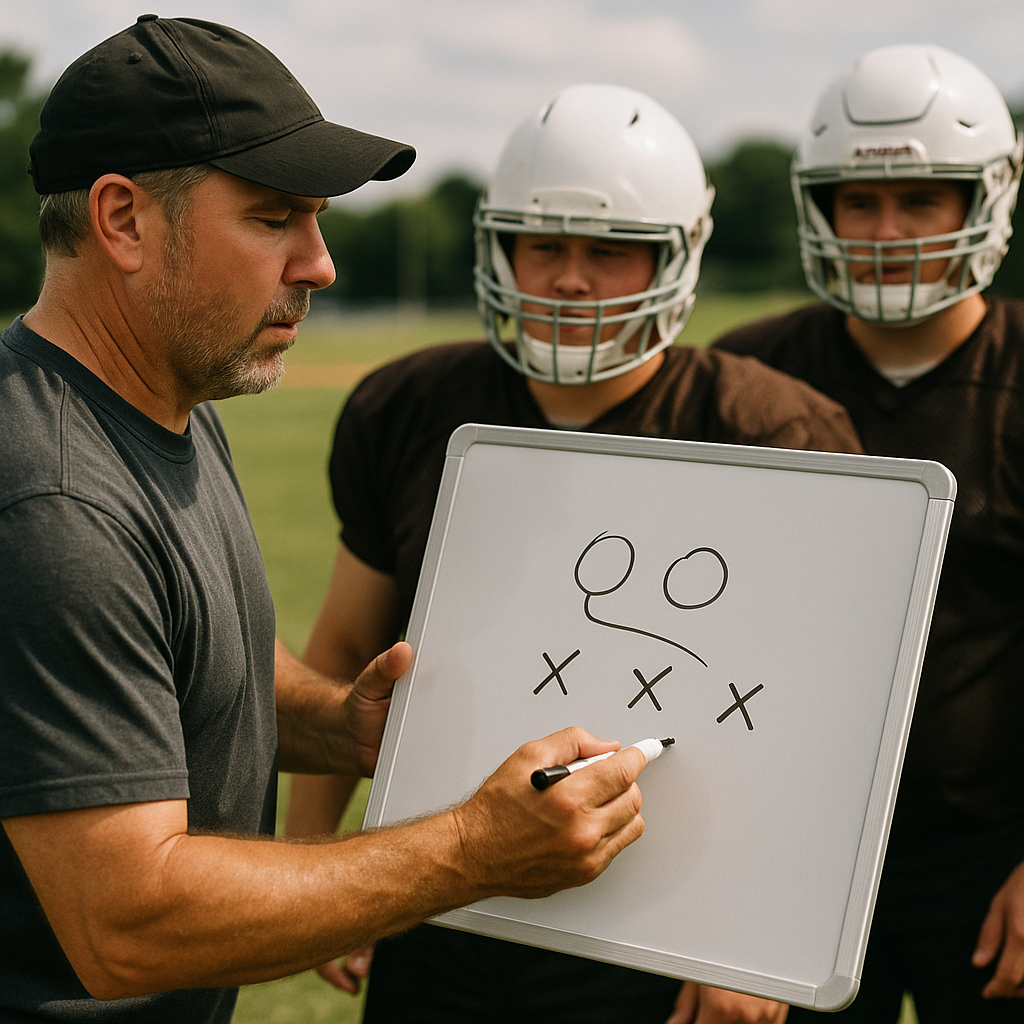
I keep a dry-erase board at practice and I draw one thing over and over: the two hips on the double. The kids have to feel those hips stay connected through the first two steps. If the defense is odd and the nose is head-up, the temptation is for both linemen to hit him straight-on and stop their feet. Then the linebacker scrapes over the top untouched. So I coach the double as dent and drift. Dent the down lineman back a step if you can, then drift your eyes and your shoulders to the linebacker window while you keep your feet alive. The climb happens when you feel him commit, not when you get bored.
To make it game-speed, I run a cadence drill where the scout defense is only allowed to stem on Down or Set. The offense has to freeze their feet, keep their hands off, and redo the call with the same volume and the same two words. If they add extra, it's a false start in my book. The cleanest lines I've coached weren't the loudest. They were the ones where the guard and center could glance, nod, and both know exactly how the combo turns into a climb when the picture changes late.