
Three zone-blocking adjustments I teach with wristbands, a cone, and a trash can lid so young linemen stop guessing vs odd fronts.
Wristband IDs: one word, one picture, no debates
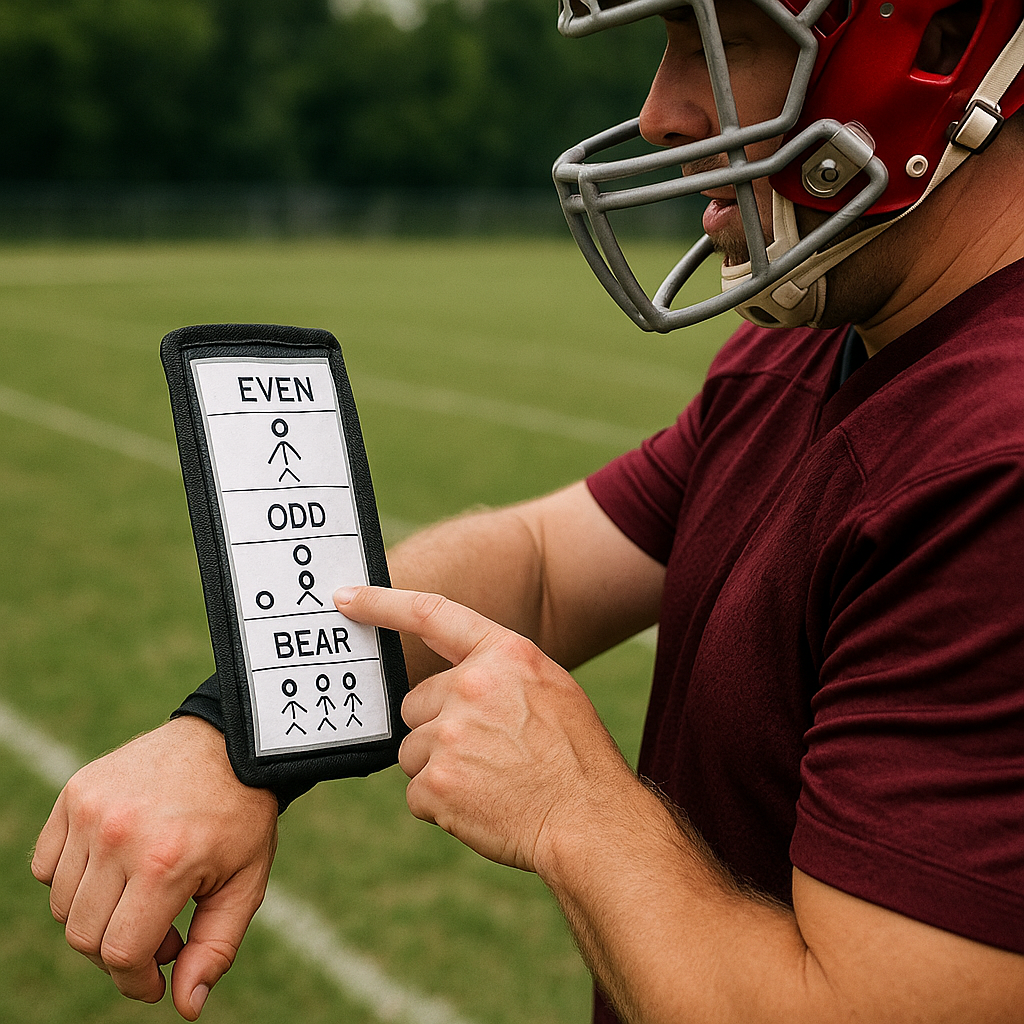
I started using wrist coaches with novice linemen for one reason: when you say, "We are covered," half of them hear philosophy and the other half hear a fight. A wristband forces it into something they can see in a glance. I put three boxes on the card, each with a simple name and a crude little sketch of the defensive picture we care about: even (two down and a shade), odd (nose head up), and bear (all three inside covered). Nothing fancy. Stick figures and dots. The rule is the part that matters: the center points at the picture pre-snap, the guard echoes the word, and everybody takes their first step off that word. No extra diagnosing from the tackle who thinks he saw a 4i for half a second.
For outside zone, that first step has to be the same even when the defense is trying to dress it up. We tell them, "Odd" means your play-side combo is built around the nose first, and you are not chasing the 4i like it's a personal insult. The play-side guard knows he's taking a tight lateral step, eyes on the nose, and he's ready to help the center get the hat across before climbing. Even means you're thinking more about a shaded 1-tech and a wider end, so the guard and tackle communicate the double differently. It's still zone, but the who-is-my-first-threat question is answered before the ball is snapped.
The best part is how it changes practice. Instead of spending ten minutes arguing about what the defense was, we run the rep, then I ask, "What picture did you point to?" If the answer is wrong, it's a clean coaching moment. If the answer is right but the footwork was wrong, it's a different coaching moment. That separation keeps young linemen from spiraling into, I didn't know, which is usually code for, I hesitated.
The cone for your play-side foot (so you stop opening the gate)
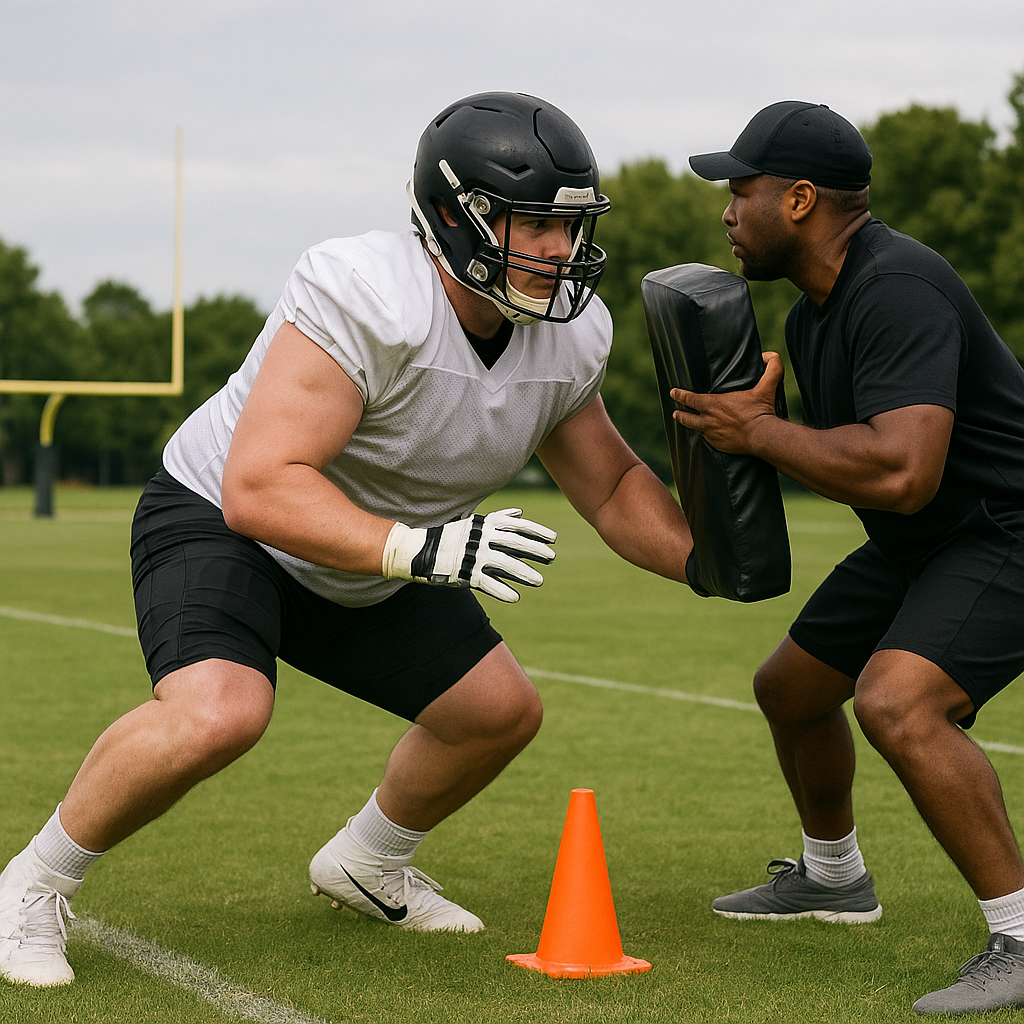
Here's the rep I do when a young lineman keeps opening the gate on outside zone. You know the one: first step turns into a big drop step, hips swing open, and now he's running sideways while the 3-tech is already splitting the combo. I put a 12-inch cone just outside the play-side foot, about a shoe length away. The instruction is blunt: do not kick the cone. If you kick it, your first step was too deep or too open.
We start from a two-point because it shows their feet honestly. On cadence, the first step is a short lateral step with the play-side foot, toe and knee staying pointed upfield enough that they can still generate force. The second step is the track step, getting the backside foot in the ground so they can run their feet through contact instead of reaching. I want them to feel that their hips stay square longer than they think they should. Young linemen swear they are going to miss the defender if they don't open up early, but zone isn't about flinging your body into space. It's about winning a piece of ground and letting the back read it.
Then we add a defender with a hand shield and one job: give them a little flash outside, then spike back inside. It's not a full stunt clinic. It's just enough to tempt that panic drop step. If the lineman stays clean on the cone and keeps his eyes on the near number, he can catch the spike and still stay on his track. If he opens the gate, he can't. The cone tattles immediately.
Coaching point that surprised me the first time I saw it: a lot of rookies miss the cone not because they're undisciplined, but because their stance width is goofy. If their feet start too narrow, they have no choice but to step big to get balance. So I widen them an inch or two, tell them to sit a touch more in the hips, and suddenly the cone drill looks like a different kid. Same helmet, better geometry.
Trash can lid = the aiming point your combos can agree on
When novice linemen struggle versus messy fronts, it's often not strength or toughness. It's that their double teams don't have a shared picture of where the combo is going. One kid thinks the double is a sideways shove. The other thinks it's a drive block. And the linebacker is already fitting off their confusion.
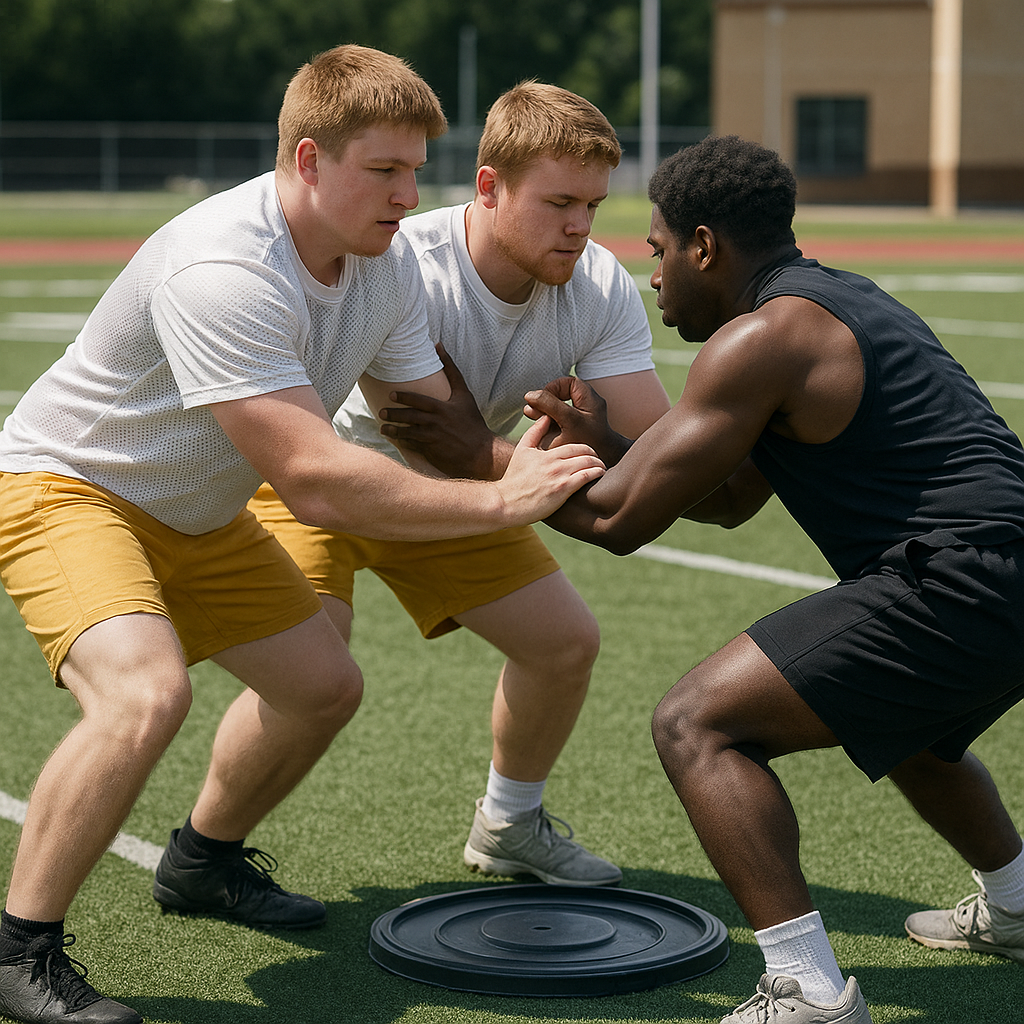
I stole a fix from a youth equipment room: a plastic trash can lid. Put it on the ground at the play-side armpit of the down lineman, basically where you'd tell the combo to get movement to. That lid becomes the aiming point for both blockers on the combo. If you're running outside zone to the right and doubling a 3-tech with guard and tackle, both of them are stepping like they are taking that defender to the lid. Not past it, not across the face into fantasy land. To the lid.
We walk it first with helmets off, because I want them talking. The covered lineman (usually the guard on that 3-tech) takes the near hip and keeps his eyes on the defender's play-side number. The uncovered lineman (the tackle) takes a tight first step and fits his near hand to the sternum or near pec, then he keeps his second step in the ground so he can feel when the defender's weight is captured. The coaching cue is simple: you are not allowed to leave the double until the defender is on the lid, or the linebacker declares inside. That gives the climb a trigger that isn't vibes.
Then I add the part kids hate, because it exposes the lie: I tell the linebacker to slow-play. Not blitz, not scrape like a maniac. Just hover and wait for the uncovered guy to get bored and leave early. If the tackle bails before the defender is moved to the lid, the guard ends up twisted, the defender splits, and the back gets tackled for two. When they see it happen twice in a row, they stop treating the climb like a race.
The lid also keeps me honest as a coach. If I'm yelling, Get vertical! and they have no clue what that means, that's on me. Now I can say, "Put him on the lid," and everybody in a pair can measure the same thing with their eyes.