
Three framing habits that change what the ump thinks he saw, without turning the catcher into a statue.
Quiet glove, loud pitch
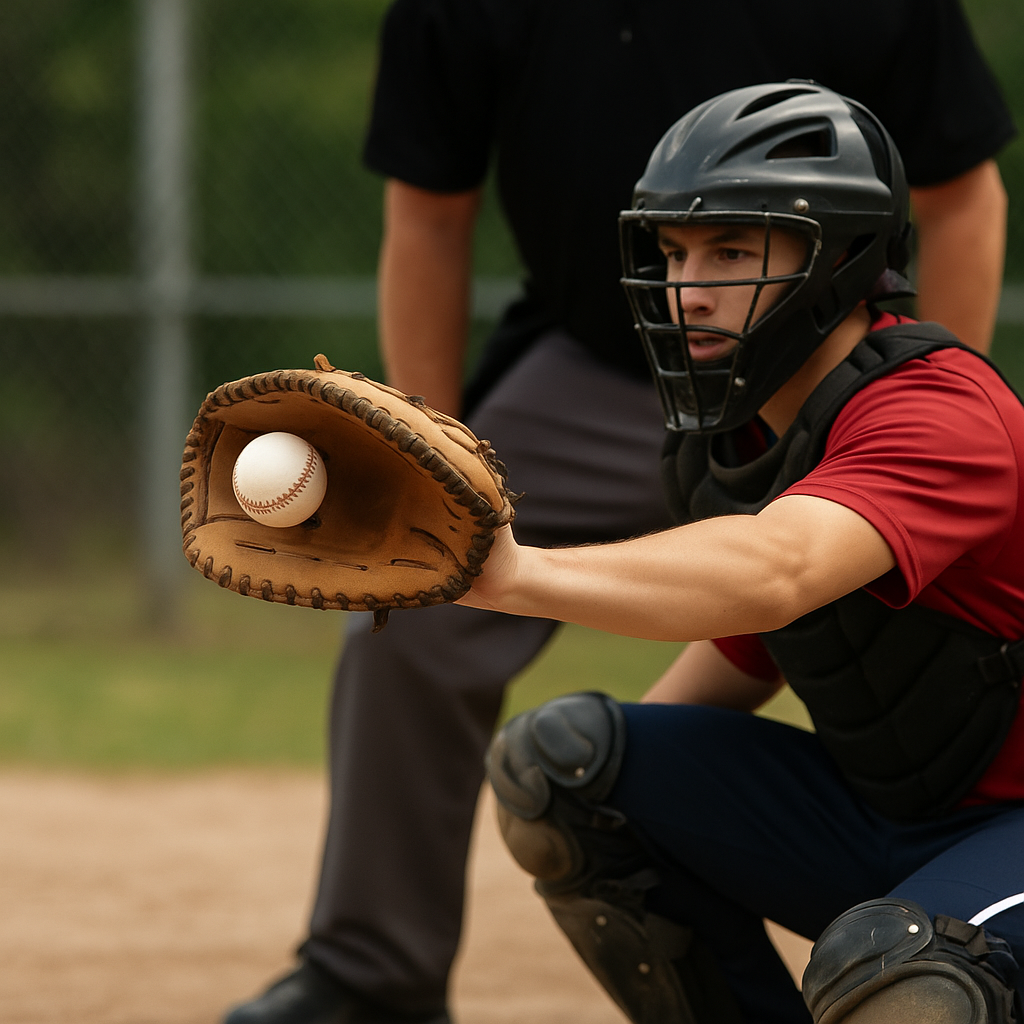
The first time I understood strike zone perception, it wasn't from a clinic. It was from a low-level fall tournament where the plate ump kept giving my pitcher the outer third, but only when my catcher received it like he was catching an egg. Same pitch, same location, different look. When the glove is noisy, the ump's brain starts questioning the pitch. When the glove is quiet, the pitch feels like it arrived where it was supposed to.
Here's the practical piece I coach now: treat your glove like a landing pad, not a steering wheel. Set a target early, then freeze it. If you're moving the mitt as the ball arrives, you're basically waving a flag that says, "I had to chase that." Even if you catch it on the edge, the chase reads like a miss. In a bullpen, I like to put a strip of athletic tape on the heel of the glove and tell the catcher to keep that exact spot level with his sternum on anything at the knees. The wrist stays soft, but the glove doesn't travel.
When the pitch hits, receive it by letting the ball push the pocket back an inch. Not a yank, not a drag, just give. You can feel the difference immediately. A yanked glove rebounds and looks like a correction. A giving glove looks like absorption. With a good ump, this buys you borderline strikes because it removes doubt. With a shaky ump, it keeps you from losing strikes you already earned.
The detail most kids miss: don't stab and then stick. The stab is the problem. Start with the glove already in the lane, thumb slightly up on the outer half and slightly down on the inner half, so your forearm isn't doing a last-second karate chop. If you're catching a pitcher who lives glove-side, you can cheat your body angle a hair so the glove can stay still. The goal isn't to fool anyone. It's to present one clean picture: pitch in the pocket, pocket barely moves, catcher doesn't flinch.
Stop letting the low pitch pull you forward
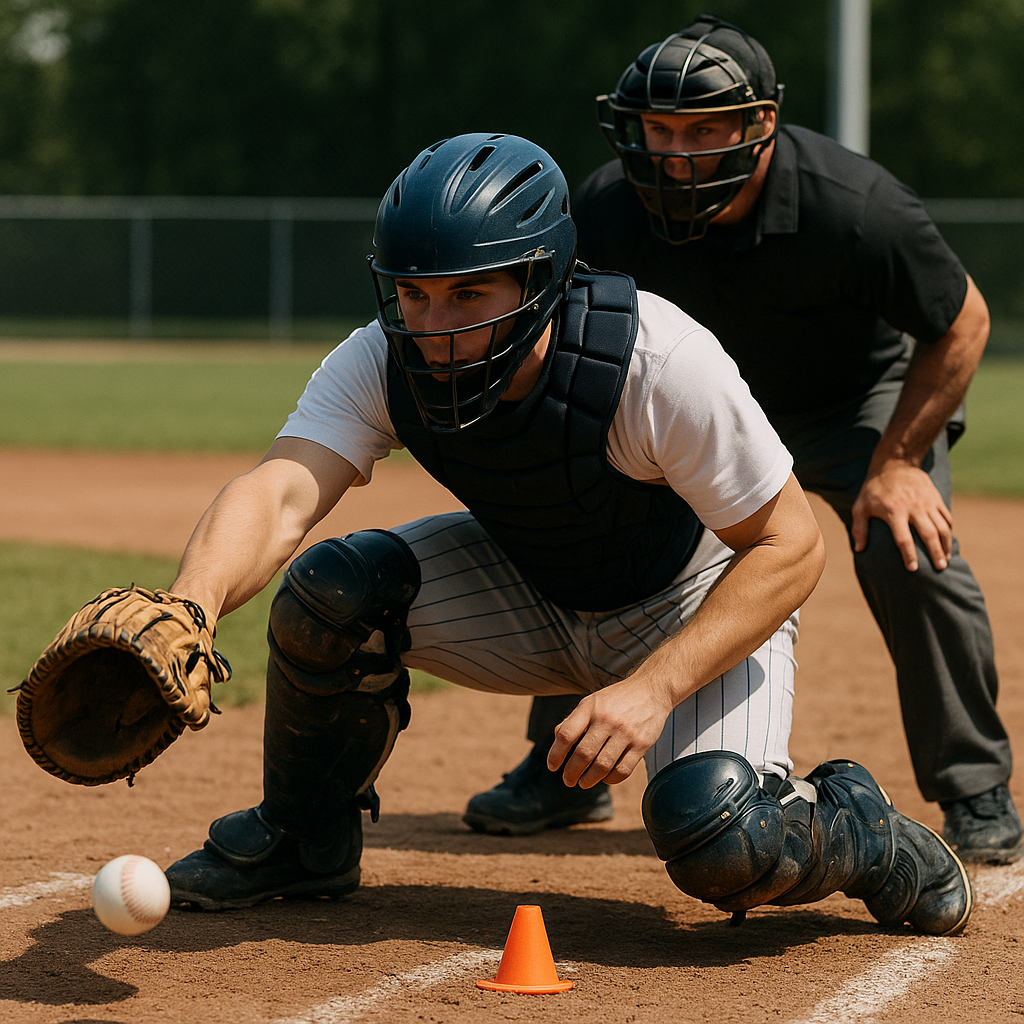
A lot of framing talk gets stuck on the glove, but the strike zone is being judged through a human head and a human set of eyes. If your catcher is lunging forward on low pitches, the ump doesn't just see a low pitch. He sees a catcher who got pulled out of position, and that makes the pitch look lower than it is.
I've sat behind the plate in a couple men's league games when we couldn't find an ump and, yeah, it's humbling. The easiest pitches to call are the ones where nothing changes except the ball arriving. The hardest are the ones where the catcher collapses, the head dips, and the whole receive screams "save." Even if the glove ends up at the bottom of the zone, your body told a louder story.
So I work this from the ground up. On anything that might end up at the knees or just under, I want the catcher thinking "drop, don't dive." That means the hips go down and back, not forward. If you watch a good receiver in the SEC or even a clean high school program, the chest stays stacked over the hips as long as possible. The head stays level. The glove can work under the ball without the torso chasing it. You're creating the impression that the pitch was always catchable in that space.
A drill I keep coming back to is simple and kind of annoying, which is why it sticks. Put a flat throwing cone or a small foam pad right in front of the toes in the crouch. The rule is you can't knock it over. Now run a bullpen where the pitcher is told to bounce a few on purpose and then live just above the bounce. The catcher learns fast: if he reaches forward, he hits the cone. If he sinks and keeps his weight centered, he can still block or receive without drifting. The payoff shows up in games when those knee-high sinkers stop looking like rescue catches and start looking like normal strikes.
One more thing that changes perception: catch the low pitch slightly out front, but with your elbow under the glove, not flared. When the elbow flies out, the glove looks like it's scooping up. When the elbow is under, it looks like a firm stop. The ump doesn't think in biomechanics, but he absolutely reacts to the picture. And the picture starts with your head and your torso, not the pocket.
How I train the edge without chasing it
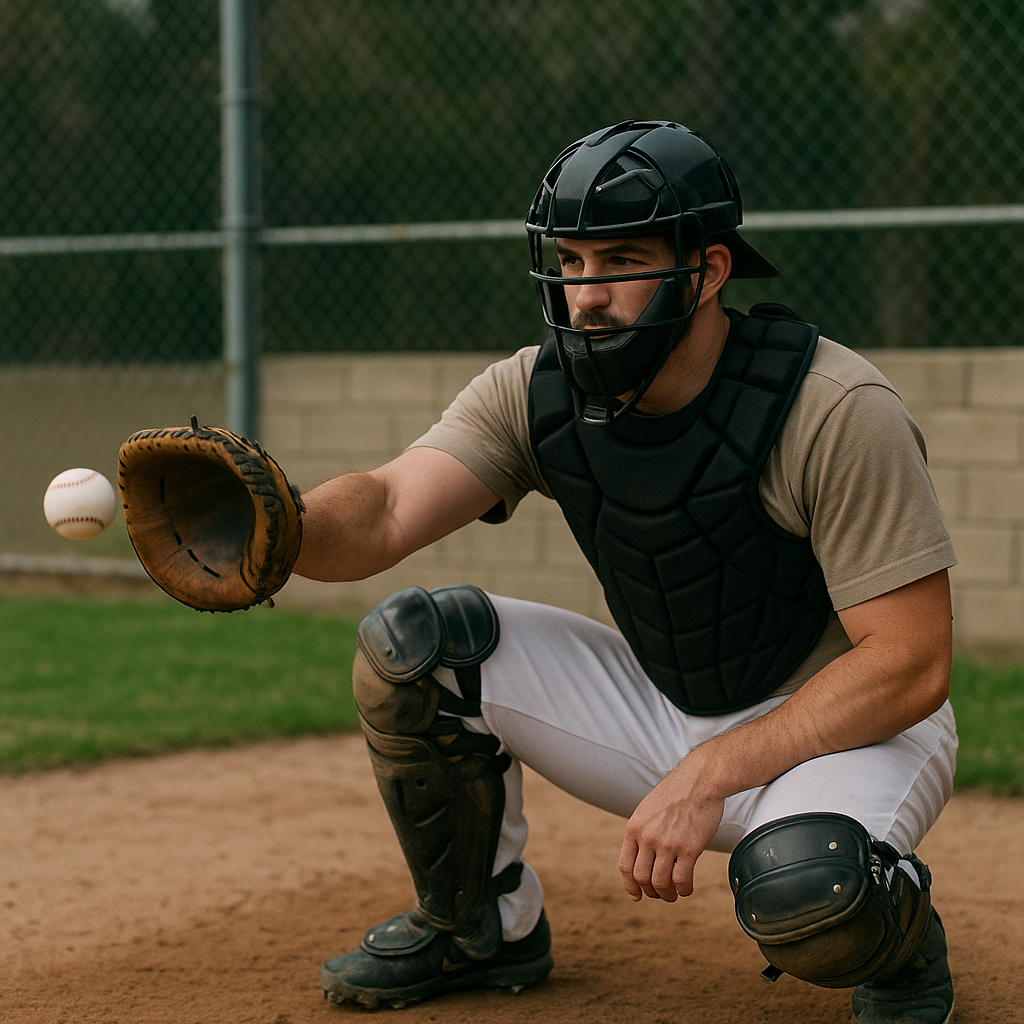
Every catcher wants the black. The problem is that training can turn into this frantic edge-hunting where the glove is always searching and the body is always reacting. In games, that doesn't read as skill. It reads as struggle, and it shrinks the zone.
When I'm working with a catcher on optimizing strike zone perception, I don't start by telling him to steal more strikes. I start by making him prove he can make the edge look boring. The best compliment you can get from a pitcher is, "That felt like a strike the whole way." Not, Nice pull.
Here's how I set it up in bullpens. We pick one lane for eight pitches: glove-side off the plate by a ball, then glove-side on the edge, then just inside. The catcher sets the target for the first pitch clearly off. That's important because it removes the temptation to cheat. The second pitch is the one we're training. The catcher sets the target on the edge early and holds it. When the ball arrives, the cue is a tiny turn of the wrist so the pocket stays facing the pitcher, then freeze for a beat. Not a pose. Just a brief stillness that lets the ump's eyes finish the thought.
Then we switch lanes and do the same arm-side, because the glove moves differently there. A lot of kids try to backhand everything and it turns the glove into a sweeping motion. I want them to learn when to present a thumb-down backhand versus when to shift their whole setup a few inches so it becomes a forehand catch. Forehand catches look stronger, period. They read as control.
The other thing I bake in is the count. We run a few sequences at 0-2 and 3-1, because the ump is a person and the context changes what feels believable. I'm not telling anyone to act. I'm telling them to avoid extra motion when the pitch is already borderline. If you work too hard on a 3-1 pitch, it looks like you're trying to sell it. If you receive it like it's ordinary, you give the ump permission to call it.
If you want one self-check after a game, it's this: think about the strikes you didn't get on the edge. Were you reaching? Were you spinning the glove? Or did it just miss? If it just missed, fine. If your body made it look like a miss, that's the work.