
Two tennis balls force pace, pocket angle, and the pass window without me saying a word.
Two-tennis-ball read: pace before the screen
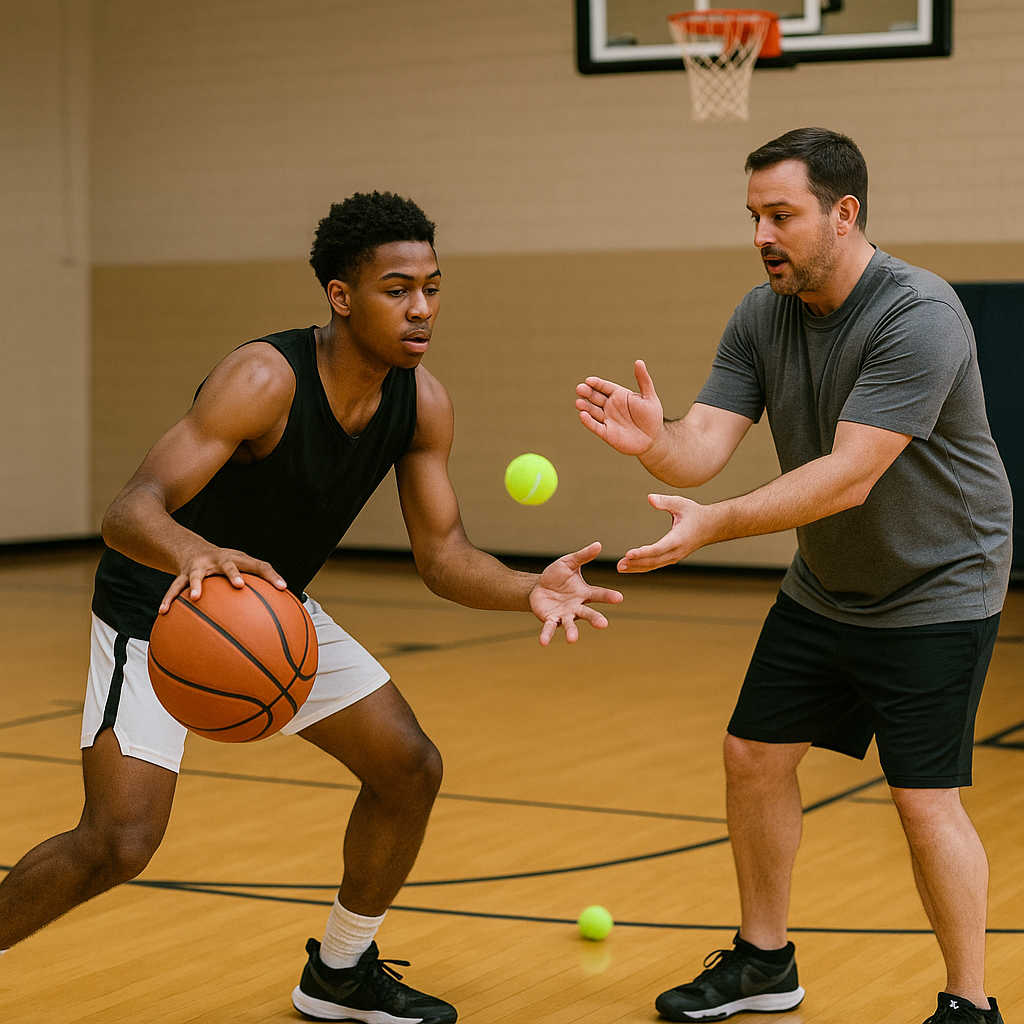
I keep two tennis balls in my backpack for one reason: they make guards stop playing the pick-and-roll like it starts at the screen. We run it on a side ball screen, with a coach or manager holding one tennis ball as a stand-in defender at the level and the second tennis ball parked at the nail to represent the low tag. The guard comes off with a normal dribble, but on my clap they have to toss the live ball (the tennis ball) to the screener as a quick pocket pass. No bounce pass allowed. It has to be a firm chest pass with the same footwork you'd use to deliver the ball on time.
Here is what changes immediately: the guard can't jog into the screen. If they drift, the pocket window closes and the pass turns into a floaty gift. So we start with the boring part on purpose. Two hard change-of-pace dribbles before the screen, then get skinny and come off shoulder-to-hip. I want the defender to feel like they got clipped even when it was legal. If the guard hits the screener's back or loops, we reset. It sounds picky, but it saves possessions in games.
After three reps, I let the screener decide: short roll to the dotted line or pop to the slot. The guard has to read which tennis ball moved. If the level defender ball steps up, it is pocket. If the nail ball cheats down, it is a pop and replace. You can run this in a high school gym with a single basket, a whistle, and a pile of tennis balls, and the kids will argue about angles like they care. They do, once the pass has consequences.
The pocket pass isn't the skill, the pocket is
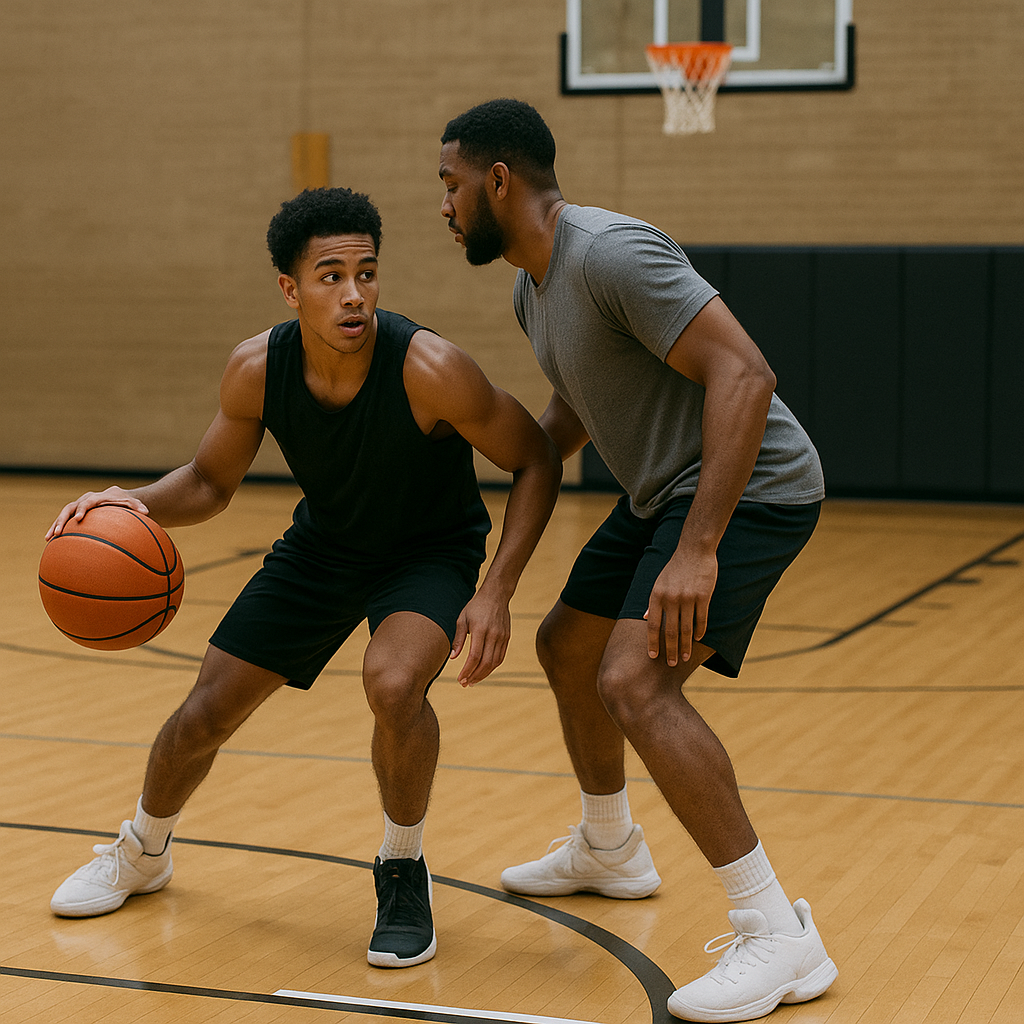
Most guards can throw a pocket pass in warm-ups. The problem is they throw it from the wrong place, at the wrong time, and then they blame the screener for having "bad hands." So I teach the pocket like it's a location on the floor, not a type of pass. When we're working pick-and-roll reads, I put a strip of athletic tape down about a step below the free-throw line extended, right where a good short roll wants to catch and square. I tell the screener: your job is to win that tape. Not the rim. Not the three point line. That tape.
Then I make the guard keep the dribble alive until the screener's inside foot hits the tape lane. If they dump it early, the defender has time to stunt and recover. If they wait too long, the screener catches moving away from the basket and the whole advantage evaporates. We want the catch with shoulders pointed at the rim and the next decision already loaded. If you're a coach, you can see it in the screener's feet. If the toes are pointed to the corner, you're about to watch a slow-motion turnover or a panic dribble.
I also care about which hand delivers the pass. Coming off a right-hand screen, the guard naturally wants to pass with the right. Fine, until the defender is riding that hip and the pass line goes through a body. I teach a simple rule: if the on-ball defender is attached, pass across your body with the outside hand. That creates a lane the defender isn't already living in. We rep it with a live defender and a coach who can reach but not gamble. I don't want steals from crazy swipes. I want the guard to feel the narrowness of the window and learn to protect it.
When it clicks, tempo shows up without anyone saying the word. The guard slows for half a beat to make the level defender commit, then speeds up into space. It's quiet. It looks normal. And the screener is suddenly catching on time, which is where all the easy points start for everybody else.
Short roll math: keep the tagger busy with one extra step
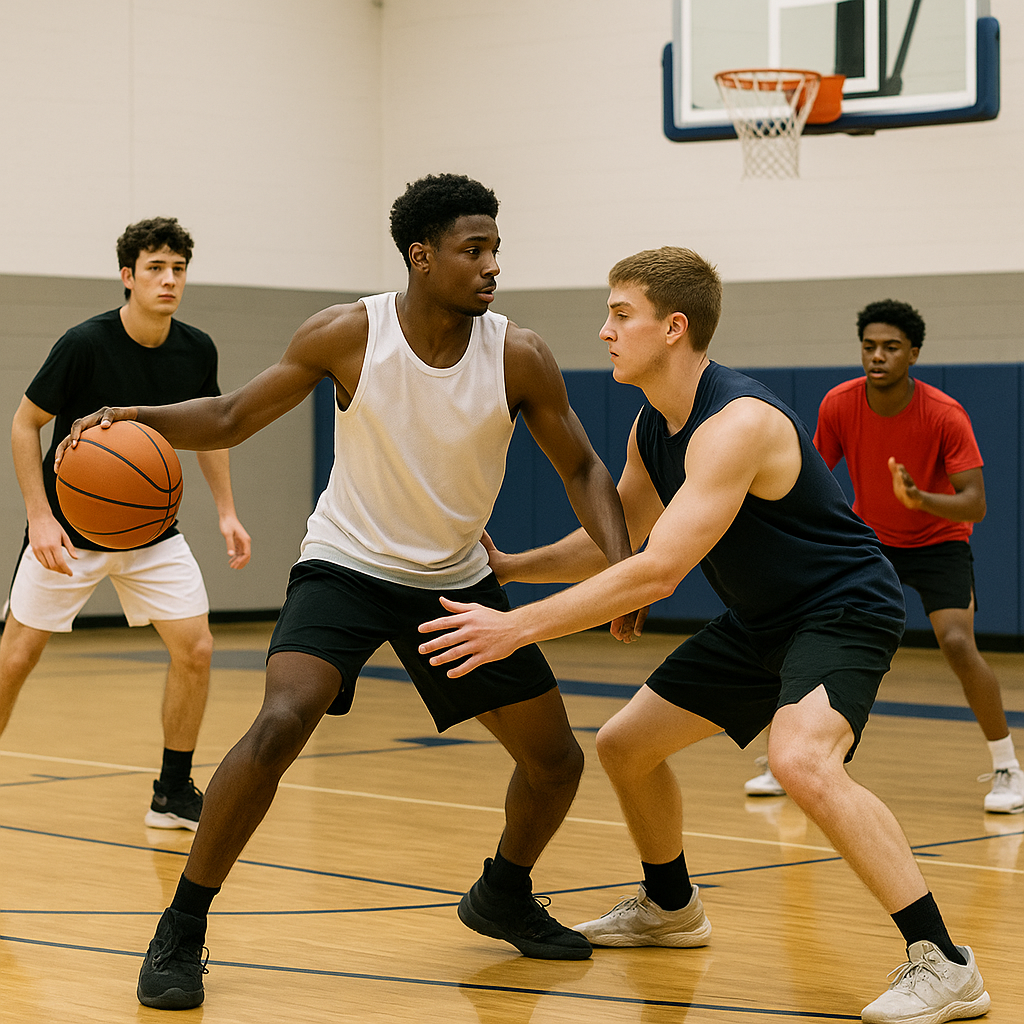
If you want point guards to create points they never touch, live in the short roll for a week. Not as a highlight play. As a boring, repeatable piece of offense. I set it up with three offensive players: the guard, the screener, and a corner shooter. On defense we use two: an on-ball defender chasing and a low man who is allowed to tag and recover. No other bodies. It's clean enough that everyone can see the choice, and competitive enough that the choices still hurt.
The coaching point that matters most is one extra step. After the guard turns the corner, I want the screener to take one hard step toward the front of the rim before they look to pass. Kids love to catch and immediately whip it to the corner like they're being timed. That early pass is what lets the tagger stunt and still get back on balance. When the screener steps at the rim first, the tagger has to respect the layup and the corner becomes a real consequence. It's a tiny change, but it's the difference between a shooter catching with daylight and a shooter catching as a closeout is already arriving.
We build the read with constraints. The screener gets three options only: (1) floater from the dotted line, (2) one dribble into a laydown if the tag never came, or (3) a one-hand hook pass to the corner if the tag commits. I don't allow jump stops into a crowd, and I don't allow backboard experiments. The guard's job is to deliver the pass that lets the screener catch moving downhill. If the screener catches flat-footed, it's a redo. If the guard snakes the screen and loses the defender, fine, but they still have to keep the low man occupied. That means the guard can't drift to the wing after the pass. They have to drift into the middle lane line like they're a scoring threat, because that pulls eyes and buys the corner half a second.
By the end, you hear different talk on the sideline. It isn't "I was open." It's he tagged and he stayed home and hit me earlier. That's the point. You're teaching them to manage the defense's time, not just their own shot.