
Three hands-on ways schools are blending strength, movement, and film so more kids progress without needing a varsity slot.
The 20-minute cross-block that keeps kids from disappearing
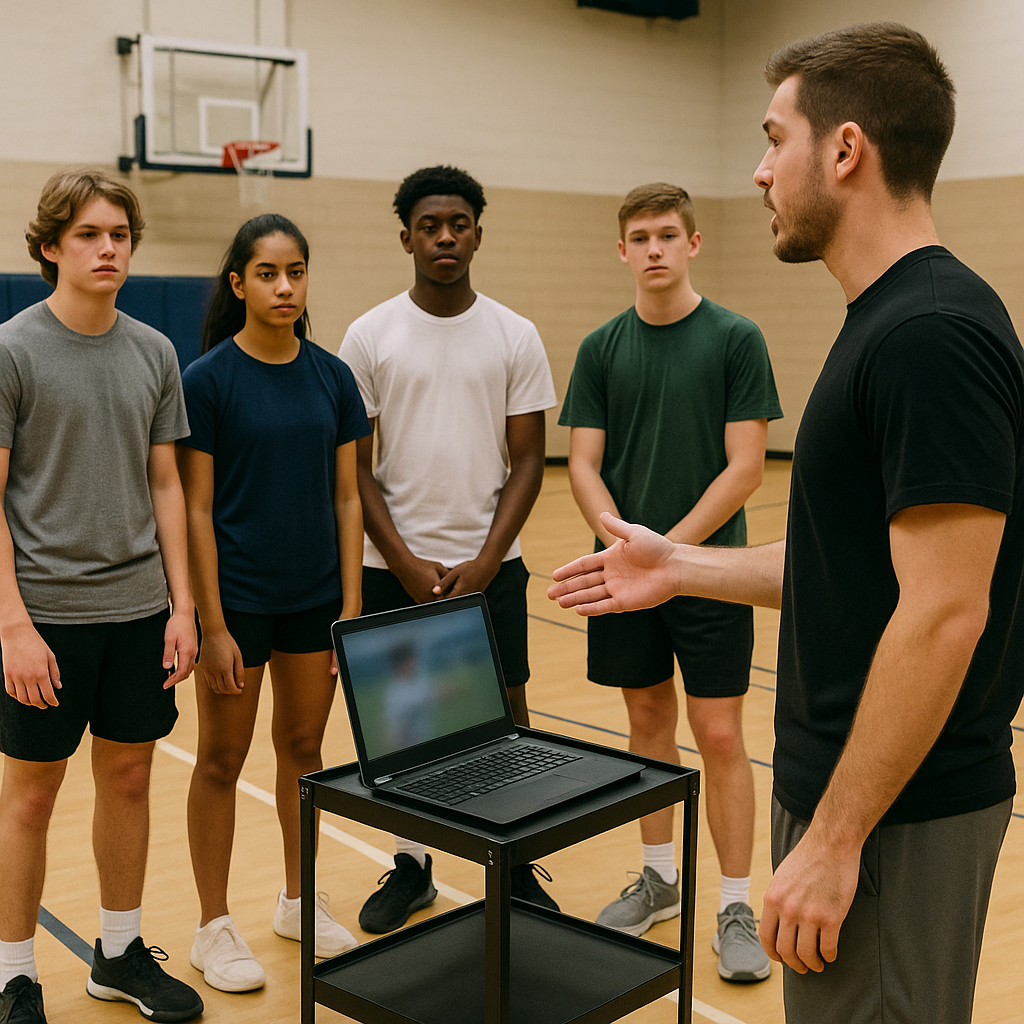
When a school says it wants a “development pathway,” what it usually means in the hallway is: kids who aren’t starting on varsity still need a place to get better without feeling like they’ve been parked. The cleanest fix I’ve seen is a 20-minute cross-block built into the week that isn’t owned by any single sport. We ran ours right after school, before the first teams rolled into full practice. It looked the same every time so nobody needed a new sign-up speech.
Here’s how it worked in the gym: three stations, seven minutes each, and a hard stop. Station one was movement quality (A-skips, lateral shuffles, decel to stick, simple hip turn mechanics). Station two was weight room basics with light loads: trap bar setup cues, goblet squat to a box, and a strict rule that the last rep has to look like the first. Station three was film on a rolling cart: a laptop with Hudl clips of one universal concept, like how to land and re-accelerate, or what a good first step looks like in different sports. The coach running film didn’t talk scheme. They talked body positions.
The point isn’t to make everyone a track kid or a powerlifter. It’s to give a freshman who got cut in soccer and a junior who’s stuck behind an all-conference shortstop the same measurable progress lane. We used a whiteboard with only three numbers: a 10-yard time once a month, a med ball throw, and a simple jump-and-stick grade. You could improve without ever winning a “spot.” And because it lived outside varsity practice time, it felt like opportunity instead of a demotion.
Borrow a coach for one skill, not a whole season
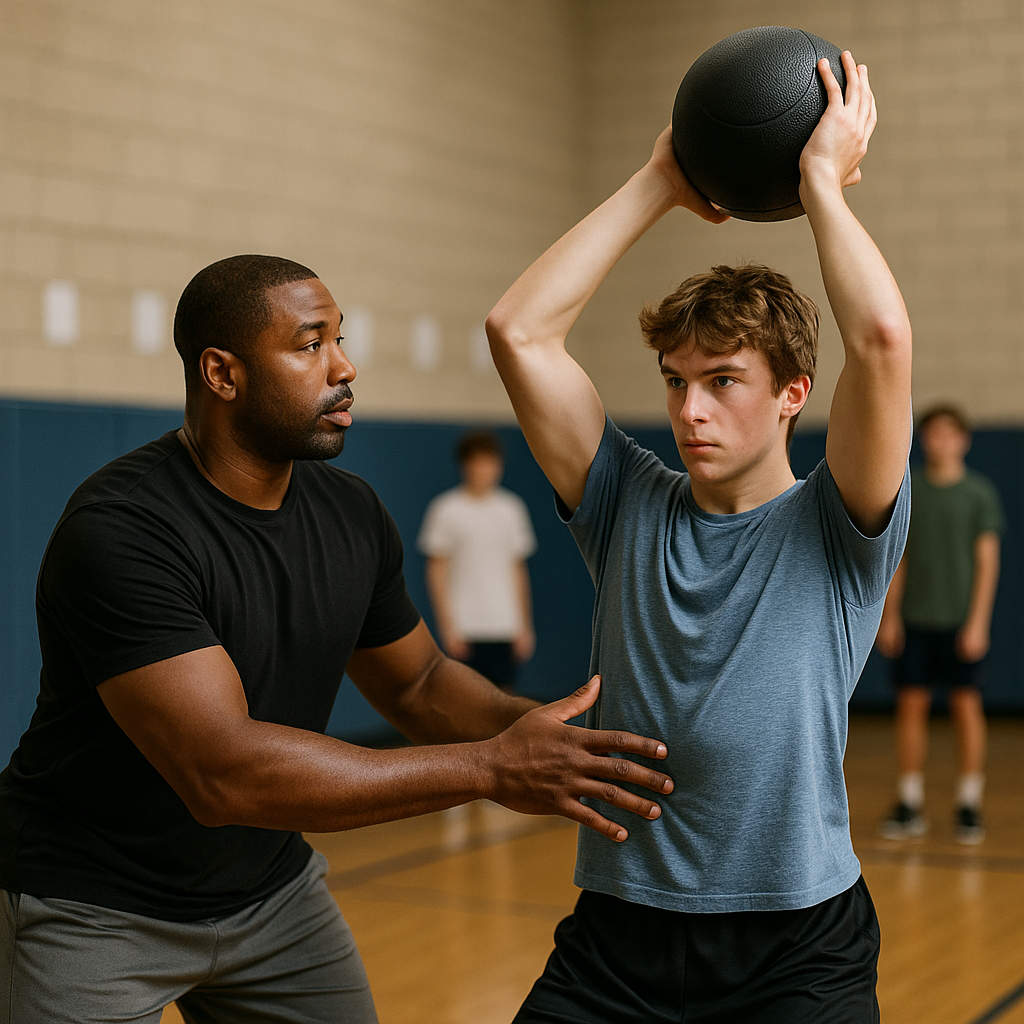
I used to think “interdisciplinary training” meant everyone should cross-train all the time. In a school setting, that turns into calendar wars fast. The version that has held up is smaller: you borrow a coach for one skill, for one week, with a start and end date written down.
We did this with our throws coach (track) and our winter teams. For five practice days, he owned the first 12 minutes of warm-up for anyone who wanted in: baseball outfielders, volleyball middles, football receivers, a couple basketball guards who just wanted their shoulders to stop barking. The only goal was cleaner overhead mechanics and safer volume. He didn’t care who started. He cared that kids could feel a ribcage stacked over hips and that their arm wasn’t doing the whole job.
The setup was simple and didn’t require new equipment: a few light med balls, a couple bands, and tape marks on the wall so kids could self-check where their hands were finishing. Day one was mostly “stop yanking.” Day two was a progression: kneeling chest pass, step-behind throw, and then a controlled overhead slam that sounded like a proper slam, not a weird slap because the ball got dumped early. By day three, you could see it in sport-specific moments. The volleyball kids stopped collapsing into their lower backs on serves. The baseball kids started throwing through their back leg instead of spinning off it.
What mattered for development pathways was who showed up: the kids who weren’t getting a lot of varsity reps. They finally had access to a specialist without having to switch sports or beg for private lessons. And because it was a contained “skill loan,” the head coaches didn’t feel like their practices were being raided. It was, “Track has us for 12 minutes, then you get us back.” That’s a trade most programs will take.
Design a roster that has 'roles' beyond varsity minutes
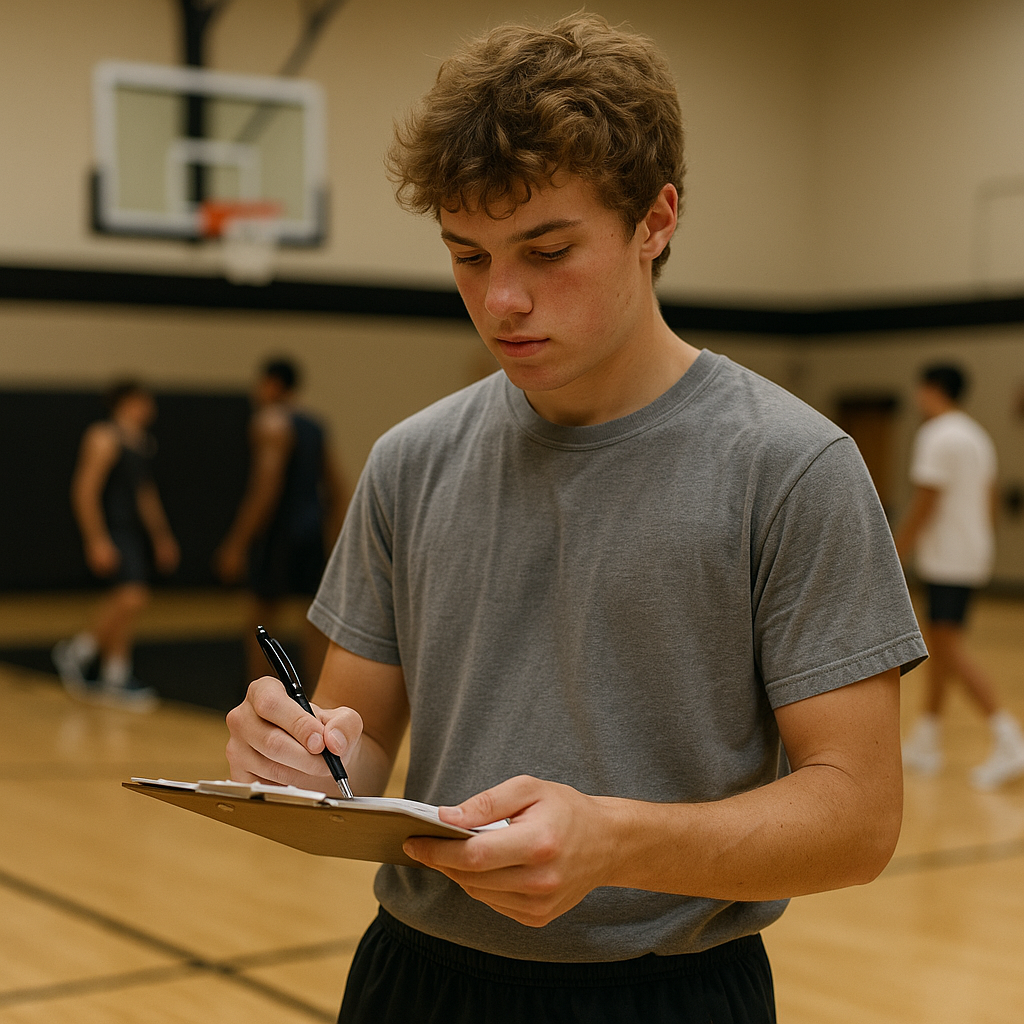
If you want stronger development pathways beyond varsity, you have to stop pretending the only meaningful “role” is playing time on Friday night. That’s the quickest way to lose the middle of your program: the kids who are good enough to care, not good enough to start yet, and busy enough to quit without drama.
The best roster system I’ve been around borrowed from strength and conditioning culture, not from tradition. We posted roles that were tied to specific work, and we rotated them. A kid could be “tempo leader” in conditioning (sets the rep pace and calls the start), “lift captain” for a small group (checks warm-up order, loads plates, logs numbers), or “film tags” for the week (marks 10 clips in Hudl that match one coaching point the staff picked). None of those jobs required you to be a starter. They required you to show up and do a thing well.
The interdisciplinary part is where it gets interesting. We let kids use evidence from one setting to earn responsibility in another. If a sophomore could run a clean warm-up progression in the weight room, we trusted them to run the same movement prep before practice. If a baseball kid was great at tracking training loads (RPE, soreness notes, sleep), we handed that spreadsheet to a basketball kid group and said, “Copy this. Don’t reinvent it.” Suddenly the pathway isn’t “wait your turn.” It’s “build competence, collect receipts, get more responsibility.”
There’s a practical payoff that isn’t fluffy: coaches see who can handle structure. In the spring, when schedules compress and JV contests get weird, those are the kids you can plug into higher-leverage reps because they’re already dependable in small ways. And for the athlete, it feels like progression you can point to. You might not have varsity minutes yet, but you’re not invisible, either. You’re developing in public, with a job attached.