
A towel, a baseline spot, and 30 seconds of film-in-your-head reps that travel across sports and show up in the first minute.
The towel on the baseline routine
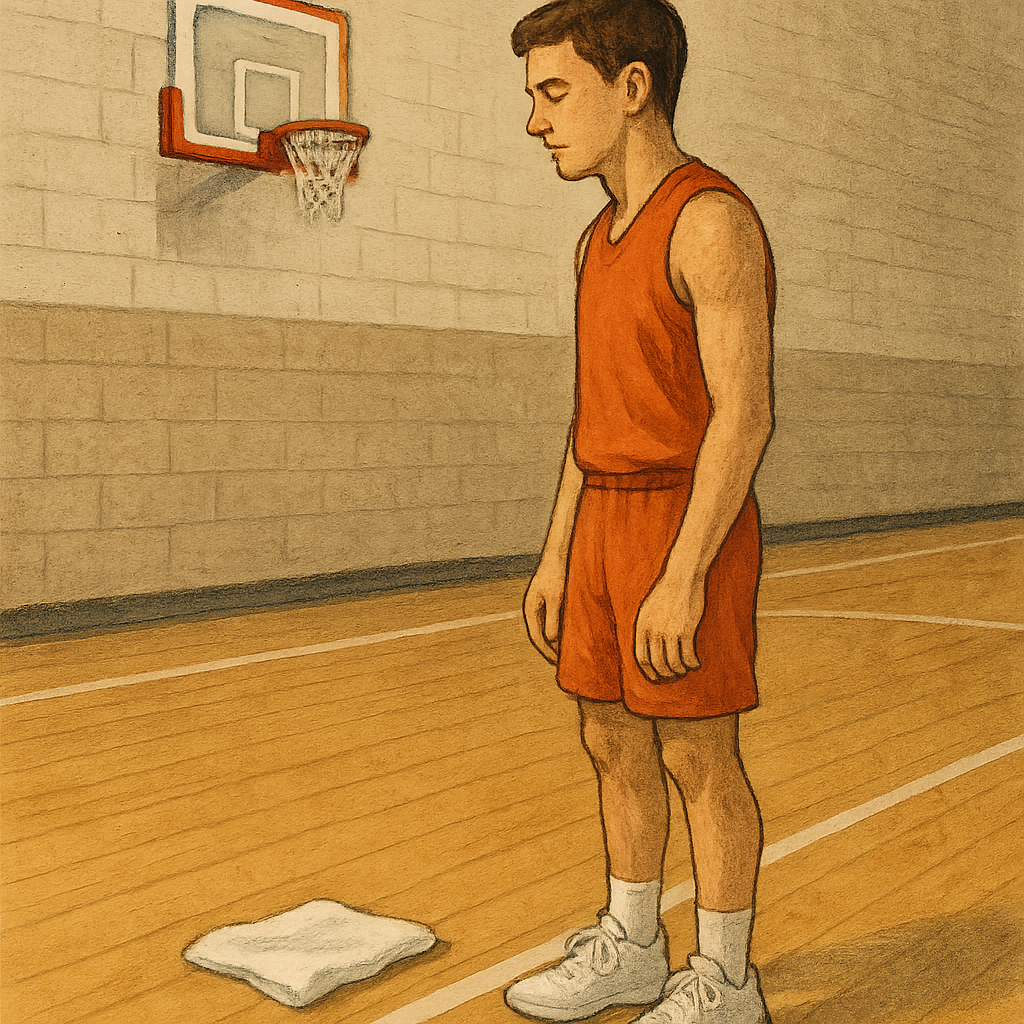
I started doing this after watching a kid who played three sports melt down in the first two possessions every single time. Great in warmups, fine in practice, then the whistle hits, and their brain goes full pinball. We tried all the usual pep-talk stuff, and none of it stuck because it wasn't anchored to anything physical. So now the anchor is a towel.
Here is how it works on game day. During warmups, they bring the same small towel they always use (not the team's pile of randoms) and set it down in the same place every time: the baseline, about a step outside the lane line, where they can see the rim and the far sideline without turning their heads. That spot matters because it's the view they'll have on the first defensive possession, and it keeps the imagery tied to a real angle rather than some floating highlight reel.
Then we do 30 seconds of visualization that is stubbornly boring in the best way. No slow-motion dunks. No crowd shots. They picture three clips, and the clips are always the same sequence: (1) sprint back, point, talk, and get to the help spot on defense; (2) first touch on offense is a simple catch-and-swing with a clean target hand; (3) one free throw routine, even if they never shoot one early. I want them to feel their shoes squeak on that first slide, see the ball pop off the passer's fingers, and hear a teammate call the coverage. If their brain tries to jump to the highlight, I pull it back to the catch and the pivot foot. That's the whole point.
If they're multi-sport, I tell them to keep the towel routine the same, even if the night before was a soccer match or a track meet. The sport may change, but keeping a familiar pregame cue can provide an athlete with a consistent way to shift attention to the next task.
Build a three-sense highlight: sound, feel, sight
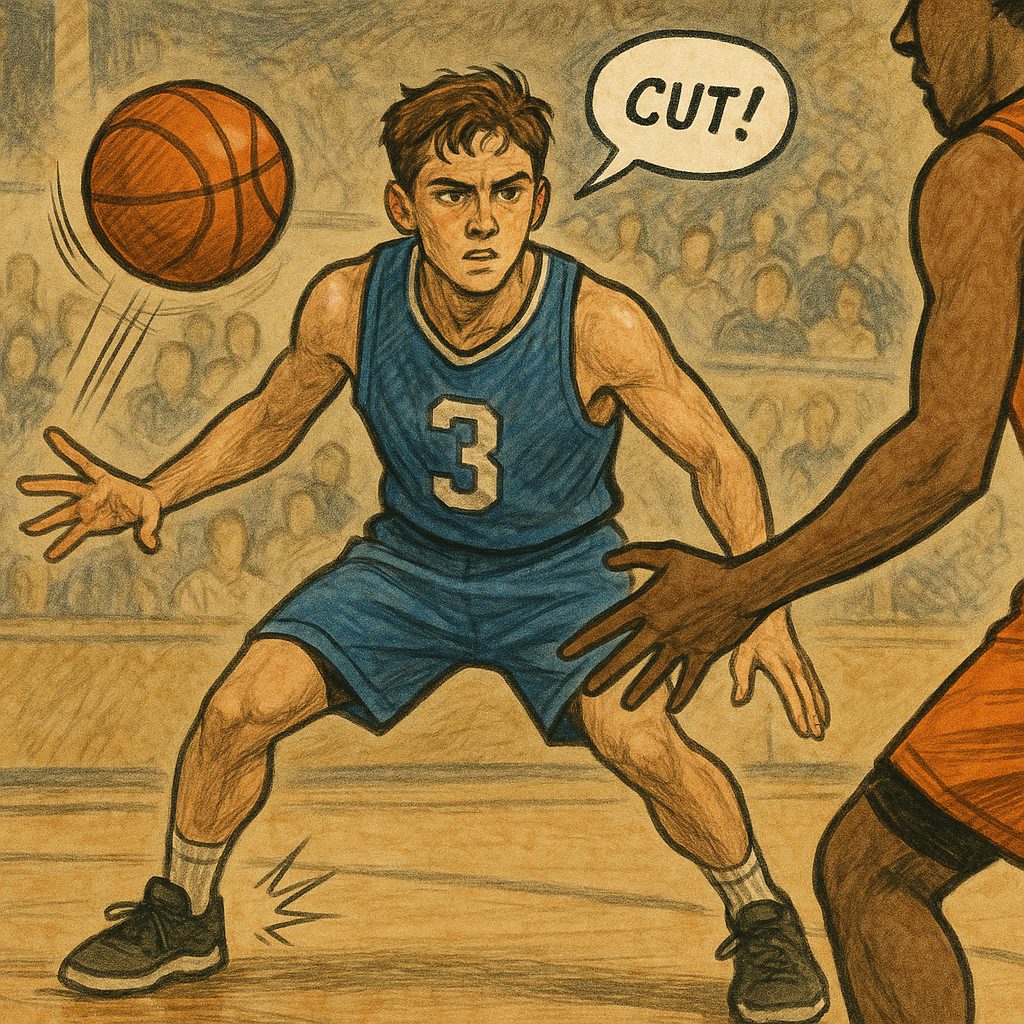
A lot of teens say they visualize, but what they mean is they daydream. It's all sight. It looks cool. A visual-only daydream may be less useful than imagery built around specific movements, sensations, and game situations. The fix isn't more hype. Adding sound and physical sensations can make the imagery more vivid and specific.
When I'm teaching this, I don't start with a full possession. I start with one micro-moment they can replay in under five seconds. My favorite is the first defensive closeout after a swing pass because it shows up at every level of play and punishes spacing mistakes immediately. I tell them: build it with three cues.
- Sound: the ball hitting hands on the skip, the one sharp sneaker squeak when they chop their feet, and a teammate's voice. Not the crowd. Your teammate. If they can't name whose voice they hear (the point guard, the center calling the screen), the picture is fuzzy.
- Feel: the thigh burn on the second shuffle, the little sting in the fingertips on a hard catch, the pressure of the mouthguard when they clamp down for a second. Multi-sport athletes may already have experience adapting to different physical demands and competitive situations, although that varies considerably from athlete to athlete.
- Sight: one simple visual target, like the shooter's waist on the closeout or the corner of the backboard during a layup finish. Not ten details at once.
Then we chain it: closeout, contain two dribbles, force a pick-up, and get a hand on the ball without fouling. That's it. No hero stuff. I want them to rehearse the part that decides whether the coach trusts them in the second quarter.
Here's the part most people skip. After they run it clean in their head three times, I have them run it once with something going wrong on purpose: the pass is late, the floor is slick, the ref is in the way. Not a catastrophe, just normal chaos. Rehearsing a manageable disruption can also prepare them to refocus when something unexpected happens.
Pregame is for rehearsal; halftime is for one reset
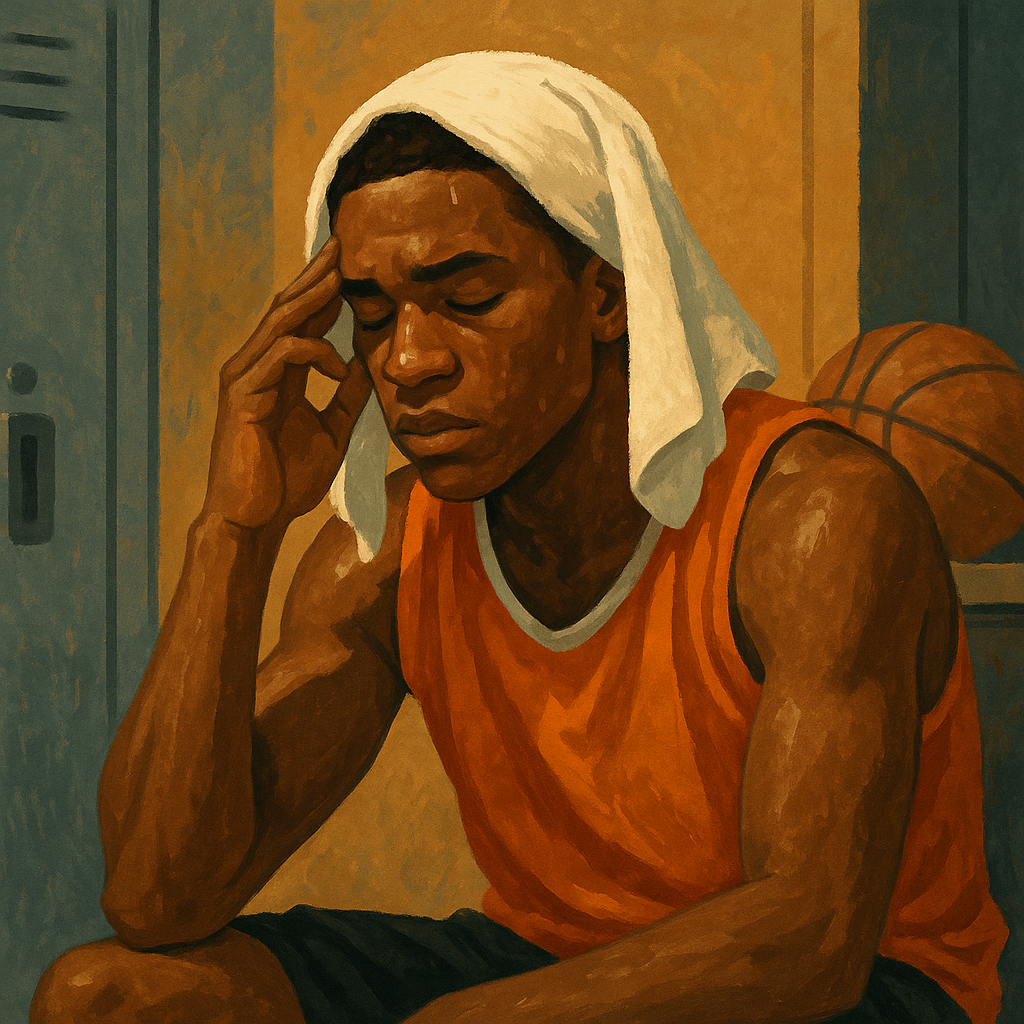
Pregame visualization can be a little longer because nobody has been punched in the mouth yet. Halftime is different. Their legs are heavy, the scouting report is suddenly wrong, and they just watched someone hit a step-back in their face. Trying to rehearse too much at halftime can make it harder to keep the reset focused and specific. So we keep it to one reset, and the reset has a rule: it must cash out within the first minute of the third quarter.
In the locker room, I ask two questions, and I don't let them answer with vibes. One: What's the first job you are likely to be asked to do when you check back in? Two: What's the first place the other team is hunting you? Maybe it's the weakside corner because you keep ball-watching. Maybe it's the top of the key because their guard knows you open your hips early. Whatever it is, we pick one scene, and we rehearse the correction.
Example I use all the time: defending a ball screen when the other team's big man is popping. The scene is tight. They see the screener's shoulder angle, they hear their teammate yell the coverage, and they feel their inside foot stick as they fight over. Then they picture the next pass. Not three passes later, not the whole possession, just the next pass, because that's where teens tend to relax and give up the shot. If it's their job to tag the roller, we rehearse the tag and the sprint back to the shooter. If it's their job to stunt and recover, we rehearse the hand showing early and the first two steps back to the corner.
After a difficult first half, a teen athlete may feel pressure to make up for mistakes quickly. This one-reset approach keeps attention on the next assignment, giving the athlete one clear task to focus on after halftime rather than mentally rehearsing an entire half.