The Unbelievable Story of the Swimmer Who Invented Surf Culture
Duke Kahanamoku reshaped entire sports. Before surfboards dotted California’s beaches and before the word “surfer” even existed, a tall man from Honolulu was gliding across waves with an ease that left crowds speechless.
He moved through the water like it was his natural element, carried the pride of his homeland everywhere he went, and somehow found time to teach the world how to stand on water. This is the story of how Duke turned a Hawaiian tradition into a global obsession.
A Hawaiian Kid With Olympic Dreams
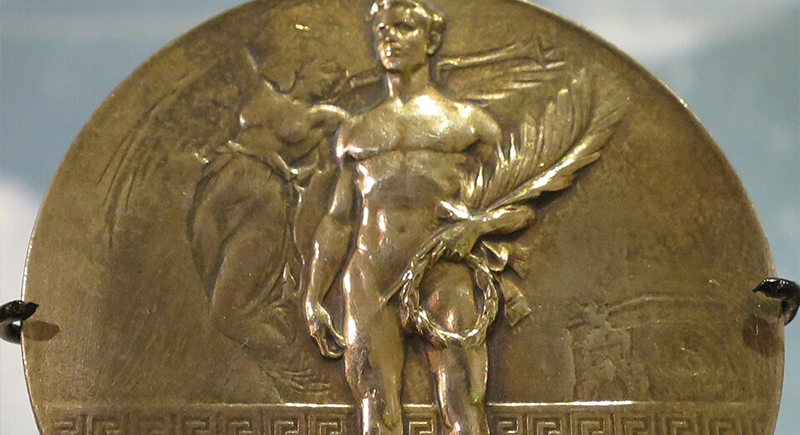
Image via Wikimedia Commons/Wmpearl
Born in 1890 in Honolulu, Duke grew up with the Pacific. At 21, he stunned the swimming world by smashing the 100-yard freestyle record using a technique later called the “Kahanamoku kick.” When mainland officials doubted his record, he crossed the ocean to show them his speed in person.
At the 1912 Stockholm Olympics, Duke captured gold in the 100-meter freestyle and silver in the relay, becoming Hawaii’s first Olympic champion. Eight years later in Antwerp, he defended his title by clocking record times and leading a team of fellow Hawaiians to a clean sweep of medals.
Duke napped between races, woke up, dove in, and won. In 1924, at 34 years old, he took silver in Paris behind a young Johnny Weissmuller, who would later become famous for playing Tarzan.
Surfing Crosses The Ocean
Fame gave Duke a chance to share something far more meaningful than medals. In Hawaii, wave-riding, or he‘e nalu, was an ancient practice tied to community and joy. Beyond the islands, hardly anyone had seen it. Duke brought a surfboard along during his travels and used it to show the world what Hawaiians had known for centuries.
In 1914, he introduced surfing to Australia at Freshwater Beach by crafting a board from local timber and riding waves that mesmerized Sydney spectators. Soon after, he did the same in California. Crowds gathered at beaches like Corona del Mar and Newport, where he showed curious onlookers how to balance and glide.
These exhibitions sparked California’s first surf community and planted the seed for what would grow into one of the world’s most recognizable subcultures.
Hero, Star, And “Ambassador Of Aloha”
Duke’s connection with the ocean wasn’t limited to competition or performance. In 1925, while living in Southern California, he used his surfboard to rescue eight men from a capsized yacht named Thelma. His quick thinking and strength made him a national hero and influenced lifeguards to begin using boards for rescues.
Hollywood soon noticed him, and he appeared in several films, often cast as an islander, warrior, or soldier. Though the parts were small, they helped spread his image and Hawaii’s spirit to audiences everywhere.
Later, back home, he served as sheriff of Honolulu for almost 30 years. When Hawaii became the 50th U.S. state in 1959, Duke was already its most beloved public figure.
The Wave That Never Broke
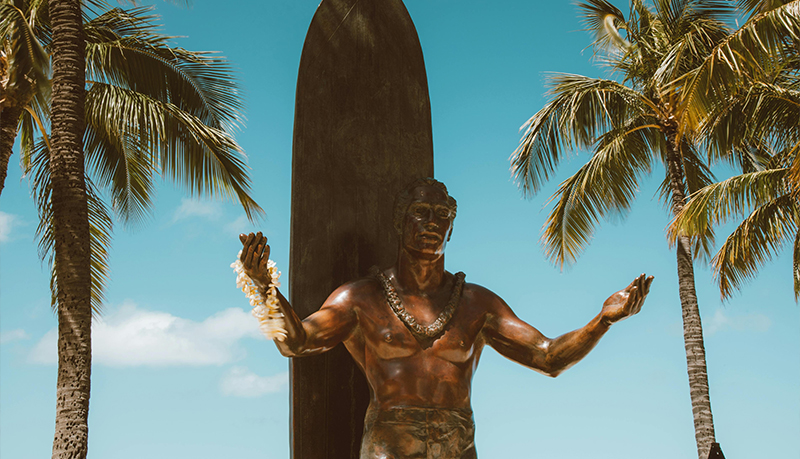
Image via Pexels/Jess Loiterton
By the 1960s, surfing had become a worldwide craze. Songs by the Beach Boys echoed across radios, surfboards filled car roofs, and movies made it look like paradise in motion. Through all of it, Duke remained a symbol of the sport’s roots. He attended surf contests, mingled with young athletes, and carried the same spirit that had defined him since his days in Waikiki.
When he passed away in 1968, thousands gathered to scatter his ashes into the ocean. His bronze statue still stands at Waikiki Beach, draped with flower leis, facing the waves he once rode. Through his life, the world got to share in something beautiful.