
From eye-tracking baselines to impact logs, these are the tech touchpoints I want in the trainer's pocket before kickoff.
Baseline eye checks you can repeat under stadium lights
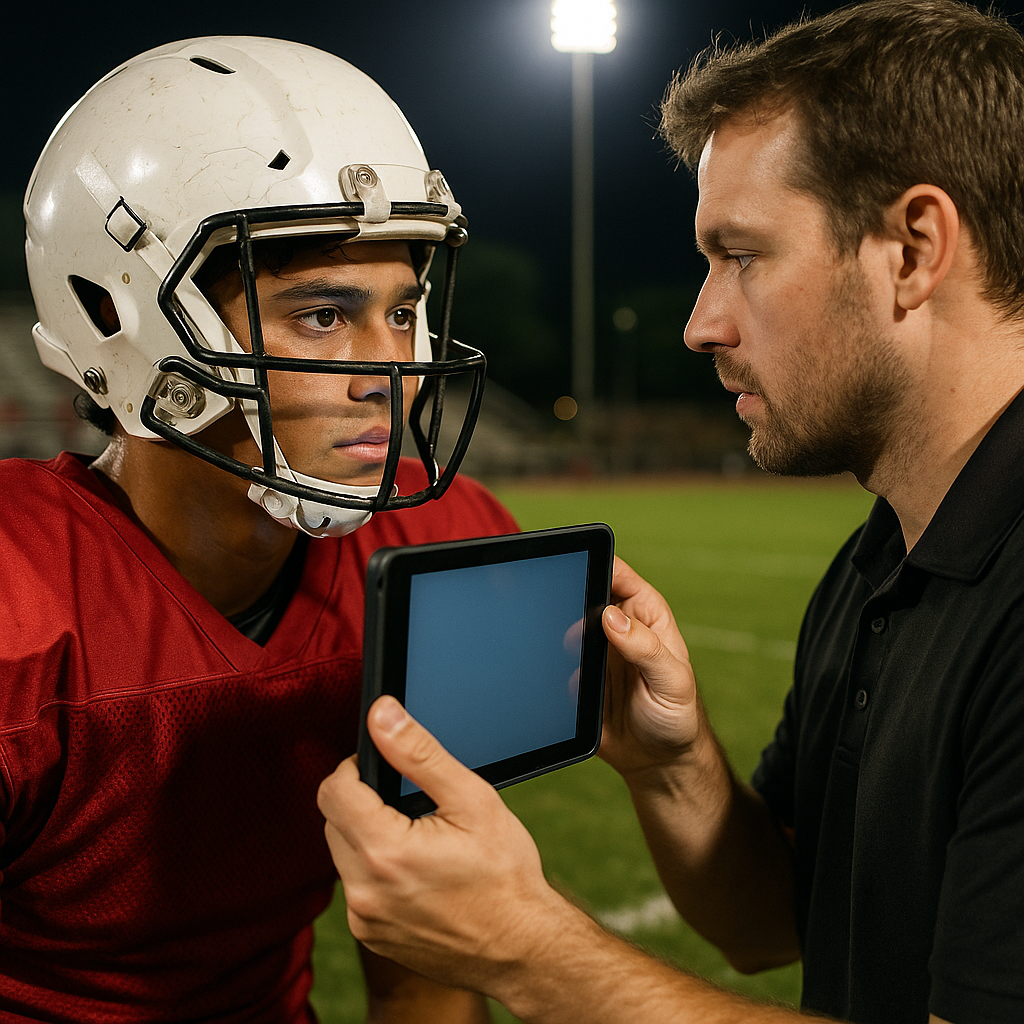
I used to think baseline testing was mainly for paperwork. Then I had the same kid look totally fine walking back from a collision, crack a joke, and still fail the part of an oculomotor screen that you cannot fake if your brain is irritated. The tech angle I lean on here is simple: baseline eye and balance checks that are standardized enough to be worth repeating, but not so precious that they fall apart the second the band starts playing.
If your school uses a tablet-based concussion assessment platform, the biggest win is consistency. Same device, same brightness, same distance, same script. I keep a cheap privacy screen on the tablet so a teammate hovering nearby can't accidentally turn it into a group project, and I run it in a predictable spot (training room doorway, golf cart shade, anywhere I can control glare). Under stadium lights, pupils do weird things. The workaround is not guessing. Lock in your conditions as much as possible and document what you couldn't control.
On game day, I'm not using a baseline to declare anyone "cleared." I'm using it as a comparison point that helps me explain a decision fast to a coach who wants a yes/no. When the tech flags slowed reaction time or abnormal smooth pursuit compared to that athlete's own baseline, it gives the conversation a spine: this is different for them, today. That matters more than arguing about whether they look "dazed."
The failure mode is when baselines were rushed in a noisy gym and the kid treated it like a video game. If you saw that happen in preseason, you already know which athletes have junk baselines. Tag them. Re-do them. It's annoying once, and it saves you from leaning on bad data when the stakes are high.
Video isn't diagnosis, but it can stop the argument
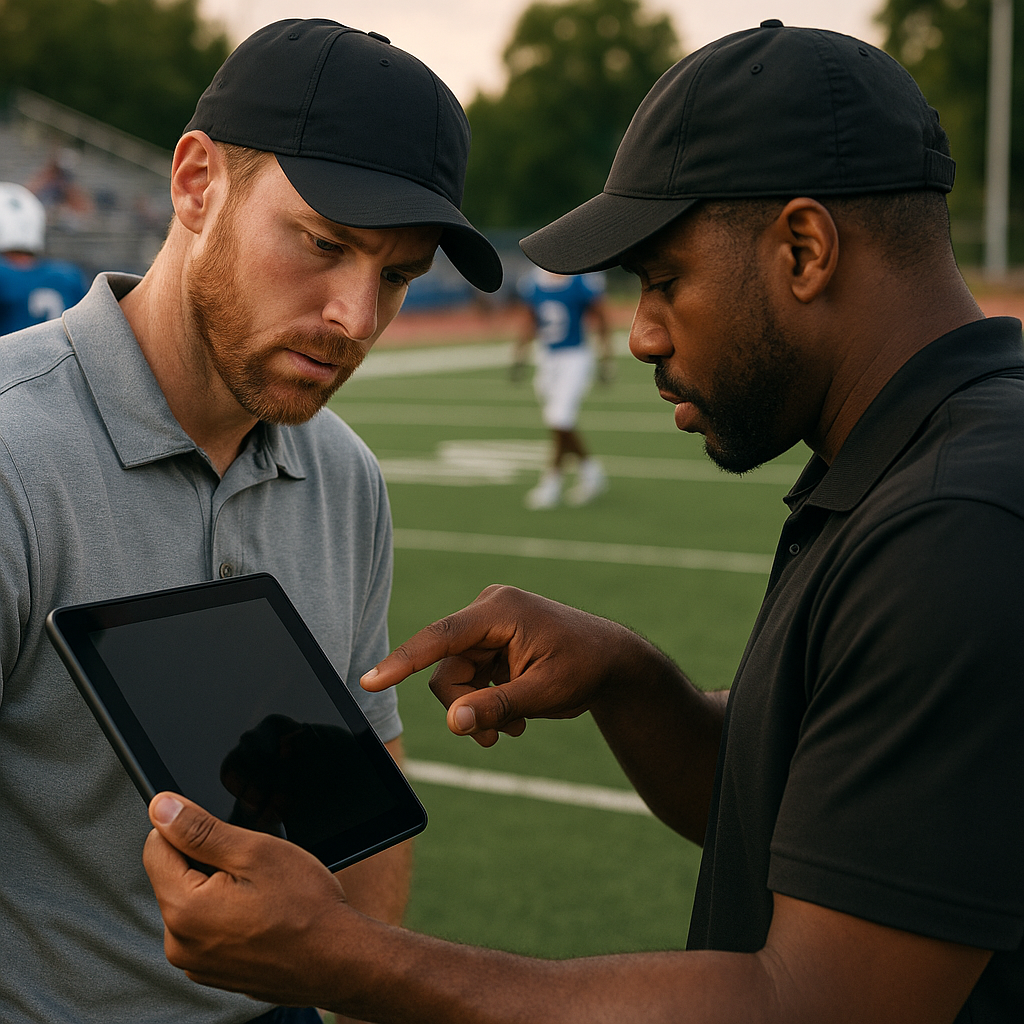
Here's the most practical piece of technology in concussion detection that nobody brags about: getting eyes on the hit. Not vibes. Not a kid's memory of it. The hit. If your school already uses Hudl or another sideline replay workflow, athletic trainers can borrow that pipeline in a way that keeps everyone calmer.
When I get called because an athlete might've taken one, my first question is, where on the field and what time on the clock? If the coaching staff can pull the clip quickly, I can match mechanism with what I'm seeing in front of me. Was it helmet-to-helmet? Was it a whiplash snap where the head never got touched? Did they go down and pop right up, or did they pause on hands and knees for a beat before standing? Those details don't diagnose a concussion, but they absolutely change my index of suspicion and how aggressively I manage removal and follow-up.
It also helps with the thing that eats up your sideline: the debate. When a coach is convinced the kid just got the wind knocked out of them, a clip can de-personalize it. I'm not calling anyone soft. I'm pointing at the mechanism and saying, we treat this one seriously because that kind of acceleration is exactly what we worry about.
Two guardrails. First, replay can't rule anything out. A clean-looking tackle doesn't mean the athlete's brain is fine, and a scary-looking one doesn't guarantee a concussion. Second, privacy and workflow matter. I don't want an athlete's worst moment getting passed around a group text. If you're going to use video as part of your decision-making, keep it inside the same secure platform the coaches already use, and keep the conversation on need-to-know.
Impact sensors are best as a sorting tool, not a scoreboard
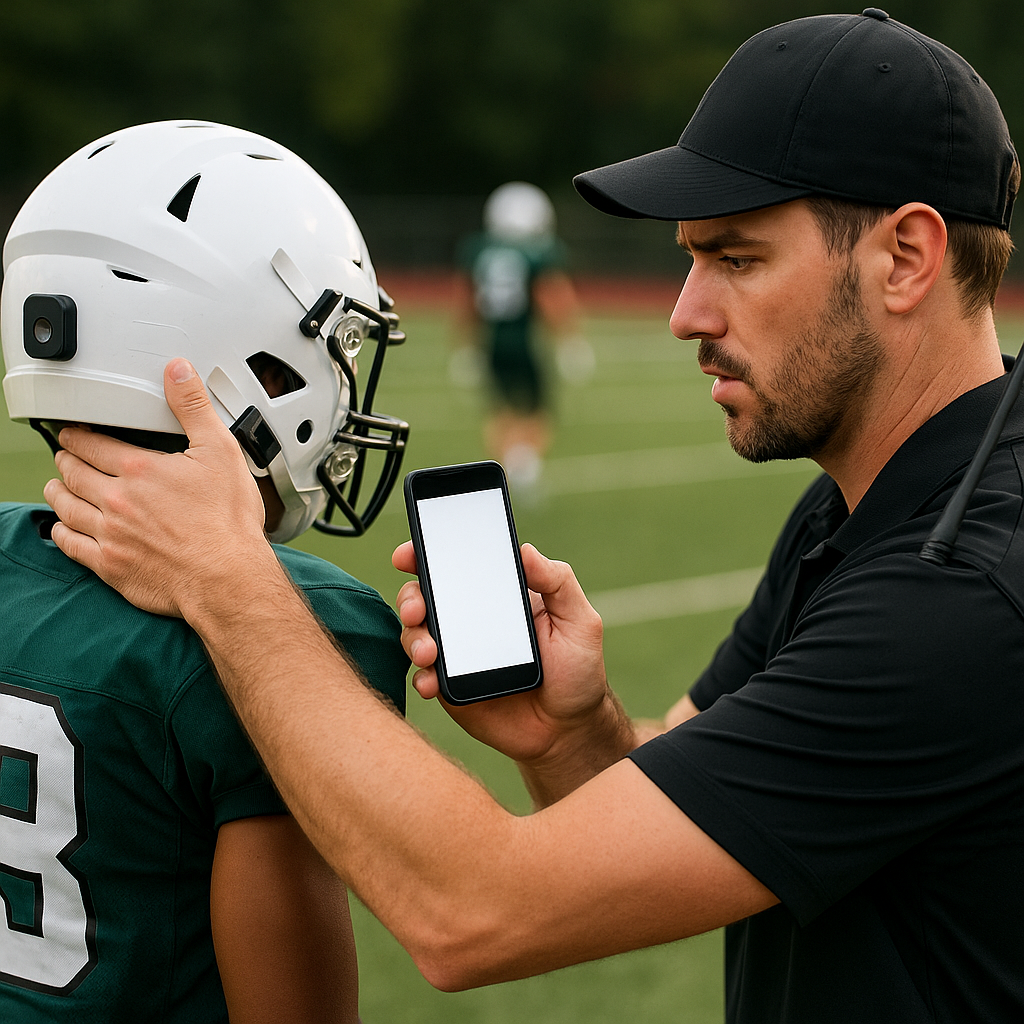
If your program has any kind of helmet or headband impact sensor in rotation, the best way I've found to use it is as a sorting tool. It helps you decide who gets your attention first when three kids come off the field in the same series and you're one person with two hands and a radio. It does not get to be a scoreboard for who hit hardest or a magic concussion detector.
On a busy Friday, I want three things from that system: a timestamped log, a way to tie events to a jersey number without confusion, and a threshold setting that the staff understands is conservative. When an alert pops, I don't run like it's an automatic concussion. I use it to prompt a check-in: quick symptom questions, a look at balance, and a scan of how they're interacting with teammates. The tech is basically tapping you on the shoulder saying, don't forget this athlete. That's valuable by itself.
Where it gets useful over weeks is pattern. The kid who never triggers an alert but is suddenly getting repeated moderate impacts at practice. The athlete who keeps spiking in the same drill, which is usually a technique problem or a coaching point, not a medical mystery. That is where I loop in the coaching staff with specifics: date, drill, and frequency. It's hard to argue with a clean log, and it lets you fix the environment instead of waiting for a bigger incident.
One caution I say out loud early in the season: sensors can be wrong. They can shift, they can miss, and they can over-read when a helmet gets tossed. So I never let an athlete talk me into staying in because it didn't beep. If anything, the tech makes my standards easier to hold because it gives me one more neutral reference point when emotions are loud.