
Three annual tracking methods I use so a sophomore's plan doesn't reset every spring.
The one-page position ledger I update after every test
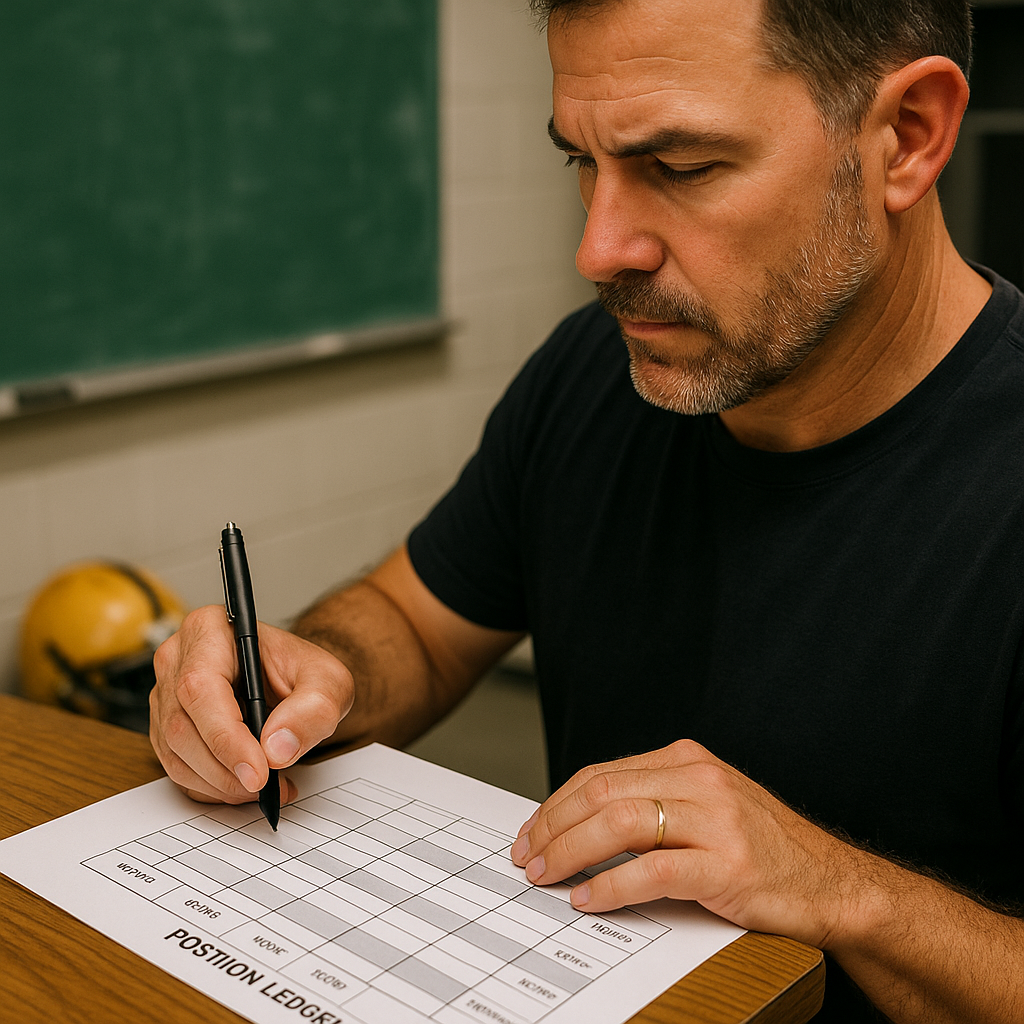
I got tired of the same conversation every March: a kid swears they're faster, stronger, and more confident, but the only proof we have is a new max on a lift we didn't test last year and a Hudl cut-up that conveniently avoids the ugly reps. So I keep a one-page position ledger for each player, and I mean one page on purpose. If it spills onto page two, nobody reads it after week 3.
Across the top I put the years (9th, 10th, 11th, 12th) and down the side I put position-specific traits, not generic ones. For a wideout, that might be release timing vs. press, top-end speed, catch radius mechanics, and blocking grade. For a guard, it could be first two steps on pull, pad level under fatigue, pass-pro anchor, and communication. Then I add three sections that make it usable in a school season: tested (numbers we can repeat), graded (film-based, with a rubric), and observed (notes from practice that you forget by summer).
On the tested side, I keep it boring: 10-yard split, flying 20, broad jump, and one strength marker that matches the kid's room (trap bar deadlift is common because it shows up in most weight rooms, but use what your program uses). The graded side is where position work lives. I keep the rubric tight: 1 to 5 with a one-sentence definition for each number. Example for DBs on man coverage: 5 = stays in-phase through the break with no grab, 3 = loses a half step but recovers without panic, 1 = opens the gate and never gets it back. When I clip film, I label it by the trait, not by the play call, because next year's staff might not run the same stuff.
Every time we test or do an end-of-camp evaluation, I update the ledger the same day. If I wait a week, it turns into a memory contest. The sneaky benefit is it keeps multi-year plans honest. A sophomore's offseason doesn't get built off vibes; it gets built off the one column where we can see what moved and what stayed stuck.
Film grading that survives staff changes
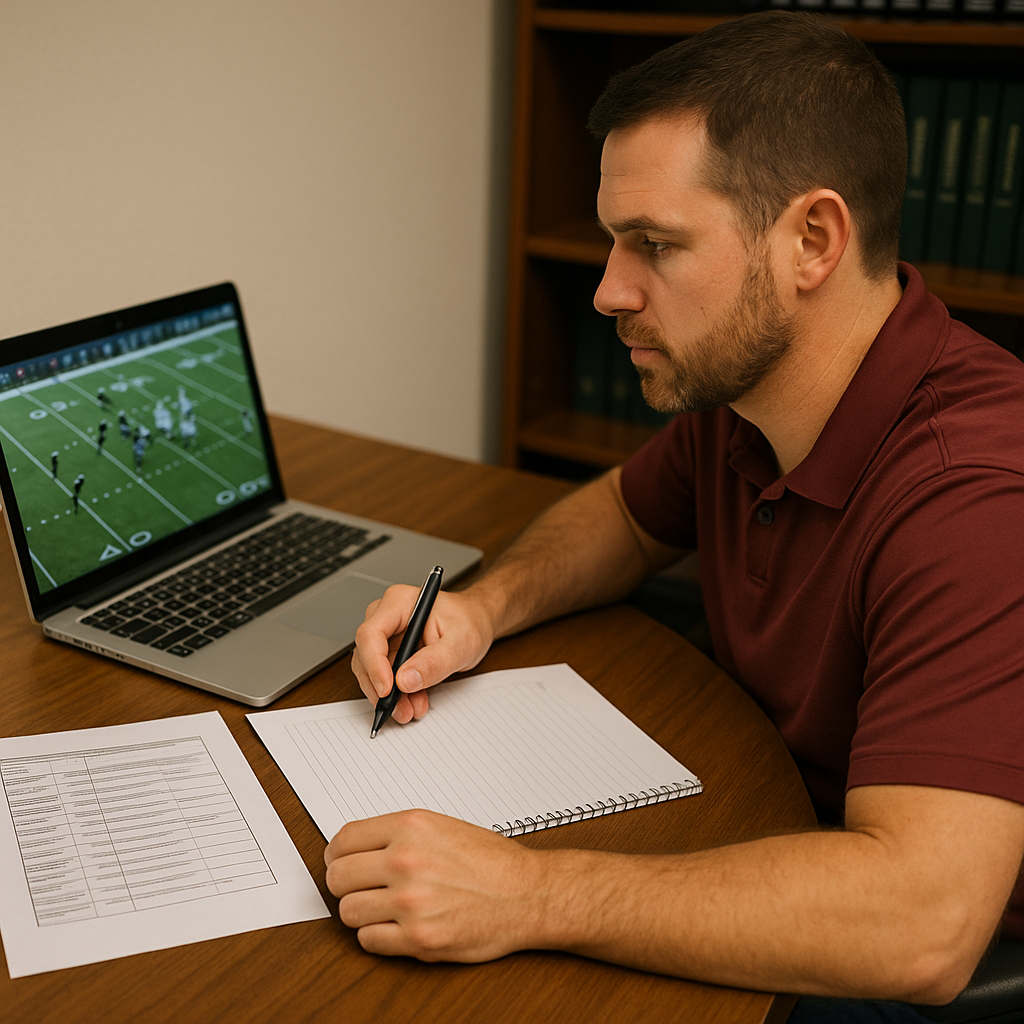
Here is the problem with most year-to-year film notes: they read like diary entries. Useful to the coach who wrote them, basically invisible to the next guy. I started building an annual film grade that can survive a coordinator leaving, a position coach swapping sports, or me being out for a week during basketball season.
I do it with three parts, and they all live in the same shared folder as the cut-ups. First, a trait glossary. It's a plain doc that defines what we mean by the traits we grade, in our language, with one clip example for each trait. Not ten examples, one. Second, a five-play sample requirement. For each trait grade, you tag five plays minimum in Hudl. That protects you from the highlight bias where the kid had one great rep on a Friday night and it quietly becomes their identity. Third, a season snapshot sheet that only gets filled out twice: end of camp, end of season. Midseason you can tag plays all you want, but you don't rewrite the whole evaluation every Sunday.
What does it look like in practice? For an offensive tackle, I might grade two traits for pass pro (set points and independent hands) and two traits for run game (first contact leverage and finish). For a linebacker, I might grade run fit tempo, block deconstruction, and coverage spacing. Those are coachable and repeatable. I don't grade personality. I don't grade effort in a way that turns into an argument. If effort is an issue, it shows up in missed assignments and loaf plays, and those can be tagged like anything else.
The annual part matters because kids change fast. A junior who learned to talk pre-snap will look like a different player even if their 10-yard split barely moves. When we sit down in the spring, I can pull the five tagged reps from last fall and the five from this fall and ask one question: did the player solve the same problem, or did they just get better at avoiding it on camera?
The spring 'carryover meeting' that sets next year's targets
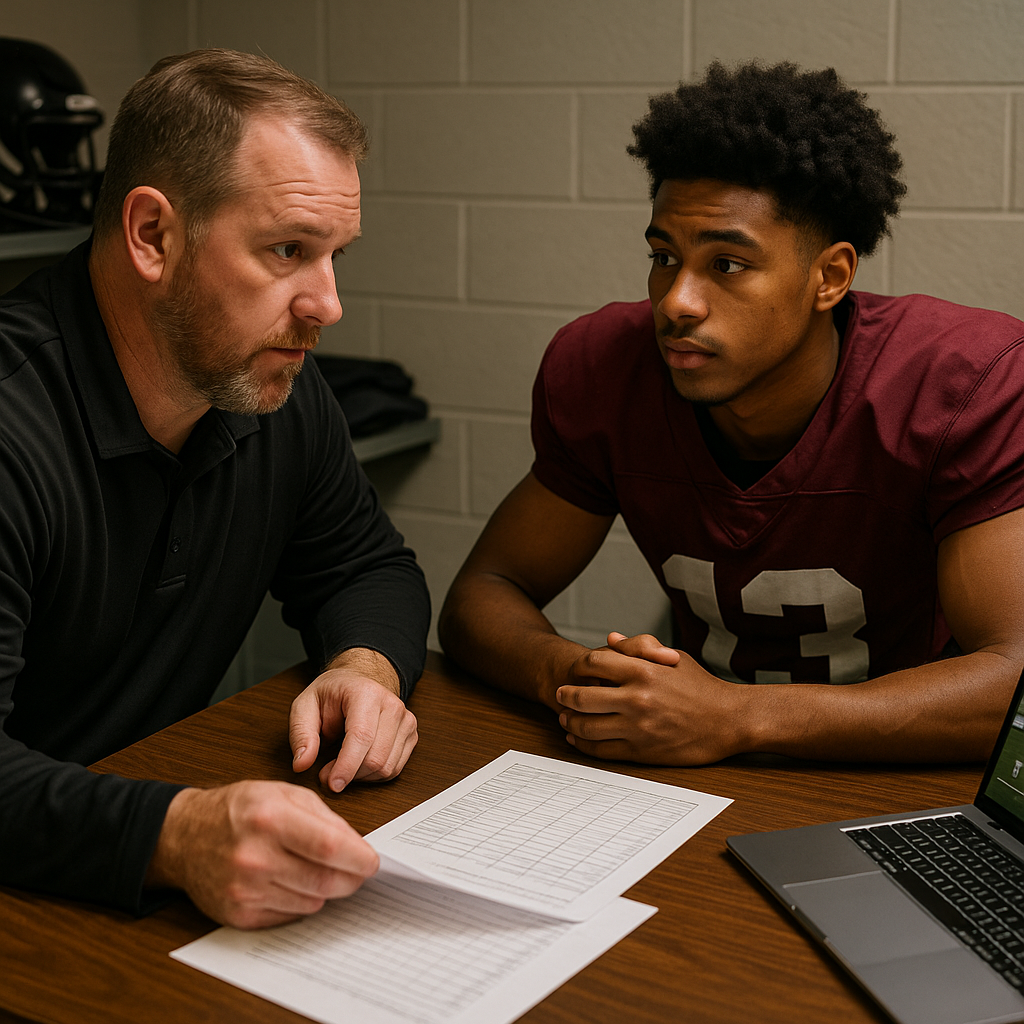
Most programs do an end-of-season meeting. Fewer do the one that matters for multi-year growth: the spring carryover meeting. It's not a hype session. It's not a recruiting talk. It's a short, slightly awkward reset where you prove to the kid that you remember what you asked them to fix last year, and you're not just inventing new goals because the calendar flipped.
I run it with three things on the table: the position ledger, the end-of-season film snapshot, and one page of spring numbers from the weight room. We sit down right after spring ball (or after the first few weeks of offseason if your state doesn't do spring football) while last season is still easy to picture and next season isn't abstract yet.
The structure is simple:
- Two carryovers: we name two traits that are staying in the plan from last year. If a safety still takes false steps on play-action, it doesn't get hand-waved away because he had a good playoff game. If a center's snapping is fine but the protection calls are late, that stays on the list.
- One new demand: we add one trait that has to show up this year because the player's role is changing. A sophomore corner who was the third guy might now be the travel corner. A tight end who used to be a big slot might now have to block a 5-tech in a 3-point stance. That role shift is where multi-year plans fall apart if you don't name it.
- One number: we pick a single tested metric that connects to the role. Not ten. One. For a slot, it might be the 10-yard split. For a lineman, it might be trap bar speed at a set load your room can repeat. The point is repeatability, not a social media PR.
Then I write the targets in plain language the kid can repeat to me in the hallway. Not coach-speak. And I tell them exactly how we'll check it: tagged reps in Hudl for the traits, and a retest date for the number. When a player comes back as a junior and says, "Coach, you never told me I had to do that," I can pull the carryover sheet and point to one line. It keeps me honest too, which is the part nobody wants to admit.