
One cheap piece of foam turns closeouts into habits and keeps your zone from collapsing on a scoring guard.
The pool-noodle line for no-collapse closeouts
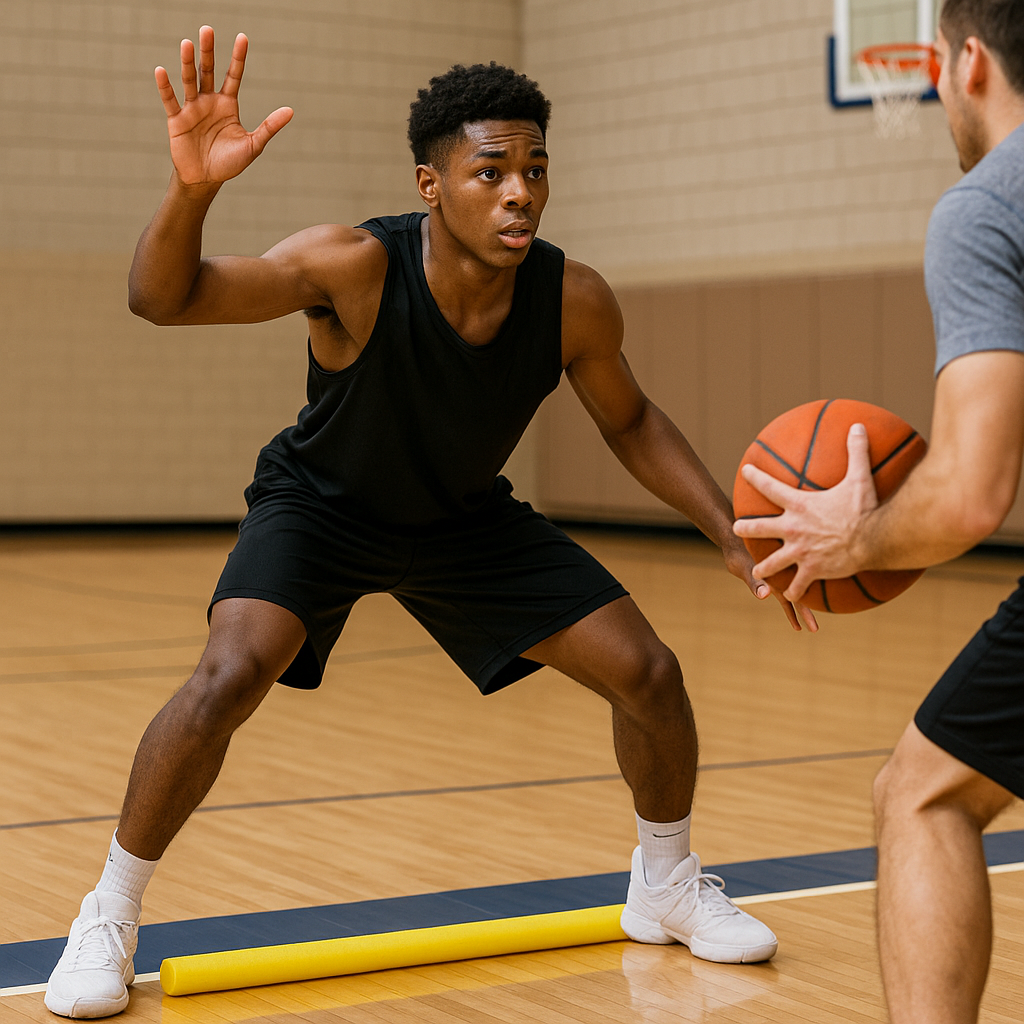
I keep a couple pool noodles in the coach's bag for one reason: they create a boundary you can see in your peripheral vision while you're flying at the ball. In a zone, aggressive scoring guards live for the moment your top defender sprints at them, then the whole shell pinches in behind the play like it's magnetized. Now you've got two defenders standing in the same window, and the pass goes right over their heads to the wing or the short corner. The noodle fixes that without a speech.
Lay one noodle along the free-throw line (or the NBA line if you're working older kids) and tell your top two defenders: on a closeout, your inside foot can't cross the noodle unless the ball is already in the paint. You're still closing hard. You're just closing under control, hands high, hips down, and you're staying connected to the next pass. Then put a manager or assistant at the top with a ball and a guard in a live stance. The guard gets two reads only: shot or quick spray to the wing. Run it at game speed for 20 seconds, rotate, repeat.
What I like is how it changes the conversation. Instead of me yelling, "Don't overhelp!", the kid can feel it. Their foot hits foam, they realize they're drifting, and they re-center. After a few rounds, you can pull the noodle and the spacing stays. It's a tiny constraint, but it buys you options: your top doesn't die on the first move, your wing isn't forced to stunt at two places, and your back line can stay home on the baseline cutter instead of playing firefighter all possession.
Tag the nail, not the driver
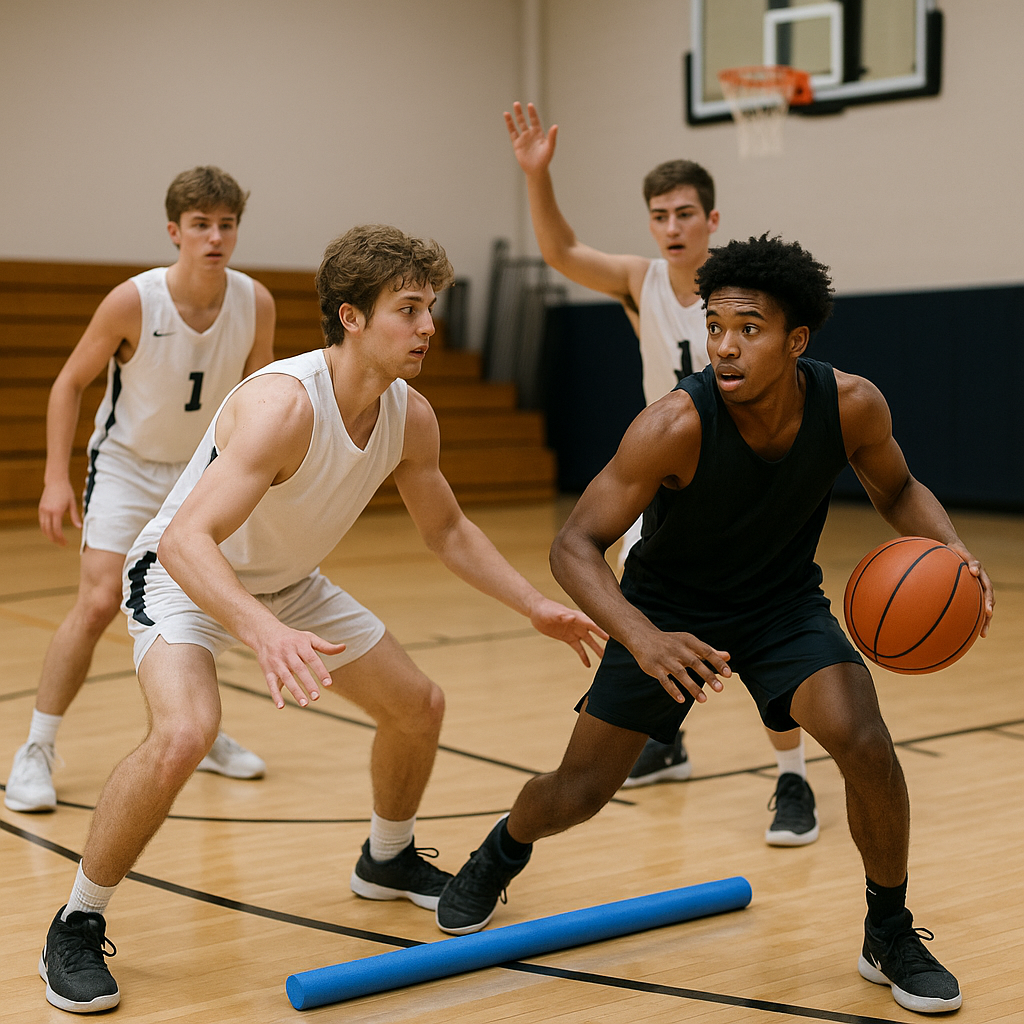
Here's the zone spacing mistake I see the most against a real scoring guard: everybody stares at the dribble like it's a magic trick. By the time the guard gets downhill, the help is late, the top is chasing from behind, and the middle of your zone caves toward the ball. You might get one tough layup. You will also give up a trail 3, a dunker spot dump-off, or that lazy baseline drift to the corner that feels like it takes five minutes to arrive and still nobody gets there.
The fix that travels well from youth to varsity is a simple rule: you don't tag the driver, you tag the nail. The nail is that imaginary spot in the middle of the floor around the free-throw line area where drives want to pass through. If your middle defender (or your weakside high defender, depending on your zone) owns that spot early, the guard sees bodies before they get comfortable. And when the guard is uncomfortable, your spacing stays wider because you aren't all collapsing in panic.
On the floor, I teach it with a piece of flat tape as a target and a stopwatch. We go 3-on-3 out of a 2-3 shell: guard up top, wing, and a short corner player. Defense has top, wing, and middle. The offensive guard's job is to attack a seam and force a rotation. The defender's job isn't to steal it. It's to beat the dribble to the nail with two hard slides, show hands, and then recover out to their zone spot on the pass. I time the rep (8 to 10 seconds) because kids move differently when there's a clock.
If you do this right, your closeouts get shorter. That's the whole point. When the nail is occupied early, the pass has to travel farther to find daylight, which gives your wings a cleaner angle to run shooters off the line without turning the possession into a scramble drill. You don't need five different coverages. You need one shared landmark that keeps everybody from drifting toward the same problem.
One call for baseline drives: "Peel"
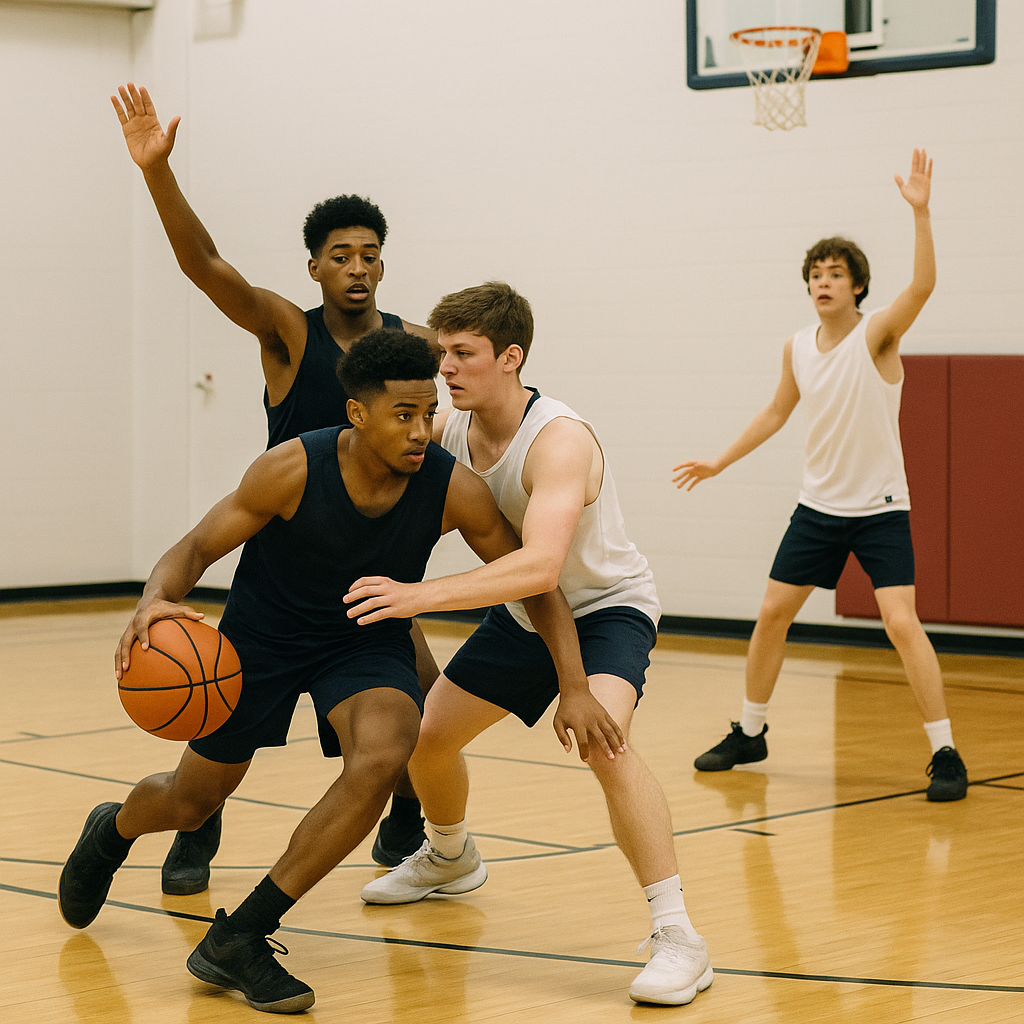
Baseline is where zones get embarrassed, especially when the guard is fast enough to force that awkward turn-and-run. The natural instinct is for the low defender to chase the ball under the backboard, the middle to drop with them, and suddenly you've got two bodies standing in the restricted area while the opposite corner is waving both hands like they're directing traffic. If the other team has one kid who can hit a corner 3, that's a long night.
I like teaching one specific exchange for this: the peel. It's not fancy, and it doesn't require your bottom defenders to be superheroes. When the ball is driven baseline from the wing, the on-ball defender rides it and the low defender steps up to stop the ball outside the lane line. The important part is what happens next. The original on-ball defender peels off and takes the low defender's old zone spot (usually the short corner or block area). The low defender stays on the ball until it's picked up or passed, and the middle stays anchored enough to still see the rim runner and the high post flash. You're trading jobs, not stacking bodies.
To make it stick, I run it in a constrained drill that looks boring until it isn't. Start 4-on-4: two offensive guards (top and wing), a corner shooter, and a short corner baseline player. Defense is your wing, low, middle, and weakside wing. The only scoring is corner 3s and short corner touches, because those are the shots your spacing is supposed to prevent. The ball must start on the wing. The wing must drive baseline on the first catch. Now you're repping the same scary moment over and over, but you're not guessing anymore. Kids learn exactly where their eyes go: ball, corner, and the cutter behind you.
When peel is clean, you feel it on the sideline. The corner pass is late or never thrown, and the guard ends up taking a weird floater from under the backboard because the middle didn't abandon the paint. That's the option you want to give them. Make them finish something awkward instead of letting them turn your zone into a layup line plus kickout practice.