10 Demolished Stadiums That Still Haunt the Memories of Die-Hard Sports Fans
Stadiums mean far more to fans than concrete and seats. Over the years, through games, championships, and unforgettable moments, they become part of a city’s identity. Even after demolition, many of these arenas remain deeply tied to the memories of the teams and supporters who filled them. These 10 demolished stadiums still hold a powerful place in sports history.
Original Yankee Stadium, The Bronx (1923–2010)
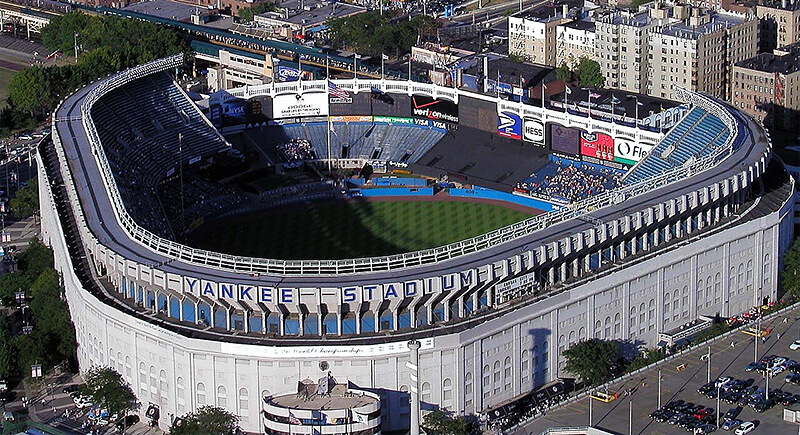
Credit: Wikipedia
The original Yankee Stadium opened on April 18, 1923, when Babe Ruth hit a three-run home run in the first game played there. Over the decades, the stadium became one of the most famous sports venues. It hosted numerous World Series games as the New York Yankees built their dynasty. The stadium also held three papal masses and the 1958 NFL Championship between the Baltimore Colts and the New York Giants. Boxing history unfolded there as well when Joe Louis knocked out Max Schmeling in 1938. The stadium was demolished in May 2010, and the site is now occupied by Heritage Field, a public park and recreation complex.
Old Comiskey Park, Chicago (1910–1991)
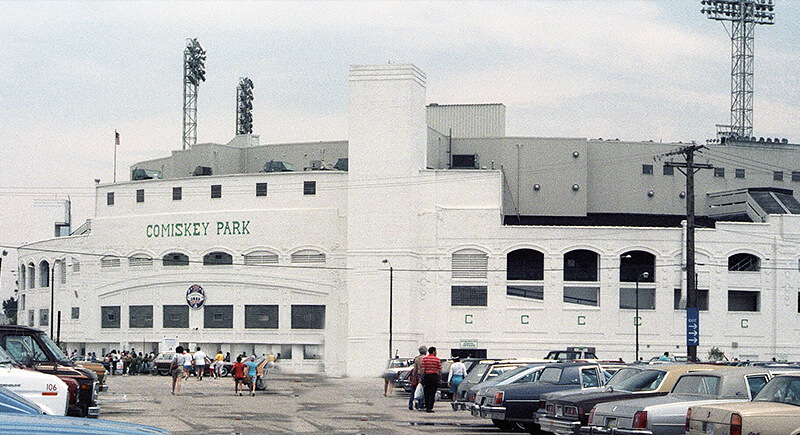
Credit: Wikipedia
On July 6, 1933, the first MLB All-Star Game was played, and this stadium had the honor of hosting it. The White Sox played there for 81 years after that, long enough for the stadium to begin to show its age, with narrow concourses and seating designed for an earlier era. By the time it was demolished in 1991, Old Comiskey Park had become the oldest active ballpark in Major League Baseball.
Ebbets Field, Brooklyn (1913–1960)
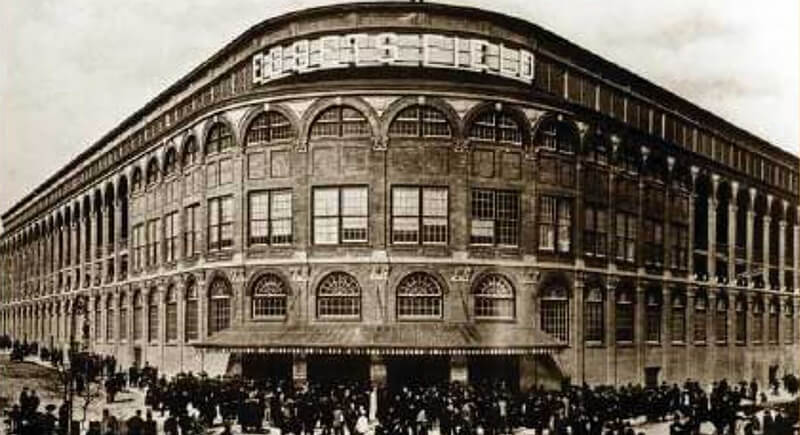
Credit: Wikipedia
The Brooklyn Dodgers moved to Los Angeles after the 1957 season, leaving many loyal fans in Brooklyn heartbroken and without their team. Ebbets Field sat empty for years before demolition began on February 23, 1960. The demolition team arrived with a wrecking ball painted to resemble a baseball. Today, an apartment complex has been built on the site, while a plaque marks where the home plate used to be.
Memorial Stadium, Baltimore (1950–2001)
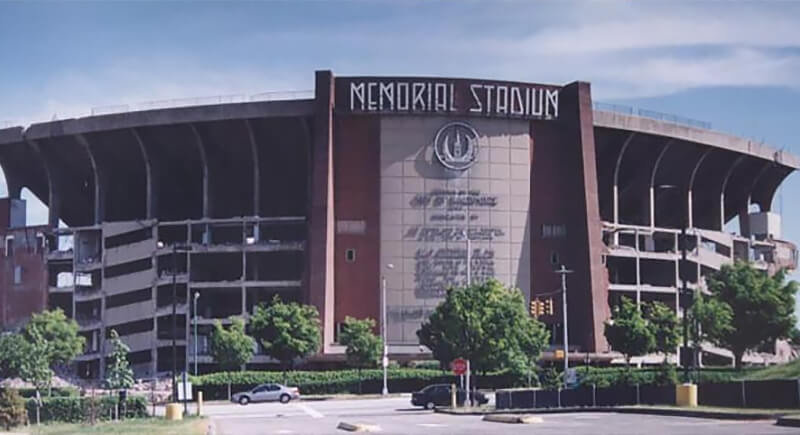
Credit: Wikipedia
In March 1984, moving trucks parked at the Baltimore Colts’ facility in the middle of the night. By morning, the team had left for Indianapolis without a word to the city that had supported them for 31 years. Memorial Stadium remained there, hosting the Orioles and carrying the weight of that betrayal until the team left. The building was largely idle for a decade before the YMCA replaced it in 2001.
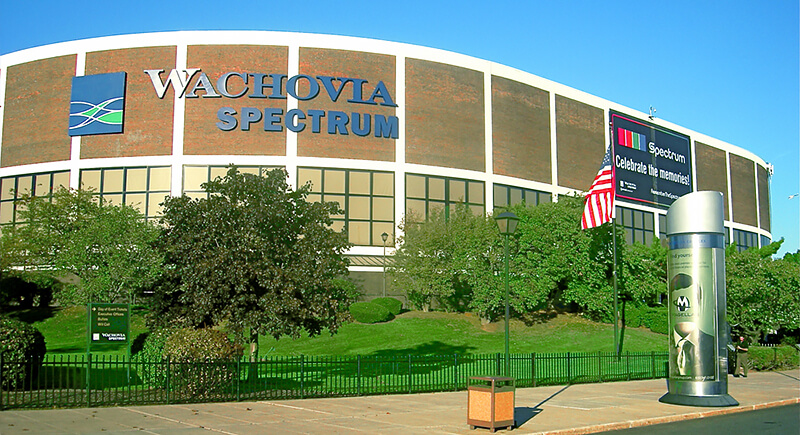
The Spectrum, Philadelphia (1967–2011)
Credit: Wikipedia
The Spectrum opened in fall 1967 with events such as a Joe Frazier boxing match, a 76ers victory over the Lakers, and a Flyers win over the Penguins. The Broad Street Bullies won two Stanley Cups there in the 1970s, and the 76ers claimed the 1983 NBA title on that floor. At the demolition ceremony, Bernie Parent, Bob Clarke, and Julius Erving each took a swing at the wrecking ball.
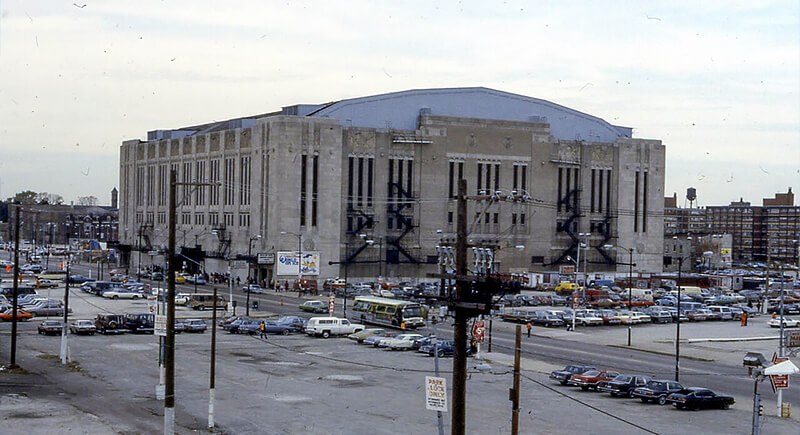
Chicago Stadium, Chicago (1929–1995)
Credit: Wikipedia
Media outlets broadcast the demolition of Chicago Stadium live in 1995, and some people watched it on TV and cried. The reaction says everything about a building that once hosted multiple NBA Finals and Stanley Cup Finals. Its 3,663-pipe Barton organ was so powerful that a CBS announcer once reported feeling the broadcast booth shake during a game. A plaque outside the United Center today reads “Remember the Roar,” a tribute to this arena.
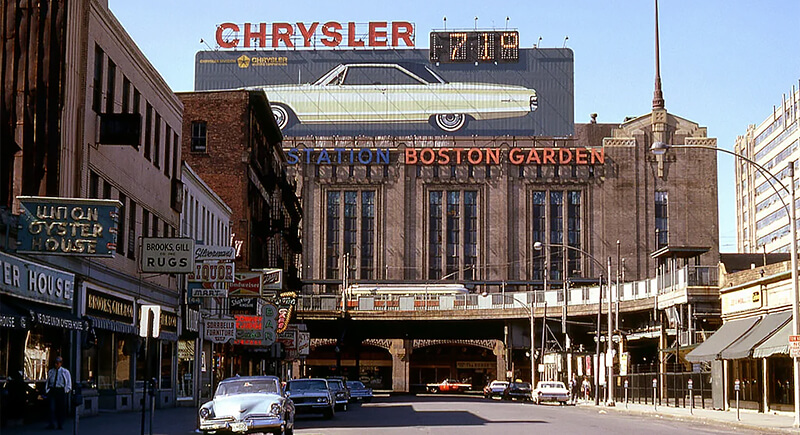
Boston Garden, Boston (1928–1997)
Credit: Reddit
Game 5 of the 1984 NBA Finals became one of the most memorable nights at Boston Garden. The temperature inside the arena reached about 97 degrees, and oxygen tanks lined the sidelines as players struggled with the heat. The Los Angeles Lakers wilted, while the Boston Celtics appeared more comfortable on their home floor. The Garden’s famous parquet court even had uneven spots that local players knew well. It was built in 1928 by promoter Tex Rickard for boxing, and the arena intimidated visiting teams for nearly 70 years.
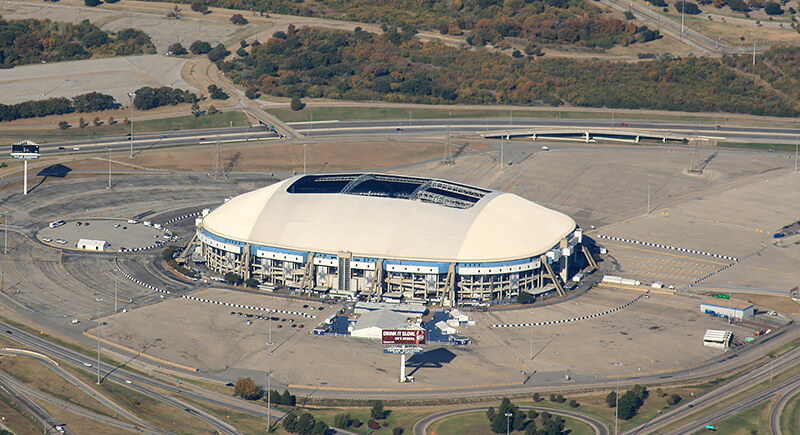
Texas Stadium, Irving, Texas (1971–2010)
Credit: Wikipedia
Engineers originally planned a fully covered roof for Texas Stadium. The builders opted for an open roof for personal design reasons, which left a gaping hole above the field that became the building’s most iconic feature. That didn’t have any bearing on their performance as the Cowboys won three Super Bowls during their time in this stadium. When the implosion happened on April 11, 2010, tens of thousands showed up to watch the stadium’s destruction that Sunday.
Three Rivers Stadium, Pittsburgh (1970–2001)
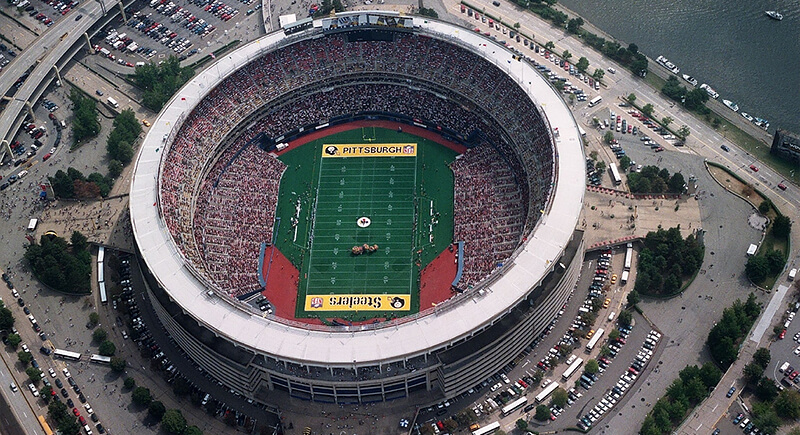
Credit: Wikipedia
On December 23, 1972, Franco Harris caught a controversial pass that the NFL ruled a legal catch, and Pittsburgh still celebrates it every December. Three Rivers Stadium held that moment, along with four Super Bowl runs for the Steelers and two World Series titles for the Pirates. The building was never really eye candy, but it earned its place in the conversation by hosting some of the most argued-about moments in American sports.
Shea Stadium, Flushing, New York (1964–2009)
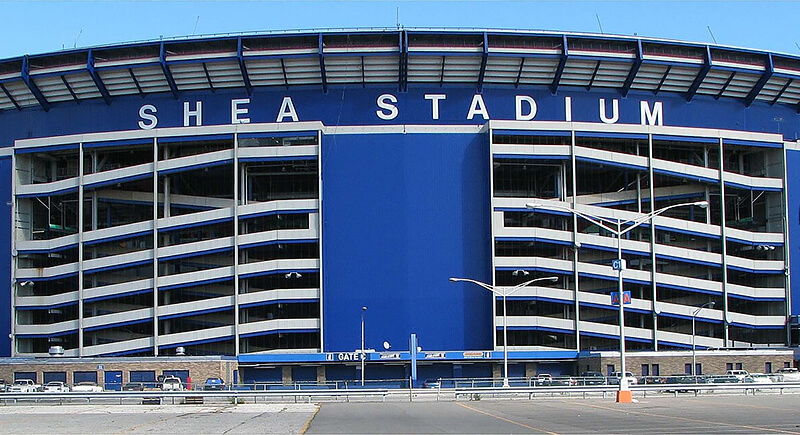
Credit: Wikipedia
In the summer of 1965, the sound inside Shea Stadium during a Beatles concert got so loud that the band couldn’t hear their instruments and had to stop to play in tune. Still, the over 50,000 people in attendance were screaming too hard to notice. The Miracle Mets won a World Series on that turf in 1969, and four different New York teams played home games there in 1975 alone.