10 Stages in the Evolution of the Football Helmet That Saved the Game
Football is a brutal sport, and for years, the players made do with whatever protection there was. The football helmet’s story isn’t a linear march of progress. In reality, it’s been a hilarious and tragic series of fixes, bans, experiments, and breakthroughs that produced one of the most engineered pieces of equipment in professional sports. Here’s how the football helmet got to its current state.
A Shoemaker Saves a Midshipman’s Brain
Credit: NFL
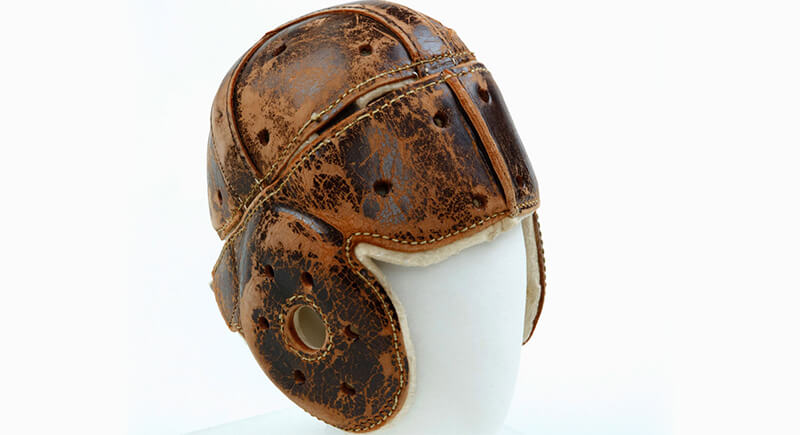
Before the 1893 Army-Navy game, Naval Academy cadet Joseph Mason Reeve (later nicknamed “the father of carrier aviation”) got a grim warning from his doctor. Apparently, one more hard hit could cause “instant insanity.” Rather than sit out, he had a local shoemaker stitch him a moleskin cap with earflaps. That cap became the first recorded football ‘helmet,’ and he played that game without further serious head injury.
The League Finally Makes It Mandatory
Credit: Etsy
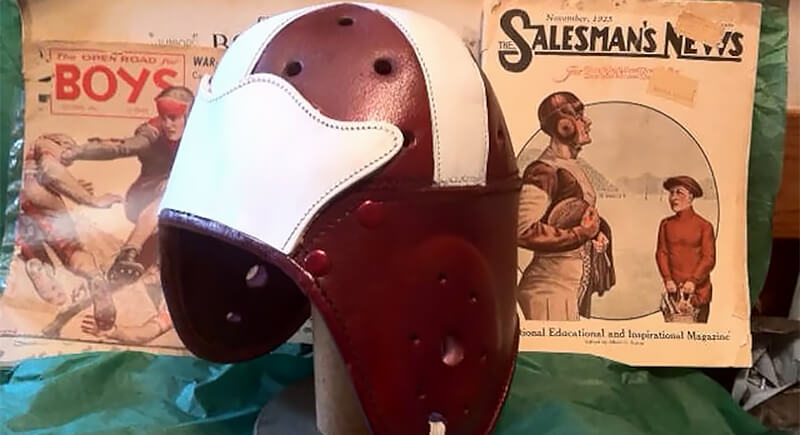
Before 1943, wearing a helmet in the NFL was optional, and several players didn’t wear one. The mandatory helmet rule was the first time the league treated head protection as a baseline requirement. Shortly after, Riddell’s plastic helmet, introduced in 1939, returned with a corrected formula, followed quickly by a padded version. Adding foam also took some of the impact force from the player’s skull.
Otto Graham’s Busted Face and the Birth of the Face Mask
Credit: Wikimedia Commons
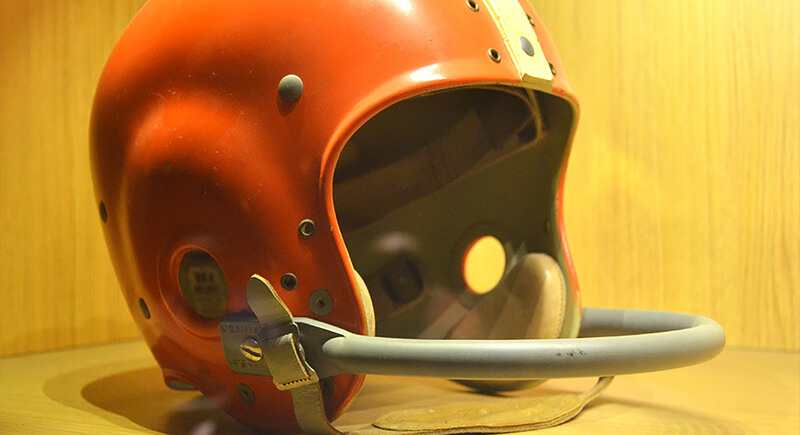
On November 15, 1953, Browns quarterback Otto Graham took an elbow from 49ers linebacker Art Michalik and left with a badly gashed cheek. Coach Paul Brown improvised a bar across Otto’s helmet and sent him back in. Cleveland won, and coach Paul worked with “Riddell” on a face mask. Soon, almost every player wore one. One of the last holdouts was Garo Yepremian, who played without a facemask until 1967.
Foam, Padding, and Taking the Interior Seriously
Credit: ebay
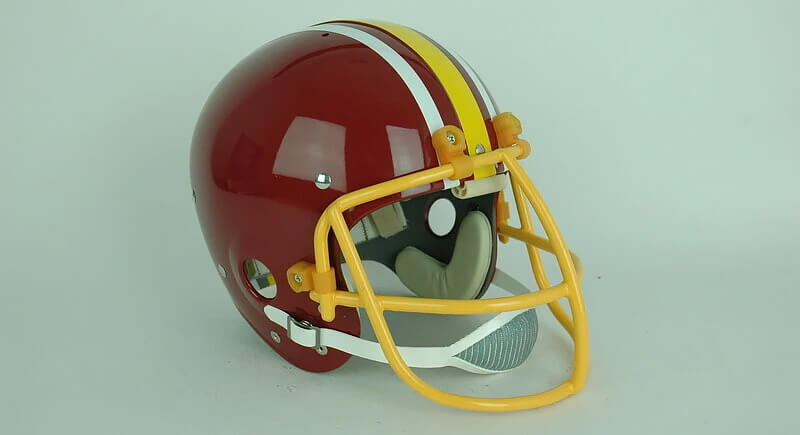
The helmet’s exterior received most of the early attention. By the 1960s and 1970s, manufacturers began prioritizing the helmet’s interior, replacing thin cushioning with thick foam designed to absorb and distribute impact. By 1975, players had full-face mask options for those who needed maximum frontal coverage. Dozens of configurations eventually followed, each matched to the protection and visibility needs of different positions.
The Radio Quarterback
Credit: NFL
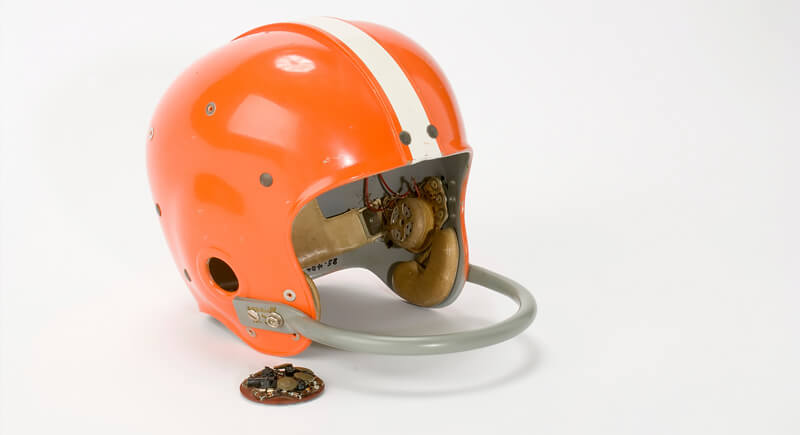
In 1956, Ohio inventors John Campbell and George Sarles built a radio receiver small enough to fit inside a helmet and brought it to Paul Brown. The coach put it in his quarterback’s helmet so he could call plays directly into the player’s ear. Commissioner Bert Bell discovered and banned it. Interestingly, the NFL legalized helmet radios for quarterbacks in 1995. Coach Paul’s illegal move became standard NFL operating procedure.
Visors, Vanity, and the Fine Print
Credit: Wikimedia Commons
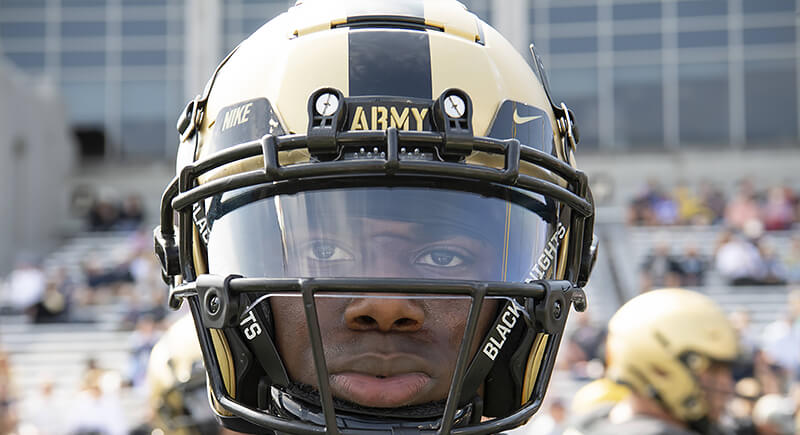
The NFL allowed transparent face shields to protect players’ eyes from fingers, turf debris, and line-of-scrimmage chaos. Nobody anticipated how quickly tinted visors would become a fashion statement. The league permits them only with documented medical approval, usually for light sensitivity. Visor violations are among the NFL’s more routine equipment infractions.
The Single Bar’s Long Goodbye
Credit: ebay
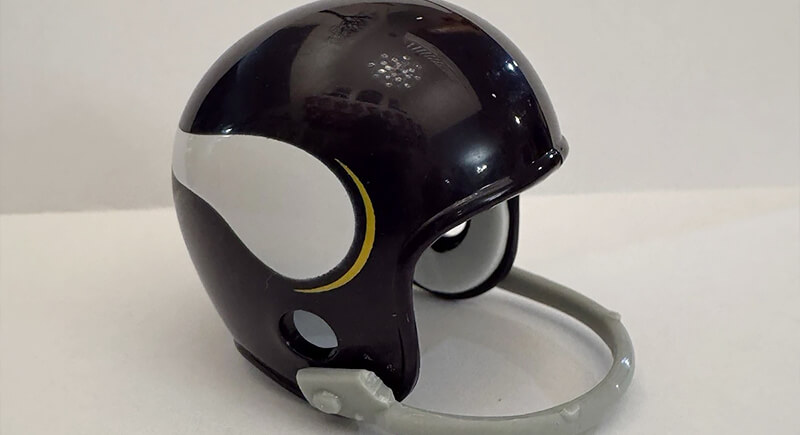
The single-bar face mask stayed in the NFL longer than many expected. Kickers and a few other players preferred it because the open design gave them a clearer view of the field. The league banned single-bar helmets in 2004, though players already using them were allowed to keep wearing them.
The Concussion Reckoning
Credit: Wikimedia Commons
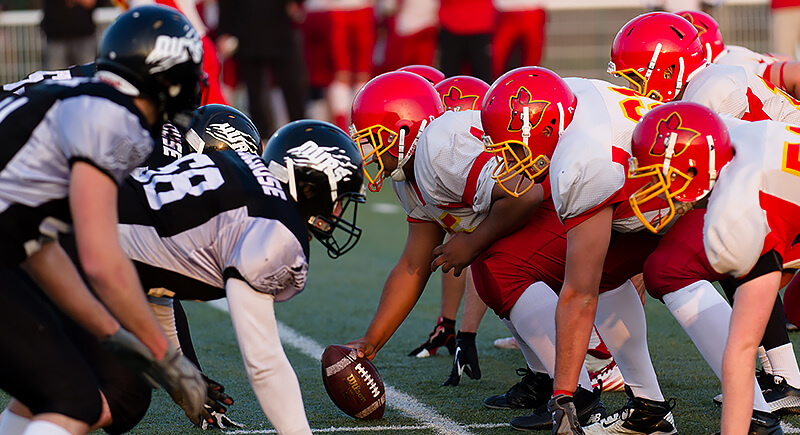
For most of the helmet’s history, the single-bar mask’s skull protection proved far too low. In 2012, more than 4,500 former players sued the NFL, alleging the league concealed the neurological risks of repeated head impacts. The class grew to over 20,000 players and family members. The settlement, finalized in 2015 at up to $1 billion, pushed manufacturers to prioritize helmets that protect players against side and jaw impacts.
The Rating System That Exposed Bad Helmets
Credit: Wikimedia Commons
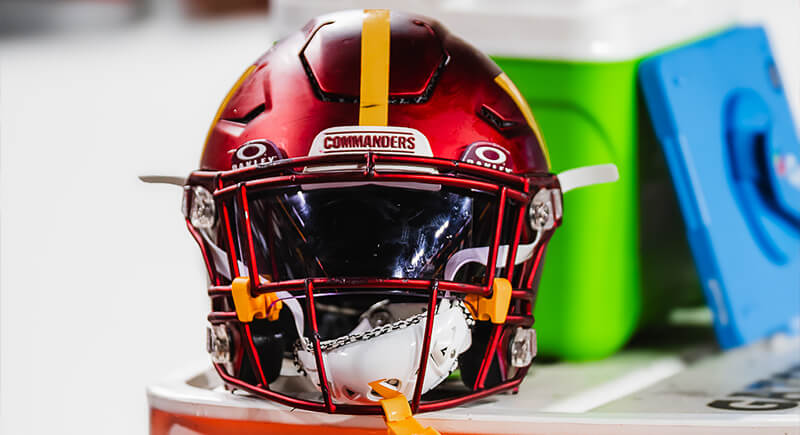
Since 2015, the NFL and NFLPA have jointly tested and ranked every helmet model worn in the league using lab simulations of concussion-causing impacts. Players responded quickly, and by the end of the 2018 season, 74 percent of them wore top-rated helmets. In 2019, the league banned the lowest-rated models outright. Data confirmed that players in higher-rated helmets had a lower reported concussion rate.
The Guardian Cap and the Position-Specific Era
Credit: Wikimedia Commons
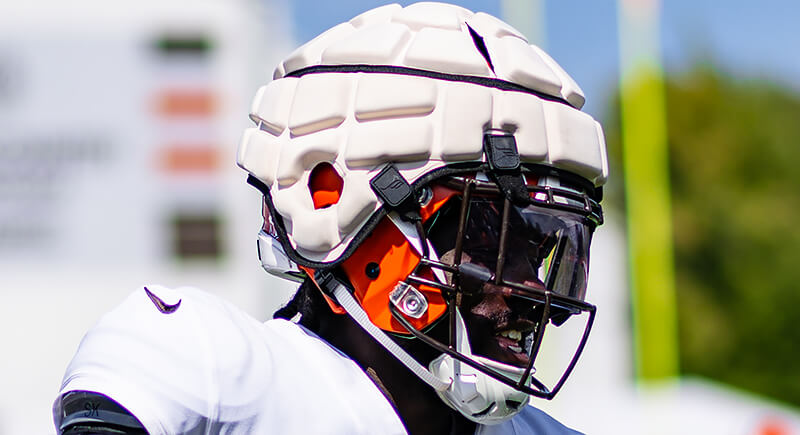
One recent change to helmets reduced impact, noise, and other issues. The Guardian Cap, a soft-shell padded cover, became mandatory in training camps for linemen, linebackers, and tight ends. Players could wear them in regular-season games by 2024. That season recorded the fewest in-game concussions in NFL history. Position-specific helmets also arrived in 2021. After over a century, plans to improve the helmet continue.