The Most Bizarre Contract Clauses in Football History
Football contracts usually focus on the obvious: wages, bonuses, and the length of a player’s contract. But as stars grow more powerful, contracts begin to stretch into unexpected territory. Clubs begin writing in clauses to manage their personalities, lifestyles, fears, and even politics. The results are strange, but each one came from a very real concern at the time.
Lionel Messi and the Catalan Integration Clause

Credit: Wikimedia Commons
Barcelona’s relationship with Lionel Messi went beyond football because one contract renewal included expectations that he learn Catalan and engage with local culture. Doing so would reinforce his role as a symbol of the club’s identity. Another clause addressed regional politics, allowing him to leave if Catalonia’s status changed.
Cristiano Ronaldo and the €1 Billion Escape Hatch

Credit: Wikimedia Commons
Spanish law requires release clauses, but Real Madrid used one strategically when negotiating with Cristiano Ronaldo. His contract listed a €1 billion buyout, a figure designed to discourage interest rather than invite it. The clause protected leverage during his peak years, then became negotiable once his departure was inevitable.
Stefan Schwarz and the Space Travel Ban

Credit: Wikimedia Commons
At the end of the 1990s, commercial space travel was starting to sound plausible, and that possibility reached contract talks. When Stefan Schwarz joined Sunderland, advisers mentioned the possibility of early civilian flights. Club lawyers responded with a clause voiding his deal if he left Earth.
Neymar and the Visiting Friends Agreement

Credit: Wikimedia Commons
When Neymar joined Barcelona, his contract covered regular flights for close friends from Brazil, easing homesickness during his early seasons. The arrangement acknowledged that performance doesn’t start on the pitch, and his stability off of it mattered enough for the club to put it in writing.
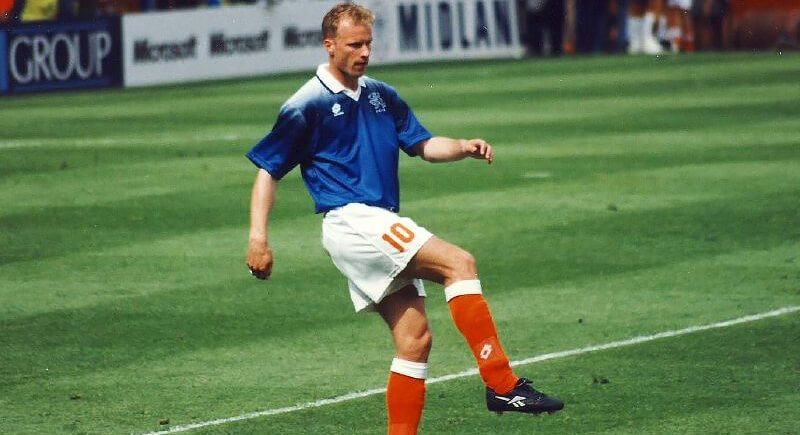
Dennis Bergkamp and the No-Flying Rule
Credit: Wikimedia Commons
Matchday travel is routine for most players, but it became a contractual issue at Arsenal as Dennis Bergkamp had a well-documented fear of flying. His deal removed any requirement to board planes. While teammates flew to European fixtures, Bergkamp took trains and ferries, with schedules adjusted to fit a scorer the club couldn’t replace.
Neil Ruddock and the Weight Penalty

Credit: ebay
Late in his career, Neil Ruddock’s fitness became a contractual concern. Crystal Palace included a clause that cut 10% of his wages if he exceeded 99.8 kilograms. Former chairman Simon Jordan later confirmed the rule was intentional. It was a blunt financial tool aimed at maintaining conditioning rather than measuring on-field contribution.
Samuel Eto’o and the Private Jet Commute

Credit: Wikimedia Commons
When Anzhi Makhachkala signed Samuel Eto’o in 2011, he agreed to train in Dagestan while keeping his home in Moscow, more than 1,000 miles away. His contract included a private jet for regular travel. Backed by billionaire funding, the club absorbed the cost without hesitation.
Rolf-Christel Guie-Mien and the Cooking Lessons Request

Credit: Youtube
During negotiations with Eintracht Frankfurt, Rolf-Christel Guie-Mien raised a practical concern unrelated to tactics. He asked the club to arrange cooking lessons for his wife, believing that familiar meals would help him settle more quickly. Frankfurt agreed, writing domestic support directly into the contract.
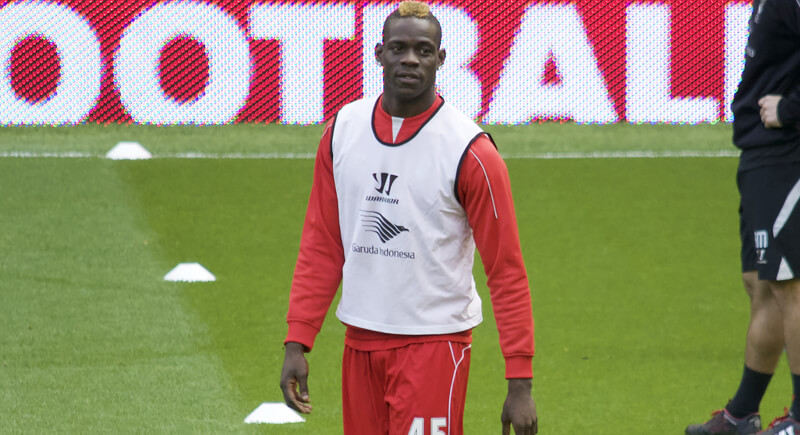
Mario Balotelli and the Good Conduct Condition
Credit: Wikimedia Commons
When Mario Balotelli returned to the Premier League with Liverpool in 2014, his contract reflected years of off-field headlines. A good-conduct clause allowed the club to terminate the deal in the event of serious misconduct. During his time at Anfield, the clause never came into play, as his challenges were tied more to form than discipline.