
Three zone variations I teach with a half-court magnet board, plus the exact calls that keep the rim protected without giving up rhythm 3s.
2-3 With a Moving Middle (and a Loud Rule)
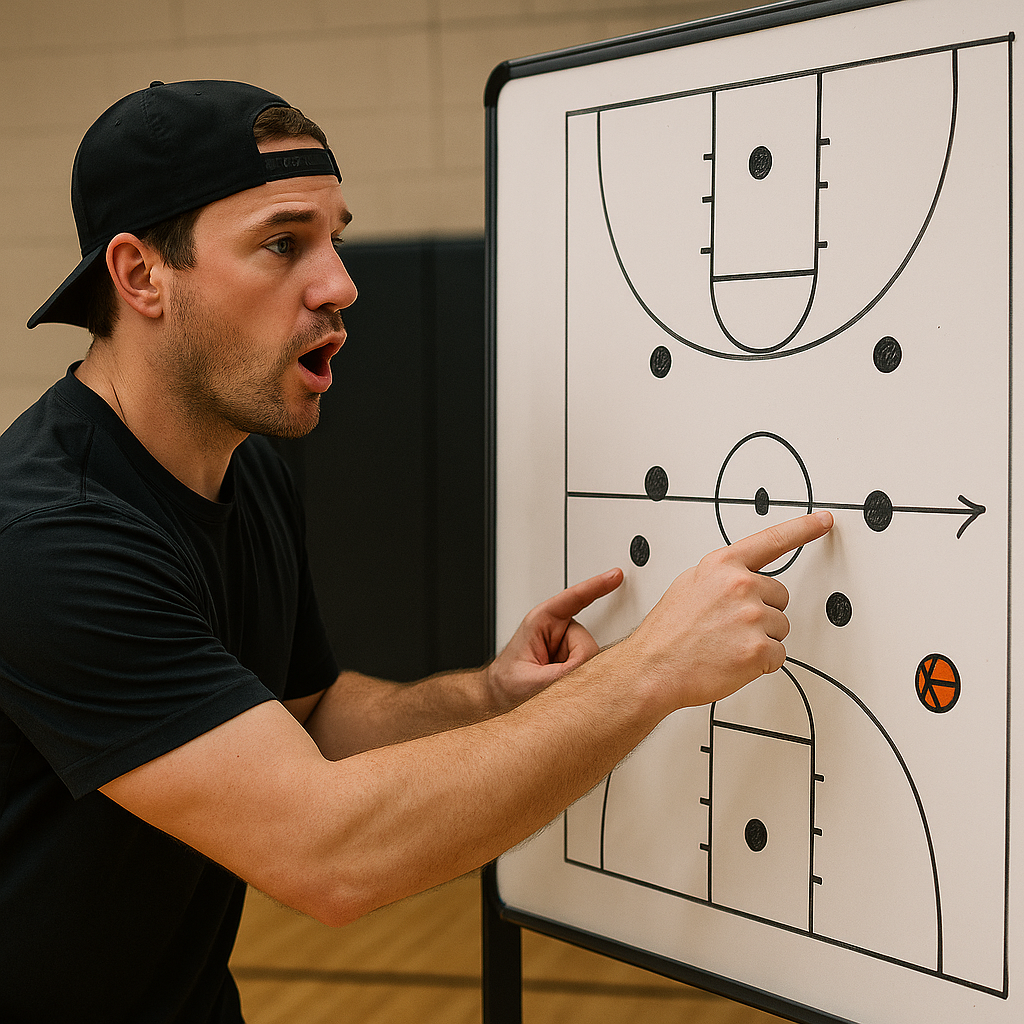
The first time I ran a 2-3 as a head coach, I learned the hard way that the diagram lies. On the whiteboard, the middle defender looks like a cozy bouncer parked on the restricted arc. In a game, that kid gets tugged two steps by every high-post flash, every short corner lurk, and every guard who dribbles to the nail just to make you blink. So I started teaching what I call a moving middle. It is still a 2-3, but the five is never allowed to be flat-footed. If the ball is above the free-throw line, the five lives on the high side of the rim, chest to the ball, with one foot already ready to slide to the front of the rim. If the ball gets to a wing, the five shifts one lane line toward that side and shows a hand early, not late. If the ball hits the high post, the five is a bully for one beat, then releases back to the rim as the nearest guard digs down and the weakside forward pinches the elbow.
The loud rule is what makes it playable: whoever is nearest the ball has to call the middle defender's spot out loud. Not a speech, just one word. I use "high," "middle," and low. High means the five is up to the dotted line, middle means the five is straddling the front of the rim, and low means the five is sitting on the baseline because the ball is in the short corner or under the backboard. That one-word call stops the most common breakdown, which is the five drifting into no-man's-land while everyone else assumes someone is home. When we do it right, the driver sees a body early and floats it, and now our guards are rebounding instead of turning to watch a layup go in.
I like this variation because it buys you paint protection without turning into a full retreat. Your top two still pressure the wings, your forwards still stunt to shooters, and you aren't begging the other team to shoot uncontested rhythm 3s. But it demands a middle defender who's willing to move on every pass, not just on drives. If that kid is tired, the zone looks tired, and everyone in the gym can tell.
The 1-3-1 Trap That Doesn't Donate Corner 3s
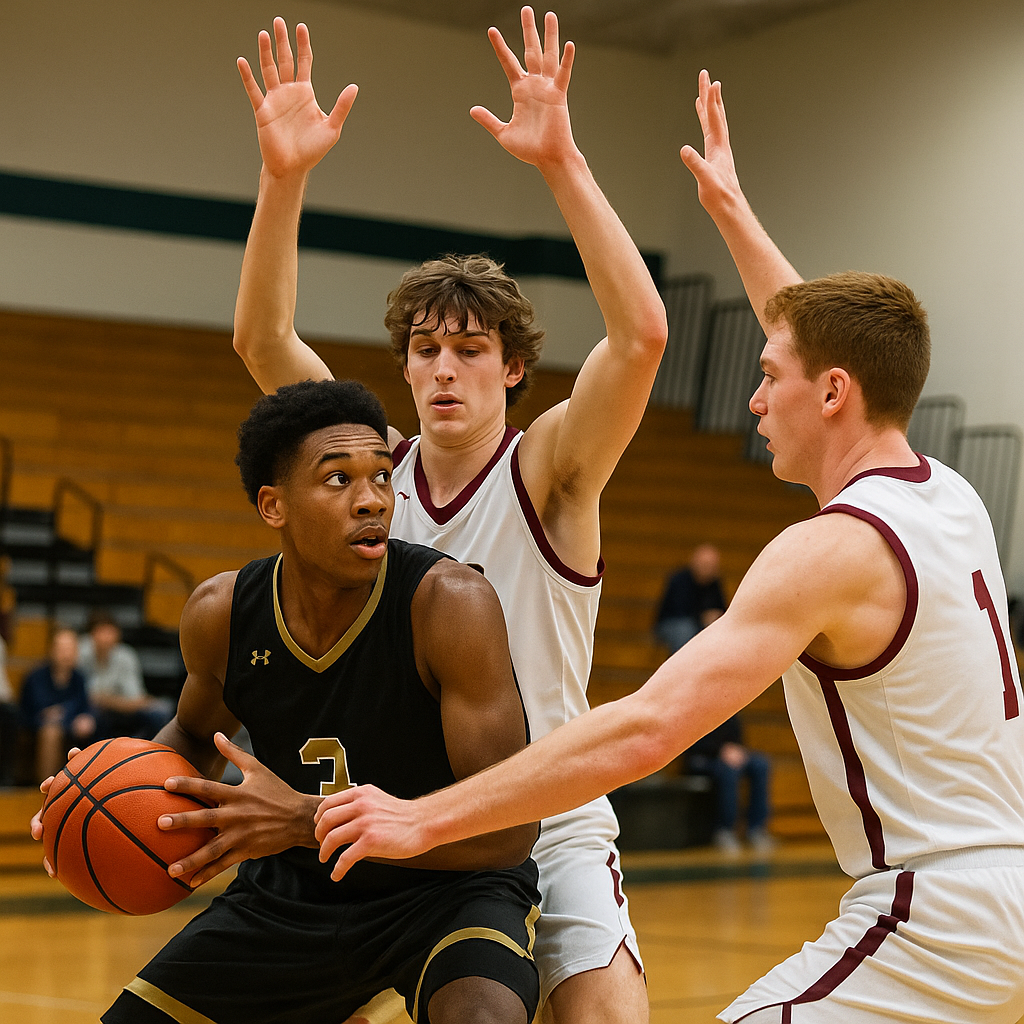
I still like a 1-3-1 for one specific job: changing the ball's comfort level without fouling or sprinting ourselves into bad matchups. But the version most teams see first is the chaotic one, where the top chases, the wings fly, and the corners become a charity drive. The corner 3 problem is usually self-inflicted. It's not that the scheme can't cover it, it's that coaches teach the trap like it's a highlight instead of a possession.
Here's the adjustment I use: we don't trap on the first wing catch unless the pass arrives late or the ball-handler turns their shoulders to the sideline. In other words, we trap on a trigger, not on location. When the ball hits the wing in rhythm, our wing defender shows pressure with high hands and forces one dribble, and our top defender shades down to take away the return pass to the point. That keeps the ball on a side without committing two bodies too early. If the ball-handler takes that dribble toward the corner, now we trap, and the trap is chest-to-hip, not reaching. The goal is to make the ball stop, not to steal it every time.
The part that protects the paint is what the backline does while everyone watches the trap. The baseline defender can't be a tourist. I teach them to start on the weakside block with their toes pointed to midcourt, then slide to the middle of the lane as soon as the trap forms. If the offense tries the classic diagonal skip, that baseline defender is already in the air space where a cutter wants to land. Meanwhile, the middle of the 3 line (the guy on the foul line area in the 1-3-1) has one job: show early at the nail and tag any flash. If you have a kid there who ball-watches, the high post becomes a layup line.
We practice this with a simple constraint: every possession in practice is dead if we give up a corner 3 off a skip pass. Not a lecture, not a punishment, just dead. It forces the weakside wing and baseline to sprint their rotations with urgency, because they know the possession ends on that mistake. When it clicks, you feel the offense get itchy. They start lobbing passes that hang, and now your zone is generating bad shots while still keeping bodies around the rim.
Matchup Zone: The One I Use Against Five-Out
When a team goes five-out and starts carving you up with drive-and-kick, a traditional spot zone can feel like you're guarding ghosts. Everybody is spaced, nobody is parked in the post, and your defenders keep drifting to empty areas because that's what they were taught: protect space. Against five-out, I stop talking about space and start talking about matchups, but I keep the zone principles that protect the rim. It's the best of both worlds if your kids can handle a couple of clear rules.
The version I run is a matchup zone with a simple starting point: we line up like a 2-3, but we guard the nearest threat once the ball is live. That means the top two can switch a shallow exchange without panicking, the forwards can bump cutters through, and we aren't giving up straight-line drives just because a player caught it in a place that's not my zone. The paint protection comes from two non-negotiables. First, the low defenders always have a foot in the lane on the pass, even if their man is standing in the corner. Second, on any drive from above the break, the first help comes from the nail defender, not the baseline. If the baseline helps first, you just gifted a drop-off dunk or a baseline drift 3.
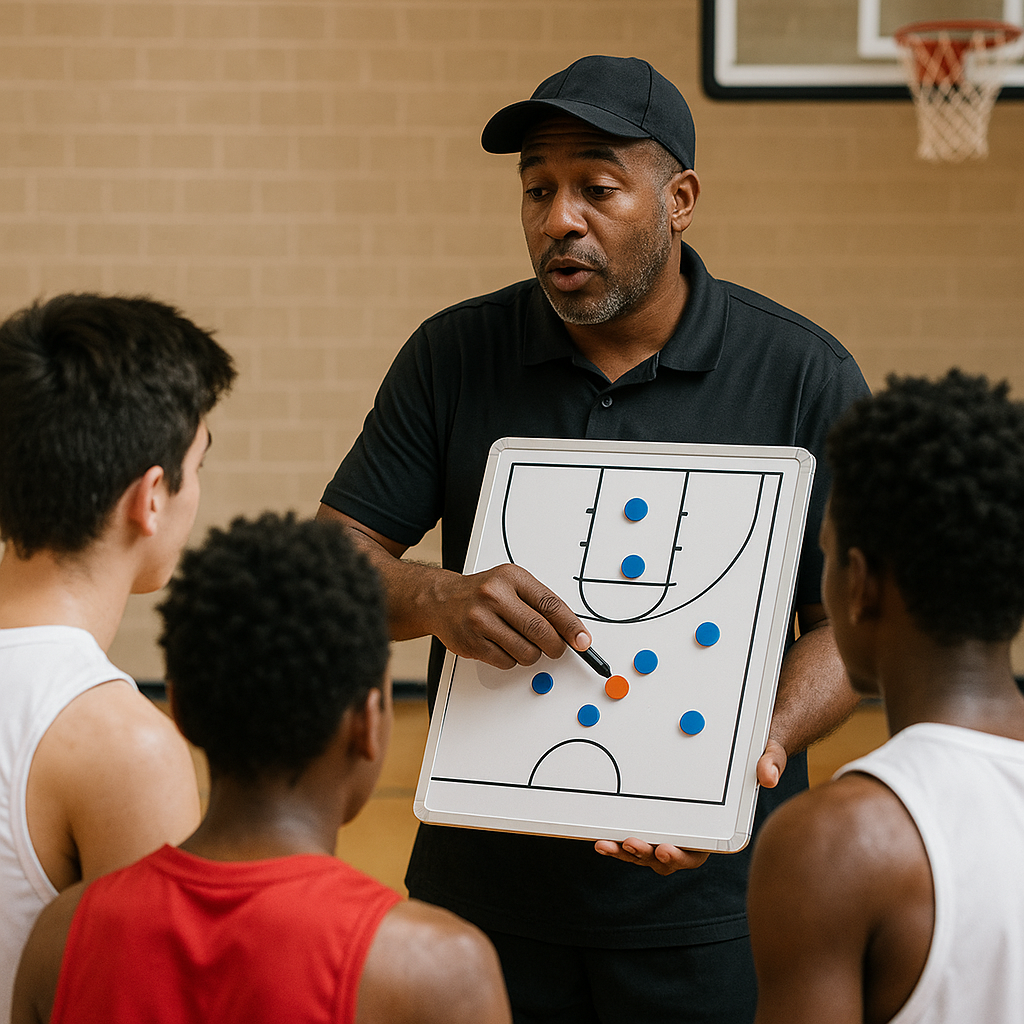
I teach it with a half-court dry-erase magnet board, and I do something that feels almost too basic: I draw the ball path first, not the defenders. I sketch the most common five-out sequence we keep seeing, like a slot drive, kick to the corner, and a quick swing to the opposite wing. Then I slide our magnets in slow motion and force myself to say the calls out loud. Nail. I got ball. Bump. Cutter through. The kids copy the language, and the language is what keeps the shape intact when the gym gets loud.
This is also where I get picky about who takes the first closeout. If a corner shooter is a specialist, I don't want my slowest forward taking that sprint every time. In matchup zone, you can pre-plan it. We tag that shooter with a color in the scout, and now whoever is nearest on the pass takes them, even if it means the top guard peels down and the forward bumps up. It looks messy on paper, but on film it looks like we're always arriving on time, and the rim stays crowded enough that floaters turn into rebounds.