
Three ways schools are turning messy wearable stats into practice reps coaches can actually run.
Build a practice scoreboard from one metric you can coach
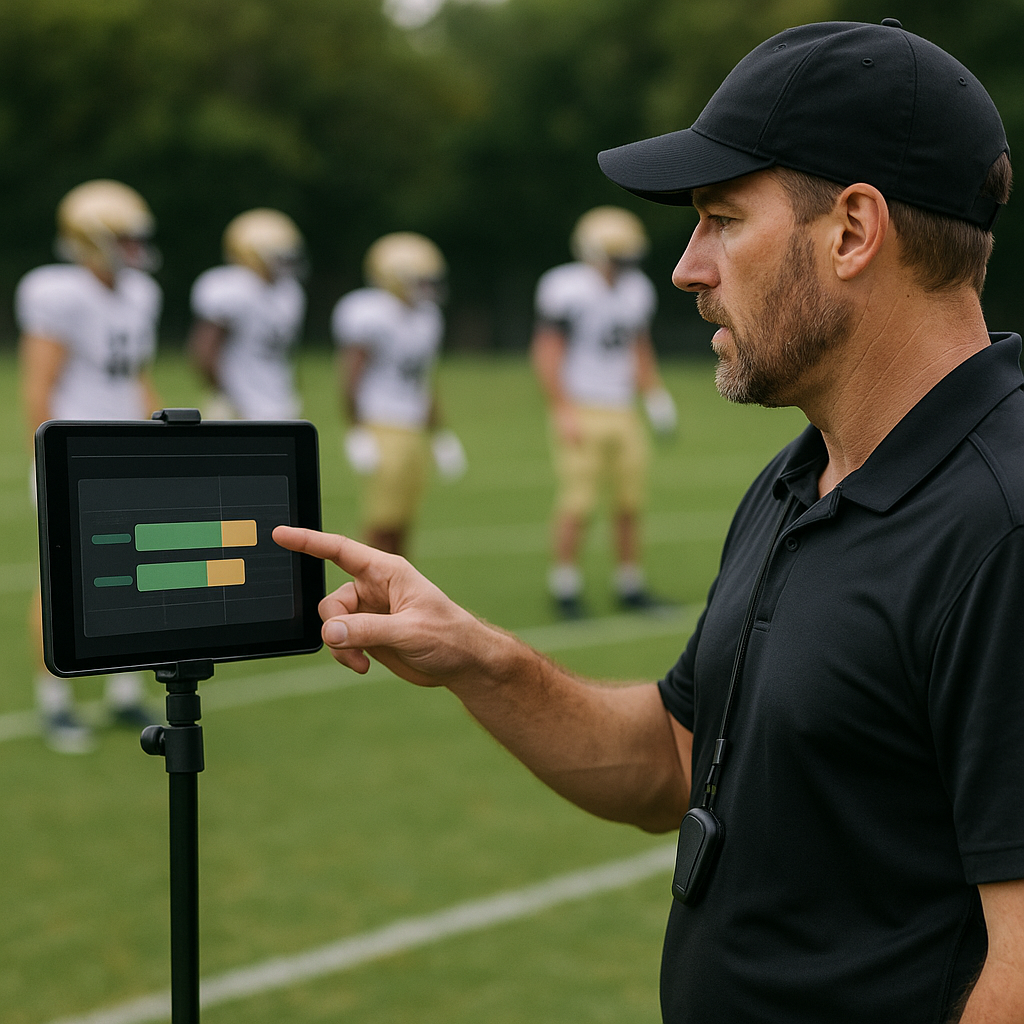
Most school programs get stuck right after they buy wearables: you suddenly have 18 charts, a dashboard full of tabs, and a coach asking, "So... are we training too hard or not hard enough?" The fastest way out is picking one metric you can coach in real time and turning it into a practice scoreboard. Not a report. A scoreboard.
On my end, that usually starts with total player load (Catapult) or an equivalent workload score, because it tracks movement volume across sport types without pretending it knows every sport's technique. The trick is resisting the urge to track five things at once. You set one target range per position group for the day and you post it where everybody sees it: the locker room TV, a sideline iPad on a stand, or even printed sheets in a clear sleeve on a fence. Then you coach to it the same way you coach tempo. Too low? You add a rep, tighten the rest, or swap a walkthrough segment for controlled competitive reps. Too high? You trim the last block, pull contact, or turn the final segment into skill work with longer rest. Coaches already know how to do those adjustments. The scoreboard just gives you a reason that isn't vibes.
The part that makes this work in a school setting is building it around the equipment you already have. If all you can afford is chest straps for a few key athletes plus an app, fine. Put those athletes on the scoreboard as your bellwethers and treat them like a weather station. If you have GPS units for everyone, even better, but don't wait for perfect coverage to start acting on data. I also like a two-week ramp where you don't chase "ideal" numbers. You collect baseline practice days, flag outliers (pep rally day is always weird), and only then set targets. Coaches will tolerate this because it feels like practice, not a research project.
The drill tags that make film and workload line up
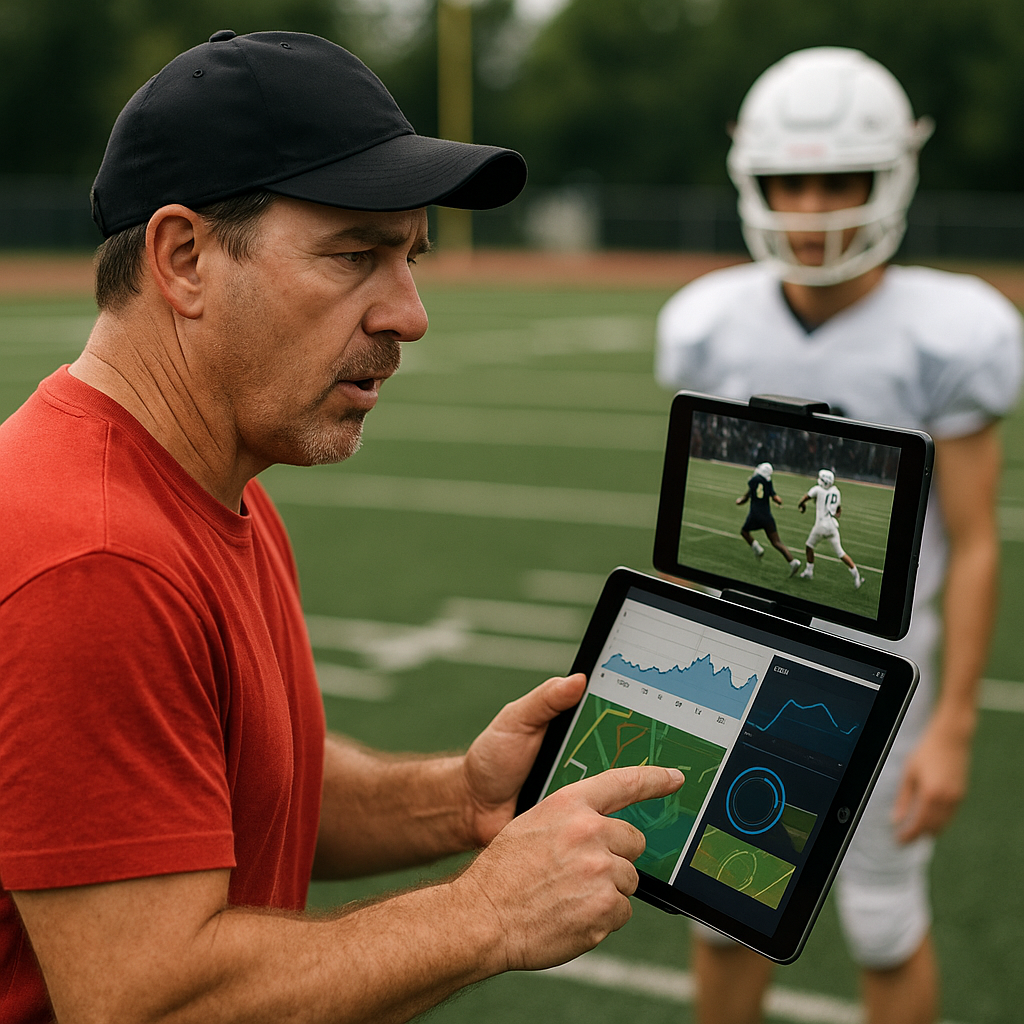
Here's the problem I see in high school programs that are trying to get "data-driven" without hiring a full-time analyst: the conditioning numbers live in one world, and film lives in another. A kid shows up in Hudl getting roasted for taking a lazy angle, then you pull up the GPS graph and it looks like they ran a mile. Now you're arguing about effort instead of coaching the angle.
The fix is boring, but it works. You tag your practice plan so the names are identical across everything: the script, the workload platform, and film. If your practice has a segment called Inside Run, don't let your wearable system call it Drill 7 and your film label call it Team O. Those tiny mismatches are why people stop trusting the numbers.
What it looks like on the ground: before practice, someone (coach, student manager, athletic trainer, whoever is reliable) builds a simple drill list in the wearable app with start/stop times. Most systems let you hit a button to mark segments. You don't need to tag every water break. You do need to tag the chunks that matter for development: competitive periods, tempo periods, position skill blocks. Then you export or screenshot a segment summary and staple it to the next day's meeting: "Inside Run: 11 minutes, high load; Indy: 18 minutes, low load; 7-on-7: moderate." Now when a coach says, "We were out of shape," you can answer with, "We spent 29 minutes in low movement, then asked them to sprint like it's Friday night." That's a coaching conversation, not a tech flex.
It also pays off fast for player development because you can pair the tag with a single film clip playlist. "Every rep from the high-load segment" is a different learning environment than "every rep from the low-load segment." Kids look sharp in fresh legs. They look honest when they're tired. If you only coach technique from the clean reps, you're building a player who disappears in the fourth quarter. A few weeks of tagged segments gives you enough material to coach that difference without guessing, and without pretending the data knows football better than your staff does.
The equipment audit: calibrate before you individualize
Everybody wants individualized training plans. The honest order of operations in a school program is: make the equipment boringly reliable first. If your heart-rate straps drift, if the GPS units are swapped between kids, or if half the team forgets to charge anything, your individualized plan becomes a punishment for the kids who follow directions.
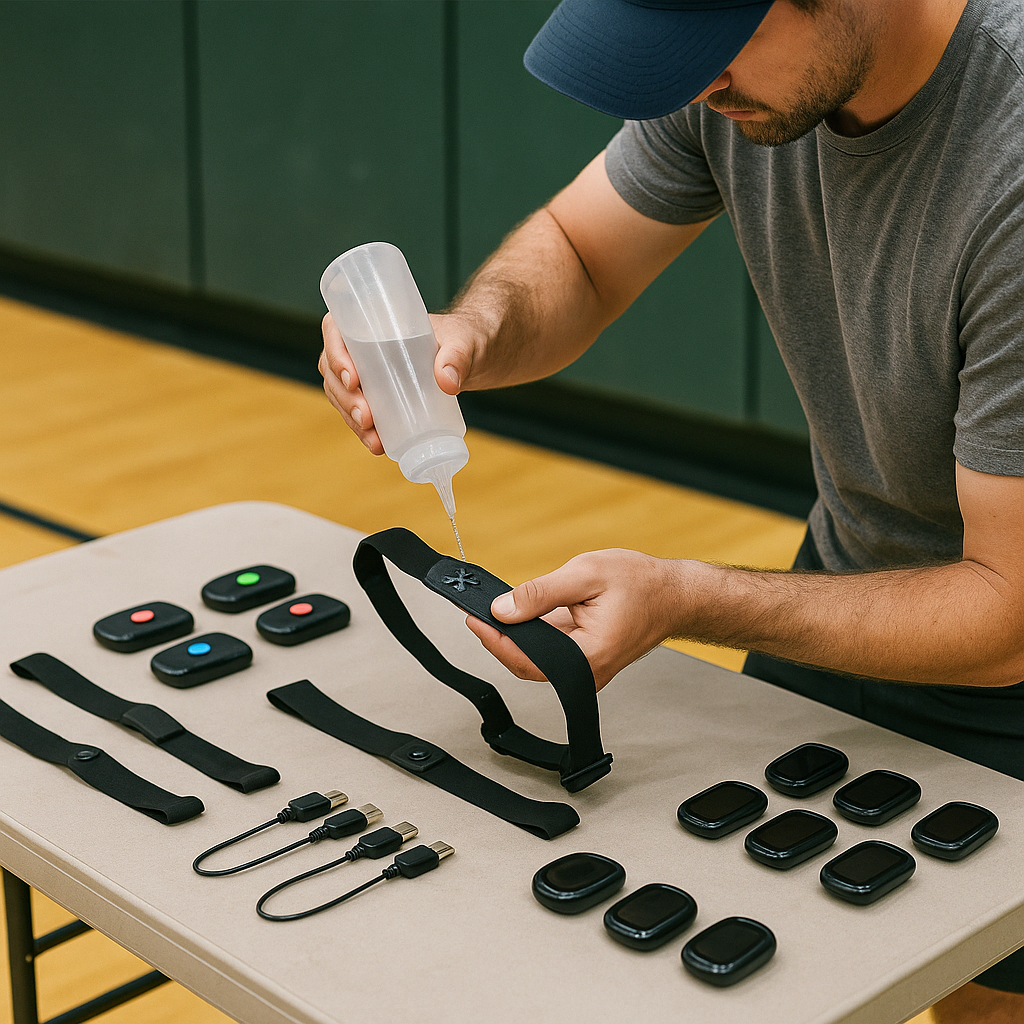
I start with an audit that takes one practice, and it lives at the equipment table, not on a laptop. Lay out every unit, every strap, every charging cable. Check the simple stuff: straps that have stretched out and won't stay snug, cracked housings, frayed charging connectors, missing unit numbers, and any strap pads that are so dried out they won't read consistently. With chest straps (Polar, Garmin, whatever your program uses), a dry sensor pad is a classic reason you'll see a kid spike to 210 bpm during warmups and then magically drop. A little water on the electrodes helps, and yes, I have watched teams lose 15 minutes arguing about effort when it was just a dry strap.
Then you standardize assignment. Each athlete gets the same unit every time, and you label it in a way that survives teenagers: number plus a color dot, or number plus position group tape. If the system supports it, you lock the roster mapping so unit 12 is always the same athlete. The point isn't bureaucracy. It's so when you say, "Your high-speed work has been trending down for three weeks," you're not accidentally talking about someone else's unit.
Only after that do you individualize workload targets. And even then, I don't start with fancy physiology. I start with attendance and role. Starters, heavy special teams reps, pitchers, and kids coming off return-to-play all need different weekly shapes. That's not revolutionary, it's just finally visible when your equipment isn't lying. If you do nothing else, run a two-week stretch where the only goal is clean, consistent collection. Coaches relax when the numbers stop being random. Athletes buy in when they realize the staff is fixing gear problems before blaming legs.