
Three on-field assessment tools that turn guesses into position-specific notes you can coach from Monday to Friday.
The wristband read: who panics when the call flips
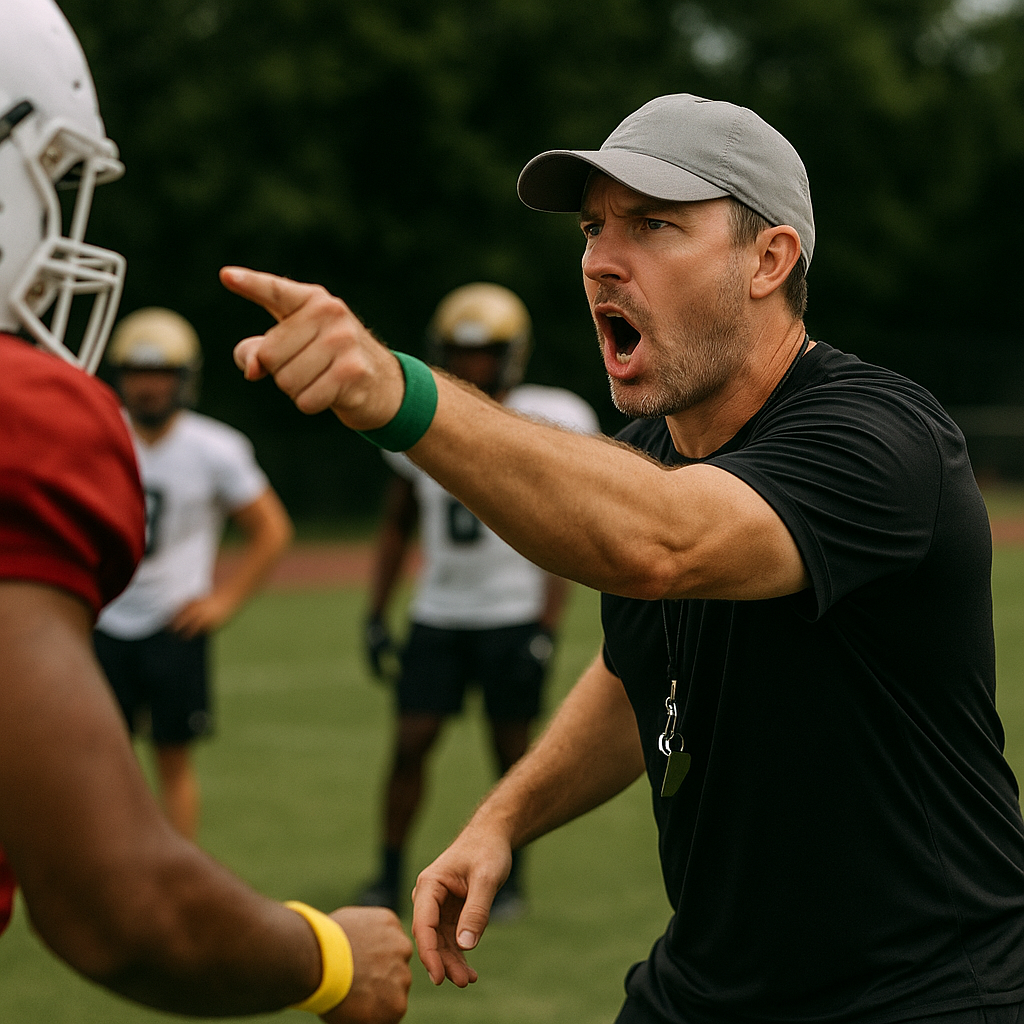
I keep a roll of cheap colored athletic wristbands in my bag (the kind you can write on with a Sharpie), and I use them as an assessment tool more than a gear thing. Here’s the setup: I put one color on the starters, another on the next group, and I don’t say why. Then we run a scripted 7-on-7 or inside period where I flip the call mid-rep. Not a timeout, not a lecture. I literally yell, “Flip it!” and the QB or MIKE changes the tag on the fly.
The wristband part isn’t magic. It just lets me track who’s who without pretending I can memorize 48 bodies in helmets the first week. I’m watching for two very specific tells: who immediately checks their new responsibility (eyes, feet, and communication), and who goes statue-still because their brain is waiting for someone else to solve it. When a safety is supposed to rotate down and he takes two false steps backward, that’s not a toughness problem. That’s a processing and role-clarity problem. When a guard hears “slide” and his shoulders turn the wrong way, same deal.
After the period, I pull two clips on Hudl and I label them with the wristband color, not the kid’s name. That matters when you’re building a multi-year development plan because you’re trying to coach behaviors, not roast a sophomore. The note I write is concrete: “On flip call, eyes go to #2 late; feet stop.” Next practice, I’ll give that position group one tiny constraint (like they can’t repeat the call until they’ve pointed to their man). It’s boring on purpose, and it shows me fast who can carry information under speed.
Two-cone release chart for skill kids (and corners)
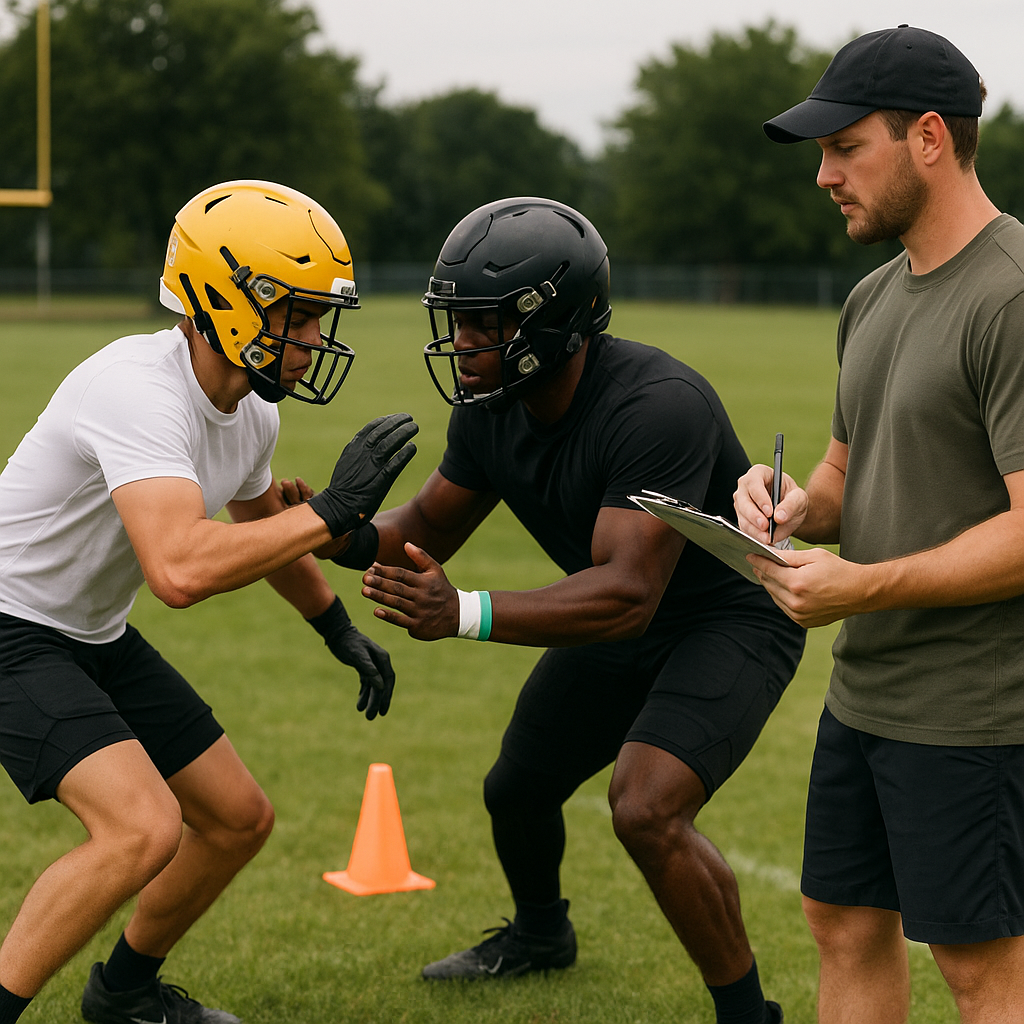
This one lives in the “tiny tool, huge payoff” category for me: two cones and a clipboard grid. I use it with receivers, tight ends, corners, and sometimes outside linebackers who have to collision and carry. It’s not a route tree workout. It’s a release assessment, because a kid can look great on air and still get erased the second a corner gets hands on him.
I set one cone as the line of scrimmage and a second cone 5 yards straight ahead. (I don’t need a full 10, because I’m grading the first 1 to 2 seconds, not the whole rep.) The athlete lines up, and a defender plays either soft press or true press depending on what we’re installing. The rep ends when the receiver clears the defender’s leverage and gets his hips pointed to the second cone. That’s it. No ball required. If we do add a ball, it’s just a quick catch so they don’t float through contact expecting no consequence.
My chart has three columns: first-step direction (inside, outside, vertical), hand usage (none, swipe, split, replace), and outcome (clean, delayed, stopped). If you’ve coached this age group, you know what shows up immediately: kids who waste a hop, kids who try to win every rep with a dead sprint, and kids who have no answer when a defender lands a solid jam on their near pec. I’m not making a speech about it. I’m collecting data.
Here’s how it feeds a multi-year plan without getting fancy. Freshman year, I’m satisfied if they can pick a first step and commit. Sophomore year, I want a consistent hand response, not the same move every time, just something repeatable. Junior and senior year, I want them to understand leverage: if the corner’s inside foot is up, your “win” might be outside access even if you don’t dust him. Corners get the mirror version. Can they keep their feet under them and stay patient, or do they open the gate because they’re scared of getting beat deep? Two cones will tell you before your Friday night does.
The 12-play call-sheet quiz that exposes who studies
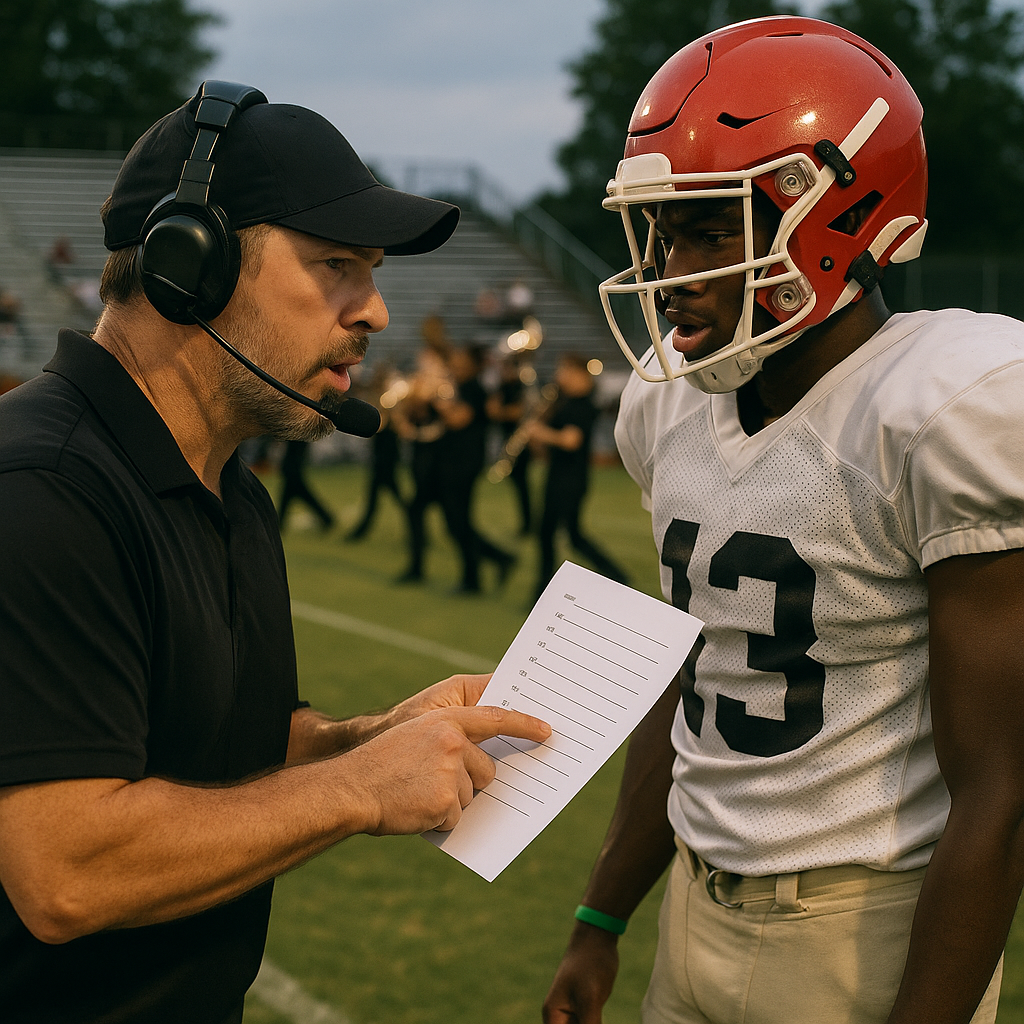
I used to ask, “Do you know your assignments?” and every kid would nod like a dashboard bobblehead. So I switched to a tool that can’t be nodded at: a 12-play call-sheet quiz I can run in three minutes, in pads, with noise. It’s not a punishment, and it’s not trivia. It’s a quick assessment of whether the kid can translate our language into a specific job.
I print a single page with 12 calls we’ve installed. Not the entire offense or defense, just the stuff we’re repping that week. Next to each call is a blank line for the position. Example prompts I’ll use: “Trips Right, 24 Zone, X motion” or “3x1, field pressure, rotate weak.” Then I hand it to a left tackle, a WILL, a slot, whoever, and I only ask for their line. What’s your first step? Who’s your key? What’s your rule if the front shifts? They answer out loud while I stand close enough to hear it over the band warming up.
The trick is that I don’t let them hide behind the play name. If a guard says, “I’m pulling,” I’ll stop him and ask, “On what look? And what are you doing if the 3-tech spikes?” If a safety says, “I’ve got deep half,” I’ll ask, “To what? And what’s your run fit if it’s split flow?” The details are the point, because Friday nights are just details arriving fast.
I score it in a way that stays useful. A kid can be wrong for two different reasons: they don’t know the concept, or they know it but they can’t say it cleanly under pressure. Those get different fixes. If they don’t know it, that’s a film and install issue. If they know it but can’t verbalize, I put them on a quick “teach-back” rotation in the position room where they have to explain one call to a teammate using our exact words. No motivational posters, no speeches. Just language reps.
Over a season, the quiz gives you a paper trail. You can show a kid (and their parents, if it comes to that) that the plan isn’t random: Week 2 he couldn’t ID his key on pressure, Week 6 he could, and now we’re pushing him into checks and alerts. That’s multi-year growth you can point at without inventing a story.