
Three rehab blocks I run with hoops players: ankle re-intro, patellar tendon load, and shoulder-friendly handle work.
The ankle re-intro I use after a sprain
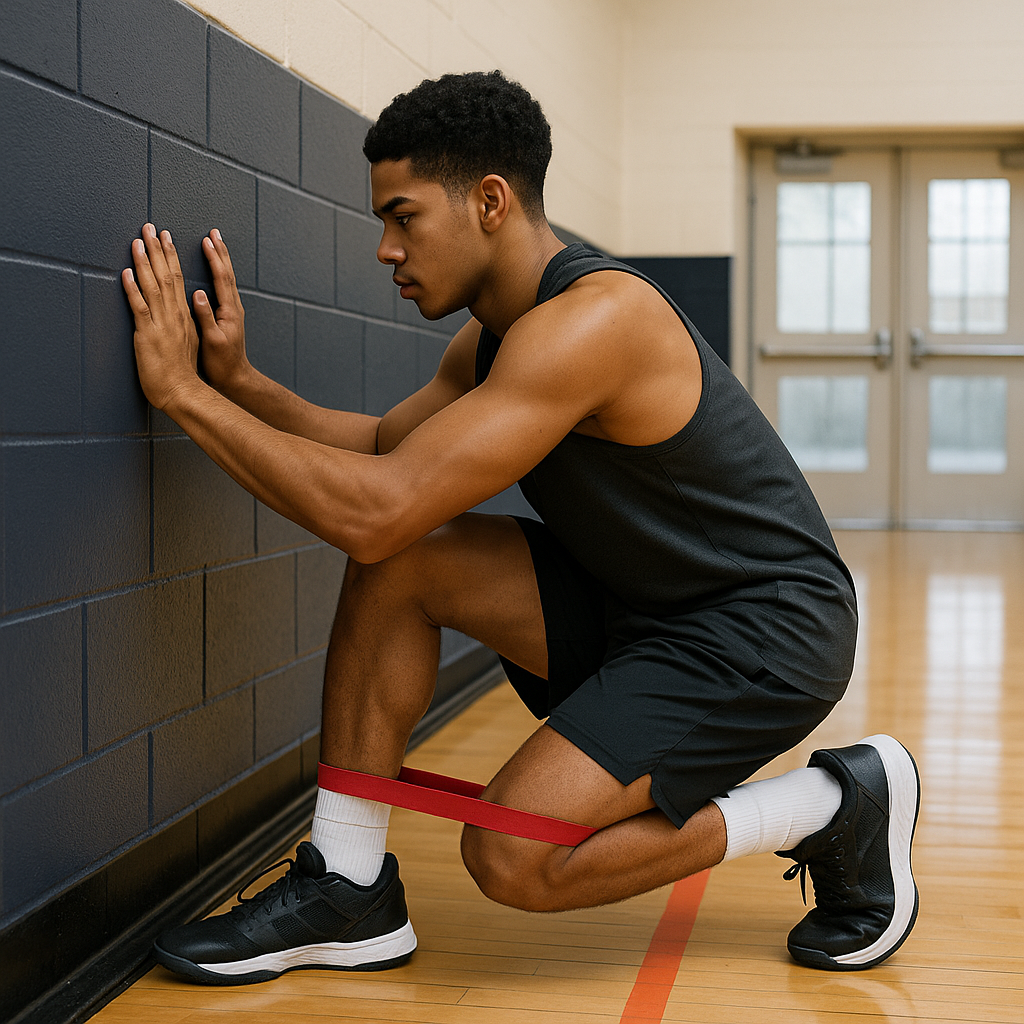
I start most post-sprain returns with a block that looks almost boring, because boring is the point. You can't ask an ankle to handle a hard closeout and a late contest if it still panics on a simple decel. This is the sequence I run on the baseline with a line on the floor, a wall, and a mini band. Shoes on, laces tied the same way they are for practice. If the player uses braces or tape, we decide up front whether today's reps are with it or without it, and we stick to that choice so the feedback is consistent.
First, knee-to-wall dorsiflexion: big toe 3 to 4 inches from the wall, heel stays down, drive the knee forward until it lightly touches. I want smooth, no hip cheat, and I compare sides without making it a contest. Then I go straight into single-leg calf raises, slow up and slower down. If the last third of the lowering phase gets shaky, that's data. After that, I like banded inversion and eversion with the band anchored low, because that outside-of-the-ankle work tends to be the first thing to quit when the player gets tired.
The on-court part is short: 5-yard stick landings. Hop forward off two, land on one, freeze for a full count, then step back. You can hear the difference when it's clean. Quiet shoe, stable shin angle, no wobble in the first half-second. Once that looks normal, we add angled shuffles to a cone and a controlled drop step, but I keep the speed at about 70% and I don't let them turn it into a race. The mistake kids make is skipping to "I feel fine" and then taking their first real cut in a live shell drill. I want the ankle to prove it can accept load, breathe, and reset, because that's what happens on the second and third defensive slide, not the first.
A patellar tendon block for jumpers who are sore below the kneecap
If a player points to the patellar tendon area and says it lights up after a weekend tournament, my first rule is simple: we don't fix that with more "conditioning" and hope. We manage the tendon like a tendon. That means deliberate loading, not random volume. I also stop pretending every sore knee is the same. Some knees hate deep flexion, some hate rapid takeoff, and some just hate being asked to jump 60 times on tired legs.
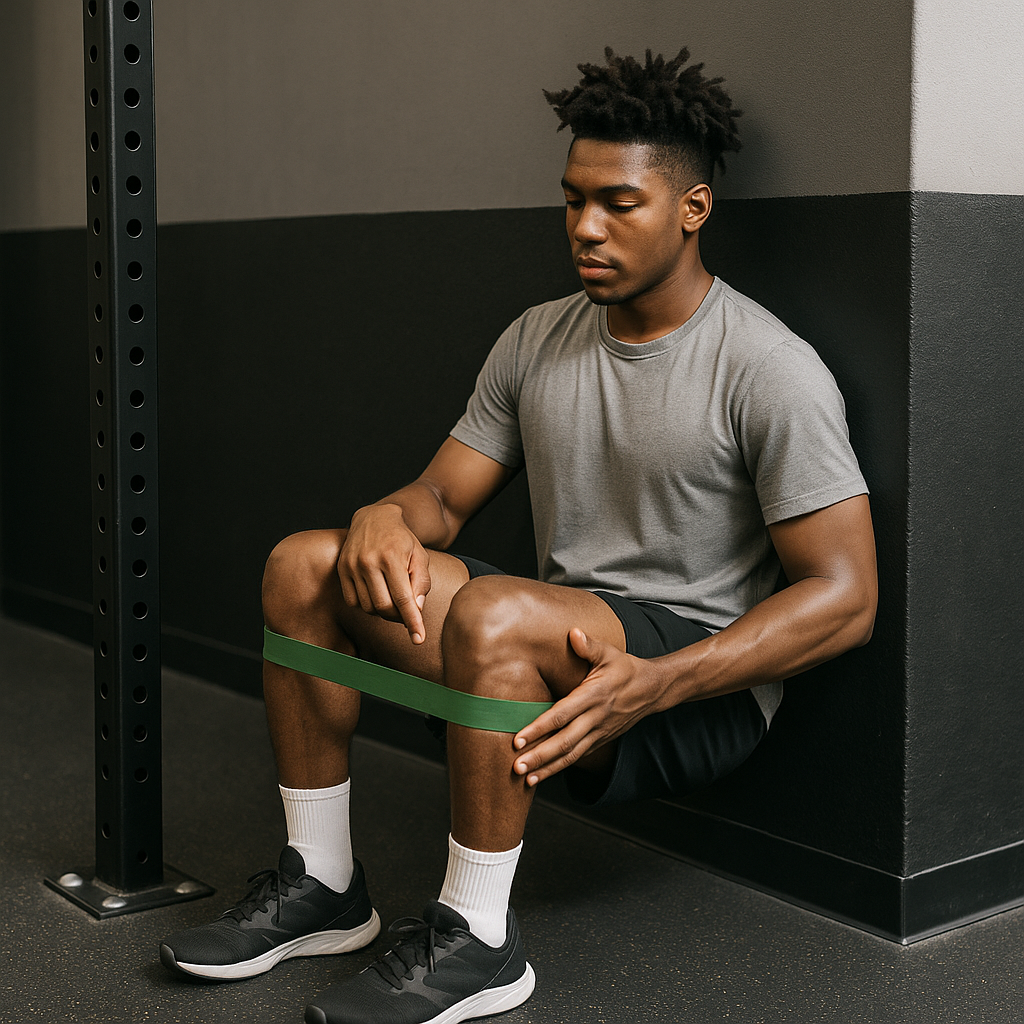
This block starts with an isometric that they can feel immediately. Spanish squat holds are my go-to: a thick strap or heavy band behind the knees, anchored to something solid, sit back so the shins stay fairly vertical, and hold. If that setup isn't available, a wall sit works, but the Spanish squat tends to hit the tendon more cleanly without turning into a back endurance contest. I run 4 to 5 holds of 30 to 45 seconds, with real rest. The goal isn't to see who suffers. It's to get a strong, steady quad contraction without joint irritation.
From there, I like slow, controlled strength: tempo split squats or tempo goblet squats to a box, depending on what the athlete can own without diving forward. Three seconds down, a brief pause, and up. I cue "knee tracks over second toe" and I watch the heel. If the heel pops, the rep turns into a different exercise and the tendon doesn't get the dose we think it's getting.
Only after that do I touch basketball-specific work, and I keep it honest. We build a finishing series with two-foot gathers and soft landings: inside-hand layups, reverse finishes, and short floaters from the lane line. No rim-hanging, no dunk attempts, no let me try one. If we need to reintroduce jumping, I prefer a fixed number, like 12 total controlled takeoffs, and we stop there even if they feel great. The next day is the check, not the last rep. If the knee is louder the next morning, we adjust load and landing volume before the problem becomes the season.
Shoulder-friendly handle work when shooting isn't ready yet
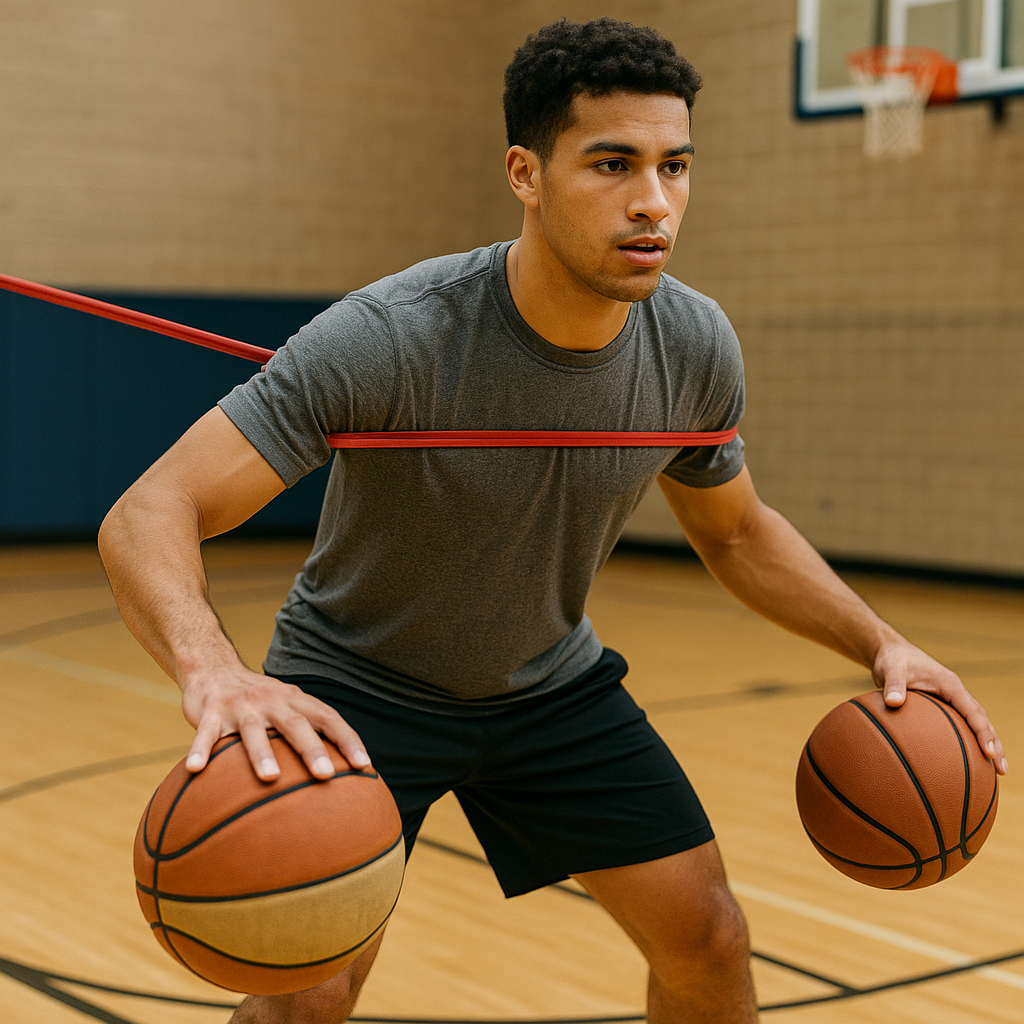
When a shoulder is coming back and the medical plan says no heavy shooting yet, a lot of players get antsy because their whole identity is tied to getting shots up. I get it. But you can keep their game moving forward by leaning into handle, footwork, and decision-making that doesn't ask the joint to live overhead for an hour. I like to run this block with a regular ball and a light ball (a youth size works), plus a resistance band for activation. If the athlete has pain with any motion, that's a stop and a conversation with the clinician. No hero reps.
I start with band work that feels like turning on the shoulder blade, not bodybuilding: band pull-aparts, external rotations with the elbow tucked, and a couple of controlled scap retractions. Then we go straight into two-ball stationary dribbles at the top of the key. The light ball is there to force touch and rhythm, not to show off. I want eyes up, shoulders relaxed, and dribbles that sound even. When a kid's guarding themselves, the first tell is they hike the dribble and tense the neck. You can hear the ball slap louder when that happens.
Next is footwork with a pass decision, not a shot. I set two cones on each wing and one at the nail. The player dribbles to a cone, plants, and makes a sharp change of direction, then hits a coach or teammate with a chest pass or bounce pass on a called target. We can do this for 8 to 10 minutes and get a ton of basketball value without a single rep that mimics a full shooting motion. If passing bothers the shoulder, we shorten the distance and use a firm, compact chest pass, or we pivot to one-hand push passes only if it stays symptom-free.
To finish, I like a contact-lite finishing series that keeps the ball below the shoulder: scoop finishes off one foot from a short run-up, using the rim as a reference without forcing a high release. If the athlete can't finish comfortably, we turn it into a touch series off the glass from two steps, focusing on angle and spin. The payoff here is psychological as much as physical. They leave the gym sweaty, sharper, and still in the routine, without sneaking in 200 jumpers because their friends are doing it on the next court.