
Three ways I run Monday film so rising teens stop chasing highlights and start seeing leverage, space, and tells.
Build a drive map before you touch the remote
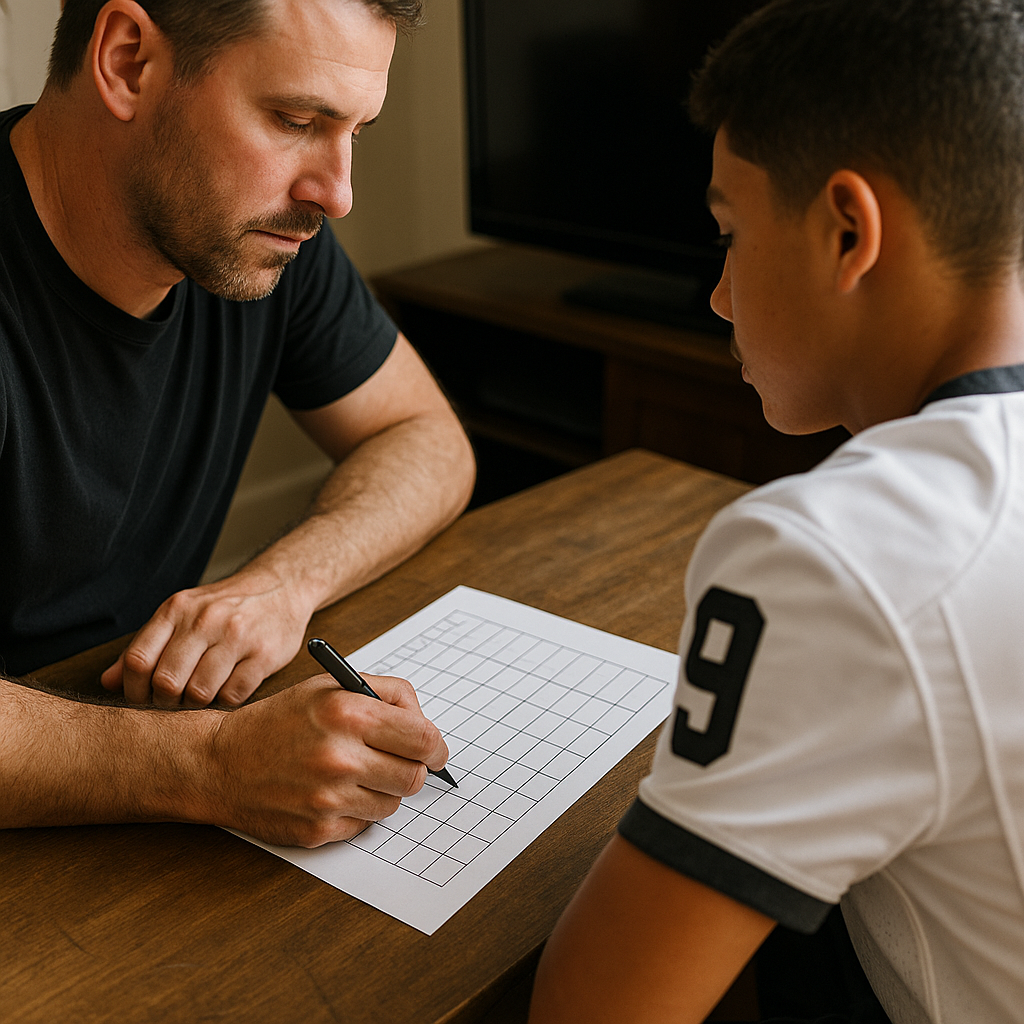
When I'm working with a rising teen quarterback, I start film with something that feels almost too boring to be useful: a drive map. One page. No remote in hand yet. Across the top I write the series numbers, then underneath I log field position, down-and-distance, formation family (2x2, 3x1, bunch, empty), and the defensive shell at the snap (one-high, two-high, zero). That's it. No opinion. No judgement. Just a scoreboard for the brain.
Why this matters: young QBs tend to watch like fans. They remember the touchdown and the sack and nothing in between. A drive map forces them to notice the stuff that creates the touchdown three plays later, like the boundary corner playing soft on first down, or the Mike creeping toward the A-gap when the back is offset. Once you have that page filled out, the film becomes searchable. You can say, "Show me every 3rd-and-5 in 3x1 when they played two-high" and you're not guessing.
I also make them mark two tiny notes that keep it grounded in Friday-night reality: (1) what the protection call was supposed to be, and (2) whether the snap count got messy. If the center is late on the cadence or the right tackle is flinching, that changes what you can reasonably ask the QB to do. Then, after the map is done, we go back and pick one series to rewatch at full speed. Not for technique. Just to feel the tempo: huddle break, motion timing, how fast the edge closes when the tight end misses a chip. The kid usually sits up straighter at that point because it starts sounding like their game again, not an abstract clinic.
The 10-second rule for pre-snap tells
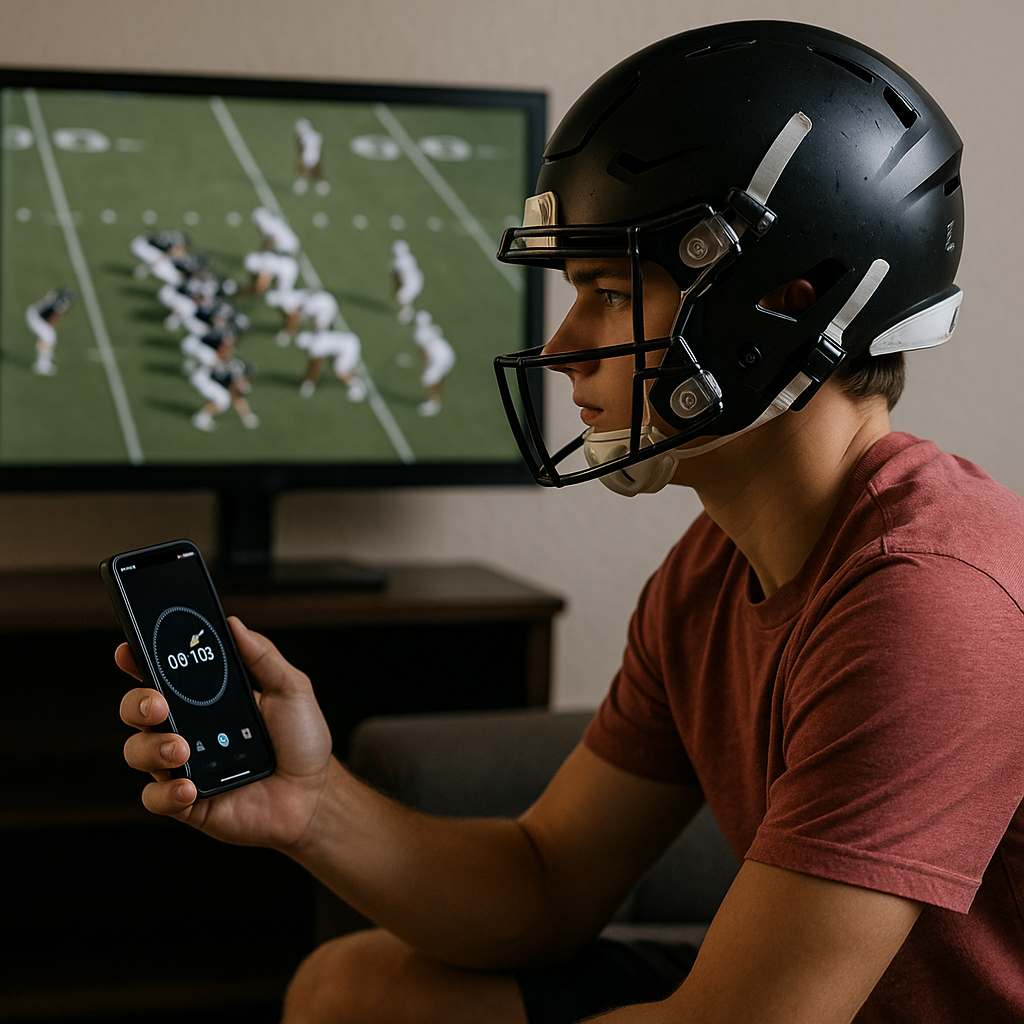
Here's the boundary I use to keep film study honest: you get 10 seconds of pre-snap time, max. If a teen QB needs a full minute of rewinding and pausing to figure out what the defense is doing, that's not a "tell." That's homework. Useful, sure, but it won't show up when the play clock is bleeding and the guard is asking, "Are we good?"
So I run a simple drill in film: I pause the clip when the offense is set, then I start a timer on my phone. The QB has to call three things before 10 seconds hits: (1) the likely shell, (2) the most dangerous rusher, and (3) one coverage indicator that could change the throw. Not three paragraphs. Three crisp calls.
What counts as a real indicator? Stuff you can see from the end zone angle or the wide shot without inventing conspiracy theories. Examples I see constantly at the high school level: the apex defender cheating inside like he's ready to rob the glance, the boundary safety at 8 yards with square shoulders (he's probably not bailing to the deep half), a corner with inside leverage on a reduced split when the offense is screaming quick game. For pressure, it's often as plain as the nickel showing his hands on his knees and then standing up late, or the Mike aligning head-up on the center instead of shaded. You don't need to be a coordinator to notice those.
Then we watch the snap and grade the call with one word: right or wrong. If it was wrong, we don't spiral into a lecture. We go back, and I ask, "What did you stare at that didn't matter?" Because that's the real issue with rising stars. They lock on the free safety like it's Madden, while the actual problem is a walked-up Sam on the line that changes the hot throw.
The best part is this carries straight onto the field. Once a QB can make those three calls quickly, you can layer in the grown-up stuff: shifting the back in protection, killing a concept, tagging a hitch to the boundary. But the first win is speed. Ten seconds. Say it out loud. Move on.
Red zone tape, but only from the 12-yard line in
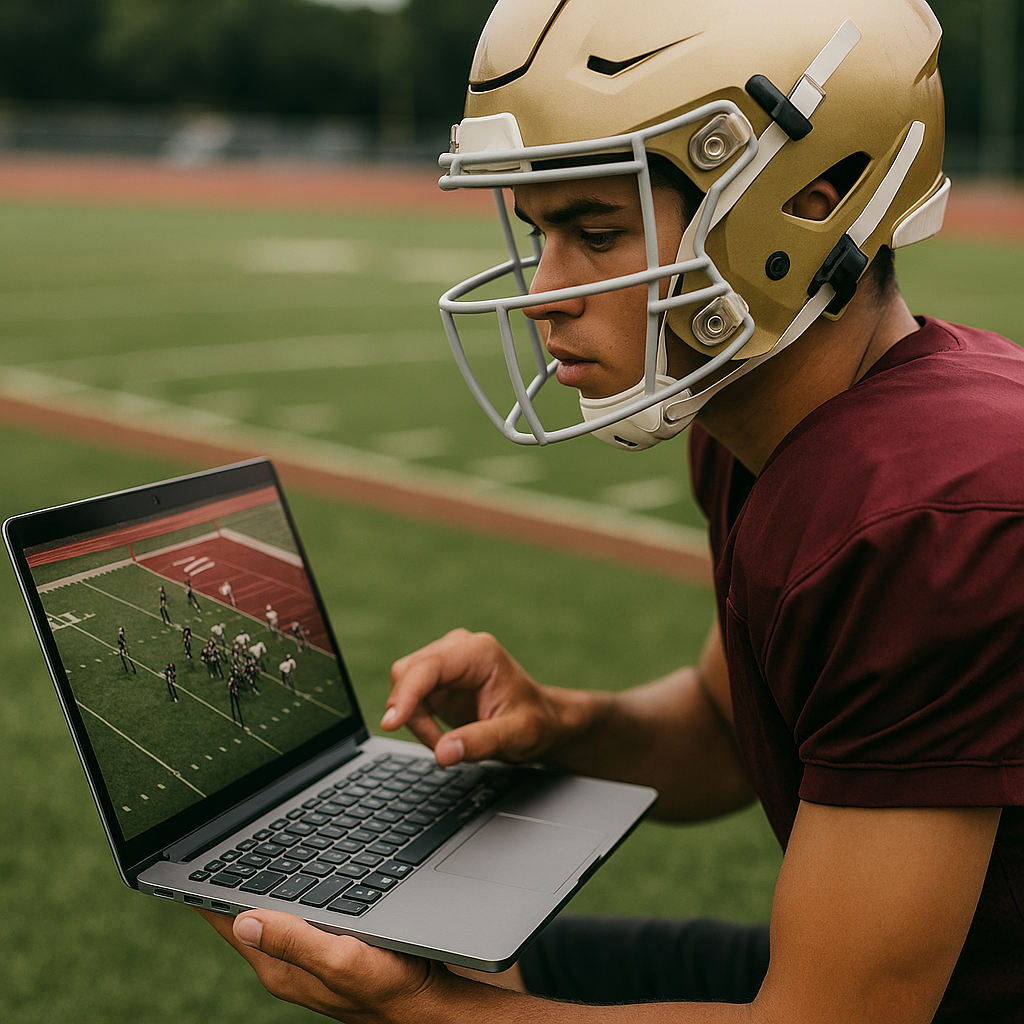
Most teen quarterbacks love red zone film because it's where the points are. I use it for a different reason: it reveals how a young passer thinks when the windows stop being polite. But I put one constraint on it that makes the session way more useful: we only study snaps from the 12-yard line and in.
From the 20 to the 13, lots of offenses are still calling their normal stuff with a few tweaks. Inside the 12, the defense stops pretending. Safeties squat. Corners get hands-on. The pass rush is less worried about contain because the QB can't drift forever without running out of grass. It's the part of the field where a rising star learns the difference between open and throwable.
Here's how I structure it without turning it into a spreadsheet. We watch five plays, then we answer four questions in plain language:
- Where's the free access? Is there a quick hitch because the corner is off? Is the slot uncovered because the defense checked into zero and nobody bumped?
- Who can you throw away from? If the boundary corner is in press with outside leverage, stop trying to win the fade every week. Look for the inside-breaking route, the back on a swing, or the tight end settling behind the Sam.
- What does the QB's feet do when the first read isn't there? A lot of teens hop in place, which feels active but buys nothing. I want one reset, then a decision.
- What was the easiest touchdown available? Not the coolest one. The easiest one. Sometimes it's a quarterback draw on 3rd-and-goal when the box is light, and the kid has been trained to feel guilty about running.
I also make them rewatch one ugly rep on purpose: the incomplete on 2nd-and-goal where the ball lands in the band. That's where you see whether the QB is forcing a hero throw because the crowd is loud, or because he missed a simple leverage cue pre-snap. When a teen starts calling those out himself, you can feel the jump. He stops being a highlight collector and starts being a points manager. And that plays on Saturdays, not just on Instagram.